
The next few months we’ll be highlighting authors who have published in Culture, Medicine, and Psychiatry.
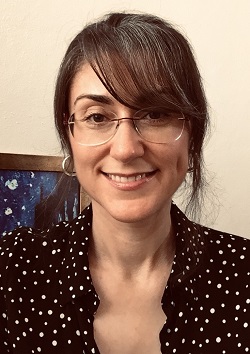
Burcu Mutlu is an assistant professor in the Department of Humanities and Social Sciences at Özyeğin University. She completed my Ph.D. in 2019 in History, Anthropology, and Science, Technology & Society at MIT. She has published on trans/national politics of assisted reproductive technologies, reproductive labor, abortion politics, reproductive justice, and migration.
What is your article “Between Solidarity and Conflict: Tactical Biosociality of Turkish Egg Donors” explores the complex and ambivalent aspects of Turkish egg donors” about?
My article explores the complex and ambivalent aspects of Turkish egg donors’ involvement in transnational egg donation between Turkey and Northern Cyprus. The article drew on ethnographic fieldwork and interviews I conducted with Turkish egg donors at a private Northern Cypriot fertility clinic from November 2014 until January 2016. In this article, I investigate how young Turkish women tactically manage social relations and orient themselves in this morally ambivalent and precarious bioeconomy of egg donation. To do so, I particularly focus on possibilities of cooperation and conflict among egg donors who are part of a specific form of biomedical sociality. I argue that cross-border egg donation retains both gendered moral and economic concerns for these young women that must be tactically negotiated not only to protect this new (clandestine) realm of financial opportunity but also to navigate the wider context of heteropatriarchal sexual culture and restrictive reproductive biopolitics.
Tell us a little bit about yourself and your research interests.
I completed my Ph.D. in 2019 with a dissertation entitled “Transnational Biopolitics and Family-Making in Secrecy: An Ethnography of Reproductive Travel from Turkey to Northern Cyprus.” In the dissertation, I investigated the transgressive cross-border reproductive travels between Turkey and Northern Cyprus that are stimulated by legal restrictions in Turkey, from a cultural anthropological and feminist STS perspective. I obtained my B.A. degree in Political Science and International Relations from Marmara University and my M.A. degree in Sociology from Boğaziçi University. Currently I am working on informal breast milk sharing practices via online platforms in times of politicized reproduction and a global pandemic. My research areas include: anthropology of reproductive technologies and biobanking; medical anthropology; feminist science & technology studies; family, kinship and gender; and transnational mobilities.
What drew you to this project?
My research interest in cross-border gamete donation is related to my M.A. project. In my thesis, I examined the local practice of assisted reproduction as a global biotechnology and its reflections on the lives and bodies of married heterosexual Turkish women (since assisted reproduction is only accessible to married heterosexual couples using their own gametes) as an intimately gendered and embodied reproductive experience. For the thesis, I conducted semi-structures interviews with married Turkish women as past or current fertility patients, and I also collected and discursively analyzed a variety of ethnographic materials including legal documents, religious discourses, economic policies, and media representations corcerning IVF in Turkey. I found that the “appropriate” and “inappropriate” forms of assisted reproduction are simultaneously configured in and through these local socio-technical articulations within and beyond the labs and clinics; transnational gamete donation thus emerges as a site of “reproductive excess” that is left outside the sphere of legality.
In my M.A. project, I investigated complex socio-technical processes that produce this excess in Turkey, with particular focus on the “appropriate” uses of assisted reproduction. In my PH.D. study, I studied this excess itself, by particularly focusing on the clandestine network of transnational gamete donation between Turkey and Northern Cyprus that includes the circulation of recipient couples, gamete donors, medical experts and technology, expertise, and capital. My article on Turkish egg donors resulted from this wider disseration project.
What was one of the most interesting findings?
I found interesting that although most Turkish egg donors I talked to said that they would support the legalization of egg donation in Turkey for recipients, they did not want donating eggs to be legally permissible for donors owing to their suspicions about the health sector in the country as well as their concerns about the possibility of higher competition (and therefore lower payment) among egg donors. So, they were willing to keep this new realm of financial opportunity secret, while undertaking all risks involved.
What are you reading, listening to, and/or watching right now?
Recently I am watching Pantheon, animated sci-fi TV series on uploaded intelligence. It raises interesting questions on what it means to be human, how the boundaries between life and death get blurred beyond the limits of corporeality, and what social, economic, political, and intimate implications technologies have for both individuals and wider society. I also enjoy reading short stories by Turkish writers and my recent favorites are Melisa Kesmez, Aylin Balboa and Burçin Tetik. Finally, I would like to mention a podcast that I recently discovered on the weather changers/ weather modification on BBC (https://www.bbc.co.uk/programmes/p0ddvpy2?utm_source=aposto ), thanks to Zappa Zamanlar, a blog curated by two Turkish sociologists, Biray Kırlı and Zafer Yenal from Boğaziçi University.
If there was one takeaway or action point you hope people will get from your work, what would it be?
One takeaway or action point people can get from my work would be to criticize and challenge states’ efforts of criminalizing or banning gamete donation that drive such practices further underground within and beyond the national borders and put both recipients and donors at risk for victimization and exploitation. Bottom-up efforts or regulations are needed that would not only guarantee safe medical practice but also address underlying social processes and inequalities, with a critical perspective that accurately captures diverse voices and experiences of involved actors.
Other places to connect:
Website
Academia.edu
 Culture, Medicine, and Psychiatry