
The next few months we’ll be highlighting authors who have published in Culture, Medicine, and Psychiatry.
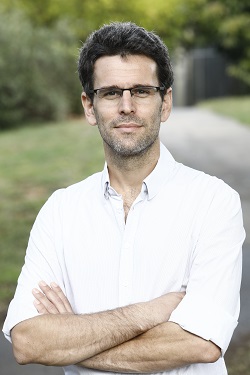
Ben Belek, Head of Impact and Policy Analysis, Israel Society of Ecology and Environmental Science is a social and medical anthropologist with a PhD (2016) from the University of Cambridge.His research focused on identity, activism, and expertise among autistic adults. In a different project he explored the shifting economic and cultural values of blood constituents. Currently, he helps design sustainable, science based and climate conscious public policies.
What is your article “‘A Smaller Mask’: Freedom and Authenticity in Autistic Space” about?
The article is about the lengths some people go to present themselves in a certain way. Society has very strict expectations on how to behave, and many of us typically abide by these expectations, if only to keep ourselves out of trouble. But the case with many autistic people is that these expectations are completely out of synch with their natural inclinations. The result is that they need to work hard to appear to fit in; not even necessarily because they want to, but because the sanctions laid against those who don’t are often ruthless. Autscape is a distinctive social setting where the rules of social conduct are unusual because they were actively and explicitly designed for autistic people, by autistic people. I did fieldwork in Autscape and learned how its autistic attendees take advantage of this unique setting to reflect on such matters as autonomy, authenticity, and freedom.
Tell us a little bit about yourself and your research interests.
Since starting my PhD about ten years ago, my main research interest was autism. My vision was to make use of the tools and insights of social anthropology to explore the aspects of autism that aren’t usually talked about in other disciplines – like what it means for people on the spectrum to be autistic, what sense they make of it, and how their ideas about autism differ from those of experts. During my postdoc I began exploring quite a different topic, which is how the medical benefits of blood proteins make them the basis of economic exchange, despite the fact that in the most part they were given freely by blood donors. So these blood constituents constantly shift between being a gift and being a commodity, with all the cultural weight placed on blood – sanctity and defilement, strength and kinship, life and death. These days I’m doing something very different – I no longer do academic research, but work with the government to help it design public policies geared towards mitigating greenhouse gas emissions and adapting to climate change. It sounds technical but it’s not – public policy is the most applied form of social science, as it’s really just about people through and through.
What drew you to this project?
By now there are loads of exciting material about autism that take a critical perspective, but when I just got started, there honestly weren’t that many. My partner was a speech therapist, and she worked a lot with autistic children. She would tell me about her patients’ difficulties and preferences, which got me curious. But the only interpretations that were out there were those given by medical professionals and mental health experts. I found it to be a very medicalized and positivistic approach to human behavior, which did not sit right. Where were the subjective experiences? I wanted to understand how autistic people themselves make sense of their condition, and so I decided to go out and study it the way I thought was most appropriate – through ethnographic fieldwork.
What was one of the most interesting findings?
I’m not sure it’s a finding as such, but I thought my interlocutors’ frequent use of the mask motif was fascinating. A mask is of course a very rich metaphor, which is partly why masking is such a deep-rooted practice in so many cultural contexts around the world. Western social theory also has quite a rich tradition of musings over the meaning of masking in the more metaphorical sense, as with Goffman etc., and these infiltrated popular conceptions over impression management and the portrayal of oneself as if on a theatre stage. In that sense, there’s nothing particularly surprising about people invoking this image of unmasking. But what I thought was especially interesting in Autscape was the fact that the proverbial mask was not seen by its participants as a tool of self-expression, but rather as an instrument of oppression. So unlike in various festivals and carnivals where masks are donned to express freedom and rebellion, Autscape is a festival (arguably) where the removal of masks is what symbolizes liberation. I thought this was a very clever reversal of the typical mask metaphor on their part.
What are you reading, listening to, and/or watching right now? (Doesn’t have to be anthropological!)
I’m tempted to go on about House of the Dragon, but I’ll mention instead a book that I’m currently reading (well, listening; I have the audio version). This one is also about politics and governance, though it’s slightly less well-known than the HBO series. Admittedly, it does have fewer dragons. It’s a book titled The Sustainable State, by Chandran Nair. Nair offers a very well-argued and quite provocative roadmap for a sustainable economy, one in which consumption is reduced to a reasonable scale and where the state claims significantly higher authority over the free market. It’s a challenging read: Nair can be extremely persuasive, and while the enormous challenges of mitigating climate change and adapting to it undoubtedly require radical reforms in the economy, his proposition for a sustainable state goes against so many of the norms and values many of us currently live by. Listening through the book, I find myself shifting between enthusiastic support and stern objection to his ideas. To what extent does the climate crisis warrant taking risks with people’s rights and liberties? I don’t pretend to know the answer, but I definitely agree it’s a question worth asking.
If there was one takeaway or action point you hope people will get from your work, what would it be?
There are a lot of stereotypes about autism. Many of them are well meaning, but like all misconceptions, they ultimately do more harm than good. I think the main takeaway from my work is that autism is a very broad and diverse category, and upon meeting a person on the spectrum, it’s nearly impossible to know what to expect. But on top of that, autism is just a very dynamic concept, in the sense that it’s constantly ascribed different meanings by different people. And autistic people also do that work of charging the concept of autism with meaning, based on their own experiences, impressions, and ideas. The scientific discourse on autism is constantly pushing towards unambiguous claims and strict definitions; this has value, and it makes sense in some respects. But what my work demonstrates is that autism is as much a political category as it is a medical one. That’s not to say it’s any less real, or that the difficulties often endured by autistic people and those who love them are any less painful. It does however open up a space for a conversation about how changing the terms of the discussion on autism and designing appropriate accommodations might help make autistic people’s lives easier and more fulfilling. The way to do this is by listening to what people on the spectrum have to say, and taking that into account when decisions – about treatment, diagnosis, education, welfare, health, employment etc. – are made.
Other places to connect:
The Autism Anthropologist
LinkedIn
Twitter
 Culture, Medicine, and Psychiatry