
The next few months we’ll be highlighting authors who have published in Culture, Medicine, and Psychiatry.
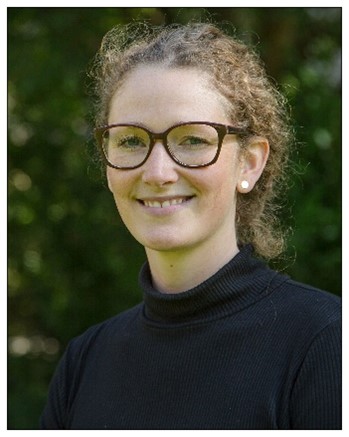
Iben Gjødsbøl is Assistant Professor at University of Copenhagen, Denmark. In her PhD, she explored questions of life’s worth and personhood in the face of dementia. Her current research explores how data-intensive medical technologies transform care and clinical practices, and how health professionals, researchers, and patients experience these transformations.
What is your article ‘Intangible Cultural Heritage: ‘Curating’ the Human‘ about?
My article is about the everyday care for people who suffer from very progressed dementia. It draws upon ethnographic fieldwork I did in a Danish nursing home specialized in dementia care as part of my PhD research. In the article, I attend to the ways in which nursing home staff care for residents who have lost their capacities for memory, agency, and communication and thus are pushed to the margins of conventional personhood. Demonstrating how caregivers during mundane care practices such as feeding and dressing uphold the residents as biographical human beings in belonging, I argue that dementia care should be recognized as a curatorial practice, preserving not only individual but also collective memories of what it takes to be human and belong in society.
Tell us a little bit about yourself and your research interests.
I’m employed as a Professor at the Department of Public Health, University of Copenhagen. Since my dementia care research, I have moved on to investigate how precision medicine is being realized in the field of cardiology in Denmark. Next year, I will do fieldwork to study how the clinical implementation of an algorithm as a support tool for decision-making transforms the care for patients with ischemic heart disease. I am always drawn to explore how the local practices and understandings, I study during my ethnographic engagements in clinical and care practices, should be understood in the context of the Danish welfare state.
What drew you to this project?
I was drawn into the project on dementia care through my outstanding research leader, Professor Mette Nordahl Svendsen. In 2013, she received a prestigious grant for a research project entitled: A Life Worth Living: Negotiating Worthiness in Human and Animal (LifeWorth). In this project, we collaboratively investigated questions of personhood and life’s worth across the very beginnings and ends of life and across human and animal with empirical fields as diverse as neonatology, dementia diagnostics and care, and experimental animal studies. Being raised as a scholar in the LifeWorth project was an invaluable experience for me.
What was one of the most interesting findings?
I was so impressed by the skills and persistence of the staff in the nursing home’s specialized unit. Every day, they tirelessly upheld the life stories, the social relations, and the agency of the very fragile residents who could only minimally respond to their care. These caregivers did everything they could to create lives worth living for the residents. Yet in the face of the residents’ profound disabilities and too little time and resources to provide proper care, caregivers also endured moral perils by sustaining the lives of the residents.
What are you reading, listening to, and/or watching right now?
I’ve just embarked on an ethnographic research project about the implementation of artificial intelligence in clinical care for patients with ischemic heart disease, so I’m trying to delve into the growing social science literature on AI and algorithms in healthcare.
If there was one takeaway or action point you hope people will get from your work, what would it be?
With my article and the argument that we should recognize dementia care as a curatorial practice, I hope to voice and draw attention to the impressive work carried out in nursing homes every day. Caregivers who care for people at the margins of conventional human personhood are constantly upholding culturally specific notions of what it takes to be human and to belong. Yet nursing home caregiving is poorly paid, and it remains some of the least acclaimed and appreciated professions in our society. With the article, I hope to flag up dementia care as an essential yet morally challenging task fundamental for curating our human heritage, and thus for maintaining the cultural and societal imaginaries of the Danish welfare state.
Other places to connect:
University of Copenhagen
 Culture, Medicine, and Psychiatry