
The next few months we’ll be highlighting authors who have published in Culture, Medicine, and Psychiatry.
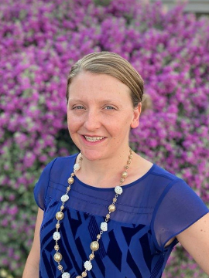
Carina Heckert is an Associate Professor of Anthropology in Department of Sociology and Anthropology at The University of Texas at El Paso. Her research focuses on how policies shape illness experiences and experiences seeking healthcare. Her forthcoming book Birth in Times of Despair: Sociopolitical Crises and Maternal Harm on the US Mexico Border (NYU Press) shows how longstanding unjust immigration, health, and social policies both before and during the height of the COVID-19 pandemic produce various forms of maternal harm in the border region.
What is your article “Recalibrating the Scales: Enhancing Ethnographic Uses of Standardized Mental Health Instruments“ about?
We intended for “Recalibrating the Scales” to serve as a way to think about the ways standardized scales are incorporated into anthropological research. Often, anthropologists use scales as a means to generate quantitative data that facilitates conversations in public health and medicine. Through our own use of scales in multiple projects, we found that how people choose to respond to closed ended questions – which often included detailed elaborations, especially when their response could not fit into the confines of a scale – show that scales have more ethnographic potential than what has typically been recognized. The projects informing this article include the Dallas Translating Affect Project, which documented the emotional trajectories of recovery for survivors of intimate partner violence, and the El Paso Maternal Health and Emotional Distress Study, which explored the emotional experience of pregnancy among first- and second-generation immigrants in the US-Mexico border region.
Tell us a little bit about yourself and your research interests.
I am a medical anthropologist with interests in global health, health policy, immigration, reproductive health, gender, and Latin America. My earlier work focused on experiences of navigating global health HIV programs in Bolivia in the context of a national agenda aimed at decolonizing health services. More recently, my work focuses on pregnancy, birth, and postpartum experiences during a series of overlapping public health and social crises in the US-Mexico border region, including draconian enforcement of immigration policies, a mass shooting, and the COVID-19 pandemic.
What drew you to this project?
This current piece draws from multiple projects, including one that I collaborated on with my graduate mentor, Dr. Nia Parson. For me, this article was a fun way for us to bring together multiple projects that shared common themes related to emotions, immigration, and gender inequities. In both of the projects that we discuss, we incorporated standardized mental health scales as a way to produce quantitative data that we could put into conversation with interview narratives. We quickly noticed that many women were not content with providing a Likert-scale response to questions, and instead often provided detailed responses to closed-ended questions. We decided it was worth exploring the content of these responses and how ethnographers might use scales to actively elicit this complementary narrative data.
What was one of the most interesting findings?
I was initially very surprised that closed ended questions were eliciting details that often did not emerge in the interviews where we were actively soliciting longer detailed responses. As we discuss in the article, at times, simply asking questions in a different way can potentially lead to different ways for people to share their experiences.
What are you reading, listening to, and/or watching right now?
My guilty pleasure is Colombian telenovelas on Netflix. I recently finished watching Season 2 of The Queen of Flow. I’m not happy with how that show ended.
If there was one takeaway or action point you hope people will get from your work, what would it be?
As ethnographers are well aware, our interlocutors often have things to say about the research instruments that we are using. The nature of standardized closed ended scales often makes these comments and mutterings invisible, when they should be treated as ethnographic data in their own right.
Thank you for your time!
 Culture, Medicine, and Psychiatry