
The next few months we’ll be highlighting authors who have published in Culture, Medicine, and Psychiatry.
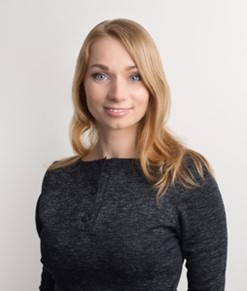
Dr. Dovilė Valaitė received her PhD in Humanities, Ethnology from Vilnius University in 2022. She published two scientific articles and gave presentations at seven scientific conferences on the subject of dissertation “The interaction of traditional religious therapy and Western psychotherapy in Islam: A comparative-anthropological study”. During her doctoral studies, the author completed a research internship in 2019 in Jordan (Yarmouk University).
What is your article “Majnūn or Mental Disorders: Between Cultural Traditions and Western Psychology in Jordan” about?
This article presents the results of a study conducted in Jordan by employing cognitive anthropological method (free listing). The study explores the conceptions of mental disorders and their causes among Muslims in contemporary Jordan. Mental disorders or altered psychological states are prevalent in all populations, regardless of race or ethnic origin, while at the same time, culture also shapes the conceptions of mental disorders. Religion is deeply rooted in the daily life of the Muslim-majority countries, while Arab countries are affected by an ongoing modernization. Thus, the main question discussed in the article, how does the traditional religious conception of mental disorders interact with Western psychological conceptions in contemporary Arab-Muslim society.
Tell us a little bit about yourself and your research interests.
My research interests are cultural psychology, medical anthropology, medical aspects of Islam, inculturation of psychotherapy in Islam, Islamic culture and religion.
What drew you to this project?
My interest in cultural psychology began while living and working in Egypt. There I had the opportunity to experience culture first hand. Inspired by international experience, I decided to continue my studies and began my researches. During doctoral studies at Vilnius University, I interned with Yarmouk University, conducting research on mental health from cultural perspective in Jordan.
What was one of the most interesting findings?
The results of the study revealed a progress in that there, it implies less denial about family difficulties instead of protecting its ‘honor’ at any cost. The social structure in Arab countries strongly supports the collective good over the individual. This is one of the features of interdependent relationship between individuals, family, and groups, which has an influence on mental health.
What are you reading, listening to, and/or watching right now?
I am still working on my research, so I am currently reading one of the latest books in the field of Islamic psychology, Islamic Psychology Around The Globe by Abdallah Rothman and Amber Haque. The book discusses the history, challenges, and prospects of this developing field and illuminate for the broader field of psychology how the Islamic tradition has been integrated into mental health practices in Muslim communities.
If there was one takeaway or action point you hope people will get from your work, what would it be?
The main message I would like to be heard is that mental disorders are diseases like any others and should not be stigmatized. There should be no shame in seeking help from mental health professionals.
Other places to connect:
LinkedIn
 Culture, Medicine, and Psychiatry