
The next few months we’ll be highlighting authors who have published in Culture, Medicine, and Psychiatry.
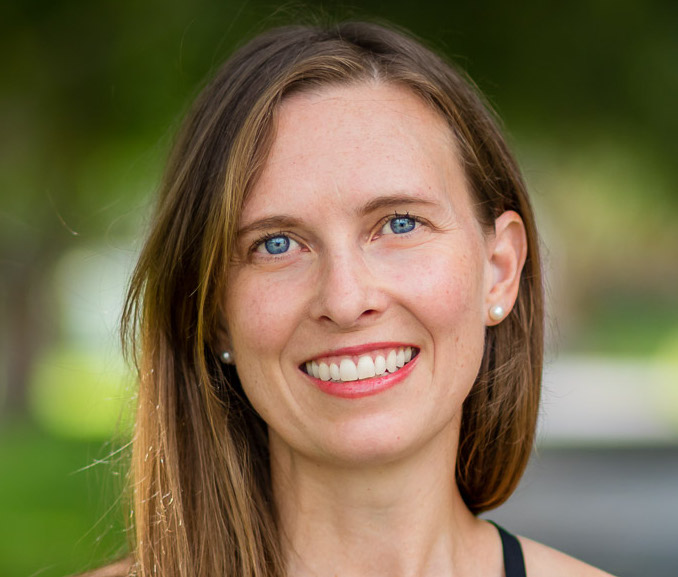
Ann Cheney, PhD, is associate professor in the Department of Social Medicine Population and Public Health, University of California Riverside School of Medicine. She is a medical anthropologist and conducts community based participatory research. Her current work focuses on the impact of structural inequalities on the health among marginalized groups.
What is your article “Continuum of Trauma: Fear and Mistrust of Institutions in Communities of Color During the COVID-19 Pandemic” about?
The article, Continuum of Trauma: Fear and Mistrust of Institutions in Communities of Color During the COVID‑19 Pandemic, is about the historical and present-day processes that shaped trauma and fear of COVID-19 healthcare services in communities of color during the COVID-19 pandemic. We conducted focus groups with historically marginalized communities, including individuals who identified with being a member of an African American/Black, Latinx/Indigenous Latin American, and Native American/Indigenous community in Inland Southern California. We found that people within these communities experienced a continuum of trauma from historically based trauma (e.g., racism, colonialism) to cultural trauma (loss of collective identity) to social trauma (race- and income-based inequities) that underlie fear and mistrust in US institutions—public health, medicine, science, government. During the pandemic, exposure to these historical and present-day traumas shaped engagement with COVID-19 public health mitigation efforts and decisions about testing and vaccination leading to continued cycles of trauma.
Tell us a little bit about yourself and your research interests.
I’m a medical anthropologist and use community based participatory research approaches to carry out public health and health services research. I see research as a way to empower grassroots leaders to activate communities and change narratives of health and wellbeing. I grew up in rural upstate New York on a family-run farm, which greatly shaped my career and passion for working with farm-working communities. Since graduate school, I have worked, in various ways, with agricultural and farm-working communities.
What drew you to this project?
Over the past 10 years, I have collaborated with various communities and groups, including African Americans in rural Arkansas and Native Americans, Latinos, and Indigenous Latin Americans in Inland Southern California. In the first several months of the pandemic, I submitted a grant to the National Institutes of Health (NIH) to identify and intervene on the structural and socio-cultural barriers to COVID-19 testing and vaccination. In collaboration with academic investigators and community partners, we planned to engage historically marginalized communities in our region, Inland Southern California. The grant wasn’t funded. But the research I designed was eventually carried forward through a state-wide effort, STOP COVID-19 CA, led by UCLA and funded by NIH Community Engagement Alliance (CEAL). It was an honor to lead this work and draw from my experiences and insights gained over the years from working with various groups.
What was one of the most interesting findings?
The most interesting finding is the continuum of trauma—historical, cultural, and social—that shapes the lives of historically marginalized communities and populations. I give full credit to Dr. Evelyn Vázquez, the lead author of the article, who proposed this continuum. As a team, we fleshed it out and considered how it differently and similarly played out across the groups we engaged in our research.
What are you reading, listening to, and/or watching right now? (Doesn’t have to be anthropological!)
I am listening to the audible book The Death Gap by David A. Ansell. It is a must read/must listen book about structural violence and how it manifests with US healthcare systems.
If there was one takeaway or action point you hope people will get from your work, what would it be?
Trauma is complex. Too often our healthcare systems focus on individualized trauma perpetrated by others such as intimate partner violence or sexual assault. But trauma is historical and systemic, and it is patterned by social categories like race, ethnicity, indigeneity, language. To intervene on the effects of trauma in its varied forms on collective wellbeing, we need to identify the inequities within systems and institutions that perpetuate the continuum of trauma.
Other places to connect:
 Culture, Medicine, and Psychiatry