
The next few months we’ll be highlighting authors who have published in Culture, Medicine, and Psychiatry.
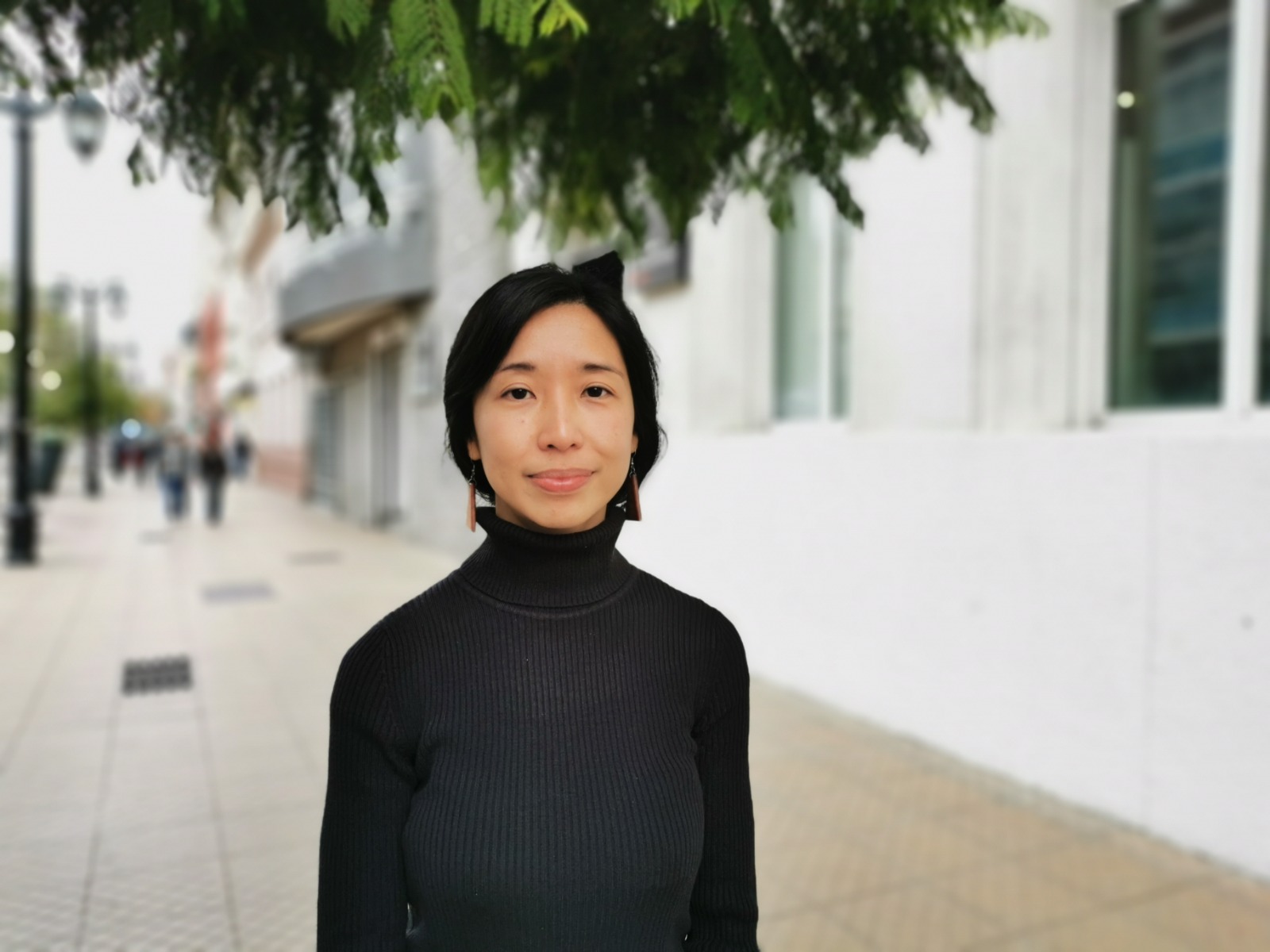
Carol Chan is an anthropologist of migration and im/mobilities, racialization, and gender. She is author of “In Sickness and in Wealth: Migration, Gendered Moralities and Central Java” (2018, Indiana University Press) and co-author of “Chineseness in Chile: Shifting Representations in the 21st Century” (2022, Palgrave Macmillan) with Maria Montt Strabucchi and Maria Elvira Rios.
What is your article “Managing the Long-Term Effects of Psychological Abuse on (Im)migrant Domestic Workers” about?
This article is based on a broader ethnographic study of Filipino and Indonesian migration to Chile. Most are women who migrated primarily to work as caregivers and cleaners in private households. While researchers have highlighted the emotional distress of migrant domestic workers who experience abuse by employers, less is known about long-term effects of the psychological abuse that they experience. In the article, we analyze the experiences of three Filipino women to focus on how they narrate and manage the long-term effects of psychological abuse in the domestic workplace that they experienced more than ten years earlier. Building on insights from medical anthropology and using narrative analysis, we contribute to discussions on migrants’ mental health and psychosocial wellbeing by showing how these migrants seek to make meaningful sense of their previous experiences to deal with the enduring effects. We show that they construct alternative narratives that foreground their experiences as linked to structural factors and suggest that their psychosocial wellbeing is linked to their ability to subvert or derive meaning from earlier experiences of structural violence.
Tell us a little bit about yourself and your research interests.
As an anthropologist of migration, I’m interested in how, why, when, and where people migrate, as well as the experiences and trajectories that complicate common understandings of migrants and migration. For example, when people re-migrate again and again, or when people decide to stay in a place where everyone else seems to be leaving. I’m curious about how perceptions or imaginaries of migrants and mobility influence the actual circulation of people across borders and impact the experiences of those who do not migrate or move.
What drew you to this project?
This article draws on a broader research project on Filipino and Indonesian migration to Chile that received funding from the Chilean National Agency for Research and Development (Fondecyt 11200270). When I first arrived as a new migrant from Singapore to Chile, I was surprised to find that many Filipino women had also migrated from Singapore, primarily to work as caregivers and housekeepers for wealthy families. I was curious about how their experiences as women, migrants, and workers in these two countries compared. I wanted to explore and understand these similarities and differences in greater depth.
What was one of the most interesting findings?
Although many Filipina workers were in arguably better labor and living conditions as compared to their experiences in previous countries, and had even obtained permanent residency in Chile, the lingering effects of psychological and verbal abuse from as long as fifteen years ago were still evident. One woman used the term “repress” to talk about how she dealt with how such past experiences continue to haunt the present. That conversation sparked the initial impetus for this article.
What are you reading, listening to, and/or watching right now? (Doesn’t have to be anthropological!)
I started reading The Argonauts (Maggie Nelson), and re-read Minor Feelings (Cathy Park Hong).
If there was one takeaway or action point you hope people will get from your work, what would it be?
Psychological abuse – often in the form of repeated verbal abuse- constitutes the most common form of abuse experienced by migrant domestic workers, and it can have long-term, enduring impact that should be considered in political and collective efforts to improve workers’ labor conditions and overall wellbeing.
Other places to connect:
Linkedin
 Culture, Medicine, and Psychiatry