
The next few months we’ll be highlighting authors who have published in Culture, Medicine, and Psychiatry.
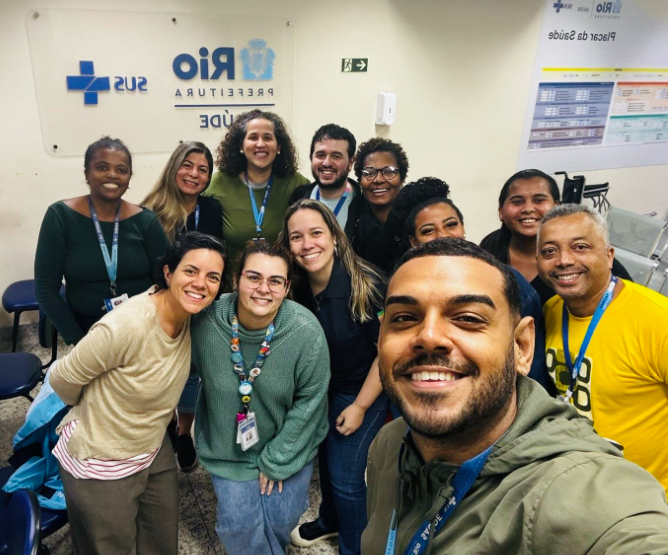
Mrs. Rodrigues-Müller is a psychiatrist, Collective Health PhD, and a professor of Mental Health at the
undergraduate medical school at the State University of Rio
de Janeiro (UERJ) Medical School (Medical Sciences School).
What is your article “Mental Health Collaborative Care in Brazil and the Economy of Attention: Disclosing Barriers and Therapeutic Negotiations” about?
This article examines an experience of mental health collaborative care in the city of Rio de Janeiro as an
illustration of mental health interventions in local contexts. Structural and sociocultural issues affect
each region and health services differently, and health teams and healthcare managers need to identify
and integrate these variations in the planning of health interventions. We argue that it is in the everyday
interactions that the processes of incorporating different epistemologies and logics of care are
manifested.
Tell us a little bit about yourself and your research interests.
I am a psychiatrist, and I have done my medical residence in public mental health program in Rio de
Janeiro in the beginning of 2000’s. I have been working in public mental health services since them. I’m
also mental health professor at UERJ. My work experience has influenced me and my interest in studying
sociocultural features setting up mental suffering.
What drew you to this project?
My interest was understanding how different perspectives on mental suffering were recognized and
dealt with among health professionals, users, families and communities.
What was one of the most interesting findings?
Brazilian public health emphasizes the social determination of health-disease processes and has
contributed significantly to the knowledge and health care developed in the country. However, an
economy of attention approach can expand our understanding of the social and cultural dimensions that
shape health phenomena. We must encourage health professionals and health systems to incorporate
the complex interweaving of material and human conditions that shape health care.
What are you reading, listening to, and/or watching right now? (Doesn’t have to be anthropological!)
I’ve just finished Silvia Federici’s book – Beyond the periphery of the skin: rethinking, remaking and
reclaiming the body in contemporary capitalism; And now I am reading Eduardo Viveiros de Castro’s
book – Cannibal metaphysics: Amerindian perspectivism.
If there was one takeaway or action point you hope people will get from your work, what would it be?
It is in the everyday interactions that the processes of incorporating the different epistemologies and
logics of care are manifested. Focusing on negotiations enables appreciation of the role played by social
actors in these exchanges and other features related to access and quality care.
Other places to connect:
 Culture, Medicine, and Psychiatry