
The next few months we’ll be highlighting authors who have published in Culture, Medicine, and Psychiatry.
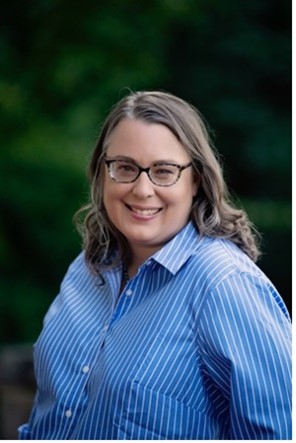
I’m a sociologist specializing in medical and mental health sociology, exploring health, ability, and technology intersections. My research focuses on medical technology’s social impact, and I edited a volume about medical technology and society. I’m currently writing a book on digital and AI technology and psychiatric patient monitoring and surveillance
What is your article “Psych Unit Gangs: An Autoethnography” about?
People with mental illness diagnoses often face unfair treatment from society. But even among those with mental health issues, there appears to be a hierarchy and some people with mental health diagnoses stigmatize others with different diagnoses. In psychiatric hospitals, patients sometimes create rankings based on their diagnoses. As someone who has experienced psychosis, I’ve been at the bottom of this ranking. Patients with conditions like depression or addiction, which are seen as less severe, often exclude and judge those of us with psychotic disorders. This creates a power imbalance, where one group that already faces discrimination treats another group even worse. Using ideas from sociology, I look at how these groups form and how quickly patients figure out where they fit in the hospital’s social structure. To help solve this problem, we need to change how psychotic disorders are shown in popular media and culture.
Tell us a little bit about yourself and your research interests.
I am a sociologist of medicine, mental health, ability, and technology, and am fascinated by the intersection of these areas. My first work in this area involved Deaf cultural identity and deaf technology such as hearing aids and cochlear implants. That project focused on the concept of normality and the use of technology to make people “normal.” That work led naturally to my current project, which involves the examination of advanced digital and AI technology and psychiatric surveillance. I am interested in how technological surveillance of those with mental health diagnoses is used to reinforce “normality,” but am also interested in the ethical, political, and social implications of these technologies, especially as they relate to patient autonomy, privacy, and impacts on the doctor-patient relationship.
What drew you to this project?
This autoethnography was borne out of my 19th hospitalization for a psychotic episode. As someone with a schizophrenia-spectrum diagnosis, I am no stranger to psychiatric hospitals and the patient rituals and social dynamics within them, but this hospitalization was different from all my others. During this hospitalization, I noticed a distinct hierarchy forming among the patients, and that was something that I had never seen before. I immediately saw the sociological implications of the social organization within the unit and was inspired to write this autoethnography about my experience. Additionally, I believe strongly in “Disclosure as Activism” and wanted to take this opportunity to blend my identity as a scholar with my identity as a person with a schizophrenia-spectrum illness.
What was one of the most interesting findings?
The most interesting finding is that these hierarchical groups remained, and the stigma from the “mood disorder group” toward the “psychotic group” remained even when there was turnover in group membership. Even when the de facto “leader” of the “mood disorder group” left the unit, and all the original members of that group had moved on, the group was re-populated with new members who continued the stigmatizing behavior.
What are you reading, listening to, and/or watching right now? (Doesn’t have to be anthropological!)
I am watching an amazing Pakistani show called “Barzakh” right now. It tackles metaphysical issues, but it is also a very interesting social experiment, because it also includes gay characters, animal cruelty, nudity, and cursing- all things that are usually not included in Pakistani productions. The show was streamed for free on YouTube, but due to death threats from Pakistani viewers toward the Pakistani actors and directors, it was recently pulled from Pakistani YouTube. It is still available to the rest of the world to watch, though, and I highly recommend it. Beyond the great story and interesting questions that it raises about death and life, it is set in the magnificent Hunza Valley, which I will never get bored of seeing.
If there was one takeaway or action point you hope people will get from your work, what would it be?
Actually, one of the most important parts of the piece is not in the content as much as it is in the context of the work- I am a prolific scholar and professor who also has a schizophrenia spectrum diagnosis. These two facts about me should not be considered incompatible or startling. I hope that one of the results of the publication of this paper is that because academics experience psychiatric diagnoses just as much as other people, we should start talking about it, and de-stigmatize it within the academy.
Other places to connect:
Website
 Culture, Medicine, and Psychiatry