
The next few months we’ll be highlighting authors who have published in Culture, Medicine, and Psychiatry.
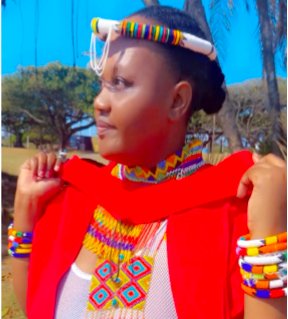
Dr. NP Ngubane is an anatomist who ventured into neuroscience, indigenous knowledge systems and traditional medicine for her PhD studies. She is currently involved in teaching, module coordination and research supervision in the Discipline of Clinical Anatomy, School of Laboratory Medicine and Medical Sciences, in the College of Health Sciences at the University of KwaZulu-Natal.
What is your article “The Influence of Culture on the Cause, Diagnosis and Treatment of Serious Mental Illness (Ufufunyana): Perspectives of Traditional Health Practitioners in the Harry Gwala District, KwaZulu-Natal” about?
Traditional healing and Traditional Health Practitioners (THPs) are still perceived as “inferior” and receive contestation in the biomedical entity due to the lack of scientific backing and detailed information of how this type of healing contributes to healthcare while taking into consideration the cultural and spiritual beliefs of a community. This article then aimed to qualitatively obtain insights from the THPs’ perspective into how culture influences the explanation of mental disorders; viz. their cause, methods of diagnoses and treatment approaches used in the traditional healing practice. The focus was on schizophrenia as symptoms of this disorder are said to be caused by a calling to become a THP and are also associated with conditions involving ancestors and/or other spirits and sorcery or bewitchment in the African healing setting. This article also aimed to identify the common symptoms observed by the THPs in mentally ill patients and document the system used by the THPs to manage their patients.
Tell us a little bit about yourself and your research interests.
I am an anatomist by profession. In my undergraduate studies I majored in Anatomy, Biochemistry and Microbiology, but stuck to Anatomy for my postgraduate studies. My previous research before PhD was based in cadaveric investigations, and particularly for my Masters research I investigated the anatomy of the sphenoidal air sinus. For my PhD studies I then branched into something different compared to what is common in my field. So, my current research interests are in indigenous knowledge systems, traditional/herbal medicine, mental health/psychiatry, and neuroscience.
What drew you to this project?
Being African. I have noticed that some information on traditional and cultural beliefs and practices ends up getting lost from generation to generation due to the lack of records which can be passed from one generation to the next. And having this information published plays a role in its preservation. My supervisor’s interest in indigenous knowledge systems, and how various ailments, particularly mental illness, have different causal explanations and treatment approaches is what also drew me to this project.
What was one of the most interesting findings?
One of the interesting findings is how cultural and spiritual conditions, which may be termed as culture-bound syndromes, actually align with psychiatric conditions through the symptoms observed in patients. Although conditions such as ufufunyana still have discrepancies in the description of symptoms observed in patients; as this condition’s causation is usually reported differently depending on how respondents from different studies understand it. Thus, the only difference between biomedical and traditional medicine in this regard is standardization. There is no one-size-fits-all in traditional medicine as everything relating to healing is guided by ancestors and cultural beliefs.
What are you reading, listening to, and/or watching right now? (Doesn’t have to be anthropological!)
Oh, please don’t judge me. I am currently reading Act Like a Lady, Think Like a Man by Steve Harvey. And I am currently watching 1899 and King the Land (K-drama) on Netflix.
If there was one takeaway or action point you hope people will get from your work, what would it be?
That would be, just because something is not fully understood, that doesn’t make it useless or inferior to what is considered to be known. Just because traditional medicine lacks scientific backing, that doesn’t necessarily mean it is void, considering that it has been used since centuries ago and is still being used by a number of communities globally.
 Culture, Medicine, and Psychiatry