
The next few months we’ll be highlighting authors who have published in Culture, Medicine, and Psychiatry.
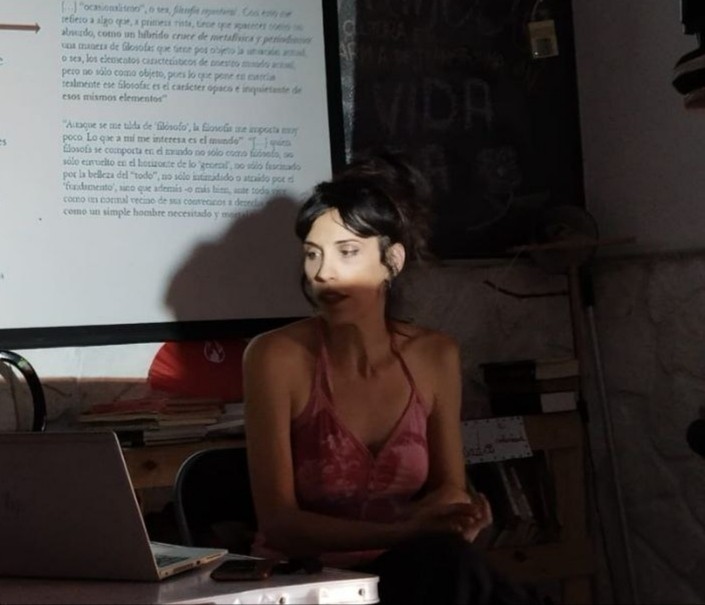
researcher in the Research Methods department at the University of Almería (Spain)
Tell us a little bit about yourself and your research interests.
I’ll start by saying that defining oneself in front of others always involves a bit of falsification because the self is a process of construction—a narrative. You can’t truly express the self. I think this should be kept in mind in these internet-dominated times. We shouldn’t get too attached to a self-presentation, or we may end up being enslaved by it. In any case, I’ll say that I’m Verónica, a 37-year-old Spanish researcher. I studied medicine and philosophy. I’ve completed my doctorate and have specialized in the fields of health education and critical medical anthropology. Currently, I’m pursuing two main lines of work: 1) studying violence and cyberviolence between adolescent couples with diverse ethnic, racial, and cultural backgrounds and 2) exploring youths’ experiences of loneliness from the perspective of the anthropology of loneliness. Both lines of work focus on how adolescents’ and young adults’ relationships are changing and how they impact their health and well-being.
What drew you to this project : “Understanding the Sociocultural Dynamics of Loneliness in Southern Spanish Youth”
As a professor of research methods, I often tell my students that the most important thing when conducting research is to choose topics that they are passionate about, that affect them emotionally, and that interest them enough to dedicate their lives to understanding and transforming. There is something about this quest that gives life meaning. This is what loneliness is about for me. I’ve always had a deep and complex relationship with loneliness. My academic interest in the topic predates the pandemic, but during the pandemic, many conversations I had with young people and my own experience made me want to explore it in a moment in which it could be felt more intensely: How loneliness is experienced in contexts of extreme isolation. Sometimes, understanding social phenomena in extreme situations is an effective way of uncovering details that wouldn’t be revealed otherwise. Taking things to their extremes is a way of unveiling their true nature.
What was one of the most interesting findings?
Beyond trying to understand the sociocultural dynamics of loneliness (which is what the article is about), I became aware of the pressing need that young people have to talk about this experience. Loneliness is still burdened by shame and taboos that cause young people acute discomfort, leading them to internalize a sense of guilt about their experiences. I analyze loneliness as an experience that, in many cases, is produced by the individualistic, competitive, and performance-oriented society we live in. In this sense, I believe the article highlights the need to develop policies that can ease this collective discomfort (politics of suffering and discomfort).
What are you reading, listening to, and/or watching right now? (Doesn’t have to be anthropological!)
Recently, I read Mary Shelley’s Frankenstein. I have a certain fondness for the themes of disengagement/inadequacy and the construction of monstrosity. It’s a book I highly recommend. I returned to it after watching the film Poor Things by Yorgos Lanthimos.
Right now, I’m alternating between two books. For pleasure, I’m reading Goliarda Sapienza, an Italian communist poet. For academic purposes, I’m reading Kierkegaard for a seminar on loneliness and despair in his work. As for what I’m listening to and watching, I have to admit that I only listen to the radio occasionally. I don’t own a TV set or use streaming platforms. The last film I loved was Alice Rohrwacher’s La chimera.
If there was one takeaway or action point you hope people will get from your work, what would it be?
I believe that the digitalization of life and relationships constantly reminds us of the importance of physical bodies and their absence. A political or social health strategy for relieving contemporary discomfort must necessarily include the recovery of physical contact and embodied connections—a politics of bodies.
 Culture, Medicine, and Psychiatry