
The next few months we’ll be highlighting authors who have published in Culture, Medicine, and Psychiatry.
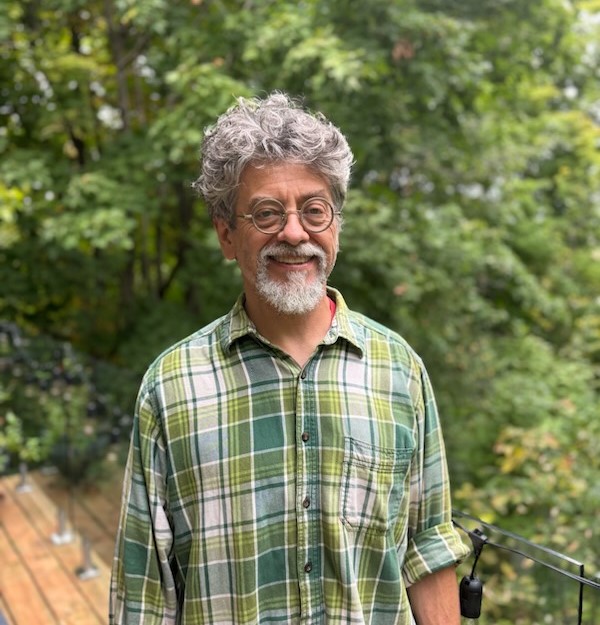
I lecture in sociology of health and medicine. I currently live in the country and enjoy canoeing and playing chess.
I am a sociologist specializing in sociology of health and health care. My particular focus is on psychiatry and specifically I specialize in researching the research on schizophrenia. I find the instability of the idea of schizophrenia absolutely fascinating and I read the primary biological research and continue to find the results being generated there indicative of a number of cultural biases that imbue the biological project of psychiatry with an unwarranted optimism. Overall I think ‘schizophrenia’ tells us far more about cultural values and prestige generation in science and medicine than it does about something called schizophrenia. I am fascinated by how differently the biology of severe mental illness is interpreted than is, for example, the biology of grief.
What is your article “No Ordinary Scribble: The Person Diagnosed with Schizophrenia Paints Their Soul” about?
I first started reading about schizophrenic art and art brut when I worked in an antiquarian bookstore and these books with amazing artwork would pass across my desk. At first I was simply enamored, but as I learned more about the intimate relationship between representation and interpretation I became suspicious and decided to search for the empirical basis of this work. While I expected to find work that was problematic I was very surprised that there was no empirical foundation for the idea that the artwork of a diagnosed schizophrenic represented their diagnosis. This led me to survey the writing on the subject and trace the growth of the assuredness of the connection in the psychiatric literature.
Tell us a little bit about yourself and your research interests.
The main goal of my work is to participate in the critical review of reductionist work in psychiatry. I find that abstraction too often overrides a human, caring encounter between practitioner and patient. This is a problem central to the research as well and I consider the ongoing individualistic reduction of the social and narrative aspects of severe mental illness both dangerous and empirically unwarranted. I am currently using the literature on social defeat to review the significant downturn in the numbers of patients diagnosed with catatonic and chronic schizophrenia in the mid-twentieth century, which, according to psychiatrists at the time, was mostly due to an improvement in institutional conditions and the implementation of occupational therapies. This suggests that a kind of social defeat was being generated in patients in the stultifying, dreary and oppressive institutional conditions of the period. It was only when patients started showing radical improvement through an improved milieu that it became evident as to just how much harm had been caused by the environment.
What are you reading, listening to, and/or watching right now? (Doesn’t have to be anthropological!)
I mostly just read material relevant to my research or teaching. The last novel I read was Dawn by Octavia E. Butler which I enjoyed as it explored some very interesting questions about being human, and oppressed in the context of an alien takeover. It also examined some questions about biological identity and gender fluidity. At night I generally watch some brain candy, a British mystery or something of the sort.
 Culture, Medicine, and Psychiatry