
**Vincent Laliberte’ is the winner of the 2024 Culture, Medicine and Psychiatry Early Career Development Award for the paper shared below. Congratulations, Vincent!**
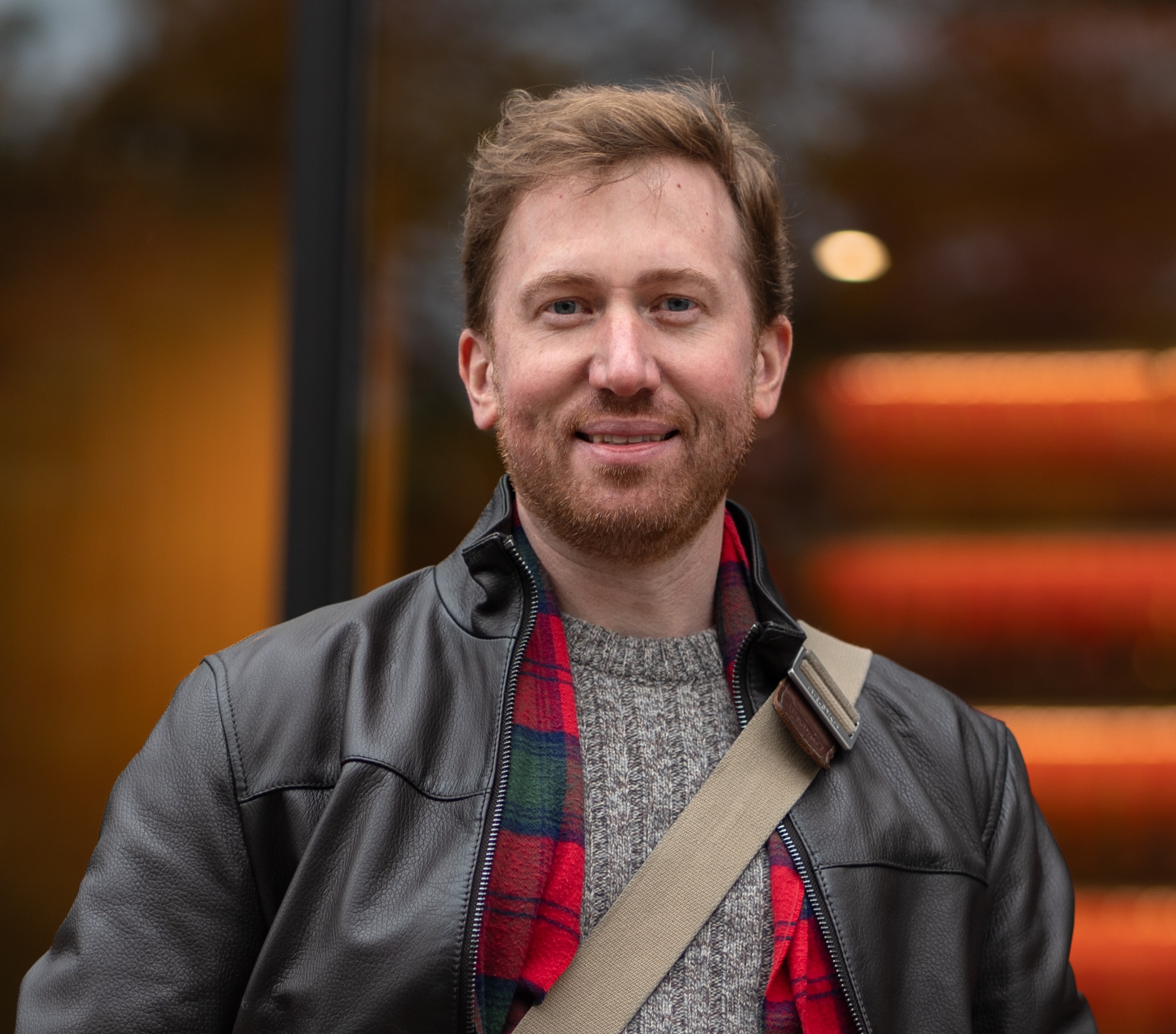
I began as a psychiatrist and later developed a passion for anthropology. I lead a clinic within Welcome Hall Mission’s shelter in Montreal, where we serve people experiencing homelessness and mental illness. Through ethnography and writing, I explore how people seek to thrive and discover ways of living in the urban environment
What is your article “When Multispecies Ethnography Encounters a Shelter-Based Clinic: Uncovering Ecological Factors for Cultural Psychiatry” about?
This paper builds on my long-term ethnography with horse-drawn carriage drivers in Montreal, focusing on one individual, whom I refer to as Jerome, who became homeless after the city outlawed the carriage industry. I explore the role of “ecologies,” by which I mean all that surrounds a living being, including relations with people, animals, plants, and digital technologies, as well as places and their affordances, in shaping psychic life. I refer to these as “ecological factors” and show how they extend beyond the social or cultural contexts outlined in the DSM. Additionally, I examine how my dual roles of psychiatrist and ethnographer were shaped by different ecologies, namely a shelter-based clinic and a horse stable. Thinking through ecological factors reveal the importance of spaces of care and what is available in the urban environment to support people’s well-being.
Tell us a little bit about yourself and your research interests.
Early in life, I developed a daily practice of writing, blending life experiences with my readings, in pursuit of self-actualization. Ethnography was a revelation, showing me how writing could expand beyond the personal, immersing me in the lives of others and in the rich and multi-generational anthropological conversation. Ethnography’s grounding in lived experience, which unfolds dynamically in a milieu, also invites us to rethink dominant knowledge systems and challenge what is taken for granted. I aim to bring this ethnographic lens to community psychiatry, reimagining how we understand psychic distress and exploring new approaches to healing that are rooted in relational and ecological perspectives.
What drew you to this project?
Last winter, I attended the 2024 Association Psychopathological Association Conference in New York, which focused on the impact of sociocultural context and social determinants on mental health. Yet I felt that something was missing from the understanding of context presented there. I wanted to find a way to write about the clinical encounter that would give texture to the singular lives of people, more-than human relations, and concrete situations as they unravel. I also wanted to show the usefulness of including myself as both psychiatrist and anthropologist, as one character in those ethnographic descriptions, with my own doubts and uncertainties.
What was one of the most interesting findings?
I discovered that people are opaque, not only because we don’t know everything about them but also because there is something fundamentally indeterminate about what they could be in a given context or ecology. Getting to know another might involve meeting them in different places and in the context of various activities. In this sense, I show how the psychiatric interview room is not a neutral place where an objective view of the other is possible. Using a “view from afar,” to use Claude Lévi-Strauss’s famous phrase, I propose that the clinic is a peculiar environment that makes diagnostic process possible.
What are you reading, listening to, and/or watching right now? (Doesn’t have to be anthropological!)
I am currently reading A World Beyond Physics by Stuart Kauffman and am fascinated by his proposition that something intrinsic to life, down to the molecular level, escapes the constraints of physical laws. This perspective opens up reflections on indeterminacy, and perhaps freedom, at the very core of life itself.
If there was one takeaway or action point you hope people will get from your work, what would it be?
Human beings thrive in rich environments that allow them to express themselves and develop new capacities. To genuinely support healing, we need to put much more emphasis on places and what is available in them. This would lead us to create environments that foster mental health and support individuals in their journey away from suffering and toward growth and fulfilling connections.
Other places to connect:
 Culture, Medicine, and Psychiatry