
The next few months we’ll be highlighting authors who have published in Culture, Medicine, and Psychiatry.
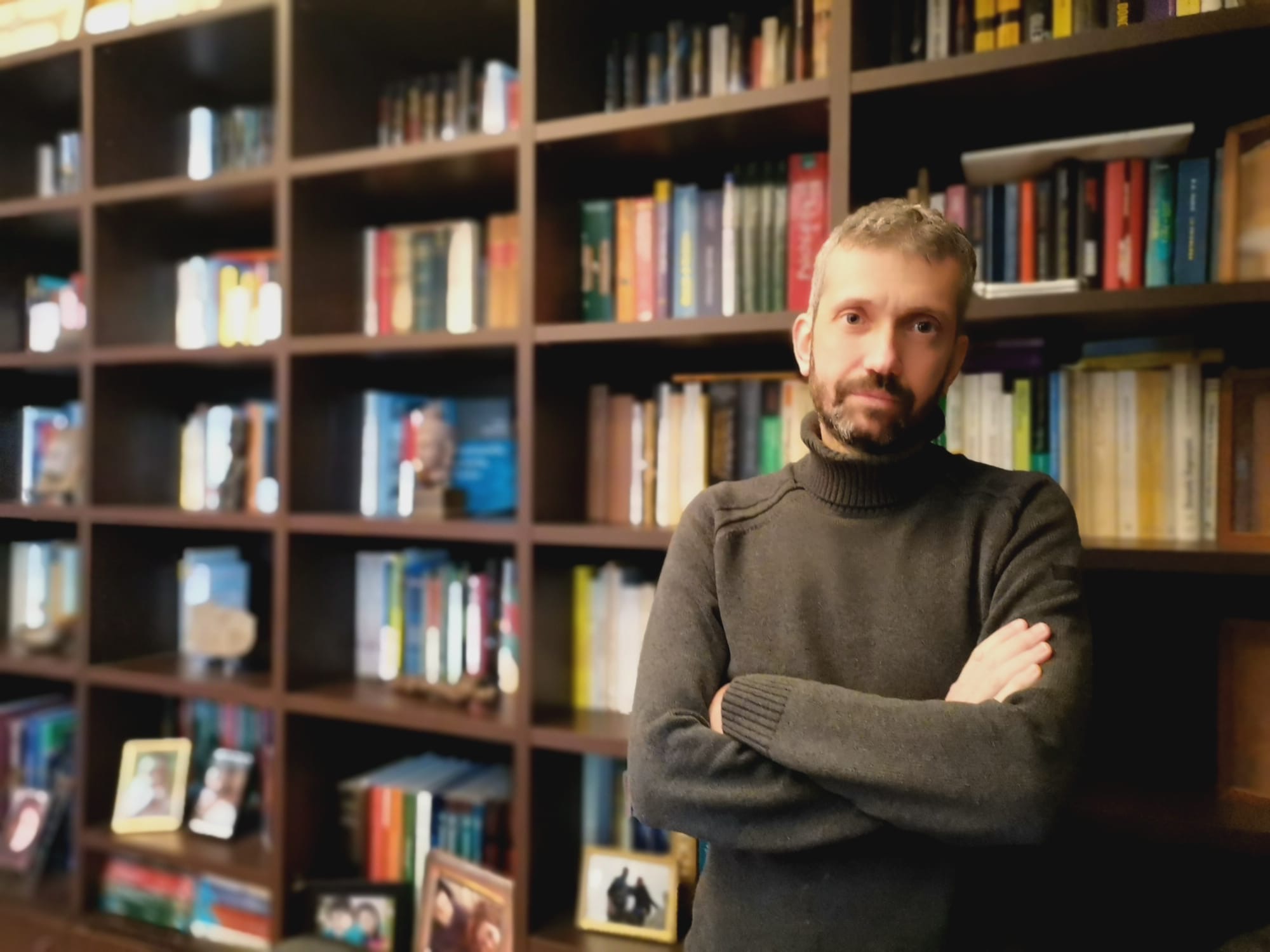
I am an Associate Professor in Psychiatry at the University of Parma. My main field of interest focuses on clinical and phenomenological psychopathology under an interdisciplinary perspective. In particular, my research aims at bridging ethology, psychopathology and anthropology in the search of the evolutionary trajectories underlying human speciation. The evolution of specific human traits, such as a fully symbolic language, are in fact sedimented in psychopathology as well as in material culture. On the other hand, uniquely human traits also have a behavioral and biological scaffolding, rooted in the phylogeny of our species. Therefore, a cross-disciplinary perspective may contribute to highlight the subjective structures of our mind, shaped by complex bio-cultural feedbacks.
What is your article “The Evolution of Symbolic Thought: At the Intersection of Schizophrenia Psychopathology, Ethnoarchaeology, and Neuroscience” about?
My article aims at comparing symbolic activity, as expressed in schizophrenia psychopathology, with symbol making, as witnessed in ethnoarchaeological records. The core concept is that the uniquely human capacity for symbolic representation evolved through the exploitation of diffuse sensorimotor networks within constructed eco-cultural niches. The high plasticity and flexibility of sensorimotor grounding allows us to detach ourselves from actual contingencies and open up to a self-constructed world of symbols. However, less constrained neural pathways also mean an inherent vulnerability to a complete sensorimotor dysconnectivity, which may eventually lead to schizophrenia disembodiment.
Tell us a little bit about yourself and your research interests.
My research aims to shed light on those basic structures of human subjectivity that, although unique, manifest themselves in different contexts, and are therefore generally investigated from different perspectives.
In particular, I am interested in ritual behavior from ethology to human cultures, through the interface with psychopathology. In particular, in psychopathology rituals are not limited to Obsessive-Compulsive Disorder but spread across different clinical syndromes, from developmental years to adulthood. Their study allows highlight the underlying continuity of ritual behavior, as to proximate and ultimate mechanisms, across phylogeny, as well as their pivotal role during human development.
Another research interest is the human capacity for symbolic representation. Namely, my field concerns the evolutionary and developmental pathways from pre-symbolic forms of communication to symbolic language, focusing on the complex interplay between sensorimotor and language processing, which contributed to mark the split from our ancestors. The study of the evolution of specifically human traits may represent a key point to understand specifically human psychopathological conditions, such as schizophrenia and autism spectrum disorders. In this regard, an integrated motor-language-self profile might represent a reliable biomarker for the early detection of psychotic vulnerability.
What drew you to this project?
Different interests over time merged together within a psychopathological framework. Psychopathology, in particular its phenomenological approach, is inherently open to interdisciplinary exchanges.
What was one of the most interesting findings?
The findings of my article, through a comparative approach, hint at invariant formal characteristics of symbolic processing in humans, which may be equally found in schizophrenia delusions as well as in human cultures.
What are you reading, listening to, and/or watching right now? (Doesn’t have to be anthropological!)
Not really separate from my research interests, is my passion for climbing and mountaineering, which has allowed me to explore different countries and cultures and of course myself. I am just reading a beautiful novel: “Paths of glory”, by Jeffrey Archer, about the life of George Leigh Mallory and his unfortunate expedition to Mount Everest in 1924.
If there was one takeaway or action point you hope people will get from your work, what would it be?
The paper strongly highlights the importance of an interdisciplinary approach in answering fundamental questions such as: “what made us humans” or “how we got here”. Within a fruitful dialogue among different disciplines, psychopathology may be in a privileged position, as it lies at the interface between nature and culture. Psychiatric disturbances in fact may contribute to unveil, often in a magnified or distorted way, such basic subjective structures of human mind, to which research should be oriented.
 Culture, Medicine, and Psychiatry