
The next few months we’ll be highlighting authors who have published in Culture, Medicine, and Psychiatry.
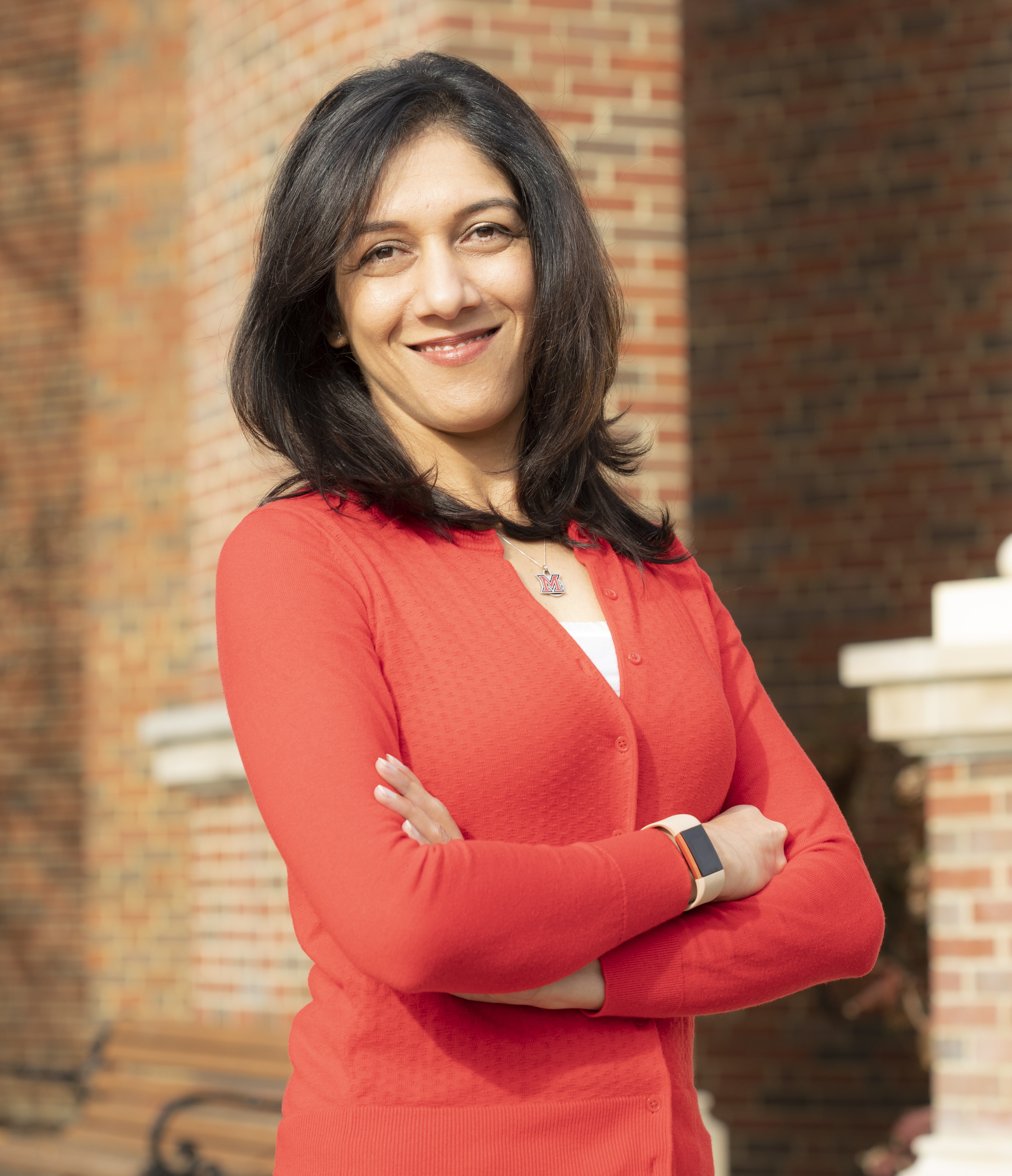
Dr. Vaishali Raval’s research, teaching, and service focus on promoting global psychological science. Situated within contextually grounded global mental health, her research program focuses on developing culturally informed understanding of psychopathology as well as processes such as parenting, emotions, and developing culturally relevant intervention and prevention approaches.
What is your article “Training in Cultural Competence for Mental Health Care: A Mixed-Methods Study of Students, Faculty, and Practitioners from India and USA” about?
Our article describes the extent to which clinical and counseling psychologists in two diverse and complementary contexts, India and USA receive training in cultural competence. Based on surveys and focus groups, we found that trainees in India learn about cultural competence more through their diverse life experiences and clinical experiences, while those in USA learn about it through varying levels of coursework, as well as through clinical experiences. In USA, cultural competence training seems to be narrowly focused on a white, cis male perspective, and does not incorporate the experiences of trainees with diverse racial, sexual and gender identities. In both contexts, trainees highlight the enormity of cultural competence and how much there is to learn, while those in the US also highlighting the hesitancy in engaging in diversity related discussions. We conclude by outlining recommendations for training programs.
Tell us a little bit about yourself and your research interests.
Informed by my lived experiences across communities in India, Canada, and USA, my program of research focuses on cultural foundations of psychological processes, with a focus on mental health. As an undergraduate student in psychology at the University of Toronto, I realized the narrow focus of psychological science on people living in the Global North, and limitations of such an incomplete science. This led me to pursue graduate training in clinical developmental psychology and then postdoctoral fellowship within the interdisciplinary setting of the Department of Comparative Human Development at the University of Chicago to learn about cultural psychology. For the past 17 years as a faculty member at Miami University, I have been fortunate to work with undergraduate and graduate students and collaborators from India to advance the scholarly understanding of mental health problems like depression, anxiety and suicide, and to develop culturally relevant interventions.
What drew you to this project?
A hallways conversation with a colleague at Christ University in India, Dr. Baiju Gopal, laid the foundation for this project. I visited their university and was able to tour the psychology department where I met him, and we exchanged business cards. Then, we met over Skype to think about possible ways to collaborate. We submitted a grant proposal to the United States-India Education Foundation and it was funded!
What was one of the most interesting findings?
For me the most interesting findings are the insights from our participants: When you grow up in diverse communities in India, you begin your journey towards cultural competence as a child, and as one of the participants commented, trying to teach someone to be culturally competent after they enter college might be too late because they might be set in their ways. Diverse life experiences early on can build a foundation for life-long learning in cultural competence. Insights from students in USA with minoritized identities are also very important: when cultural competence is taught, the assumption is that the therapist is white, cis, and straight working with clients with minoritized identities. Space needs to be created for trainees with diverse identities, their experiences, and trainee needs.
What are you reading, listening to, and/or watching right now? (Doesn’t have to be anthropological!)
I have been reading about decolonial theory and particularly the ways in which current psychological science practices may serve to recreate colonial inequalities. Two special issues of the Journal of Social Issues (Readsura Decolonial Editorial Collective, 2022) have been instrumental in helping me to learn about how we can move towards decolonial scholarship in psychology.
If there was one takeaway or action point you hope people will get from your work, what would it be?
Developing cultural competence is a life-long process that requires the mental health practitioner to seek out professional development opportunities to continue to grow. Graduate coursework can provide a foundation that the practitioner can build on to engage in continuous learning.
Other places to connect:
Website
 Culture, Medicine, and Psychiatry