
The next few months we’ll be highlighting authors who have published in Culture, Medicine, and Psychiatry.
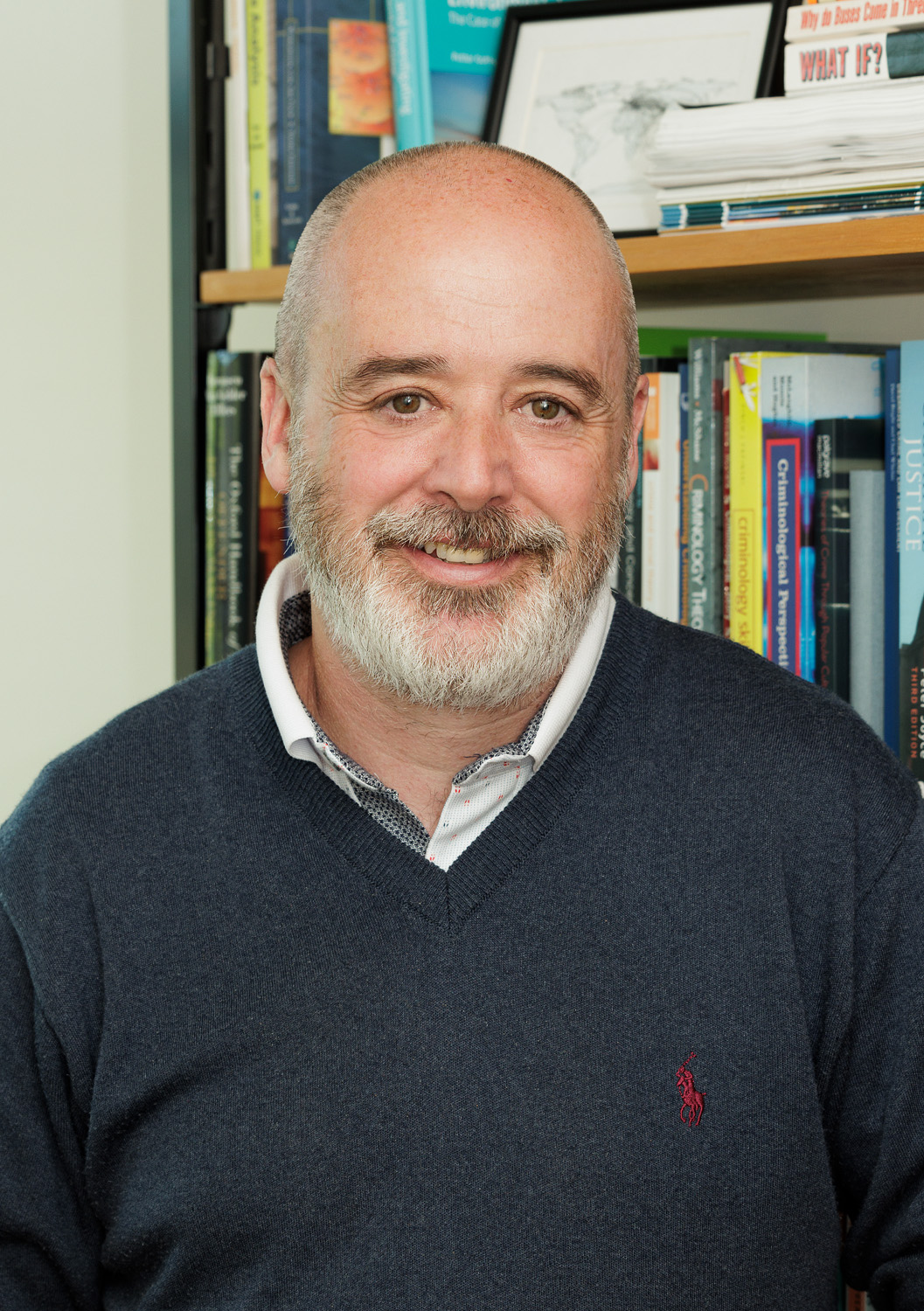
I have worked at Surrey University for a little over 25 years and am currently a Professor in the School of Social Sciences. I am also the Editor-in-Chief of the journal Sociology.
What is your article “Entanglements of Technologies, Agency and Selfhood: Exploring the Complexity in Attitudes Toward Mental Health Chatbots” about?
A few years back, Christine Hine and I became really interested in conversational agents (chatbots) for mental health – and we wanted to know more about how people formulate their understandings of what might be appropriate in this space. We decided to interview a group of non-users who had experienced a need for support; as this group could imagine self as a therapeutic target unconstrained by the features of a specific actual chatbot. Focus groups started with a brief description of mental health chatbots before turning to discuss expectations, assumptions, understandings and attitudes.
With respect to some core findings, multiple forms of imagined ‘agency’ were operationalized within participant narratives. The most common was a form of agency where chatbots are treated as one dimensional objects which could enable people to achieve their goals. Chatbots were also afforded a ‘parasitic’ agency, as well as derided for having no agency.
Tell us a little bit about yourself and your research interests.
Following my social science Masters degree I joined the Human Psychopharmacology Research Unit at the University of Surrey. At the time, this was one of Europe’s largest sleep labs and I found myself increasingly interested in the sociological aspects of sleep. To this day I remain immensely grateful that I then bumped into Professor Sara Arber. At that time there was not much sociological work happening in this area – although Simon Williams at Warwick certainly needs a mention here – and Sara had just started working on a sociological study of women’s sleep. I ended up doing a part-time PhD under Sara’s supervision, working with her on a study of couples’ sleep and publishing a range of papers on inequalities and sleep. The sociological aspects of sleep remain one of my core research interests and I am currently co-editing a collection on the global history of sleep and dreams and working on a project looking at adolescent sleep and mental health.
What drew you to this project?
There is also probably quite a long story here. Although being interested in sleep sounds quite focused, in reality it has led me to travel into areas ranging from health and medicine to family and masculinities. A lot of my current research happens at the nexus of sleep, technology and mental health. This project was formed in that space in the Venn diagram where technology and mental health touch and where I am particularly interested in the meanings of recovery and how these are shaped by – and shaping – technologies.
What was one of the most interesting findings?
I might be cheeky here and offer two. One of the concluding points in the article is that a range of traditions, norms and practices are used when people think about chatbots for mental health. Taking this forward might help us understand why there is such complexity in research on user attitudes and experiences.
The other thing I found really interesting is hidden a little in a footnote. One of the participants talked about using ChatGPT as a form of therapeutic tool. When alone, they would sometimes ask how it is, ask if it could suggest a song to help them feel peace and calm etc. If I am honest, at that point this hadn’t occurred to me as a possibility and raised a lot of exciting questions.
What are you reading, listening to, and/or watching right now? (Doesn’t have to be anthropological!)
I am dipping in and out of Tony Blair’s book On Leadership. I feel I should say this is not because I am a Blairite (or a scholar of leadership). Blair came to power during the final weeks of my undergraduate degree and it really did feel like a huge event; not least of all because he seemed to be listening to a sociologist (Giddens).
If there was one takeaway or action point you hope people will get from your work, what would it be?
Across my work – which often speaks to different disciplinary audiences – it is probably just that we ‘need to think beyond the individual’. Of course, I also hope that some of the complexities around ‘why’ and ‘how’ travel through but we probably have a bit more work to do here.
Other places to connect:
Website
 Culture, Medicine, and Psychiatry