
The next few months we’ll be highlighting authors who have published in Culture, Medicine, and Psychiatry.
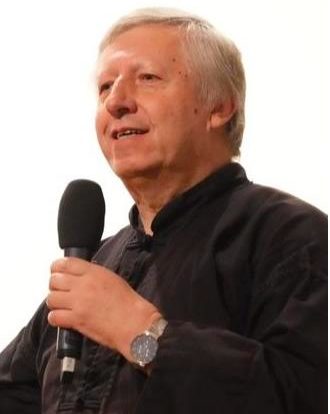
Wolfgang Mastnak holds doctoral degrees in medical sciences, sports sciences, mathematics, arts therapies, music education and psychology. Artistic profile: piano, singing and composition. Main research areas: arts therapies, interdisciplinary music education, cross-cultural psychosomatics and psychiatry, health education, long-term cardiac rehabilitation and psycho-cardiology, perinatal health and quantum consciousness.
What is your article “A Chinese Dance Therapy Framework” about?
Traditional Chinese dances are brimming with health promoting and therapeutic potential. Consequently, genuine Chinese dance therapy is in the ascendant. Related psychiatric approaches involve a broad spectrum of principles such as ontological identity, social inclusion and collective support, aestheticisation and expressive catharsis, symbolic exorcism, trance and Buddhist mindfulness. The phenomena discussed in this article relate to a wealth of Chinese dance genres originating from various dynasties as well as cultural traditions of ethnic groups living in China. Moreover, the article sheds light on different epistemological backgrounds of Western diagnostic manuals and traditional Chinese views of mental diseases, complex understanding of pathologies and therapeutic dynamics. Multi-disciplinary research resulted in a theoretical framework that also should encourage interdisciplinary approaches, as well as inclusive transcultural psychiatry and related philosophy of science.ions.
Tell us a little bit about yourself and your research interests.
Already as a child I was driven by the spirit of discovery, e.g. the difference of a living and a dead body, or how a brain, which is tangible, can generate thoughts and emotions, which are intangible. Throughout decades, the miracle of human beings has been the main focus of my research involving medicine, cultural sciences, anthropology and bio-psychological approaches such as the quantum mind. And I have been haunted by the question of how true my findings are, hence my deep interest in philosophy of science and the wisdom inhering in ethnic traditions.
What drew you to this project?
Living in Europe and East Asia I work in the realm of arts-based therapies, as well as culturally sensitive medicine and psychiatry. In this context, I sensed the huge gap between traditional forms of dance therapy and imported dance therapy such as dance movement therapy, which is, particularly in ethno-medical circles, often seen as sort of commercial colonialism. Consequently, a major incentive for this research was to sharpen the awareness of the wealth and enormous health promoting potential of Chinese dances, and to advocate their recognition within public health systems.
What was one of the most interesting findings?
There are anthropological similarities across different cultures world-wide such as trance and spirituality, mystical identity with arts, and rituals to enhance social and psychosomatic balance. Phenomena, however, differ considerably. Thus we may speak about an invariant anthropological core alongside the diversity of related manifestations and expressions. This specific interdependency may be a key to further findings in the domain of culture, medicine and psychiatry.
What are you reading, listening to, and/or watching right now? (Doesn’t have to be anthropological!)
I’m reading (in the evenings) an older German book for children about a school housed in an old castle namend ‘Schreckenstein’, I listen to ‘French Latino – Historia de un Amor’, and I’m watching Donna Leon’s Commissario Brunetti.
If there was one takeaway or action point you hope people will get from your work, what would it be?
That the arts are not just fun for leisure times but belong to the essence of human beings.
 Culture, Medicine, and Psychiatry