
The next few months we’ll be highlighting authors who have published in Culture, Medicine, and Psychiatry.
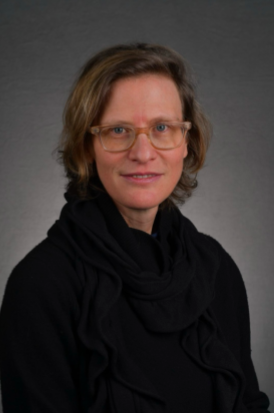
Liza Buchbinder is an anthropologist and internist. Her long durée engagement in Togo is the basis for a book on the limits of naming violence against adolescents through child trafficking discourses. She has also written on clinical ethnography and physician burnout for Cultural Dynamics, Journal of General Internal Medicine, and The Conversation.
What is your article “Clinical Ethnographies of the Politics and Poetics of the US Healthcare Crisis” about?
The contributors to this special issue, Ethnography of and in Clinical Formation: Poetics and Politics of Dual Subjectivity, are clinicians and social scientists, critiquing the clinical spaces in which they work caring for patients. Covering a range of topics, from the socialization of medical students to the everyday violence and brutal contradictions of “jailcare,” this special issue draws on differing perspectives from clinician-scholars working in diverse specialties and levels of training. The special issue themes emerge in contexts of an increasingly neoliberal corporatization of American society—made hyperreal with the second Trump administration–the alienation of physicians from patients, the dissolution of reproductive rights, and medicine’s reckoning with deep-seated structural racism and class inequities. This special issue embraces clinical ethnographic practice as a means of chronicling our rapidly changing era from worksites where we learn, practice, and spend much of our time.
Tell us a little bit about yourself and your research interests.
I am an internist and anthropologist based at UCLA. I also work as a physician for a large urban jail in southern California. My research has largely focused on adolescent labor migration and critical human rights in West Africa, but more recently I have turned my attention to climate change and the cultural impact of deforestation in eastern Togo. As a practicing physician and social scientist, I have also engaged in collaborative projects on physician burnout, as well as clinical ethnography.
What drew you to this project?
I am fortunate to have worked with Seth Holmes and Philippe Bourgois for many years who are both inspiring and generous scholars. Philippe started an ethnography writing group of md/phd physician-scholars and the idea for this special issue emerged from this collective. As a physician and anthropologist, I have found this process of coming together with colleagues from across the life course of medicine (i.e. from student to seasoned practitioner) to ethnographically reflect on clinical practice to be extraordinarily powerful. And I am grateful to have had the opportunity to share this with a larger audience through the publication of this special issue.
What are you reading, listening to, and/or watching right now? (Doesn’t have to be anthropological!)
I’m currently reading Small Things Like These by Claire Keegan and a collection of short stories by Anton Chekhov.
If there was one takeaway or action point you hope people will get from your work, what would it be?
With clinical ethnography, I think the key takeaway is to keep writing those reflections! In the process of working through seemingly disparate and incoherent observations about one’s own practice and the often-uncanny world of clinical medicine, nuanced insights emerge that cannot be predetermined. This discipline can apply to other auto-ethnographic endeavors outside of medicine. Even if exhaustion hits at the end of a day, it’s important to take a moment to jot down words, phrases, lists, or any other form of note-taking to capture those small details that facilitate deeper understandings of the everyday.
Other places to connect:
 Culture, Medicine, and Psychiatry