
The next few months we’ll be highlighting authors who have published in Culture, Medicine, and Psychiatry.
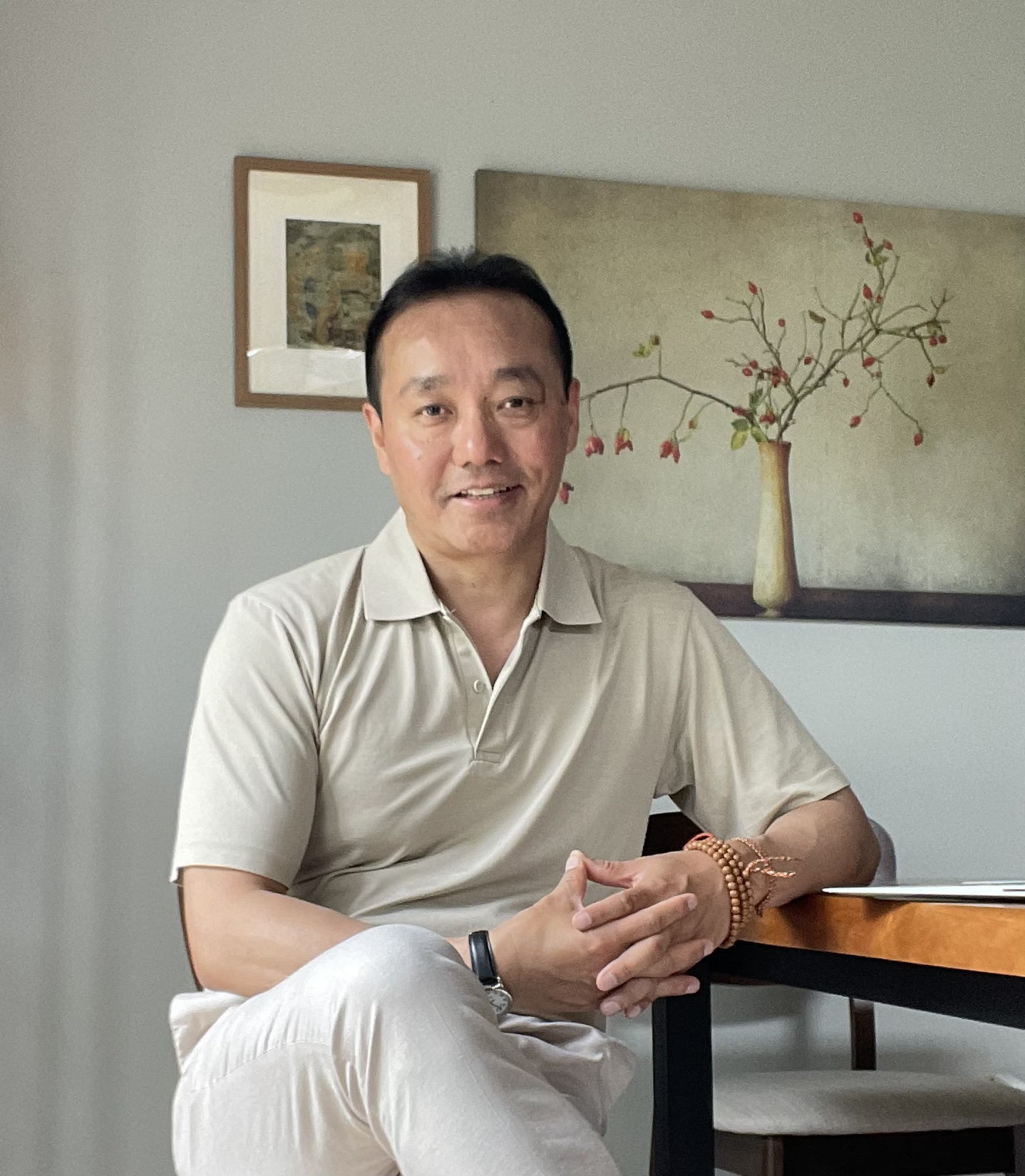
Dr. Tenzin Namdul is a medical anthropologist and Tibetan Medicine doctor. Tenzin is an assistant professor and the director of Tibetan Healing Initiative at the University of Minnesota’s Bakken Center for Spirituality and Healing. His research focuses on cognitive resilience, aging, death and dying, end-of-life care, and integrative medicine.
What is your article Death and Happiness: Exploring the Temporalities of the Meditated Death and Everyday Life in Tibetan Buddhist Practice of Tukdam about?
This article illustrates how death and stages of dying are employed by Tibetan Buddhist practitioners as avenues to reframe individual’s relationship to oneself and others, and to engage in advanced meditation called, tukdam, that transcends clinical (biological) death. Although tukdam—a meditative state entered through various practices resting in extremely subtle consciousness while dying—is seen to only be achieved by adept practitioners, the philosophy and psychology that underpin tukdam inform Tibetan communities beyond just accomplished adepts and frame the very way death and dying is conceived. Furthermore, the article proposes that Tibetan Buddhist practices that culminate in tukdam symbolize the way death and dying is assumed to be approached more broadly beyond advanced practitioners, and thereby, provides a cultural model for an “ideal” death that guides approaches to dying for oneself and others.
Tell us a little bit about yourself and your research interests.
As a Tibetan medicine doctor and medical anthropologist, I incorporate my diverse training to examine how the intersection of bio-sociocultural factors and the intimate relationship between mind and body shape the ways individuals flourish, age, and die, as well as care for the dying. My current research is an interdisciplinary study of healthy aging among Tibetan Buddhist monks in India.
What drew you to this project?
My initial encounter with a Tibetan monk in the state of tukdam meditation where the practitioner kept his “dead body” intact for weeks in hot and humid weather not only blew my mind, but also compelled me to ask a series of questions that led to my ongoing work. Particularly, I wondered how such specific cultural practices intertwined with death and stages of dying impact the way community members perceive death, die, and care for dying people.
What are you reading, listening to, and/or watching right now? (Doesn’t have to be anthropological!)
I am currently reading two books in tandem: “The End of Trauma…” by Michael Bonanno and “A Suitable Boy” by Vikram Seth. Both of these books explore human relationships. social changes, and resiliency in the face of adversities.
If there was one takeaway or action point you hope people will get from your work, what would it be?
I would emphasize the importance and need of finding confidence and joy rooted in loving kindness
Other places to connect:
 Culture, Medicine, and Psychiatry