
The next few months we’ll be highlighting authors who have published in Culture, Medicine, and Psychiatry.

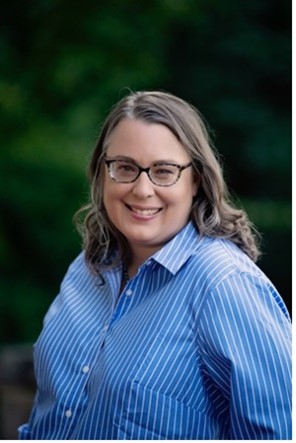
Rebecca Seligman is a medical and psychological anthropologist. Dr. Seligman studies how political-economic conditions, ontologies, models of self and personhood, narrative, and practice shape experiences of health and illness. Her published works focus on religious devotion and therapeutics, healing and self-transformation, embodiment and the intersection of mental and physical health, and the anthropology of psychotherapy.
What is your article “Mothering and Mental Health Care: Moral Sense-Making Among Mexican-American Mothers of Adolescents in Treatment” about?
The intersection of maternal care with mental health care is increasingly commonplace, yet we know little about the experience from the perspective of mothers in general and Mexican American mothers in particular. This article details the stories of Mexican American women seeking care for their troubled adolescents, and their efforts to sort out what is “right” for their children in the face of numerous competing stakes and the urgency of their children’s struggles. The article situates mothers’ narratives in the context of morally loaded discourses surrounding both mothering and psychiatry. It demonstrates that the moral threat associated with help-seeking, by forcing mothers to make sense of their situations, also gives them an opportunity to re-envision aspects of themselves and their social identities. Mothers use their experiences to create narratives of maternal expertise and valor, and as a way to engage in identity renegotiation related to gender, ethnicity, and class.
Tell us a little bit about yourself and your research interests.
My work focuses on mental health and the cultural and social factors the shape the expression and treatment of distress in different contexts. I am particularly interested in how meaning is embodied and the relationship of embodied meanings to health. One of the themes I have been exploring for a long time is “the work of culture” in healing and therapy. My earliest work was on the role of ritual in healing and my first book is about the embodied therapeutics of spirit possession mediumship. But I am also interested in the anthropology of psychiatry, and the role of culture and meaning in biomedical contexts. My most recent work is on people’s experiences with an illness called Conversion Disorder, or Functional Neurological Disorder, which is widely presumed to be “psychosomatic.” But in between, I did a study on how people from different backgrounds understand and experience mental health care, which is what this article is about.
What drew you to this project?
As a postdoc in transcultural psychiatry at McGill University, I was able to participate in a cultural consultation program for clinicians that was exceptional in many ways. I got very interested in issues related to the provision of culturally appropriate mental health care. Later, when I saw statistics suggesting that Mexican American adolescents have high rates of mental health issues, I wanted to know what kind of care they were getting in mainstream mental health care settings. I had the idea to interview the parents as well as the adolescents and clinicians, to get a sense of what care-seeking was like from all of those perspectives.
What was one of the most interesting findings?
I was struck right away by how the mothers were the ones who seemed to take all of the responsibility for getting care for their adolescents, how strong and resourceful they seemed, and how their feelings about this kind of care-seeking often seemed very complicated. There’s a lot of ambivalence among mothers about engaging with psychiatry because it has major moral implications—they worry that they are, or will be seen as, “bad mothers.” But what was so captivating about many of their narratives was how they actually used their care-seeking as a way to present themselves as strong and heroic, and as a way to align themselves with different sets of values and different ways of being parents.
What are you reading, listening to, and/or watching right now? (Doesn’t have to be anthropological!)
I like to read and watch fiction in my spare time. I just read a great novel called “The Quail Who Wears the Shirt” by Jeremy Wilson-–very surreal and funny and smart. And I’m eagerly
awaiting season 2 of Severance—speaking of things that are surreal! In a slightly more academic vein, I just finished listening to the Podcast, Hysterical, which is related to my current work on Conversion Disorder. I am also reading a really interesting book that blends memoir and scholarship, called “The Secret Mind of Bertha Pappenheim” by Gabriel Brownstein.
If there was one takeaway or action point you hope people will get from your work, what would it be?
I think in practical terms, the analysis in the paper is relevant to how we understand factors influencing health care decision making. There is a fairly large literature on the barriers to mental health care seeking among people of Mexican origin in the U.S., but the work mostly focuses on economic and other practical barriers. Those are incredibly important, but this work suggests that barriers could also include complex social and moral dynamics. I would love to see greater clinician recognition of the fact that families from diverse backgrounds are navigating both complex social and structural constraints in order to come to the clinic.
Other places to connect:
Website


 Culture, Medicine, and Psychiatry