Book Release: Buchbinder’s “All in Your Head: Making Sense of Pediatric Pain”

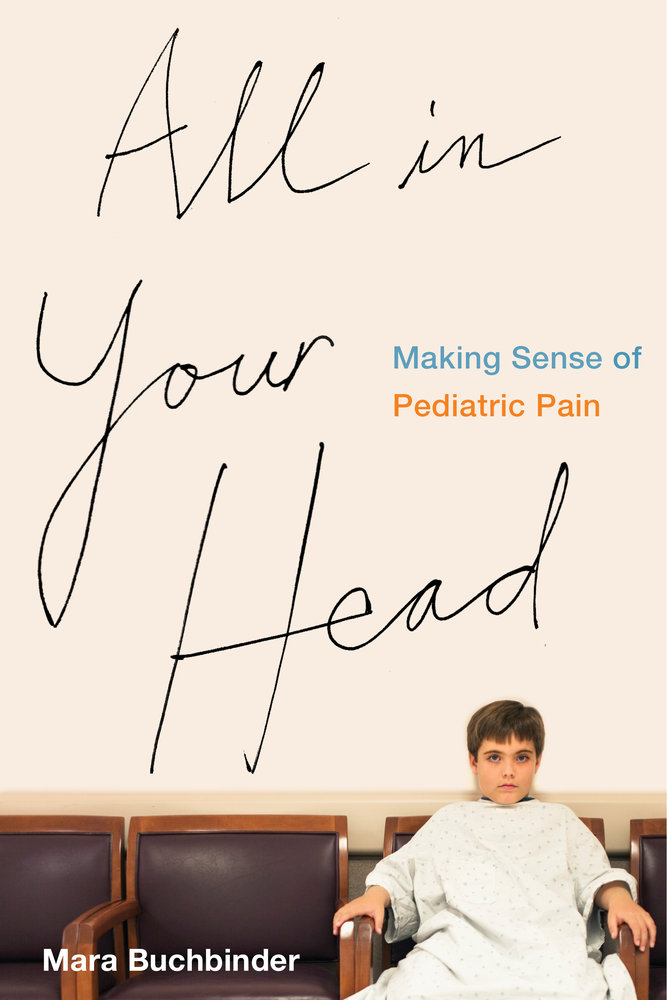
This May 2015, Mara Buchbinder’s book All in Your Head: Making Sense of Pediatric Pain will be released by the University of California Press. The book grapples with the difficulty of expressing internal states to others via language, as these inner subjective experiences are often considered impossible to actualize in words. Buchbinder strives to honor this private experience of pain while studying how language surrounding pain and pain management is relational in nature. She explores how pain is described, managed, and treated in medical settings.

Image via UC Press

Image via UC Press

The text is a product of ethnographic research in numerous pediatric units in California hospitals. Buchbinder considers the social lives of physicians, caregivers, clinicians, parents, and children, all with a stake in alleviating pain and interpreting troubling or perplexing symptoms. Rather than allowing pain to be read solely as an isolating, private matter, the author argues that the treatment of pain is a complex social phenomenon. By focusing on narratives, conversations, and metaphors used by participants to illustrate the nature of pain, Buchbinder’s account underscores the power of language to generate shared meanings for human suffering.

All in Your Head will prove of interest to linguistic and medical anthropologists alike, as well as to scholars in the medical humanities with an interest in textual and communicative analysis in clinical settings. To learn more about this upcoming book, visit the publication page at the University of California Press here: http://www.ucpress.edu/book.php?isbn=9780520285224

ABOUT THE AUTHOR

Mara Buchbinder is Assistant Professor of Social Medicine at UNC-Chapel Hill, where she also teaches coursework in anthropology. She has previously coauthored the book Saving Babies? The Consequences of Newborn Genetic Screening.

Guest Blog: Reflections on Antibiotic Use in American Hospitals

This week, we are featuring a special guest blog written by Katharina Rynkiewich from Washington University in St. Louis. Today, she tells us about her experiences researching antibiotic use among infectious disease practitioners in Chicago, Illinois. If you would like to submit a guest blog entry on your research, please send a 500-700 word piece to social media editor Julia Balacko at jcb193@case.edu.


In the spring of 2013, I conducted research on hospital-based infectious disease specialists in Chicago. Although my participants had a lot to say about antibiotic resistance, I was most surprised at how they characterized and criticized fellow clinicians’ use of antibiotics in relation to resistant disease strains. In hospitals, they suggested, the regulation of antibiotics has changed drastically in the past half century. Some of the older infectious disease specialists I interviewed remembered a time when antibiotic overuse was rampant within the hospital setting. “Anyone could prescribe antibiotics,” my participants complained when describing that era. Clinicians and hospital officials at that time had little reason to expect that antibiotic resistance would become the expensive, lethal, and complicated problem that it is today.

In health care settings now, there is more regulation concerning the use of antibiotics. Clinicians are experiencing a lull in the production of antibiotics for infectious diseases, and practitioners must make do with the limited antibiotic supplies they have. Today, there are systematic hospital reviews of antibiotic use to monitor how often the drugs are used. However, most practitioners can still prescribe antibiotics with little oversight. Procedurally, the review of antibiotics in the hospital setting is an enormous task, and an adjustment of patient treatment plans may not occur until after the first few doses of an antibiotic have been given. There is room, therefore, for antibiotic-resistant diseases to generate as misuse and overuse of antibiotics still occurs.

One way to mitigate overuse employed was the notion of antibiotic stewardship: an idea that the infectious disease specialists I interviewed frequently emphasized. “Stewardship” here refers to the responsibility of certain clinicians to manage antibiotic prescription and usage. The infectious disease specialists expressed a desire to have more control over the distribution of antibiotics in hospital settings, leaving surgery to the surgeon and cancer to the oncologist. The infectious disease staff wished for this level of control over antibiotic use despite the fact that both surgeons and oncologists can prescribe antibiotics independently, meaning antibiotics are not managed by one clinical care specialty. When asked whether, in general, practitioners today realize the importance of antibiotic stewardship in light of the dangers of antibiotic resistant infections, one infectious disease practitioner joked, “Which doctors?” My data show that  many infectious disease specialists note that their management of antibiotic resistance is quite a challenge because most other physicians within and outside of hospitals may readily prescribe them.

This issue is especially pressing because illnesses themselves are rarely treated with one biomedical intervention, or by one clinician. Few patients can be treated for one disease with one corresponding treatment, meaning that patients’ cases are managed with a variety of therapies and by a number of doctors. Patients can also have multiple conditions, again meaning that multiple types of practitioners can prescribe antibiotics for these patients at different points in their hospital stay. In these complex networks of caregiving, who gets the power to give antibiotics might not always be clear, or there might be tension when deciding who gets to limit the drug’s use. Indeed, when an infectious disease specialist is added to a patient’s chart, they are often added as a consult, meaning their advice may not be adhered to by the primary physician.

Certainly, we can expect that infectious disease specialists want professional autonomy over the management of antibiotic drugs, which means limiting and surveying the drug’s accessibility to other clinicians. But to do so, this would mean that other practitioners would have to agree to the control of part of their treatment plans by an outside party. This relationship of competing interests and access to antibiotics leads to disagreements and struggles of bureaucratic power in the hospital. As it stands, the future of antibiotic resistance rests in the hands of all practitioners who must negotiate who gets to prescribe, and who gets to control, the use of antibiotics.


About the Author: Katharina Rynkiewich

I am a PhD student in Anthropology at Washington University in St. Louis. My current research involves studies of infectious disease practitioners and treatment of infectious disease in hospital settings, and will focus on hospital policy regarding infection and epistemic differences among specialty groups of physicians. In 2013, I completed a masters program (MAPSS) at the University of Chicago, and research for this post was done in partial fulfillment of this masters.

Book Release: Sharon R. Kaufman’s “Ordinary Medicine”

Via the Duke UP website

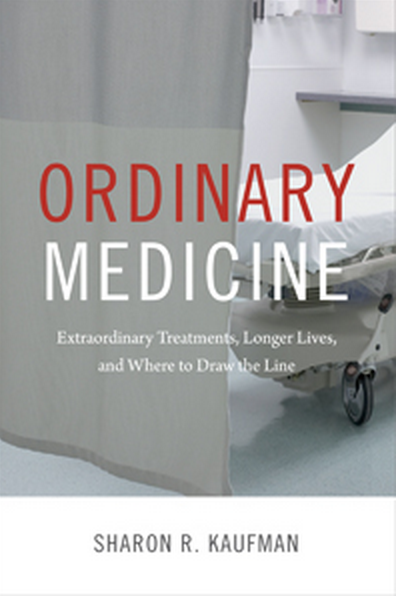
Via the Duke UP website

In May 2015, Sharon R. Kaufman’s book Ordinary Medicine: Extraordinary Treatments, Longer Lives, and Where to Draw the Line is set to be released by Duke University Press. The text will address the contested division between what is a life-saving therapy and what proves to be over-treatment of older patients. This divide, Kaufman states, is frequently negotiated by pharmaceutical, biomedical, and insurance industries. Treatments that might seem aggressive or unnecessary to address late-life health concerns have become common procedures.

Drawing on ethnographic accounts from older patients, their families, and their physicians, Kaufman demonstrates how patients and their caregivers decide how much medical intervention is enough, or when it has gone too far. Kaufman considers what this new, medicalized meaning of the “end-of-life” means for patients and for the social world of medicine, while inviting us to consider how we might refresh the goals of medicine when caring for older patients.

Kaufman has previously published on a related topic in her book And a Time to Die: How American Hospitals Shape the End of Life. She is the Chair of the Department of Anthropology, History and Social Medicine at the University of California, San Francisco.

See more about the book from the publisher’s website here:

https://www.dukeupress.edu/Ordinary-Medicine/index.html

News: Must-See Medical Museums in the USA


Boston, MA

The Warren Anatomical Museum in partnership with Harvard University contains the skeletal remains and the infamous tamping iron of Phineas Gage, as well as phrenological casts and other objects in the history of the study of the human body.

The Public Health Museum is located on the grounds of the former Tewksbury Hospital, and features exhibits on the development of public health in history.

Chicago, IL

The International Museum of Surgical Science, located on the shores of Lake Michigan just north of “The Magnificent Mile,” is a collection of surgical instruments, medical artifacts, and displays on the history of anatomical and surgical learning housed in a beautifully restored former mansion.

The Museum of Science and Industry in the Hyde Park neighborhood is an enormous building which houses not only a permanent collection of plastinated and preserved cadaveric specimens, but features many exhibits on human health, the body, and other areas of scientific and industrial development.

Cleveland, OH

The Dittrick Museum of Medical History houses a newly-renovated exhibit on medical instruments and devices, as well as the Percy Skuy Collection of artifacts in the history of contraception and abortion. It also features exhibitions on the history of birth and on medical practice in the Cleveland area.

Danville, KY

The McDowell House Museum is the restored home and office of Dr. Ephraim McDowell, who for the first time in history in 1809 successfully removed an ovarian tumor. The museum features a collection of early medical equipment in the USA, gardens, and a recreated 19th century apothecary.

Houston, TX

The Health Museum features a series of interactive exhibits about the human body and disease, with rotating exhibitions on various aspects of biomedical technology and science. It is a family-friendly destination if you happen to be in town with little ones.

Indianapolis, IN

The Indiana Medical Museum can be found on the grounds of the former Central State Hospital, inside the old pathology building. The museum highlights the early history of biomedical psychiatry, and in its own words: “maintains a collection of scientific artifacts from the nineteenth and twentieth centuries in a completely authentic setting. Constructed in 1895 and inaugurated in 1896, the nineteen-room Pathological Department Building, as it was then called, is equipped with three clinical laboratories, a photography lab, teaching amphitheatre, autopsy room, and library.”

Kirksville, MO

The Museum of Osteopathic Medicine at A.T. Still University is the first museum dedicated to osteopathic care. It is home to an impressive collection of over 50,000 artifacts in the history of osteopathy, many from the founder of the field: Dr. Andrew T. Still, whose cabin is on the museum grounds.

New York, NY

The Morbid Anatomy Museum, newly opened by independent scholar Joanna Ebenstein, is located in Brooklyn. It features an array of exhibits on the intersections of death, art, and medicine, as well as a coffee café on the bottom level.

Philadelphia, PA

The Mütter Museum is a world-renowned collection of medical oddities and human pathological specimens, including (not for the faint of heart) the mummified body of a woman whose fat chemically decomposed into a soap-like material. The Mütter Museum has partnered with the Penn Museum of Archaeology and Anthropology to offer a one-price two-museum admission ticket, if you wish to visit both institutions.

Rangley, ME

The Wilhelm Reich Museum, situated inside the former home and estate of psychiatrist and psychoanalyst Dr. Wilhelm Reich, displays Dr. Reich’s collection of scientific devices and artwork. It also features a bookstore with the widest selection of his publications, as well as a conference center on the estate grounds.

Rochester, NY

The Rochester Medical Museum and Archive is located in the Rochester Academy of Medicine, and houses a collection of photos, articles, and vignettes on display that document the history of medicine in the Rochester area. The museum also features a climate-controlled storage area for clinical costumes and other artifacts in the history of medicine.

Washington, DC

The National Museum of Health and Medicine highlights not only the historical development of medicine in America, but the impact of medicine during important moments in American history, such as the Civil War and the assassination of President Abraham Lincoln.

The NIH US National Library of Medicine, an impressive collection of medical books and artifacts, is open to the public.

The National Museum of Civil War Medicine features exhibits on medicine and care in the Civil War era, as well as highlighting the changing roles of women and medical professionals in the delivery of treatment at that time.