
The next few months we’ll be highlighting authors who have published in Culture, Medicine, and Psychiatry.
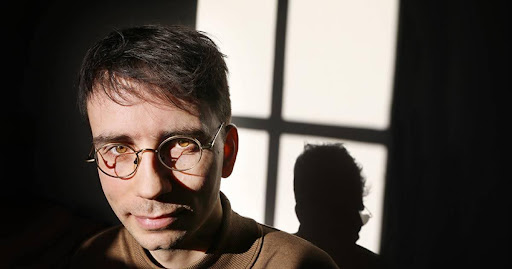
Simon van der Weele is a moral philosopher and ethnographer. He tries to make sense of ethical life by combining philosophical and social-scientific methods and frameworks. His research engages with care and caring, particularly for people with intellectual disabilities.
What is your article “‘Why Bother?’ Skeptical Doubt and Moral Imagination in Care for People with Profound Intellectual Disabilities” about?
People with profound intellectual disabilities are completely dependent on care from others to survive and thrive. But since they are non-verbal, interpreting their needs and preferences is difficult. As a result, caregivers experience constant uncertainty about whether or not their care is good and appropriate. In this article I try to understand how care professionals maintain faith in the meaning of their care, despite this uncertainty.
Tell us a little bit about yourself and your research interests.
I am fascinated by care and how we care for each other. I am trained as a philosopher, and I enjoy thinking philosophically about care. But I’ve come to believe that such philosophical thinking requires ethnographic texture for it to have bearing on our experiences. That’s why I try to bring ethnography to philosophy, and vice-versa.
What drew you to this project?
I’ve been entranced with the care for people with profound intellectual disabilities ever since I first set foot in a group home where a few of such people lived. Make no mistake, there’s nothing romantic about this care: it’s hard physical labour, day after day, often under precarious conditions. But I was deeply moved by the patience, intelligence and creativity I witnessed in the interactions between people with profound intellectual disabilities and their caregivers. I just had to move closer to this.
What are you reading, listening to, and/or watching right now? (Doesn’t have to be anthropological!)
Lately, I keep reaching for more stories by Ursula K. Le Guin. I just finished reading her collection A Fisherman of the Inland Sea. The titular story’s emotional impact hinges on ‘sedoretu’, a complicated polyamorous marriage system conjured up by Le Guin. There’s a strikingly ethnographic quality to her science fiction – it often reads like a kind of speculative anthropology, clothed in deeply human storytelling.
If there was one takeaway or action point you hope people will get from your work, what would it be?
I want to show my readers that imagination and creativity are at the heart of care. We often think of care as monotonous, even tedious work. The creative energy caregivers put into their work is seldom noticed. I hope my work provides some concepts to recognize and bolster this creativity.
Other places to connect:
 Culture, Medicine, and Psychiatry