Interview with Amand Führer and Julia Vorhölter

Over the next few months, we’ll be highlighting authors who have published in Culture, Medicine, and Psychiatry.

Today, we are excited to bring you our interview with Amand Führer and Julia Vorhölter!
Amand Führer
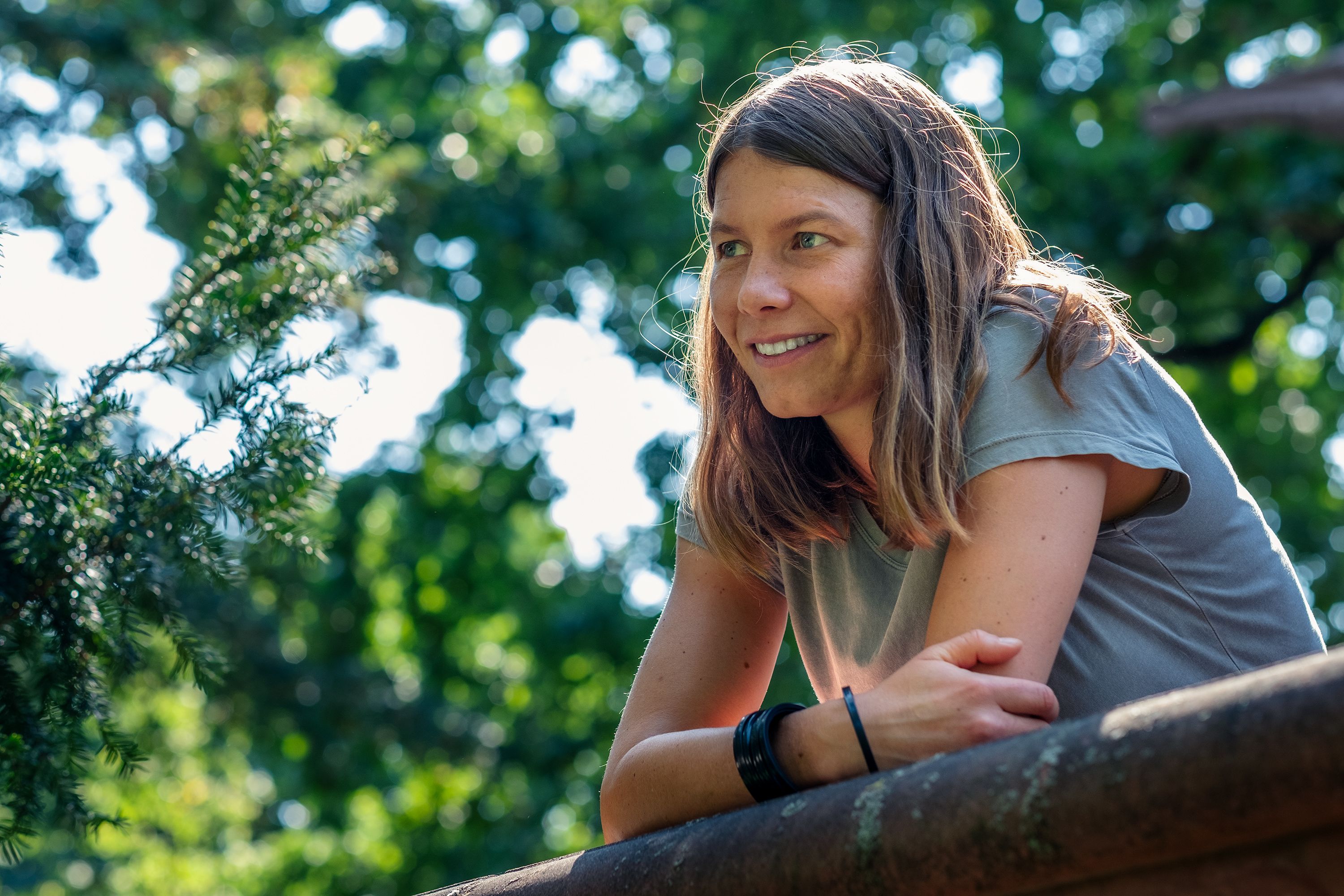
Julia Vorhölter photographed by Jonathan von Koseritz.

What is the motivation for republishing the article “The Rebel Body: The Subversive Meanings of Illness “?

Amand: In many ways, it is a foundational document for Liberation Medicine, even though it does not mention the term. Also, it raises questions that are still relevant today and speak especially to debates taking place in social medicine, like the need for better structural competency for physicians.  

Julia: In 2024, when we were organizing the workshop on which this Special Issue is based, I reread ‘Death without Weeping’ – Nancy Scheper-Hughes’ seminal monograph on her work in Brazil. And I thought ‘wow, there is so much in here, so much ethnographic detail combined with a powerful voice of analysis and political critique; anthropologists today don’t write books like that – with more than 600 pages – anymore’. Seth Holmes suggested we also read the ‘Rebel Body’ and when I did I had a very similar reaction. To be honest, I was surprised how well the article spoke to current issues and debates despite having been written in the early 90s. I think in our focus on contemporary scholarship and current trends and turns, we sometimes tend to forget the work of our foremothers (and -fathers).

Tell us a little bit about yourself and your research interests.

Amand: My professional identity is a bit situation-dependent: Most of the time I see myself as a social medicine researcher, but I also have a background in social anthropology and medicine, and I work as a psychotherapist as a side hustle. My research gravitates around the topic of health equity and its mechanisms – e.g. why are poor children in Germany sicker than rich children, or how does living in shelters affect the health of refugees?

Hereby, I am most interested in dialog between empirical research and theory development, to improve our understanding of the mechanisms that connect social inequities to poor health.

Julia: Over the last few years, I have worked on three research projects – on psychotherapy in Uganda; on sleep, sleeplessness, and sleep medicine in Germany; and on the digitalization of health and elderly care in the former coal-mining region of Saxony-Anhalt – all of which are situated in the field of psychological, medical, and political anthropology. My work has centred on three overarching questions: How do understandings of and approaches to care change in relationship to emerging technologies, new forms of knowledge, and shifting economic and political orders? How do people – those affected and those trying to offer professional support – struggle with moments of crisis in which they are confronted with the limits of their own, or another person’s, body, mind, and agency? And how do they try to instigate positive change and imagine new futures despite their experiences of past injustices, broken body-minds, and collapsing life worlds?

What drew you to this project?

Amand: I’ve been talking about the social determination of health with medical students for many semesters – how the circumstances under which our patients live shape their health and, rather strongly, dictate if they can live healthy long lives, or sick and short ones. In such discussions, one problem that always comes up is that there are many fragments of theory used in social medicine, but students are yearning for a more comprehensive framework that provides some sort of bigger narrative on equity-oriented health. A second problem is that in routine medical training students almost never encounter examples of what a medicine, that takes the structural forces shaping health seriously, could look like in practice. What does it mean for medical students and physicians to make a preferential option for the poor?

With Liberation Medicine, I had the gut feeling that it might have this function: Provide a framework that is both theoretically grounded and practically applicable.   

Julia: I think right from the start, our project was motivated by the idea of bringing together social scientists with medical students, scholars, and practitioners. And like Amand said, the concept of Liberation Medicine seemed to really speak to a broad range of people from different disciplines and across the theory-practice divide. Maybe one reason is that the concept is both critical, but also hopeful. Much of contemporary medical anthropology is ‘dark anthropology’ (to use Ortner’s 2016 term); but the idea of Liberation Medicine, at its core, is a hopeful one, a ‘concrete utopia’ as we argue in our introduction. In the ‘Rebel Body’, Nancy Scheper-Hughes argues that suffering, when politicized and heard rather than medicalized and silenced, can be a powerful driver of change, but that patients, doctors and critical observers need to work together to achieve this.   

What was one of the most interesting findings?

Amand: In the workshop that was the basis of the special issue, I was impressed that the term Liberation Medicine created a strong pull for people from different disciplines: Medical anthropology, social medicine, clinical medicine, health activism and other fields. Also, it spoke to students as well as early career scientists and more established researchers alike. As Julia said, it looked like Liberation Medicine can be a uniting banner for various perspectives that want to engage medicine as a tool for social change.  

Julia: I was struck by the creativity with which the workshop participants and the authors in our Special Issue put the concept of ‘Liberation Medicine’ to use. And I liked the powerful ethnographic stories it inspired – about a couple from a marginalized setting in India seeking hospital care (Dasgupta), about medical activists in Germany (Mair), about those wounded in political protests in France (Jacob Pinto), about doctors trying to provide meaningful care despite a crumbling health system in Spain (Aragon Martin) and about two convicts doing mental healthcare work in an LA prison (Bourgois). In all those stories, the authors see solidarity amidst crisis, suffering, and injustice.

What are you reading, listening to, and/or watching right now?

Amand: I have just finished reading a book by bell hooks (Teaching to Transgress). It crossed my path when one of my students asked me if I have it (shout out to Larissa!), which I didn’t. But then, the title sounded so interesting that I bought it and read it in one go.

Julia: Over the semester break, I read Angela Garcia’s ‘The way that leads among the lost’, which I found deeply moving and have been thinking about a lot since. At the moment, I am reading Octavia Butler’s ‘Kindred; it’s a profound reflection on the possibilities and limits of individual agency in systems of oppression. 

If there was one takeaway or action point you hope people will get from your work, what would it be?

Amand: For health care providers: Cultivate an openness to understand illness as a form of protest, as a way of denying to continue under these circumstances; and find ways to responsibly answer to this protest.

Julia: For medical anthropologists (and other social scientists): tune your attention to more-than-suffering and violence and be open to an attitude of ‘more-than-critique’ when analyzing help-seekers, help-providers, and the politics and forms of care that (can) unfold amongst and between them, in the medical realm (and beyond).

Interview With Scott D Stonington

The next few months we’ll be highlighting authors who have published in Culture, Medicine, and Psychiatry.

Scott D Stonington, Associate Professor of Anthropology and Internal Medicine, University of Michigan Ann Arbor

Scott Stonington is a cultural anthropologist and internal medicine physician. His first book, The Spirit Ambulance, won awards from multiple academic societies for ethnographic writing. His two major current projects address affect in clinical practice in the U.S. and pain management in Thailand.

What is your article Hallucination’: Hospital Ecologies in COVID’s Epistemic Instabilityabout?

In early COVID in the hospital, clinicians were driven into scientific and data-hungry frenzy trying to understand the virus, making their clinical practice very unstable, changing dozens of times daily in response to tweets, texts and news articles. The article is a case study on the dependence of clinical knowledge and practice on context, in contrast to the usual assumption that it is the “view from nowhere.”

Tell us a little bit about yourself and your research interests.

I practice hospital and primary care medicine, which makes me constantly look at social theory and ethnographic concepts through the lens of lived experience. My research always seems to return to that.

What drew you to this project?

I was thrust into working in the hospital in early COVID, at a time when I thought there was a good chance that I would die if I became infected (due to comorbid illnesses). I simply had to study that experience.

What was one of the most interesting findings?

The most interesting finding was that clinicians, afraid and trying to sort through rapid-fire contradictory ideas about COVID, entered a kind of trance, a bad trip, needing to imagine (or “hallucinate”) virus distributed everywhere. It was interesting that the fear wasn’t simply formless emotion, but that it infiltrated the very scientific expertise that they had previously thought of as objective.

What are you reading, listening to, and/or watching right now? (Doesn’t have to be anthropological!)

I just finished Children of Time by Adrian Tchaikovsky. I thought it was just for pleasure, but there were so many wonderful ideas in it that it got my academic idea mill churning!

If there was one takeaway or action point you hope people will get from your work, what would it be?

I think that we fantasize that doctors should be completely objective, and it blinds us to some of the very important effects that their own emotion and experience injects into health systems.


Interview With Talia S. Katz, PhD

The next few months we’ll be highlighting authors who have published in Culture, Medicine, and Psychiatry.

Assistant Professor of Israel Studies, State University
of New York (SUNY) at Binghamton

Talia Katz is a cultural anthropologist whose research
intersects the medical humanities, childhood studies, and gender studies. Her first book project, A Healing Stage: Violence, Self-Knowledge, and Therapeutic Theater in Israel, is a historical and ethnographic study of psychodrama in Israel, focusing on the mixed Jewish-Palestinian city of Lod.

What is your article “A Ring Transforms: Children Learning Life and Death in Lod” about?

My article develops an ethnographic method of attending to children’s voices, showing how what I call the ‘fragmented’ texture of children’s knowledge yields new insights about Israeli society and its conflicts. The article is based on sixteen months of participant observation at a community theater center in Lod, Israel. Taking elementary school children as ethnographers, I show how their play reveals that they learn political violence not as a specific event but rather as part of the conceptual structure of their world. This finding is particularly important for debates on trauma in the social sciences, illustrating how the biomedical focus on the etiological event can eclipse foundational ways in which violence shapes one’s self and world.

Tell us a little bit about yourself and your research interests.

Trained as a cultural anthropologist at Johns Hopkins University, I use
ethnographic methods to ask questions about health, illness, trauma, and subjectivity. At its core, my research seeks to understand how both psychological experts and everyday people respond to the marks of violence on their milieu. I am interested in what repair looks like from the perspective of the everyday and how the frameworks I encounter in my fieldwork differ from dominant legal and biomedical model.

What drew you to this project?

Having grown up in a household shaped by chronic illness and migration, I have always been passionate about how children put together that which adults, for one reason or another, may not share directly. When I began exploratory research for my dissertation, I learned that the Lod Theater held a weekly
children’s theater group. It seemed like a natural fit for the dissertation research – a chance to empirically study questions towards which I already had an affinity.

What are you reading, listening to, and/or watching right now? (Doesn’t have to be anthropological!)

A colleague introduced me to the powerful and beautifully written book Liliana’s Invincible Summer by Cristina Rivera Garza. I appreciated the astute rendering of how grief reverberates through kinship relations and reflections on subjectivity.

If there was one takeaway or action point you hope people will get from your work, what would it be?

Often adults – whether clinicians, educators, or care-givers – will ponder how best to explain X event or X challenge to a child. My research points to the ways in which children are already putting such knowledge together, whether adults have the courage to recognize this or not. Shifting the questions we ask about children’s knowledge can meaningfully reshape our understanding of what constitutes an adequate response.

Other places to connect:

Twitter: @TaliaSKatz

Linkedin

Website

Interview with Simon van der Weele

The next few months we’ll be highlighting authors who have published in Culture, Medicine, and Psychiatry.

Assistant professor, University of Humanistic Studies, Utrecht, the Netherlands

Simon van der Weele is a moral philosopher and ethnographer. He tries to make sense of ethical life by combining philosophical and social-scientific methods and frameworks. His research engages with care and caring, particularly for people with intellectual disabilities.

What is your article “‘Why Bother?’ Skeptical Doubt and Moral Imagination in Care for People with Profound Intellectual Disabilities” about?

People with profound intellectual disabilities are completely dependent on care from others to survive and thrive. But since they are non-verbal, interpreting their needs and preferences is difficult. As a result, caregivers experience constant uncertainty about whether or not their care is good and appropriate. In this article I try to understand how care professionals maintain faith in the meaning of their care, despite this uncertainty.

Tell us a little bit about yourself and your research interests.

I am fascinated by care and how we care for each other. I am trained as a philosopher, and I enjoy thinking philosophically about care. But I’ve come to believe that such philosophical thinking requires ethnographic texture for it to have bearing on our experiences. That’s why I try to bring ethnography to philosophy, and vice-versa.

What drew you to this project?

I’ve been entranced with the care for people with profound intellectual disabilities ever since I first set foot in a group home where a few of such people lived. Make no mistake, there’s nothing romantic about this care: it’s hard physical labour, day after day, often under precarious conditions. But I was deeply moved by the patience, intelligence and creativity I witnessed in the interactions between people with profound intellectual disabilities and their caregivers. I just had to move closer to this.

What are you reading, listening to, and/or watching right now? (Doesn’t have to be anthropological!)

Lately, I keep reaching for more stories by Ursula K. Le Guin. I just finished reading her collection A Fisherman of the Inland Sea. The titular story’s emotional impact hinges on ‘sedoretu’, a complicated polyamorous marriage system conjured up by Le Guin. There’s a strikingly ethnographic quality to her science fiction – it often reads like a kind of speculative anthropology, clothed in deeply human storytelling.

If there was one takeaway or action point you hope people will get from your work, what would it be?

I want to show my readers that imagination and creativity are at the heart of care. We often think of care as monotonous, even tedious work. The creative energy caregivers put into their work is seldom noticed. I hope my work provides some concepts to recognize and bolster this creativity.

Other places to connect:

Linkedin

Website