
The next few months we’ll be highlighting authors who have published in Culture, Medicine, and Psychiatry.
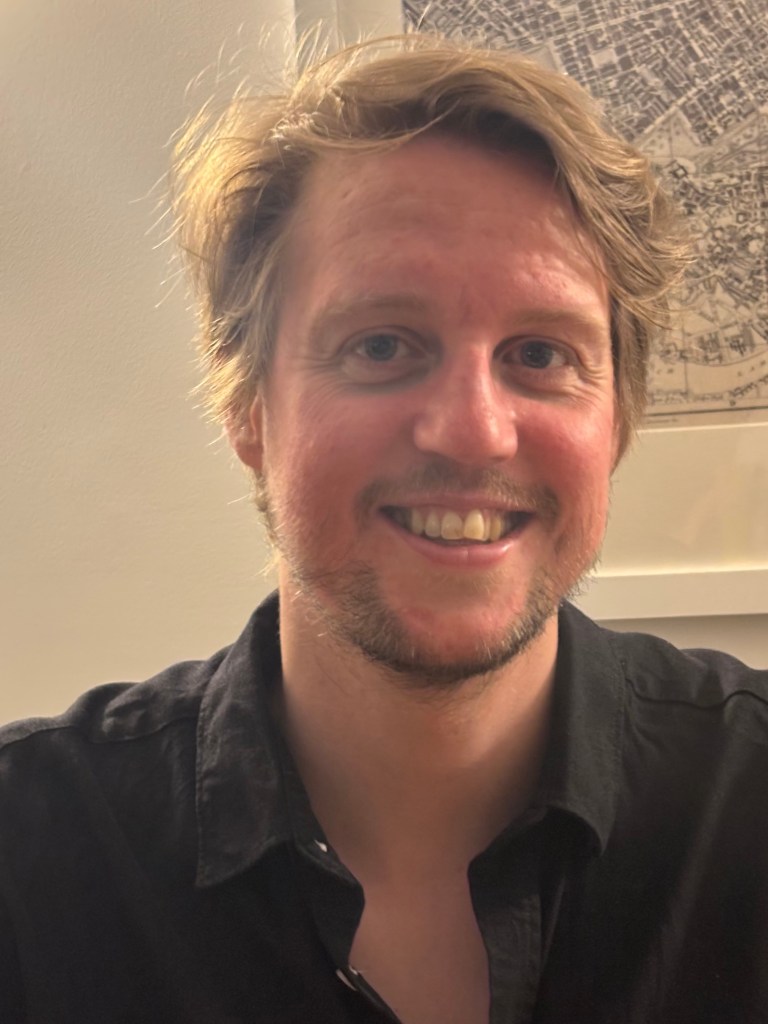
Doctoral researcher, Department of Anthropology and Sociology & Centre for Anthropology and Mental Health Research in Action (CAMHRA), SOAS University of London
Dr Henry Whittle is a psychiatrist and anthropologist in training. He began his research career using mixed methods to study food insecurity, before pivoting towards mental health rehabilitation after specialising in psychiatry. Following further training in medical anthropology, he is currently working towards a PhD at SOAS University of London.
What is your article “Ronaldo on the Clapham Omnibus: Complex Recoveries in Complex Psychosis“ about?
In the article, I think about what we mean by recovery in psychosis. I ask how it complicates our current understanding of recovery if we consider the experiences of people with the most complex forms of psychosis. These people are inadvertently excluded from much debate on this topic. Ethnography is one of the few ways that their experiences can be incorporated meaningfully. Drawing on six months of ethnography on an inpatient psychiatric rehabilitation unit, the article centres around a man I call Shepherd, whose journey to becoming a more confident, calmer, happier person looked very different to most portraits of recovery in the existing literature. This is important because our understanding of recovery shapes mental health policy in material ways. If we oversimplify recovery by missing people like Shepherd, we risk structurally undermining the interventions—including inpatient rehabilitation—that may be most effective in supporting them to live well.
Tell us a little bit about yourself and your research interests.
I am a psychiatrist and anthropologist, still working through my training in both disciplines. I currently work in an Early Intervention in Psychosis service in London and I will be part of the new Centre for Anthropology and Mental Health Research in Action (CAMHRA) at SOAS University of London. My research interests broadly relate to the social, cultural, and structural influences on mental health care and recovery, particularly for people living with more severe and enduring mental illnesses. Above all, I am an advocate for using applied social science as a basis for dialogue with service users, clinicians, practitioners, relatives, carers, and everyone else invested in improving mental health services.
What drew you to this project?
I have been intrigued by inpatient units ever since I first started working in psychiatry. Even though things are a little different now from how they were in Goffman’s time, the ‘total institution’ was still the main conceptual apparatus I received from my professional training to think through these places. Contributing towards addressing that gap, even slightly, was part of my motivation for taking on this project. The other part was that I have always been drawn to working with people with complex psychosis. I have learned so much from them, mainly about the limits of my own frameworks and my own imagination, but also about the complex, conflicting, and sometimes unexpected roles that institutions play in their lives. This is poorly captured in a clinical evidence base that, on the whole, tends to privilege streamlined understandings and analytic closure. I thought that ethnography could be particularly useful here—to help us hold onto that complexity as we make pragmatic decisions about care.
What are you reading, listening to, and/or watching right now? (Doesn’t have to be anthropological!)
Music and sport are big parts of my life. Both were important for this study. I bonded with Shepherd over a shared love of sport, and when I think of Apollo Ward I mainly think of playing pool and taking requests to play music on my phone—Orbital, Ed Sheeran, the Darkness, and the Rolling Stones were the soundtrack to this study. So now I’m watching my beloved Liverpool play football again after celebrating England Lionesses win the European Championship, and I’m listening to a lot of exciting British and Irish post-punk bands—Big Special, Wet Leg, and Sprints at the moment. I also recently started reading The Brown Sahib Revisited by Tarzie Vittachi, a searing takedown of the legacies of British colonialism in South Asia that was a wonderful gift given to me by my mentor and friend Sushrut Jadhav.
If there was one takeaway or action point you hope people will get from your work, what would it be?
That we need to take people’s ambivalent feelings and contradictory dispositions towards mental health services seriously in imperfect systems, even if it makes us uncomfortable. These contradictions may be our only glimpses of the life-sustaining roles that some institutions play in people’s lives. That is not to say that we should avoid radical critique, just that we need to proceed with caution. It is easy to miss complexity in this field, and missing complexity has material consequences that tend to impact the most marginalised people disproportionately.
 Culture, Medicine, and Psychiatry