
The next few months we’ll be highlighting authors who have published in Culture, Medicine, and Psychiatry.
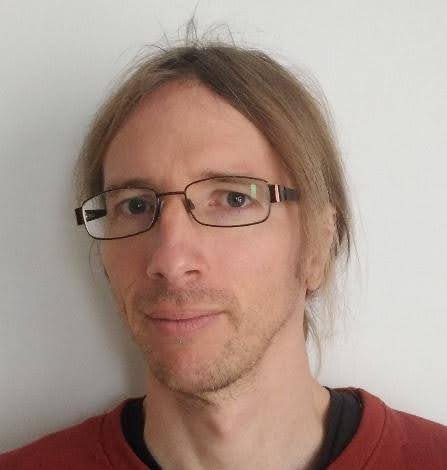
My research deals with various topics in critical theory including political culture and mental disorders in late modernity. My work has appeared in such venues as The Sociological Review, Theory, Culture & Society, European Journal of Social Theory, Thesis Eleven, Journal of Mental Health. Most recent books: Empty suffering (Routledge 2021) Salvaging modernity (Brill 2025).
What is your article “Between Depression and Alienation: Burnout as a Translator Category for Critical Theories“ about?
The article explores the psychopathological and sociological discourses surrounding the contested notion of burnout, with the aim of reintroducing it as a ‘translator category’. Such concepts, which can translate between everyday language, medical language and critical language, are particularly important in cases which originate from both individual and social causes. Without these translator categories, biomedical and psychopathological interpretations veil the social components of suffering – therefore, inevitably mistreat it as an exclusively individual problem. Furthermore, attempts at social critique also remain inaccessible because they rely on their own set of diagnostic concepts (such as alienation), while lay actors interpret their suffering as an illness or mental disorder (such as depression). To avoid these dead ends, the article discusses how burnout as a translator category can link the discourses of alienation (as a cause of burnout) and depression (as a consequence of burnout) while remaining accessible as a lay category.
Tell us a little bit about yourself and your research interests.
I was trained as a sociologist and philosopher in post-socialist Hungary. Initially, my research focused on democratic transition, particularly its phenomenological features. Since 2010, however, my attention has shifted from the criteria of democratic culture to the personal consequences of failed democratization. This led me to explore the links between social suffering and mental health issues, a topic which has become my main area of expertise over the last decade.
What drew you to this project?
After exploring several clinical categories (e.g. depression, anxiety, addiction) from a critical theoretical-phenomenological perspective (see my book Empty Suffering) I became interested in a phenomenon located at the intersection of biomedical and lay discourses. This is how I found the topic of burnout, which is contested within the biomedical discourses, while being widely applied by the lay actors at the same time.
What are you reading, listening to, and/or watching right now? (Doesn’t have to be anthropological!)
I enjoy reading novels, viewing them not just as an excellent way to relax, but also as a constant source of inspiration for my social scientific work. As well as the better-known classics by authors such as Balzac and Dostoevsky, and contemporaries such as Ali Smith and Kazuo Ishiguro, I also enjoy the vivid Central European literary scene (authors such as Péter Nádas and Mircea Cărtărescu).
If there was one takeaway or action point you hope people will get from your work, what would it be?
Most mental health conditions are inextricably linked to social dysfunction and structural distortion. If we do not address the ‘social pathologies of contemporary civilization’ (that is also the name of a research network I am currently involved in: https://socialpath.org/), there is little hope of stopping the ‘epidemics’ of depression and burnout.
Other places to connect:
 Culture, Medicine, and Psychiatry