This week we are featuring previews of three books received for review at Culture, Medicine, and Psychiatry (available here). These previews provide a snapshot of recent publications in medical anthropology, global health, and the history of medicine that we’re excited to discuss in our journal and with our followers on social media. If you would like to review a recently received book, please contact Brandy Schillace, Managing Editor. If you have a book you would like us to review, contact the Managing Editor via email, but please send books to the office of Culture, Medicine, and Psychiatry, care of the Anthropology Department, Case Western Reserve University.

via The University of Chicago Press
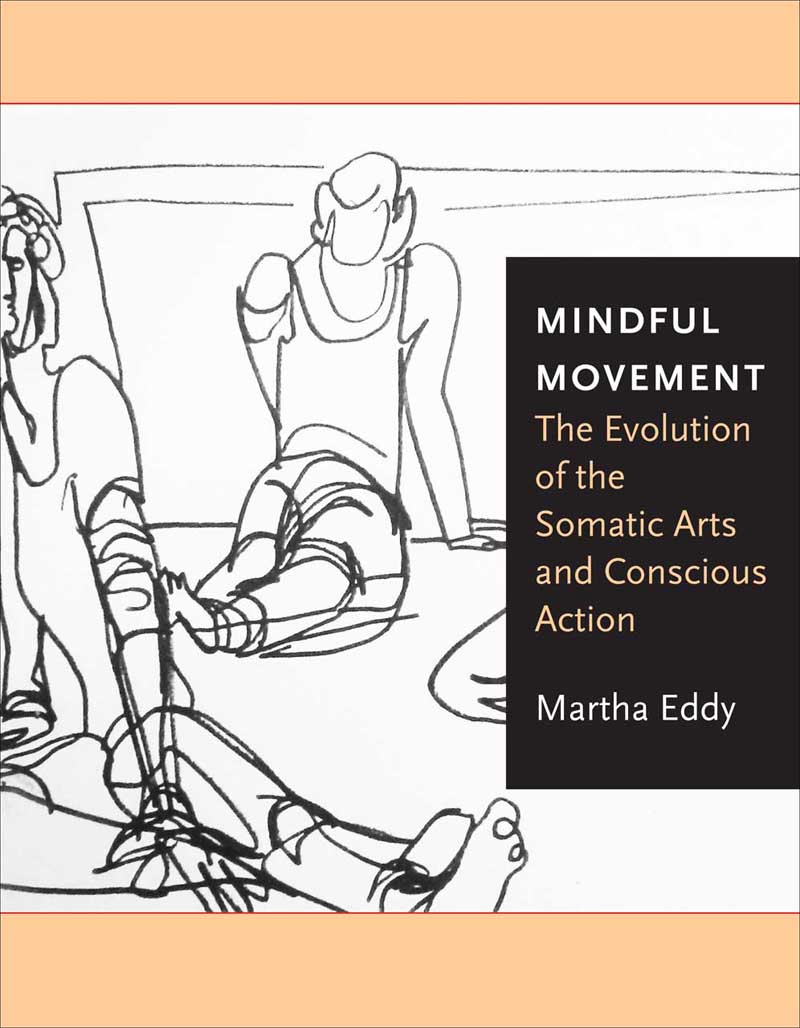
Mindful Movement: The Evolution of the Somatic Arts and Conscious Action (2016)
Eddy, Martha
In Mindful Movement, exercise physiologist, somatic therapist, and advocate Martha Eddy uses original interviews, case studies, and practice-led research to define the origins of a new holistic field—somatic movement education and therapy—and its impact on fitness, ecology, politics, and performance. The book reveals the role dance has played in informing and inspiring the historical and cultural narrative of somatic arts. Providing an overview of the antecedents and recent advances in somatic study and with contributions by diverse experts, Eddy highlights the role of Asian movement, the European physical culture movement and its relationship to the performing arts, and female perspectives in developing somatic movement, somatic dance, social somatics, somatic fitness, somatic dance and spirituality, and ecosomatics. Mindful Movement unpacks and helps to popularize awareness of both the body and the mind.
For more information, check out The University of Chicago Press, available here.

via Routledge
Religion and Psychotherapy in Modern Japan (2015)
Christopher Harding, Iwata Fumiaki, and Yoshinaga Shin’ichi, eds.
Since the late nineteenth century, religious ideas and practices in Japan have become increasingly intertwined with those associated with mental health and healing. This relationship developed against the backdrop of a far broader, and deeply consequential meeting: between Japan’s long-standing, Chinese-influenced intellectual and institutional forms, and the politics, science, philosophy, and religion of the post-Enlightenment West. In striving to craft a modern society and culture that could exist on terms with – rather than be subsumed by – western power and influence, Japan became home to a religion–psy dialogue informed by pressing political priorities and rapidly shifting cultural concerns.
This book provides a historically contextualized introduction to the dialogue between religion and psychotherapy in modern Japan. In doing so, it draws out connections between developments in medicine, government policy, Japanese religion and spirituality, social and cultural criticism, regional dynamics, and gender relations. The chapters all focus on the meeting and intermingling of religious with psychotherapeutic ideas and draw on a wide range of case studies including: how temple and shrine ‘cures’ of early modern Japan fared in the light of German neuropsychiatry; how Japanese Buddhist theories of mind, body, and self-cultivation negotiated with the findings of western medicine; how Buddhists, Christians, and other organizations and groups drew and redrew the lines between religious praxis and psychological healing; how major European therapies such as Freud’s fed into self-consciously Japanese analyses of and treatments for the ills of the age; and how distress, suffering, and individuality came to be reinterpreted across the twentieth and early twenty-first centuries, from the southern islands of Okinawa to the devastated northern neighbourhoods of the Tohoku region after the earthquake, tsunami, and nuclear disasters of March 2011.
Religion and Psychotherapy in Modern Japan will be welcomed by students and scholars working across a broad range of subjects, including Japanese culture and society, religious studies, psychology and psychotherapy, mental health, and international history.
For more information, visit the Routledge website here.

via Johns Hopkins
Still Down: What to do when Antidepressants Fail (2016)
Dean F. MacKinnon
Thirty medications are classified as antidepressants in the United States—and that’s not counting drugs that might prove effective in treating major depressions but aren’t officially designated as antidepressants.
That formulary’s length is not surprising. As veteran Johns Hopkins psychiatrist Dean MacKinnon notes, major depressive disorder is one of the most common and debilitating conditions, annually causing some 1 million people worldwide to commit suicide. In a concise, clearly written and exceptionally helpful book, he provides insights and advice on what to do if those medications don’t work initially.
The brain is a complex organ, and what transpires within it often is mysterious. Every one of the drugs classified as an antidepressant helps in about 60 to 70 percent of cases, MacKinnon writes. They do so by increasing the amount of the neurotransmitters serotonin and/or norepinephrine, and possibly dopamine, in the space between neurons in the brain. Yet it isn’t known why this change in neurotransmitters effectively treats major depressions.
What’s more, when an antidepressant doesn’t work, physicians and psychiatrists often don’t ask why it failed, MacKinnon says. Usually, they just try a different medication. MacKinnon has spent the past two decades trying to determine why some patients do not respond well to antidepressant medications and how to address that treatment failure.
Creating nine patient composites based on many cases he has handled, he uses their stories to describe why an antidepressant treatment “for some unknown biological reason” sometimes “goes awry.” He also tells how he has sought to understand the wide variety of causes for such failure and what to do for those who do not respond to antidepressant treatment.
Brief summaries, case notes and excellent appendices make this a useful book for practitioners and patients alike.
For more information, visit the Johns Hopkins Medicine website, available here.




 Culture, Medicine, and Psychiatry