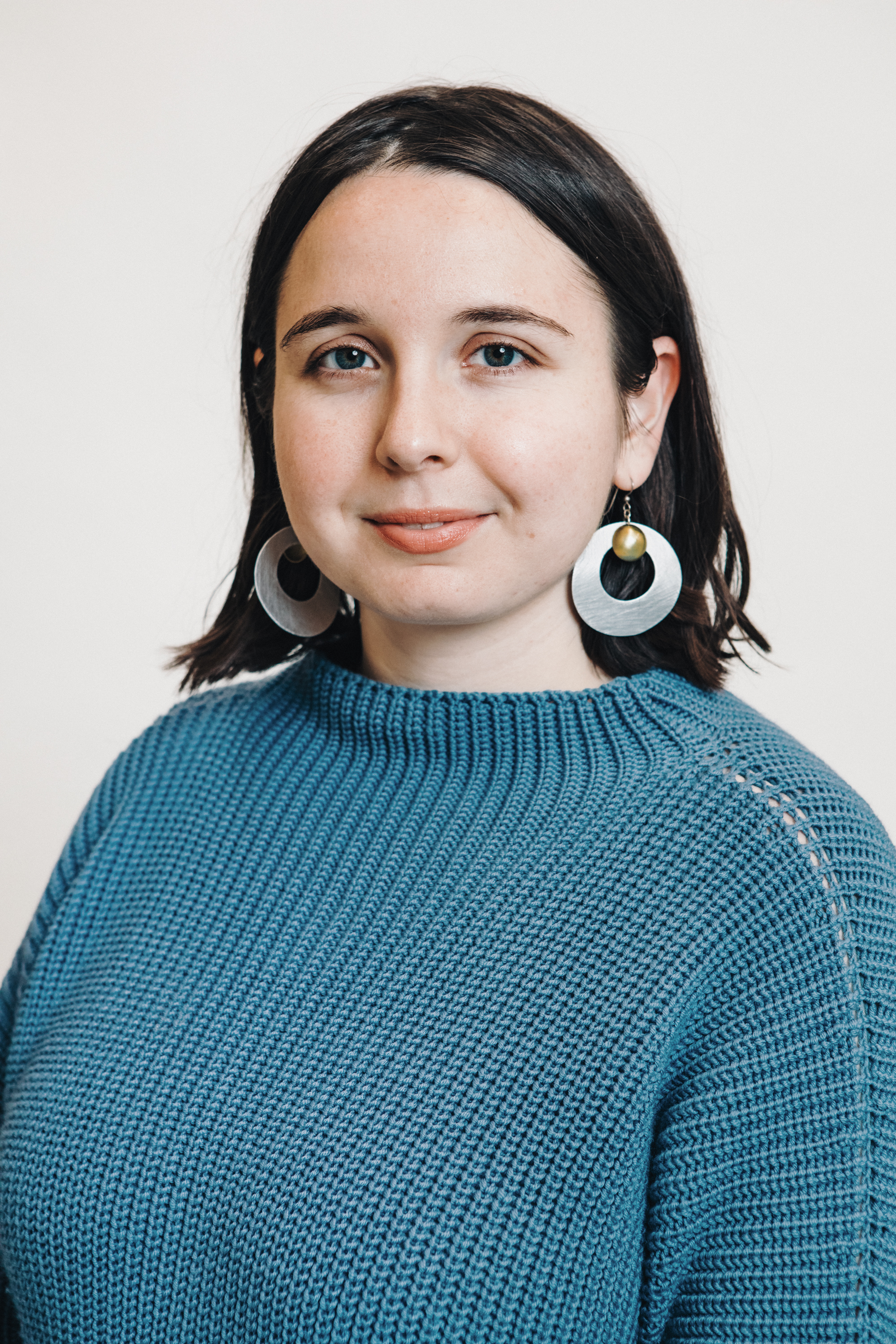
Interview With Talia S. Katz, PhD

The next few months we’ll be highlighting authors who have published in Culture, Medicine, and Psychiatry.

Assistant Professor of Israel Studies, State University
of New York (SUNY) at Binghamton

Talia Katz is a cultural anthropologist whose research
intersects the medical humanities, childhood studies, and gender studies. Her first book project, A Healing Stage: Violence, Self-Knowledge, and Therapeutic Theater in Israel, is a historical and ethnographic study of psychodrama in Israel, focusing on the mixed Jewish-Palestinian city of Lod.

What is your article “A Ring Transforms: Children Learning Life and Death in Lod” about?

My article develops an ethnographic method of attending to children’s voices, showing how what I call the ‘fragmented’ texture of children’s knowledge yields new insights about Israeli society and its conflicts. The article is based on sixteen months of participant observation at a community theater center in Lod, Israel. Taking elementary school children as ethnographers, I show how their play reveals that they learn political violence not as a specific event but rather as part of the conceptual structure of their world. This finding is particularly important for debates on trauma in the social sciences, illustrating how the biomedical focus on the etiological event can eclipse foundational ways in which violence shapes one’s self and world.

Tell us a little bit about yourself and your research interests.

Trained as a cultural anthropologist at Johns Hopkins University, I use
ethnographic methods to ask questions about health, illness, trauma, and subjectivity. At its core, my research seeks to understand how both psychological experts and everyday people respond to the marks of violence on their milieu. I am interested in what repair looks like from the perspective of the everyday and how the frameworks I encounter in my fieldwork differ from dominant legal and biomedical model.

What drew you to this project?

Having grown up in a household shaped by chronic illness and migration, I have always been passionate about how children put together that which adults, for one reason or another, may not share directly. When I began exploratory research for my dissertation, I learned that the Lod Theater held a weekly
children’s theater group. It seemed like a natural fit for the dissertation research – a chance to empirically study questions towards which I already had an affinity.

What are you reading, listening to, and/or watching right now? (Doesn’t have to be anthropological!)

A colleague introduced me to the powerful and beautifully written book Liliana’s Invincible Summer by Cristina Rivera Garza. I appreciated the astute rendering of how grief reverberates through kinship relations and reflections on subjectivity.

If there was one takeaway or action point you hope people will get from your work, what would it be?

Often adults – whether clinicians, educators, or care-givers – will ponder how best to explain X event or X challenge to a child. My research points to the ways in which children are already putting such knowledge together, whether adults have the courage to recognize this or not. Shifting the questions we ask about children’s knowledge can meaningfully reshape our understanding of what constitutes an adequate response.

Other places to connect:

Twitter: @TaliaSKatz

Linkedin

Website

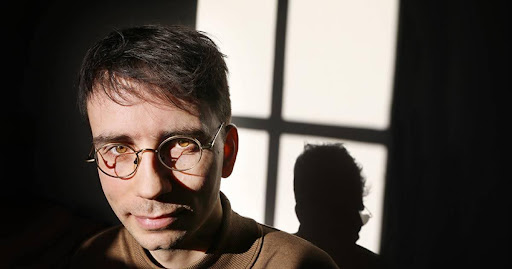
Interview with Simon van der Weele

The next few months we’ll be highlighting authors who have published in Culture, Medicine, and Psychiatry.

Assistant professor, University of Humanistic Studies, Utrecht, the Netherlands

Simon van der Weele is a moral philosopher and ethnographer. He tries to make sense of ethical life by combining philosophical and social-scientific methods and frameworks. His research engages with care and caring, particularly for people with intellectual disabilities.

What is your article “‘Why Bother?’ Skeptical Doubt and Moral Imagination in Care for People with Profound Intellectual Disabilities” about?

People with profound intellectual disabilities are completely dependent on care from others to survive and thrive. But since they are non-verbal, interpreting their needs and preferences is difficult. As a result, caregivers experience constant uncertainty about whether or not their care is good and appropriate. In this article I try to understand how care professionals maintain faith in the meaning of their care, despite this uncertainty.

Tell us a little bit about yourself and your research interests.

I am fascinated by care and how we care for each other. I am trained as a philosopher, and I enjoy thinking philosophically about care. But I’ve come to believe that such philosophical thinking requires ethnographic texture for it to have bearing on our experiences. That’s why I try to bring ethnography to philosophy, and vice-versa.

What drew you to this project?

I’ve been entranced with the care for people with profound intellectual disabilities ever since I first set foot in a group home where a few of such people lived. Make no mistake, there’s nothing romantic about this care: it’s hard physical labour, day after day, often under precarious conditions. But I was deeply moved by the patience, intelligence and creativity I witnessed in the interactions between people with profound intellectual disabilities and their caregivers. I just had to move closer to this.

What are you reading, listening to, and/or watching right now? (Doesn’t have to be anthropological!)

Lately, I keep reaching for more stories by Ursula K. Le Guin. I just finished reading her collection A Fisherman of the Inland Sea. The titular story’s emotional impact hinges on ‘sedoretu’, a complicated polyamorous marriage system conjured up by Le Guin. There’s a strikingly ethnographic quality to her science fiction – it often reads like a kind of speculative anthropology, clothed in deeply human storytelling.

If there was one takeaway or action point you hope people will get from your work, what would it be?

I want to show my readers that imagination and creativity are at the heart of care. We often think of care as monotonous, even tedious work. The creative energy caregivers put into their work is seldom noticed. I hope my work provides some concepts to recognize and bolster this creativity.

Other places to connect:

Linkedin

Website