
The following article is part of the Culture, Medicine & Psychiatry March 2024 special issue, “Student Experiences of Covid-19 around the Globe: Insights from the Pandemic Journaling Project” which is guest edited by Heather M. Wurtz, Katherine A. Mason, and Sarah S. Willen.
This special issue explores how the Covid-19 pandemic has impacted the mental health and wellbeing of high school and college students in diverse locations around the world. The collection analyzes data collected by the Pandemic Journaling Project, a combined research study and online journaling platform that ran on a weekly basis from May 2020 through May 2022, and from complementary projects. Contributions draw on a range of data including PJP journal entries, semi-structured interviews with PJP participants, autobiographical writing by students, and conversations about engagement with PJP in classroom and community-based settings. This week we feature a brief blog post by the authors of “Seesaw Precarity: Journaling Anxious Hope on a Chinese University Campus During Covid-19”.
This article is by:
Katherine A. Mason, Associate Professor of Anthropology, Brown University
Jianmei Xie, Lecturer in Second Language Education, School of Foreign Languages, Guangdong Polytechnic Normal University

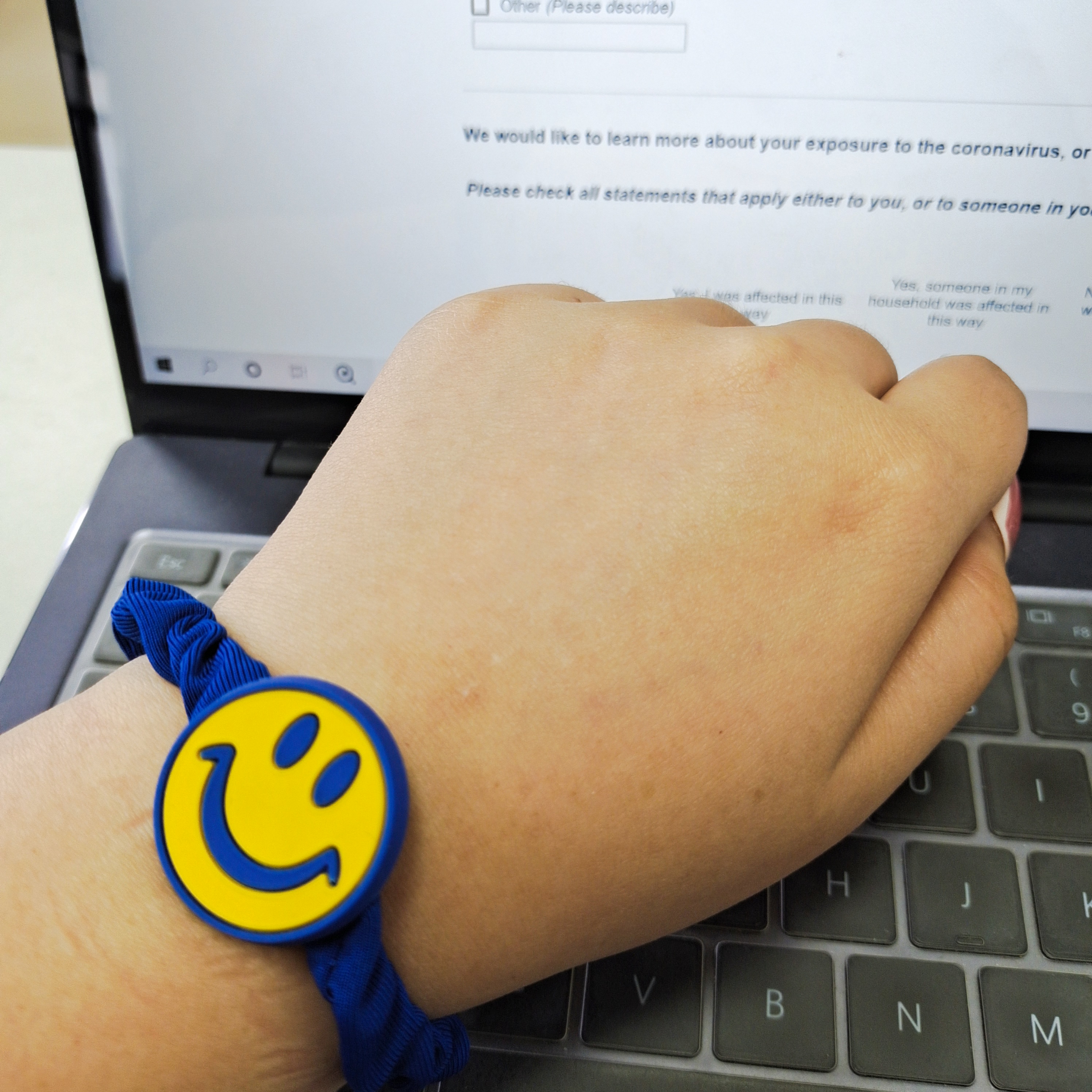
Photo 1: Photo from journal entry by study participant, April 14, 2022, Guangzhou, China
What is your article “Seesaw Precarity: Journaling Anxious Hope on a Chinese University Campus During Covid-19” about?
“Seesaw Precarity” is based on the Covid-19 experiences of a group of Chinese university students. We draw on journal entries that the students submitted to the Pandemic Journaling Project to argue that these students spent most of their undergraduate years living in a state of “seesaw precarity.” We define seesaw precarity as a long period during which many people in China were unable to predict from one day to the next whether they would be free to engage in the ordinary, everyday activities of everyday life. We trace student reactions and adaptations as they struggled to attend class, buy food, and see friends and family in the midst of unpredictable swings between openness and closedness. The seesaw nature of restrictions spurred anxiety among the students we followed, but also produced an optimistic mindset we refer to as “anxious hope.”
Tell us about how this project came to fruition.
This project resulted from a partnership between the co-authors that traces back to 2002, when we first met in Guangzhou, China to do a Chinese-English language exchange. We became friends and then colleagues and have kept in close touch over the years. We kept in touch during the pandemic, and we knew from our own correspondence that both professors and students were having really different experiences in China vs. the US. When Heather and Sarah and I (KAM) decided to put together a special issue on student experiences of the pandemic, I (KAM) thought immediately of reaching out to Jianmei (JX) to see if she’d be interested in writing something. She was, and we began meeting to put together the project that forms the basis for the paper. It’s been such great fun collaborating on this project and this article after so many years of more informal collaborations!
What was one of the most interesting findings?
I think both of us were pretty surprised at just how resilient the students we followed seemed to be during all of the crazy ups and downs of the pandemic in China. Jianmei had noticed and remarked on this before we even started the project, as she worked very closely with dozens of Chinese undergraduates during this time and frankly was amazed at how much better they seemed to be handling things than the adults in her life! We had talked about this before and then both observed it strongly in the data. The students were definitely struggling, and periodically did get upset, but they were really determinedly optimistic about the whole thing in ways that were quite inspiring.
Who might be interested in reading your piece?
I think our piece should be of interest to anyone who would like some deeper insights into lived experience during the pandemic in China. We get such a stilted, superficial view of people’s lives there through US media, and the focus is almost always on negative experiences and on resistance. Our article certainly doesn’t discount people’s negative experiences, but also provides a bit of a more well-rounded sense of the full lives people were leading, and how they managed to find joy in addition to the sorrow. We also provide some insight into why there was relatively little resistance to harsh control measures in China during the first two years of the pandemic.
If there was one takeaway or action point you hope people will get from this work, what would it be?
One big takeaway from this article is that people can handle an awful lot of uncertainty even over long periods of time, if they have faith in the system and are able to experience their chaotic situation as something that will make them stronger rather than break them. But this ability and willingness to weather a lot has limits. A lot of people started to hit their limit in China in late 2022, when the really strict control measures that they were living with started to work less and less well in controlling the virus, and the cycles between locking down and opening up became more frequent and more extreme.
 Culture, Medicine, and Psychiatry