
The next few months we’ll be highlighting authors who have published in Culture, Medicine, and Psychiatry.
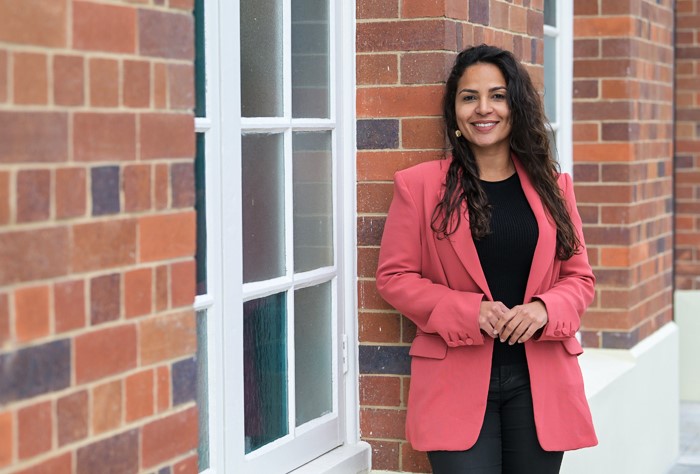
Nathalia Costa is passionate about deepening the understanding of healthcare issues through qualitative methods and methodologies, with a focus on theoretically grounded, critical, reflexive and collaborative approaches. She advocates for pluralist inquiries to achieve the intersubjective understandings needed for impactful collective action.
What is your article “Non-clinical Psychosocial Mental Health Support Programmes for People with Diverse Language and Cultural Backgrounds: A Critical Rapid Review” about?
This critical rapid review examined non-clinical psychosocial support services for culturally and linguistically diverse (CALD) populations delivered by lay health workers. Drawing on a critical realist framework and Brossard and Chandler’s taxonomy on culture and mental health, the review analysed 38 studies (10 quantitative, 7 mixed-methods, and 21 qualitative), mostly conducted in North America and Europe. While many interventions focused on specific populations (e.g., refugees, Latinx immigrants) and targeted outcomes like depression and trauma, fewer studies used multimodal approaches or focused on broad populations. Despite short intervention durations, most reported positive psychosocial outcomes. Qualitative findings underscored barriers such as inadequate resources and limited cultural alignment. The review found most studies operated within split-relativist paradigms, aiming to help participants navigate Eurocentric systems. Culturally responsive and context-sensitive models, prioritisation of social determinants of health and community engagement are likely to be critical to ensure best practice in non-clinical psychosocial support.
Tell us a little bit about yourself and your research interests.
I am a Brazilian scholar living and working in Australia, and committed to shaping, enhancing and transforming quantitative evidence through qualitative methods and methodologies to make research, practice and education more inclusive and nuanced. With postdoctoral studies in policy and at the interface of clinical science and sociology, I draw from these disciplines to explore healthcare challenges and generate insights that drive meaningful change.
What drew you to this project?
I was drawn to this project through my longstanding collaboration with A/Prof Rebecca Olson and Dr Jenny Setchell, with whom I share a commitment to social justice and critical approaches to health research. An opportunity to evaluate a service providing non-clinical psychosocial support for people from multicultural backgrounds came up, and we thought it was important to ground our evaluation in a rigorous and critical understanding of best practice in this area. Rebecca invited me to co-lead the rapid review with her, and I enthusiastically accepted, seeing it as a valuable opportunity to contribute to work that aligns with my values and interests in diversity and policy-informed research.
What are you reading, listening to, and/or watching right now? (Doesn’t have to be anthropological!)
I have been reading The view from Nowhere, by the philosopher Thomas Nigel. It is a book about subjectivity and objectivity – he argues that pure objectivity is impossible because we are embodied, situated beings. As far as I can tell from what I read so far, the book calls for a balance between subjectivity and (inherently limited) objectivity.
If there was one takeaway or action point you hope people will get from your work, what would it be?
It would be great if researchers and practitioners working in non-clinical psychosocial support for people from multicultural backgrounds to move beyond eurocentrism and individualistic understandings and approaches to mental ill-health, and instead adopt approaches that are grounded in an understanding of social, cultural, structural, historical and political contexts.
Other places to connect:
 Culture, Medicine, and Psychiatry