
The next few months we’ll be highlighting authors who have published in Culture, Medicine, and Psychiatry.
What is the article “Embracing Pluralism: Rethinking Western Psychiatric Models for Equitable Global Mental Health” about?
This article is fundamentally a challenge to one of global health’s most comfortable assumptions: that what works in Boston or London will work in Freetown or Kampala, provided we translate it carefully enough. The global mental health movement has done genuinely important work in drawing attention to the enormous burden of mental illness in low- and middle-income countries up to 85% of people with mental health conditions in these settings receive no treatment at all. But in its urgency to close that treatment gap, the movement has largely exported Western psychiatric frameworks wholesale: the DSM diagnostic categories, pharmaceutical-centred treatment protocols, and individual psychotherapy as the gold standard of care.
My article argues that this approach carries real risks that are too often ignored. It can produce cultural mismatch where diagnostic tools built on Euro-American concepts of depression and anxiety fail to capture how distress is experienced and expressed in other societies. It can medicalise what is fundamentally social suffering, framing poverty, displacement, and structural injustice as individual disorders amenable to a prescription. And it can marginalise or displace indigenous healing systems traditional practitioners, religious leaders, community elders that communities trust and turn to.
The paper is not an argument against biomedical psychiatry. It is an argument for pluralism: a framework that values multiple healing traditions as equally legitimate, prioritises cultural adaptation and local leadership, and insists that equity not just coverage must be the measure of success. I draw on evidence from Zimbabwe’s Friendship Bench, community-based programmes in India and Pakistan, and hybrid models from Nepal and Uganda to show that locally grounded approaches are not second-best alternatives they are often more effective, more sustainable, and more meaningful to the people they serve.
Tell us a little bit about yourself and your research interests.
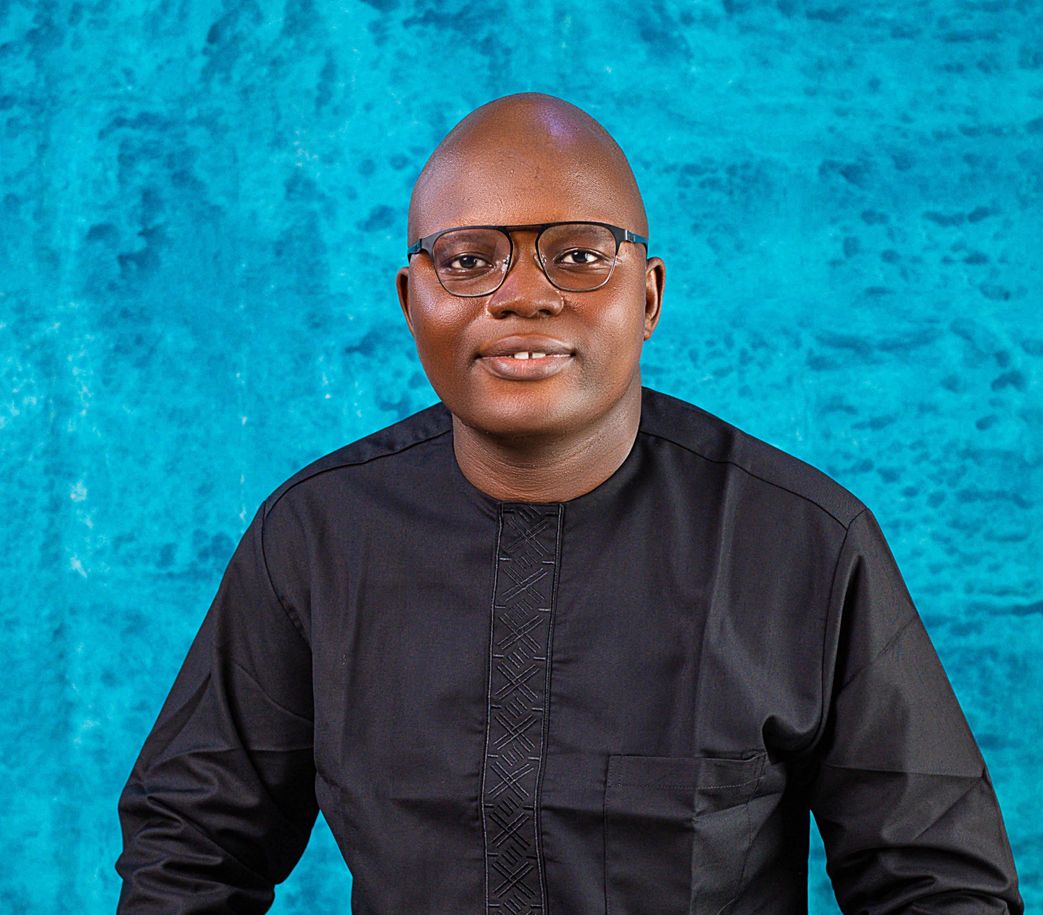
I am a public health researcher based in Freetown, Sierra Leone, where I was born and trained. I hold an MSc in Public Health and a BSc in Biological Sciences from Njala University, and I have spent the past decade trying to understand and generate evidence about the structural forces that shape health and illness in Sierra Leone and across sub-Saharan Africa.
My research spans a wide range of topics: maternal and child health, health systems strengthening, infectious disease, health equity, and increasingly, the intersection of digital health and social determinants of wellbeing. I have authored and co-authored over 140 peer-reviewed publications, and I used to teach Epidemiology and Biostatistics at Njala
University, where I tried to pass on not just statistical methods but a way of thinking about evidence who produces it, who it serves, and whose experiences it tends to miss.
What connects all of my work is a preoccupation with equity with understanding why health outcomes are so unequally distributed, and with generating the kind of evidence that can actually move policy in the right direction. I use a range of tools ArcGIS for spatial analysis, machine learning for predictive modelling, NVivo and MAXQDA for qualitative work but the driving question is always the same: who is being left behind, and why?
Mental health sits at a particularly important intersection of these concerns. In Sierra Leone, the legacy of a decade-long civil war, the Ebola epidemic, and chronic poverty has created an enormous burden of psychological distress yet mental health services remain desperately under-resourced, and the frameworks imported to address the gap do not always fit the realities of the people they are meant to serve.
What drew you to this project?
Honestly, it was the gap between what I observed in practice and what the global mental health literature was telling me should work.
Working in Sierra Leone first as a surveillance officer during the Ebola outbreak, then in health systems research I repeatedly encountered situations where people in psychological distress were navigating between multiple systems of care simultaneously: visiting a biomedical clinic, consulting a traditional healer, seeking counsel from a religious leader. This was not confusion or ignorance. It was a rational response to a plural reality, where different systems offered different things and no single framework captured the full picture of suffering or healing.
Yet the global mental health literature I was reading largely treated this pluralism as a problem to be overcome, a sign of inadequate access to proper care rather than as a resource to be understood and built upon. I found that framing both empirically questionable and, frankly, troubling in its assumptions about whose knowledge counts.
I was also struck by the growing body of evidence from programmes like Zimbabwe’s Friendship Bench, which showed that community-embedded, culturally resonant interventions could achieve outcomes comparable to or better than imported Western protocols. That evidence deserved a more prominent place in the conversation about how global mental health should be organized and funded. Writing this paper was my attempt to make that argument systematically drawing together the critique, the evidence, and a concrete set of recommendations in a way that might be useful to researchers, practitioners, and policymakers working in this space.
What was one of the most interesting findings?
The finding that most stayed with me and that I think has the broadest implications is the evidence around stigma. The dominant narrative in global mental health has long been that the biomedical model reduces stigma by framing mental illness as a brain disease rather than a moral failing or spiritual affliction. The logic is intuitive: if depression is a chemical imbalance, not a character flaw, people should be less blamed for it.
But the evidence I reviewed tells a more complicated story. In several settings, the introduction of Western psychiatric labels increased stigma because these diagnoses were experienced as foreign, permanent, and frightening in ways that local idioms of distress were not. In rural China, medicalizing depression led to greater social distancing, not less. In Sri Lanka, Western diagnostic terms for schizophrenia were associated with new forms of social exclusion. The assumption that biomedical framing is universally destigmatizing turns out to be empirically unfounded and it is an assumption that has shaped enormous amounts of global mental health investment.
This matters because it illustrates a broader point: the risks of exporting Western models are not just theoretical. They play out in real people’s lives, in communities where the introduction of a foreign framework can disrupt existing social networks, undermine indigenous coping strategies, and create new forms of harm even while trying to help. That is a finding that should give the global mental health movement serious pause.
What are you reading, listening to, and/or watching right now?
I am currently reading The Wretched of the Earth by Frantz Fanon which feels more relevant than ever to the questions this paper raises about knowledge, power, and whose frameworks get to count as universal. Fanon’s analysis of colonial psychiatry is remarkably prescient, and I find myself returning to it as a grounding text for thinking about decolonial approaches to global health.
In terms of listening, I have been following the Global Health with Greg Martin podcast, which does a good job of bringing together researchers and practitioners from the Global South in conversations that do not always make it into mainstream journals. There is something valuable about hearing researchers from Sierra Leone, Uganda, and Nepal speak in their own voices about the challenges and opportunities in their contexts.
And I have been watching with great interest and some anxiety about the ongoing debates about artificial intelligence in healthcare. My own research has moved increasingly into machine learning applications for public health, and the questions about bias, equity, and whose data trains the models feel very continuous with the questions I am raising in this paper about whose knowledge shapes global mental health frameworks.
If there was one takeaway or action point you hope people will get from your work, what would it be?
The one thing I most want readers to take away is this: pluralism is not a compromise it is a superior framework.
I am aware that pluralism can sound like a polite way of saying “let’s include everyone and not make hard choices.” That is not what I mean. I mean something more specific and more demanding: that the most effective, most equitable, and most sustainable approaches to global mental health are those that genuinely value multiple healing traditions as legitimate on their own terms not as supplements to biomedical care, not as cultural window-dressing on Western protocols, but as systems of knowledge and practice that have evolved to address human suffering in specific social and historical contexts.
The practical implication is that funders, policymakers, and researchers need to stop treating the question “how do we scale up Western psychiatric models in low-income countries?” as the primary question of global mental health. The primary question should be: “How do we build mental health systems that are meaningful, accessible, and effective for the specific communities they serve?” Sometimes the answer will involve biomedical psychiatry. Often it will involve traditional healers, community volunteers, religious leaders, and social interventions that address the structural roots of distress. Almost always it will require local leadership, genuine community co-design, and the humility to recognize that the Global North does not have a monopoly on wisdom about how human beings heal.
That shift from export to partnership, from uniformity to pluralism is the action point I hope this paper contributes to.

