
The next few months we’ll be highlighting authors who have published in Culture, Medicine, and Psychiatry.

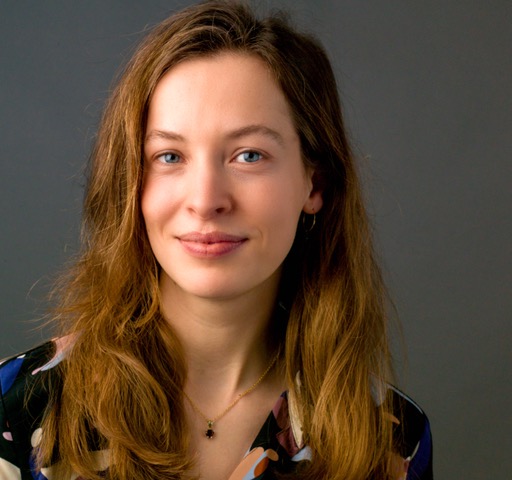
Nader Abazari holds a PhD in clinical psychology. Currently, as a post-doctoral researcher, he explores ways to enhance existential well-being through interdisciplinary approaches. He is particularly interested in how cultural context contributes to the fundamental human need to quest for meaning in life.
Existential well-being research group, University of Eastern Finland
What is your article “Meaning in Life: Exploring the Potential of Mythological Narratives in Contemporary Life” about?
Everyone, at some point, faces the question: What makes life worth living? Psychologists address this through the concept of “meaning in life.” As meaning is not automatically given, we must actively create it. While this is a deeply personal process, it is also shaped by the cultural context in which we live. In addition, anthropologists view myths as the essence of the cultures from which they emerge. This led us to ask: Do myths contain clues for meaning-making that remain useful today? To explore this, we compared three psychological theories with examples from world myths. Our analysis shows that mythological narratives, aligned with contemporary theories, provide valuable insights into the meaning-making process: encountering a profoundly impactful event, dissatisfaction with the current state, meaning-making attempts, and providing a vision of desired state. Thus, we conclude that myths remain relevant to enduring human concerns, guiding reflection on meaning in contemporary life.
Tell us a little bit about yourself and your research interests.
Previously, I worked as a psychologist focusing on improving the well-being of individuals with chronic conditions. As a postdoctoral researcher, I found the perfect opportunity to pursue my interest in a particular dimension of well-being, existential well-being. Within this field, I am especially fascinated by sources of meaning, the avenues people draw upon to see their lives as meaningful. These sources range widely, from spirituality, love, and unison with nature to religion, ritual, achievement, freedom and more. What intrigues me most is how people seem to choose their sources of meaning from a kind of “menu” offered by their cultural context. For instance, in Finland, with its striking and abundant natural landscapes, people’s lives are deeply intertwined with nature, and unison with nature often becomes a particularly valued source of meaning. In other countries, however, we may find that sources such as religiosity and spirituality are more prominent. Currently, under the supervision of Associate Professor Suvi-Maria Saarelainen, I am exploring how culture shapes sources of meaning, with myths, as cultural showcases, forming a central part of our research.
What drew you to this project?
In answering this question, I am reminded of Isaac Newton’s famous words: “If I have seen further, it is by standing on the shoulders of giants.” We believe this perspective extends far beyond the academic world; it also applies to everyday life. In the context of meaning in life, these “giants” are the tangible and intangible cultural heritage passed down through generations. Our project was inspired by the idea that just as personal human history can provide insights into how to find meaning in life, collective human history also has the potential to show how our ancestors found meaning in their lives. We sought to take an initial step in showing that the meaning-making practices of the past may still resonate and continue to shape the ways people seek meaning today.
What are you reading, listening to, and/or watching right now? (Doesn’t have to be anthropological!)
Lately, I have been drawn to books that build bridges between human psychological processes, culture, and history. Two that stand out for me are The Cultural Animal by Roy F. Baumeister and The Cry for Myth by Rollo May. I also enjoy podcasts on world history and the biographies of influential figures from diverse fields. For me, history offers a process-oriented, holistic perspective for understanding human issues, and helps me avoid the trap of tunnel vision.
If there was one takeaway or action point you hope people will get from your work, what would it be?
I would say that myths are not just stories of the past, they are lived and culturally validated roadmaps for a meaningful life. They remind us that the visions for a better life that once guided our ancestors can still, at least at times, inspire and shape our own search for meaning today.
Other places to connect:
 Culture, Medicine, and Psychiatry