Issue Highlight Vol 40 Issue 3: Asperger’s Syndrome, Subjectivity and the Senses

This week, we will highlight an Illness Narrative from the September 2016 issue of the journal (available here). Here we feature Ellen Badone, David Nicholas, Wendy Roberts, and Peter Kien’s article “Asperger’s Syndrome, Subjectivity and the Senses.” To read the full article, click here.


cards

As previous blog highlights suggest, the intersections of research and illness narratives are important to an anthropological perspective on subjectivity and experience. Badone and colleagues situate their article within narrative phenomenology. They discuss how constructing an illness narrative gives patients and families hope, and frames their experiences in a positive direction. The personal narrative, then, allows individuals to express their agency in hostile structural and environmental settings. The narrative also serves as a valuable first-hand account from which medical anthropologists can learn more about the subjective experience of illness.

The authors perform a close reading of an autobiographical narrative recounted by Peter, a young man diagnosed with Asperger’s Syndrome, a type of autism spectrum disorder (ASD.) Badone and colleagues aim to describe Peter’s case to widen understandings of the lived experience of people with autism. Responding to Olga Solomon’s 2010 article “Sense and the Senses: Anthropology and the Study of Autism,” this paper calls into question key assumptions in the clinical and popular literature about ASD relating to theory of mind, empathy, capacity for metaphorical thinking, and ASD as a life-long condition.

Badone and colleagues begin with a brief history of the diagnostic label of ASD, then describe the ethnographic-autobiographical process. Peter, the pseudonym chosen by the young man whose story is told in this article, reflects on his life experiences and articulates his awareness of autism and its impact on his life. An important recognition that Peter makes is that he senses many of the places he encountered were characterized by the “opposite of accommodation.” In the context of his elementary and high school for example, Peter describes how his need for calm and respite were disregarded in the noisy, abrasive environments. But it is Peter’s mother who is his metaphorical, and social, link to the world he felt dislocated from. Peter describes how it was his mother’s love and guidance which kept him alive and motivated to improve his life.

As Peter continues to narrate his experiences, however, he begins to intentionally seek out interactions in unwelcoming social environments. To Badone, Peter’s later decisions to submerse himself in activities that he found difficult, such as unexpected social situations and interactions, was an unconscious therapeutic response. This response mirrored the principles of cognitive behavioral therapy (CBT). To Badone’s astonishment, Peter had unintentionally started a treatment regimen to gradually lessen his anxiety, decrease his “meltdowns,” and become more independent. But to do so, Peter had to alter his own connection to a social environment that initially felt closed to him.

Badone and colleagues conclude, upon analyzing Peter’s narrative, that quality of life improves when individuals with autism are allowed to flourish in a social milieu of acceptance and understanding. Through the narrative, and through phenomenological examination of moments in Peter’s life, Badone and Peter hope to foster understanding and to urge others to create inclusive communities where social interaction is supported and individuals are not made to feel unwelcome. They seek to make autism more coherent to the non-autistic world and thereby to promote the larger ethical goal of creating flexible communities open to accommodating neurodiversity.
In the News: Health Disparities and Water Quality in the 2016 Rio Summer Olympics


August 2016 – The 2016 Summer Olympic games in Rio de Janeiro, Brazil has dominated news headlines in recent weeks. The athletics event, taking place from August 5 to August 21, featured 207 countries in the Parade of Nations as well as the first ever Refugee Olympic Team. It is the first time the games have been held in South America. But besides highlights on the events and spotlights on athletes’ training regimens and backgrounds, there is another stream of news stories surrounding the Olympic Games. These stories have focused on two key public health issues related to this year’s Games: health disparities and water quality issues.

ap_16221704995649-2a9b5ac7291dd20a71781f18eaca8c4d3edb888a-s800-c85

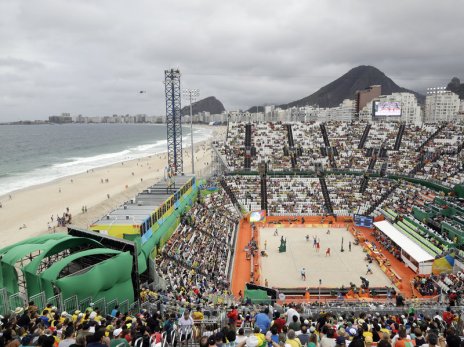
Rio’s Olympic beach volleyball venue is on Copacabana Beach. Photo from Marcio Jose Sanchez for AP.

Only two years ago the FIFA World Cup was making similar headlines in Brazil. As reported in 2014, and highlighted in this blog[1], there have been past concerns about access to quality healthcare despite the surge of funds for the World Cup event. These reports unmasked a problematic system of health disparities to a global audience. The Daily Californian[2] stated that many Brazilians were “unhappy that their government [was] funding stadium renovations instead of spending on more instrumental matters like improved health care and emergency services.” Reports relating to the current Olympics have painted a similar picture for the present health scene. As Reuters[3] reported in December 2015, the governor of Rio de Janeiro declared a state of emergency “as hospitals, emergency rooms and health clinics cut services or closed units throughout the state as money ran out for equipment, supplies and salaries.” According to CNN[4], the financial crisis has been causing difficulties in the “provision of essential public services and can even cause a total breakdown in public security, health, education, mobility and environmental management.”. While the state of emergency declaration provides a critical 45 million reais ($25.3 million) in federal aid and may facilitate the transfer of future funds, estimates state that Rio de Janeiro owes approximately $355 million to employees and suppliers in the healthcare sector alone, and the state needs over $100 million to reopen the closed hospital units and clinics.[5] While the city of Rio spent approximately $7.1 billion on improving toll roads, ports and other infrastructure projects, the Brazil Ministry of Health devoted only $5.7 million to address health concerns[6].

rio-favelas--joao-velozo-9_custom-84b1822885fc72f97f7e9084730eb4397aa48b6e-s1300-c85

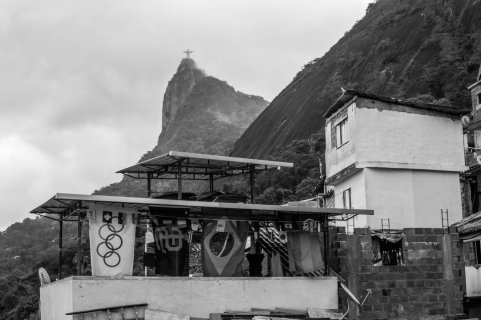
The Christ the Redeemer statue is visible above the Santa Marta favela in Rio de Janeiro. Photo from Joao Velozo for NPR. 

In addition to these issues (and the high-profile Zika virus, which is causing health concerns in multiple countries[7]), concerns surrounding water quality and cleanliness in Brazil has garnered considerable attention. A recent scene involving the diving and water polo pools turning a swamp-green color because of an algae bloom left some athletes complaining of itchy eyes.[8] While the Olympic Games have brought international attention to the impact of water quality on the athletes and visitors, the residents of Rio have been dealing with theses concerns on a daily basis for much longer. With almost 13 million people living in and around Rio, the current sewage system is struggling to cope. One news report[9] notes that “about 50 percent of what Brazilians flush down the toilet ends up in the country’s waterways. Diseases related to contaminated water are the second leading cause of death for children under five in Brazil.” Tests performed in a variety of areas, including the sailing venue of Guanabara Bay, over the course of a year found high levels of “superbugs of the sort found in hospitals on the shores of the bay.” The possibility of hospital sewage entering the municipal sewage system remains a concern.[10]

An economic recession, compounded by water concerns, political unrest, and a presently faltering healthcare system all leave many Cariocas— citizens of Rio– who rely on the public health system in a challenging and hazardous situation across the social, medical, and political spheres. With hopes of local profits from the Olympic Games ranging in the billions of dollars, much is at stake for both residents and investors.[11] Despite the risks and tribulations, many residents welcome the international event and attention, and credit the Olympics for cultivating “several underutilized, often abandoned spaces have been transformed to ones that appeal and cater to local residents”. Many “beautification” projects leave residents hoping the installation of new art and the newly constructed spaces will leave a lasting impression on its residents and visitors long after the games end.[12]  Despite this optimism, the citizens of Rio are not impacted equally by the Games.[13] The improved infrastructures will likely benefit those who already have access to services. Tourism, and tourism cash, has been weak in the favelas, or shantytowns, which house at least 25% of the population in Rio. The infrastructure inequities have even bypassed some neighborhoods entirely, leaving those residents out of the celebrations.[14]

Overall, these Olympic Games promise once again to bring the world’s cultures together in competition and camaraderie, yet they do not do so without controversy. This global spectacle illuminates athletics and sportsmanship, as well as the intersections between cultural events, politics and nationalism, power and profit, and community health. These larger issues lead to questions about what will happen to the residents of Rio after the Games have drawn to a close.


[1] https://culturemedicinepsychiatry.com/2014/07/11/news-the-2014-world-cup-and-healthcare-in-brazil/

[2] http://www.dailycal.org/2014/07/08/uc-berkeley-faculty-graduate-students-look-world-cup-different-light/

[3] http://www.reuters.com/article/us-brazil-health-emergency-idUSKBN0U716Q20151224

[4] http://www.cnn.com/2016/06/18/americas/brazil-rio-state-emergency-funding-olympics/

[5]http://www.reuters.com/article/us-brazil-health-emergency-idUSKBN0U716Q20151224

[6] http://wuwm.com/post/let-s-do-numbers-money-spent-rio-olympics#stream/0

[7] http://www.nytimes.com/2016/01/29/world/americas/brazil-zika-rio-olympics.html?_r=0

[8] http://uk.reuters.com/article/uk-olympics-rio-diving-pool-idUKKCN10O0UW?feedType=RSS&feedName=sportsNews

[9] http://wuwm.com/post/rios-water-problems-go-far-beyond-olympics#stream/0

[10] http://edition.cnn.com/2016/08/02/sport/rio-2016-olympic-games-water-quality-sailing-rowing/index.html

[11] http://www.newsweek.com/rio-2016-who-stands-benefit-successful-olympics-453094

[12] http://www.kvia.com/news/rio-olympics-bring-beautification-projects/40884340

[13] http://www.npr.org/sections/thetorch/2016/08/11/487769536/in-rios-favelas-hoped-for-benefits-from-olympics-have-yet-to-materialize

[14] http://www.reuters.com/video/2016/08/14/olympic-infrastructure-causes-suffering?videoId=369565427