
The next few months we’ll be highlighting authors who have published in Culture, Medicine, and Psychiatry.
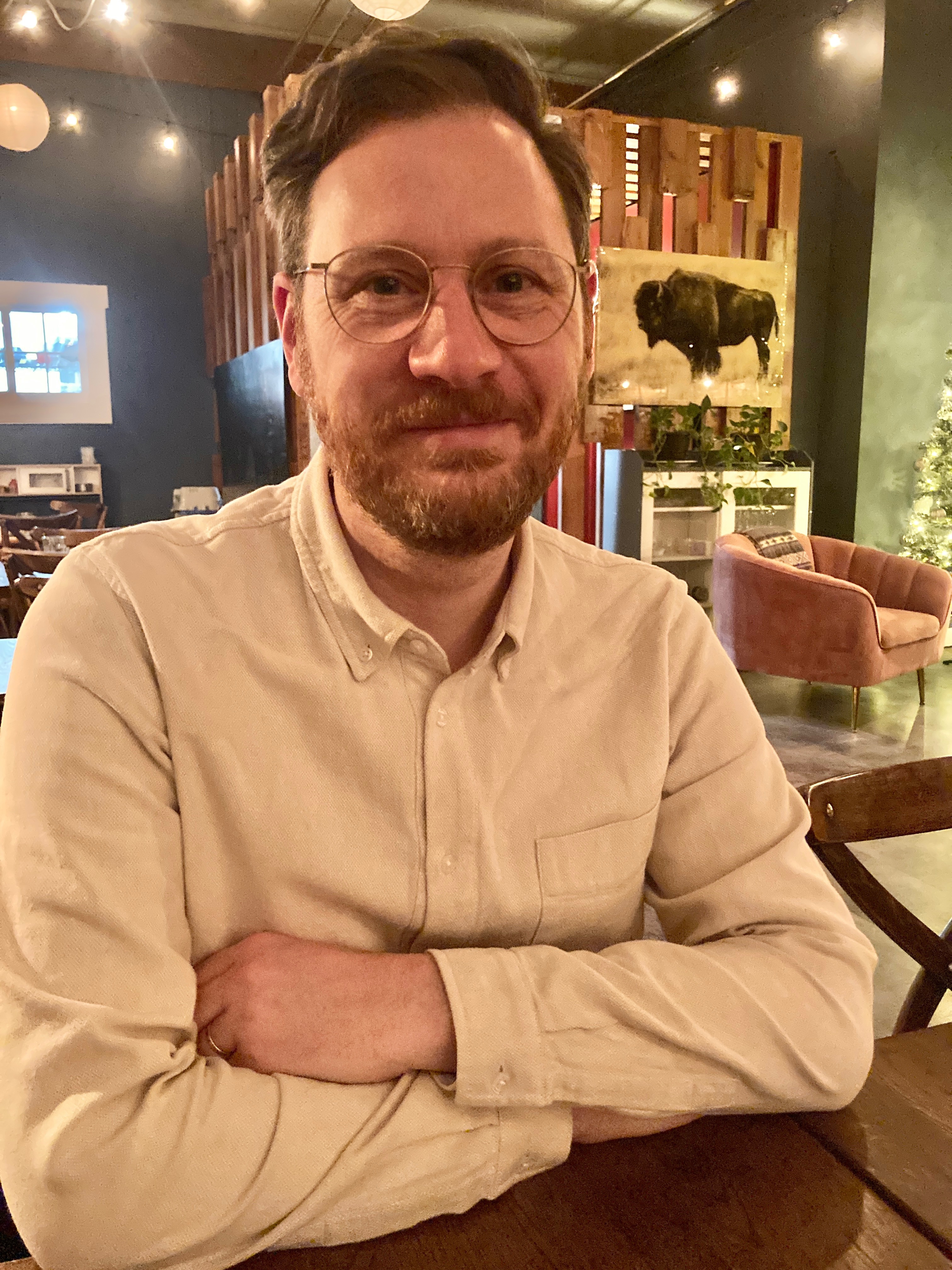
Jesse Proudfoot is an Assistant Professor in the Department of Sociology at Durham University. His research focuses on drug use among marginalized and racialized people, the politics of drug policy and treatment, and the relationship between addiction and structural violence.
What is your article “The Dreamwork of the Symptom: Reading Structural Racism and Family History in a Drug Addiction” about?
This article is about the relationship between oppressive social forces and illnesses like drug addiction. It’s common in medical anthropology to argue that seemingly individual illnesses need to be understood as shaped, and often produced, by social forces, but the precise ways that these forces produce illness is difficult to chart in concrete terms. In this article, I try to analyze this process, by looking at the case of one person I interviewed: Leon, an African American man from Chicago who had an addiction to crack cocaine. Drawing on psychoanalysis, and in particular, Freud’s idea of the dreamwork, I attempt to show how latent social forces like structural racism can find expression in symptoms such as drug addiction, but only through the mediation of other proximate layers—in Leon’s case, his complex relationship with his family and his own radical politics.
Tell us a little bit about yourself and your research interests.
I’ve been interested in drug use and addiction since my PhD, which was an ethnographic study of homeless drug users in Vancouver’s Downtown Eastside. I charted their experiences as the neighbourhood underwent rapid changes due to progressive developments in drug policy, as well as gentrification. My earlier work was more concerned with the politics of harm reduction drug policy, but over the years, I’ve become more interested in the broader question of addiction and the subjective experience of people with problematic relationships to substances. I’m most interested in thinking about symptoms—like addiction—as sites of connection between the social, the political, and the subjective.
What drew you to this project?
This research grew out of an 18 month period of fieldwork I conducted in Chicago in 2012-13. I was working in a halfway house for people being released from prison who were struggling with drug addictions. I was struck by the diversity of people’s experiences of addiction, which ranged from what we might call acute self-medication, in order to deal with intolerable life circumstances, to much more complex, unconscious dynamics related to childhood trauma. Having written about these different forms of addiction in an earlier paper (‘Traumatic Landscapes’, 2019), I became interested in understanding what else we can read in addictions and the broader question of how to understand the relationship between politics and symptoms.
What was one of the most interesting findings?
The hook of this paper is that understanding the causes of your illness is not the same as treating it. Critical medical anthropology places a lot of emphasis on the demystification of symptoms, implicitly arguing that by uncovering the social causes of illnesses, we can alleviate them. Even though it now sounds obvious, I was struck during this research by the gap between demystification and therapeutics. My interlocutor Leon had a very well-developed political analysis of his addiction, grounded in critical political economy and anti-racism, and we talked about this often. But these insights failed him where he needed them most, in changing his own relationship to drugs. Making sense of this gap was what prompted me to think more deeply about how we approach the question of demystification.
What are you reading, listening to, and/or watching right now?
I started running last year, which means I’m listening to a lot of podcasts. My current favorites are Know Your Enemy, which is a deep dive into American conservative thought for people on the Left, and Love is the Message by Tim Lawrence and Jeremy Gilbert, which is focused on dance music, counterculture, and collective joy—things I’ve spent a lot of time thinking about. The most recent novel I read was A Gate at the Stairs, by Lorrie Moore; a very funny and sad book about going to college, grief, and loss.
If there was one takeaway or action point you hope people will get from your work, what would it be?
The demystification of illness is a complex business and our critical efforts must be attentive to the highly particular ways that people experience and embody those social forces that medical anthropologists are often interested in. As I hope to show in the article, this is essential not only to more accurately theorize illness, but also to help people with addictions to make sense of their lives and navigate their recoveries. Care must be ‘structurally competent’ in Jonathan Metzl and Helena Hansen’s terms, but also—in the spirit of the best traditions within psychoanalysis—grounded in the particularities of life histories.
Other places to connect:
Website






 Culture, Medicine, and Psychiatry