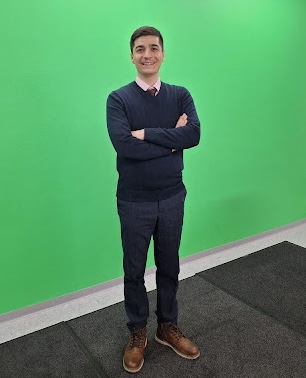
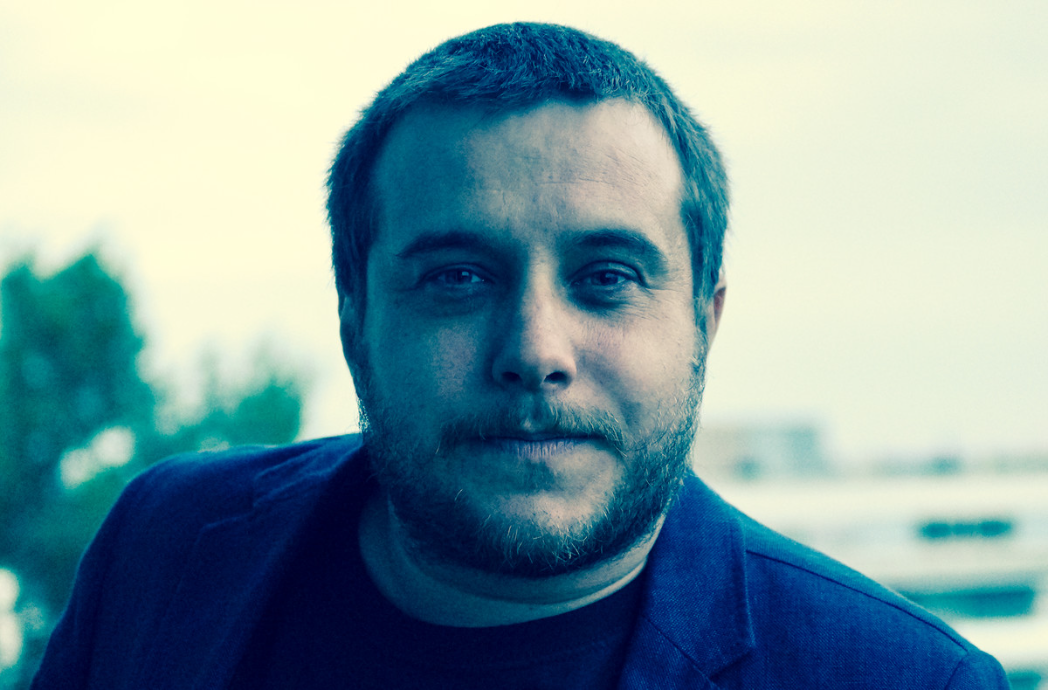
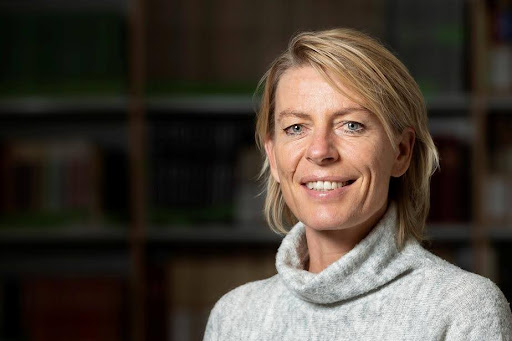
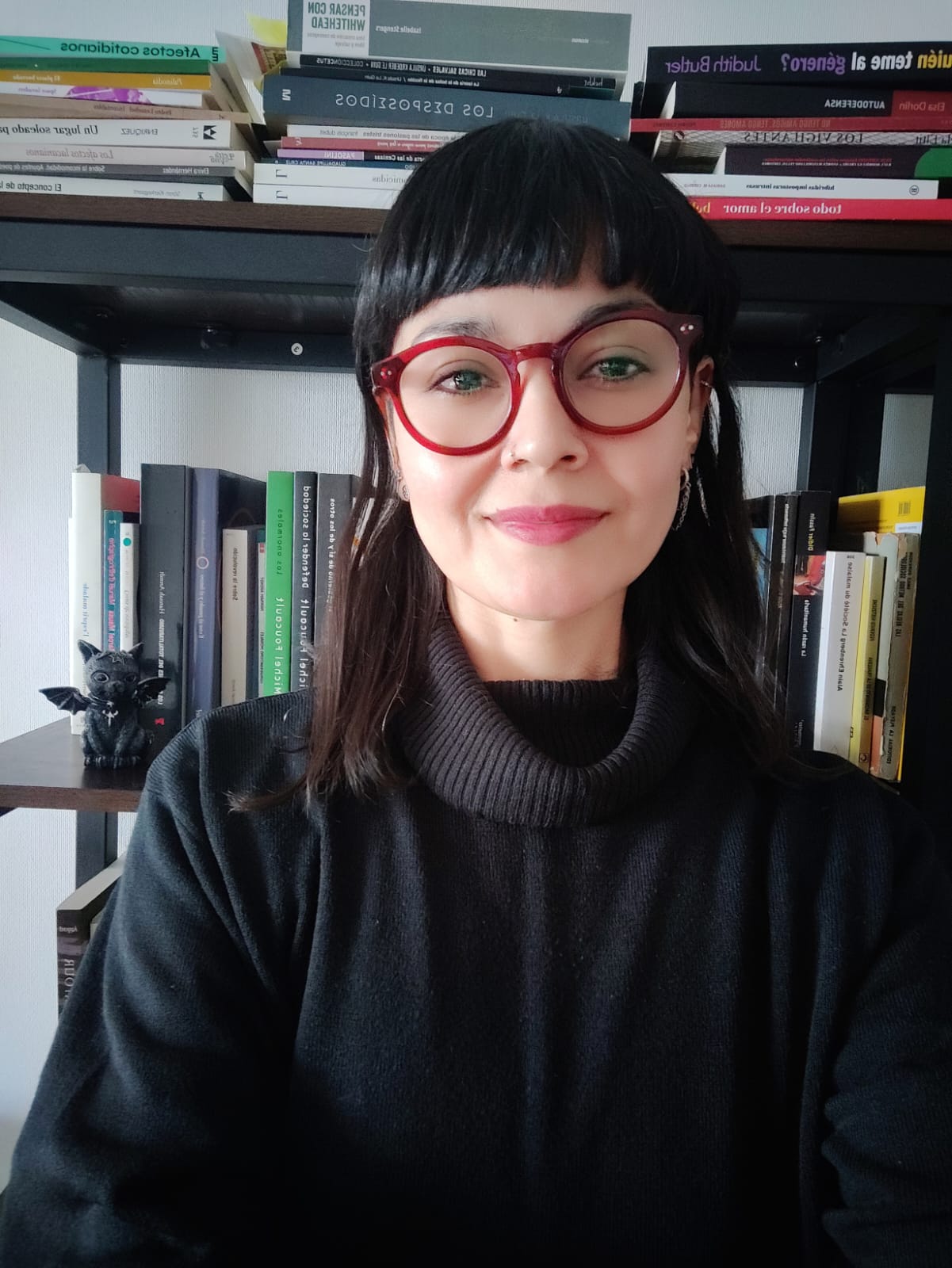
Interview With Domonkos Sik 

The next few months we’ll be highlighting authors who have published in Culture, Medicine, and Psychiatry.

Associate Professor, Eötvös Loránd University, Budapest 

My research deals with various topics in critical theory including political culture and mental disorders in late modernity. My work has appeared in such venues as The Sociological Review, Theory, Culture & Society, European Journal of Social Theory, Thesis Eleven, Journal of Mental Health. Most recent books: Empty suffering (Routledge 2021) Salvaging modernity (Brill 2025).

What is your article Between Depression and Alienation: Burnout as a Translator Category for Critical Theories about?

The article explores the psychopathological and sociological discourses surrounding the contested notion of burnout, with the aim of reintroducing it as a ‘translator category’. Such concepts, which can translate between everyday language, medical language and critical language, are particularly important in cases which originate from both individual and social causes. Without these translator categories, biomedical and psychopathological interpretations veil the social components of suffering – therefore, inevitably mistreat it as an exclusively individual problem. Furthermore, attempts at social critique also remain inaccessible because they rely on their own set of diagnostic concepts (such as alienation), while lay actors interpret their suffering as an illness or mental disorder (such as depression). To avoid these dead ends, the article discusses how burnout as a translator category can link the discourses of alienation (as a cause of burnout) and depression (as a consequence of burnout) while remaining accessible as a lay category.

Tell us a little bit about yourself and your research interests.

I was trained as a sociologist and philosopher in post-socialist Hungary. Initially, my research focused on democratic transition, particularly its phenomenological features. Since 2010, however, my attention has shifted from the criteria of democratic culture to the personal consequences of failed democratization. This led me to explore the links between social suffering and mental health issues, a topic which has become my main area of expertise over the last decade.

What drew you to this project?

After exploring several clinical categories (e.g. depression, anxiety, addiction) from a critical theoretical-phenomenological perspective (see my book Empty Suffering) I became interested in a phenomenon located at the intersection of biomedical and lay discourses. This is how I found the topic of burnout, which is contested within the biomedical discourses, while being widely applied by the lay actors at the same time.

What are you reading, listening to, and/or watching right now? (Doesn’t have to be anthropological!)

I enjoy reading novels, viewing them not just as an excellent way to relax, but also as a constant source of inspiration for my social scientific work. As well as the better-known classics by authors such as Balzac and Dostoevsky, and contemporaries such as Ali Smith and Kazuo Ishiguro, I also enjoy the vivid Central European literary scene (authors such as Péter Nádas and Mircea Cărtărescu).

If there was one takeaway or action point you hope people will get from your work, what would it be?

Most mental health conditions are inextricably linked to social dysfunction and structural distortion. If we do not address the ‘social pathologies of contemporary civilization’ (that is also the name of a research network I am currently involved in: https://socialpath.org/), there is little hope of stopping the ‘epidemics’ of depression and burnout.

Other places to connect:

Website

Interview With Nader Abazari

The next few months we’ll be highlighting authors who have published in Culture, Medicine, and Psychiatry.

Nader Abazari holds a PhD in clinical psychology. Currently, as a post-doctoral researcher, he explores ways to enhance existential well-being through interdisciplinary approaches. He is particularly interested in how cultural context contributes to the fundamental human need to quest for meaning in life.

Existential well-being research group, University of Eastern Finland

What is your article “Meaning in Life: Exploring the Potential of Mythological Narratives in Contemporary Life” about?

Everyone, at some point, faces the question: What makes life worth living? Psychologists address this through the concept of “meaning in life.” As meaning is not automatically given, we must actively create it. While this is a deeply personal process, it is also shaped by the cultural context in which we live. In addition, anthropologists view myths as the essence of the cultures from which they emerge. This led us to ask: Do myths contain clues for meaning-making that remain useful today? To explore this, we compared three psychological theories with examples from world myths. Our analysis shows that mythological narratives, aligned with contemporary theories, provide valuable insights into the meaning-making process: encountering a profoundly impactful event, dissatisfaction with the current state, meaning-making attempts, and providing a vision of desired state. Thus, we conclude that myths remain relevant to enduring human concerns, guiding reflection on meaning in contemporary life.

Tell us a little bit about yourself and your research interests.

Previously, I worked as a psychologist focusing on improving the well-being of individuals with chronic conditions. As a postdoctoral researcher, I found the perfect opportunity to pursue my interest in a particular dimension of well-being, existential well-being. Within this field, I am especially fascinated by sources of meaning, the avenues people draw upon to see their lives as meaningful. These sources range widely, from spirituality, love, and unison with nature to religion, ritual, achievement, freedom and more. What intrigues me most is how people seem to choose their sources of meaning from a kind of “menu” offered by their cultural context. For instance, in Finland, with its striking and abundant natural landscapes, people’s lives are deeply intertwined with nature, and unison with nature often becomes a particularly valued source of meaning. In other countries, however, we may find that sources such as religiosity and spirituality are more prominent. Currently, under the supervision of Associate Professor Suvi-Maria Saarelainen, I am exploring how culture shapes sources of meaning, with myths, as cultural showcases, forming a central part of our research.

What drew you to this project?

In answering this question, I am reminded of Isaac Newton’s famous words: “If I have seen further, it is by standing on the shoulders of giants.” We believe this perspective extends far beyond the academic world; it also applies to everyday life. In the context of meaning in life, these “giants” are the tangible and intangible cultural heritage passed down through generations. Our project was inspired by the idea that just as personal human history can provide insights into how to find meaning in life, collective human history also has the potential to show how our ancestors found meaning in their lives. We sought to take an initial step in showing that the meaning-making practices of the past may still resonate and continue to shape the ways people seek meaning today.

What are you reading, listening to, and/or watching right now? (Doesn’t have to be anthropological!)

Lately, I have been drawn to books that build bridges between human psychological processes, culture, and history. Two that stand out for me are The Cultural Animal by Roy F. Baumeister and The Cry for Myth by Rollo May. I also enjoy podcasts on world history and the biographies of influential figures from diverse fields. For me, history offers a process-oriented, holistic perspective for understanding human issues, and helps me avoid the trap of tunnel vision.

If there was one takeaway or action point you hope people will get from your work, what would it be?

I would say that myths are not just stories of the past, they are lived and culturally validated roadmaps for a meaningful life. They remind us that the visions for a better life that once guided our ancestors can still, at least at times, inspire and shape our own search for meaning today.

Other places to connect:

Website

Linkedin

Interview With Florin Cristea

The next few months we’ll be highlighting authors who have published in Culture, Medicine, and Psychiatry.

PhD candidate, Freie Universität Berlin

Florin Cristea is a PhD candidate in psychological and medical anthropology at the Freie Universität Berlin. His research focuses on understanding the moral world of people diagnosed with severe psychiatric disorders. In his work, he engaged with the social and clinical life worlds of people with a lived experience of psychiatric encounters in Romania, Tanzania, and Indonesia.

What is your article Navigating the Unknown: Mental Pain, Uncertainty, and Self-Isolation in Bali and Java about?

Suffering has long been a central theme in anthropology. Yet, despite growing interest in psychology and psychiatry, anthropological engagement with mental or emotional pain (as stand-alone concepts) has remained limited. In my article, based on fieldwork in Indonesia on severe psychiatric disorders, I tried to understand the impact of mental pain on the person experiencing it and their immediate environment. I first outlined the salient attributes of mental pain as they emerged during my conversations with patients and observations of their everyday lives. I then suggested that these attributes contributed to the uncertainties individuals faced as part of their experiences with severe psychiatric disorders. Finally, my main argument was that the interplay between mental pain and uncertainties informed certain illness behaviors, particularly tendencies toward self-isolation.     

Tell us a little bit about yourself and your research interests.

I am interested in the anthropology of mental health and illness, as well as in Global Health and Global Mental Health. I am fascinated by how different knowledge worlds come together and influence people’s understanding of what it means to be healthy, sick, and ultimately human. While my work has been strongly influenced by critical medical and psychological anthropology, I try to maintain an open engagement with the psy and biomedical sciences and seek venues of mutual understanding and collaboration.

What drew you to this project?

I initially was drawn to alternative understandings of the mind in Indonesia. However, mapping out these understandings proved far more complex than I had anticipated. Addressing mental pain was my way of making sense of the muddle that became my data.

What are you reading, listening to, and/or watching right now? (Doesn’t have to be anthropological!)

A friend recently recommended “Lightseekers” by Femi Kayode, and I am looking forward to reading it on my upcoming vacation. I am grateful to have time to enjoy something completely unrelated to work. 

If there was one takeaway or action point you hope people will get from your work, what would it be?

Isolation of people diagnosed with a severe psychiatric disorder is a fairly common problem, irrespective of where it occurs. It is important to note or to reiterate that isolation is not only the result of social attitudes toward mental illnesses, nor is it an individual issue. It is part and parcel of the intersubjective nature of the encounter between the social and the individual. We need to do better in understanding this relationship.  

Other places to connect:

Linkedin

Interview With Gitte Vandborg Rasmussen

The next few months we’ll be highlighting authors who have published in Culture, Medicine, and Psychiatry.

PhD, Department of Anthropology, Aarhus University, Denmark

Gitte holds a PhD in medical anthropology and is a former psychiatric nurse. Her research concerns mental health and family life and explores connections between time and ADHD from an everyday family perspective. She draws on long-term fieldwork conducted in Danish families.

What is your article “”I Do not have ADHD When I Drive My Truck” Exploring the Temporal Dynamics of ADHD as a Lived Experience” about?

Co-written with Per Hove Thomsen, Sanne Lemcke, and Rikke Sand Andersen, this paper explores cases where interlocutors make use of space—such as a truck, a horse stable, or a space capsule/flat—as a strategy for balancing ADHD symptoms. Methodologically, the article draws on Stevenson´s concept “imagistic thinking” as a way to approach creative sides of managing ADHD. The main contribution of the paper is the concept of “own-time spaces”: personal spaces driven by dreams and desires and characterized by rhythm. In own-time spaces, ADHD symptoms fade into the background. The article adds to the existing understanding of shielding as a pedagogical strategy in coping with ADHD. Own-time spaces are more than concrete shields; they are personal, dynamic, and imagistic spaces that reflect a lifetime perspective, such as for example childhood dreams. Put simply, attending to own-time spaces is a strategy for regulating ADHD-experiences and thereby reduce ADHD symptoms

Tell us a little bit about yourself and your research interests.

As both a medical anthropologist and psychiatric nurse, I seek to explore the entanglements between
biological and social experiences and explanations of living with ADHD. I approach this through the lens of time. Drawing on ethnographic fieldwork and conceptualizing ADHD as a bio-chrono-social condition, my research unfolds the temporal entanglements of ADHD in bodies and families.

What drew you to this project?

A concrete empirical case kickstarted the idea of writing this article.
I have known Kenny for 15 years, first as my patient, and now as a research participant. Kenny is diagnosed with a severe degree of ADHD and has always been obsessed with trucks. Ever since he was a kid, he told me that his ADHD disappears when he is in a truck. Now, when an adult, the same counts; he still tells me that his ADHD disappears when he drives his truck. Kenny´s experiences of ADHD as a condition that fluctuates contrasted with my primary understanding of ADHD a highly biological condition. This contradiction has been my main motivation to write this article. I invited a team of cross-disciplinary co-authors from anthropology and psychiatry because I wanted the article to explore this mystery in the broadest possible sense

What are you reading, listening to, and/or watching right now? (Doesn’t have to be anthropological!)

I defended my PhD dissertation three weeks ago, so right now I’m enjoying some downtime by watching a popular Netflix series called Sirenes.

If there was one takeaway or action point you hope people will get from your work, what would it be?

One key takeaway is that ADHD is a dynamic condition deeply entangled with time and space. People
actively engage in various forms of ‘time-work’ to manage their experiences and symptoms. Recognizing
these strategies can help us better understand ADHD beyond purely biomedical or social constructionist
frameworks.

Other places to connect:

Orchid

Linkedin

PURE

Interview With Ángela Cifuentes Astete

The next few months we’ll be highlighting authors who have published in Culture, Medicine, and Psychiatry.

Professor, Department of Humanistic Studies, Universidad Técnica Federico Santa María, Santiago, Chile. Associate researcher, Transdisciplinary Laboratory on Social Practices and Subjectivity (LaPSoS), Faculty of Social Sciences, Universidad de Chile. External member, Medical Anthropology Research Center (MARC), Universitat Rovira i Virgili, España

Ángela Cifuentes is a transdisciplinary researcher, clinical psychologist and psychoanalyst, holding PhDs in Social Sciences and in Medical Anthropology and Global Health. In recent years, she has focused on exploring experiences of anxiety, forms of affectation, and mental health care practices in contemporary Chilean universities shaped by neoliberal logic.

What is your article “The University Lives Anxiety and De-pression”: Diagnostic Uses and Affective Negotiations in Mental Health Care Services for University Students in Chile” about?

In this article, I explore how mental health problems are experienced and named in Chilean universities, especially in contexts marked by competition, performance, and inequality. Based on interviews I conducted with students and mental health professionals across three types of institutions, I analyze the everyday uses of diagnoses like “anxiety” and “depression.” I show that, both for students and for professionals, these diagnoses do not necessarily reflect clinical illnesses but often serve as ways of naming forms of distress tied to the demands of academic life. In many cases, they allow students to access institutional support or justify difficult decisions, such as taking a break or changing degrees. I argue that these diagnostic uses are also affective negotiations in response to pressures of academic performance and social adjustment, and they open space for imagining alternatives in the face of failure. Mental health in the university thus emerges as a complex, contested, and constantly shifting field.

Tell us a little bit about yourself and your research interests.

My experience as a clinical psychologist and psychoanalyst in various public and private mental health institutions has shaped a critical lens on experiences of suffering, affects, and the modes of management and care within institutions, leading me to focus on their political, cultural, and socio-historical dimensions. I am interested in generating knowledge that enables a deeper understanding of complex phenomena and contributes to social transformation. Currently, I am particularly interested in continuing research on university mental health, especially how global mental health discourses are locally reconfigured in Chilean universities in the post-pandemic context, exploring the affects, interdependencies, and technical mediations that shape students’ everyday care practices.

What drew you to this project?

The article is based on part of the findings from my doctoral research. Initially, the project aimed to study so-called ‘anxiety disorders’ in the context of public health in Chile. However, during the course of my doctoral studies, various expressions of distress erupted in Chilean universities: first, in May 2018, feminist protests against abuse and gender-based violence within universities; and then, in April 2019 (just a few months before the ‘chilean social uprising’), protests demanding greater access to mental health treatment services in universities. In those protests, student banners—echoed in the title of my article—declared that ‘at university we live anxiety and de-pression.’ This shifted my attention toward the use of mental health language in expressions of discontent, the institutional management of anxious affects, and its relationship to performance demands in universities.

What are you reading, listening to, and/or watching right now? (Doesn’t have to be anthropological!)


This year, I’ve immersed myself in the work of Ursula K. Le Guin, fascinated by her ability to imagine alternative forms of life, relationships, and vital persistence. Her literature has become a source of inspiration for rethinking research as a political gesture. After reading several of her science fiction novels, I’ve now begun reading the fantasy saga “The Earthsea Cycle” with my daughter. Musically, I tend to move between very different registers — from dense, dark sounds to fusions that open up to something more hopeful. Lately, while working, I’ve been listening a lot to Tigran Hamasyan, an Armenian jazz pianist whose music helps me stay grounded and focused. On screen, I’m watching the final season of “The Handmaid’s Tale”.

If there was one takeaway or action point you hope people will get from your work, what would it be?

The main conclusion I aim to convey through my work is that mental health in university settings cannot be understood or addressed solely through reductionist and biomedical perspectives—nor can it be fully captured by interpretations that frame it exclusively as a form of inescapable social control. My research shows that while diagnoses and expressions of distress often involve individualized uses, they also function as affective languages and negotiation strategies in response to the demands of neoliberal academia. The key takeaway I propose is to rethink university mental health as a situated, collective, and political issue that reflects structural forms of exclusion, precarity, and inequality. It is urgent that public policies and institutional interventions acknowledge this pragmatic-political dimension of diagnoses, and move toward co-constructed strategies that do not reduce the complexity of student suffering to the private or clinical realm, but instead open up spaces for listening, recognition, and transformation of the structural conditions that produce it.

Other places to connect:

Website

Linkedin

Interview With Christopher Chapman

The next few months we’ll be highlighting authors who have published in Culture, Medicine, and Psychiatry.

Assistant Professor, Nanyang Technological University; Postdoctoral Affiliate, University
of Oxford

I am a medical anthropologist and sociologist. My work explores the intricacies of health and medicine in the Asia-Pacific, focusing on how people care for each other and how these practices intersect with medical and social service systems.

What is your article “Yuri’s Story: Memory, Relational Healing, and the Reflexive Logics of Art Therapy in Japanese Clinical Psychology” about?

Child protection systems around the world utilize mental health professionals to conduct assessments and provide children with therapeutic care. Japan is no exception. But thinking about child welfare and mental health cross-culturally helps us appreciate the
social side of practices that are commonly seen as (or hoped to be) objective, technical, and universal. My article details how clinical psychologist Yuri learned how to use art therapy to improve her professional work with abused or neglected children. Yuri’s story inadvertently dug up her own painful memories. Her return to childhood through art therapy unsettled her worldview: was her clinical work actually for the children, or was it just for herself? Yet, Yuri renewed her sense of clinical will. Cathartic resolutions of distress may help care practitioners develop empathy and become better carers. This is how Yuri thought art therapy was innovative for mental health care.

Tell us a little bit about yourself and your research interests.

While I am originally from a small, rural town in the Northwestern U.S., my research training has taken me across the world, from Hawai‘i and Japan to the U.K. and Thailand. My experiences in these places shape my interests in how people think about and enact care—and the lived realities of how caregiving plays out.

What drew you to this project?

I always find myself drawn to the ‘in-between’ things, especially in medicine and culture. Child protection does not immediately bring things like clinics and hospitals to mind, but it is a critically important arena where decisions and actions have dire consequences for one’s health and well-being. Japan’s child protection system has been undergoing significant reform throughout the past decade, providing an even more complicated space to think about care and culture.

What are you reading, listening to, and/or watching right now? (Doesn’t have to be anthropological!)

While I am reading (and re-reading) chapters from my in-progress book, I also recently started re-reading the Expanse series by James S. A. Corey. It is a fun hobby, but for my work, it is also helpful in seeing how writers in other genres craft an argument, describe social life, and present information to the reader.

If there was one takeaway or action point you hope people will get from your work, what would it be?

I cannot stress enough the value of strong and long-term relationships in ethnographic work. Yuri’s story was not a single moment, but conversations at the office, meetings in the therapy room, and chats in coffee shops over a year. I learned some of the most moving parts of her life quite late into my fieldwork. It can take time to appreciate another person’s life, but taking small steps toward making a person feel wanted can go a long way in building a rewarding connection (like inviting someone to a cup of
coffee/tea).

Interview With Henry J. Whittle

The next few months we’ll be highlighting authors who have published in Culture, Medicine, and Psychiatry.

Doctoral researcher, Department of Anthropology and Sociology & Centre for Anthropology and Mental Health Research in Action (CAMHRA), SOAS University of London

Dr Henry Whittle is a psychiatrist and anthropologist in training. He began his research career using mixed methods to study food insecurity, before pivoting towards mental health rehabilitation after specialising in psychiatry. Following further training in medical anthropology, he is currently working towards a PhD at SOAS University of London.

What is your article Ronaldo on the Clapham Omnibus: Complex Recoveries in Complex Psychosis about?

In the article, I think about what we mean by recovery in psychosis. I ask how it complicates our current understanding of recovery if we consider the experiences of people with the most complex forms of psychosis. These people are inadvertently excluded from much debate on this topic. Ethnography is one of the few ways that their experiences can be incorporated meaningfully. Drawing on six months of ethnography on an inpatient psychiatric rehabilitation unit, the article centres around a man I call Shepherd, whose journey to becoming a more confident, calmer, happier person looked very different to most portraits of recovery in the existing literature. This is important because our understanding of recovery shapes mental health policy in material ways. If we oversimplify recovery by missing people like Shepherd, we risk structurally undermining the interventions—including inpatient rehabilitation—that may be most effective in supporting them to live well.

Tell us a little bit about yourself and your research interests.

I am a psychiatrist and anthropologist, still working through my training in both disciplines. I currently work in an Early Intervention in Psychosis service in London and I will be part of the new Centre for Anthropology and Mental Health Research in Action (CAMHRA) at SOAS University of London. My research interests broadly relate to the social, cultural, and structural influences on mental health care and recovery, particularly for people living with more severe and enduring mental illnesses. Above all, I am an advocate for using applied social science as a basis for dialogue with service users, clinicians, practitioners, relatives, carers, and everyone else invested in improving mental health services.

What drew you to this project?

I have been intrigued by inpatient units ever since I first started working in psychiatry. Even though things are a little different now from how they were in Goffman’s time, the ‘total institution’ was still the main conceptual apparatus I received from my professional training to think through these places. Contributing towards addressing that gap, even slightly, was part of my motivation for taking on this project. The other part was that I have always been drawn to working with people with complex psychosis. I have learned so much from them, mainly about the limits of my own frameworks and my own imagination, but also about the complex, conflicting, and sometimes unexpected roles that institutions play in their lives. This is poorly captured in a clinical evidence base that, on the whole, tends to privilege streamlined understandings and analytic closure. I thought that ethnography could be particularly useful here—to help us hold onto that complexity as we make pragmatic decisions about care.

What are you reading, listening to, and/or watching right now? (Doesn’t have to be anthropological!)

Music and sport are big parts of my life. Both were important for this study. I bonded with Shepherd over a shared love of sport, and when I think of Apollo Ward I mainly think of playing pool and taking requests to play music on my phone—Orbital, Ed Sheeran, the Darkness, and the Rolling Stones were the soundtrack to this study. So now I’m watching my beloved Liverpool play football again after celebrating England Lionesses win the European Championship, and I’m listening to a lot of exciting British and Irish post-punk bands—Big Special, Wet Leg, and Sprints at the moment. I also recently started reading The Brown Sahib Revisited by Tarzie Vittachi, a searing takedown of the legacies of British colonialism in South Asia that was a wonderful gift given to me by my mentor and friend Sushrut Jadhav.

If there was one takeaway or action point you hope people will get from your work, what would it be?

That we need to take people’s ambivalent feelings and contradictory dispositions towards mental health services seriously in imperfect systems, even if it makes us uncomfortable. These contradictions may be our only glimpses of the life-sustaining roles that some institutions play in people’s lives. That is not to say that we should avoid radical critique, just that we need to proceed with caution. It is easy to miss complexity in this field, and missing complexity has material consequences that tend to impact the most marginalised people disproportionately.

Interview With Tawni L. Tidwell

The next few months we’ll be highlighting authors who have published in Culture, Medicine, and Psychiatry.

Research Assistant Professor, Center for Healthy Minds, University of Wisconsin-Madison

Tawni Tidwell is a biocultural anthropologist and Tibetan medical doctor. She has served as Project Lead for the Tukdam Study since 2020. Her research explores cultural practices for differential wellbeing and resilience, especially those cultivated over the life course from Tibetan medical and Buddhist approaches. She maintains a private clinic.

What is your article “Life in Suspension with Death: Biocultural Ontologies, Perceptual Cues, and Biomarkers for the Tibetan Tukdam Postmortem Meditative State” about?

This article presents two cases from the Tukdam Study, an international collaboration with Tibetan monastic populations in India on the post-death meditative state called tukdam. Entered by advanced Tibetan Buddhist practitioners through a variety of different practices, this state provides an ontological frame that is investigated by two distinct intellectual traditions—the Tibetan Buddhist and medical tradition on one hand and the Euroamerican biomedical and scientific tradition on the other— using their respective means of inquiry. This article explores how the two traditions enact distinct views of the body at the time of death alongside their respective conceptualizations of what constitutes life itself. It examines when the two investigative paradigms might converge, under what contexts, and through which correlating means of evidence to understand the varied physiological changes exhibited in the context of dying and their implications for conceptualizing different states of being.

Tell us a little bit about yourself and your research interests.

Tidwell’s interest in becoming an aerospace medical doctor and studying the body in extreme conditions took an unconventional path to eventually lead her to pursue Tibetan medical education in India and Tibet concurrent with doctoral training in anthropological inquiry as to how culture gets under the skin. Her current research facilitates bridges across the Euroamerican scientific tradition and the Tibetan medical tradition for illness contexts such as cancer, infectious disease and chronic inflammatory disorders along with the attendant epistemologies and ontologies related to embodiment, ecological approaches to health, body-substance dynamics in Tibetan pharmacology, and diagnostic/treatment paradigms. She investigates cultural practices over lifetime trajectories that affect mind-body outcomes derived from Buddhist contemplative and Tibetan medical approaches.

What drew you to this project?

This project is a deeply collaborative project with the Tibetan community in which we are co-developing research aims, constructs, and measures to mutually inform each intellectual tradition. With some of the most accomplished practitioners of the Tibetan Buddhist world, we have the opportunity to understand not only the life stories of these remarkable individuals but how they have used their lives to engage practices that transform their minds, bodies and experiences. We are fortunate to work with such a dedicated field team who are deeply devoted to the XIV Dalai Lama’s engagement with science and facilitating understandings of wellbeing with colleagues from the Russian Academy of Sciences and India-based National Institute for Mental Health and Neurosciences.

What are you reading, listening to, and/or watching right now? (Doesn’t have to be anthropological!)

Gül Dölen’s work on consciousness among octopus species, social cognition and critical periods. E.g., here is her interview with Being Patient, which focuses on innovative work on brain health, cognitive science, and neurodegenerative diseases.

If there was one takeaway or action point you hope people will get from your work, what would it be?

How we die speaks volumes about how we live. In this short life we share on this planet, our collective capacity to transform ourselves, our communities and our global condition is emphasized through the extraordinary exemplars and intrepid cultural practices of many from whom we still have opportunities to learn.

Other places to connect:

Twitter: @Tawni Tidwell

Instagram: tawnitidwell

LinkedIn

Interview With Talia S. Katz, PhD

The next few months we’ll be highlighting authors who have published in Culture, Medicine, and Psychiatry.

Assistant Professor of Israel Studies, State University
of New York (SUNY) at Binghamton

Talia Katz is a cultural anthropologist whose research
intersects the medical humanities, childhood studies, and gender studies. Her first book project, A Healing Stage: Violence, Self-Knowledge, and Therapeutic Theater in Israel, is a historical and ethnographic study of psychodrama in Israel, focusing on the mixed Jewish-Palestinian city of Lod.

What is your article “A Ring Transforms: Children Learning Life and Death in Lod” about?

My article develops an ethnographic method of attending to children’s voices, showing how what I call the ‘fragmented’ texture of children’s knowledge yields new insights about Israeli society and its conflicts. The article is based on sixteen months of participant observation at a community theater center in Lod, Israel. Taking elementary school children as ethnographers, I show how their play reveals that they learn political violence not as a specific event but rather as part of the conceptual structure of their world. This finding is particularly important for debates on trauma in the social sciences, illustrating how the biomedical focus on the etiological event can eclipse foundational ways in which violence shapes one’s self and world.

Tell us a little bit about yourself and your research interests.

Trained as a cultural anthropologist at Johns Hopkins University, I use
ethnographic methods to ask questions about health, illness, trauma, and subjectivity. At its core, my research seeks to understand how both psychological experts and everyday people respond to the marks of violence on their milieu. I am interested in what repair looks like from the perspective of the everyday and how the frameworks I encounter in my fieldwork differ from dominant legal and biomedical model.

What drew you to this project?

Having grown up in a household shaped by chronic illness and migration, I have always been passionate about how children put together that which adults, for one reason or another, may not share directly. When I began exploratory research for my dissertation, I learned that the Lod Theater held a weekly
children’s theater group. It seemed like a natural fit for the dissertation research – a chance to empirically study questions towards which I already had an affinity.

What are you reading, listening to, and/or watching right now? (Doesn’t have to be anthropological!)

A colleague introduced me to the powerful and beautifully written book Liliana’s Invincible Summer by Cristina Rivera Garza. I appreciated the astute rendering of how grief reverberates through kinship relations and reflections on subjectivity.

If there was one takeaway or action point you hope people will get from your work, what would it be?

Often adults – whether clinicians, educators, or care-givers – will ponder how best to explain X event or X challenge to a child. My research points to the ways in which children are already putting such knowledge together, whether adults have the courage to recognize this or not. Shifting the questions we ask about children’s knowledge can meaningfully reshape our understanding of what constitutes an adequate response.

Other places to connect:

Twitter: @TaliaSKatz

Linkedin

Website

Interview with Simon van der Weele

The next few months we’ll be highlighting authors who have published in Culture, Medicine, and Psychiatry.

Assistant professor, University of Humanistic Studies, Utrecht, the Netherlands

Simon van der Weele is a moral philosopher and ethnographer. He tries to make sense of ethical life by combining philosophical and social-scientific methods and frameworks. His research engages with care and caring, particularly for people with intellectual disabilities.

What is your article “‘Why Bother?’ Skeptical Doubt and Moral Imagination in Care for People with Profound Intellectual Disabilities” about?

People with profound intellectual disabilities are completely dependent on care from others to survive and thrive. But since they are non-verbal, interpreting their needs and preferences is difficult. As a result, caregivers experience constant uncertainty about whether or not their care is good and appropriate. In this article I try to understand how care professionals maintain faith in the meaning of their care, despite this uncertainty.

Tell us a little bit about yourself and your research interests.

I am fascinated by care and how we care for each other. I am trained as a philosopher, and I enjoy thinking philosophically about care. But I’ve come to believe that such philosophical thinking requires ethnographic texture for it to have bearing on our experiences. That’s why I try to bring ethnography to philosophy, and vice-versa.

What drew you to this project?

I’ve been entranced with the care for people with profound intellectual disabilities ever since I first set foot in a group home where a few of such people lived. Make no mistake, there’s nothing romantic about this care: it’s hard physical labour, day after day, often under precarious conditions. But I was deeply moved by the patience, intelligence and creativity I witnessed in the interactions between people with profound intellectual disabilities and their caregivers. I just had to move closer to this.

What are you reading, listening to, and/or watching right now? (Doesn’t have to be anthropological!)

Lately, I keep reaching for more stories by Ursula K. Le Guin. I just finished reading her collection A Fisherman of the Inland Sea. The titular story’s emotional impact hinges on ‘sedoretu’, a complicated polyamorous marriage system conjured up by Le Guin. There’s a strikingly ethnographic quality to her science fiction – it often reads like a kind of speculative anthropology, clothed in deeply human storytelling.

If there was one takeaway or action point you hope people will get from your work, what would it be?

I want to show my readers that imagination and creativity are at the heart of care. We often think of care as monotonous, even tedious work. The creative energy caregivers put into their work is seldom noticed. I hope my work provides some concepts to recognize and bolster this creativity.

Other places to connect:

Linkedin

Website