
The next few months we’ll be highlighting authors who have published in Culture, Medicine, and Psychiatry.
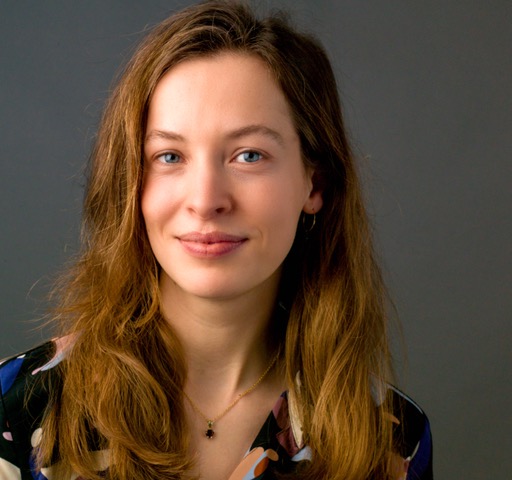
Sandrine Vollebregt, MD, is affiliated with Doctors of the World in Amsterdam, the Netherlands. Sandrine is a 30-year old medical doctor from the Netherlands, based in Amsterdam. She has worked in a primary health clinic for refugees on the Greek island Samos, and in acute psychiatry and the emergency department in the Netherlands. In her free time, she likes to listen to podcasts, cycle and write.
What is your article “Help-Seeking Undocumented Migrants in the Netherlands: Mental Health, Adverse Life Events, and Living Conditions” about?
In this article we looked at how many undocumented migrants visiting a low-threshold free non-governmental health service had mental health problems. Undocumented migrants are a diverse group comprised of amongst others rejected asylum seekers or labor migrants without a visa. They do not exist officially, cannot work legally, often have poor and uncertain housing conditions, and have in practice a restricted access to health care due to logistical and cultural barriers.
Tell us a little bit about yourself and your research interests.
I am 30 years old and I live in Amsterdam, the Netherlands, in a living community. I am a medical doctor and I have a specific interest in psychiatry. Currently, I am doing a course on global health and tropical medicine at the Royal Tropical Institute. I am very interested in migrant and refugee health, as I believe dealing with migration in a way that respects human rights is one of the great issues of our time. I hope that studying the health of migrants, and looking at how this connects to migration policies, can contribute to this discussion in a positive way by providing evidence based arguments.
What drew you to this project?
I was still a medical student when I saw a call for a student to analyze data on mental health of undocumented migrants in the Netherlands. At the time I just came back from volunteering for the first time in a refugee camp on the island Lesbos in Greece, and I was shocked by the conditions that refugees live in at the borders of Europe. I wanted to learn more about the situation of refugees and undocumented migrants in the Netherlands, my own country. When I started working on this study, I also became a volunteer doctor in a mobile clinic for undocumented migrants that visits certain neighborhoods, squats and shelters. By doing this, I gained deeper connection to and understanding of the people I was studying.
What was one of the most interesting findings?
Mental health problems are very common amongst the group of undocumented migrants we studied. In our study, 81% of the people scored above a threshold for common mental disorders. Common mental disorders are anxiety disorder, depression and psychosomatic disorders. We saw that having traumatic experiences was strongly linked to mental health issues and also to psychotic phenomena, like hearing voices. The traumatic experiences that were documented in the medical files were often severe, like torture and rape.
What are you reading, listening to, and/or watching right now?
I am currently reading a Dutch book of Lieke Marsman which would in English be called ‘The opposite of a human being’, a poetic novel on climate change. I just started the podcast ‘Burn It Down’, an American podcast about a discriminatory and masculine culture at the Amsterdam Fire Department.
If there was one takeaway or action point you hope people will get from your work, what would it be?
Mental health problems are common in undocumented migrants. Health care professionals should be aware of this, explore problems actively and refer to psychological help when necessary. But on a deeper level, I hope that we start asking each other critical questions about how our policies shape the health of undocumented migrants.
Thank you for your time!
Other ways to connect:
LinkedIn
 Culture, Medicine, and Psychiatry