Books Received for Review: February 2017

This week we are featuring previews of four books received for review at Culture, Medicine, and Psychiatry (available here). These previews provide a snapshot of recent publications in medical anthropology, global health, and the history of medicine that we’re excited to discuss in our journal and with our followers on social media.


9780520282841

via UC Press

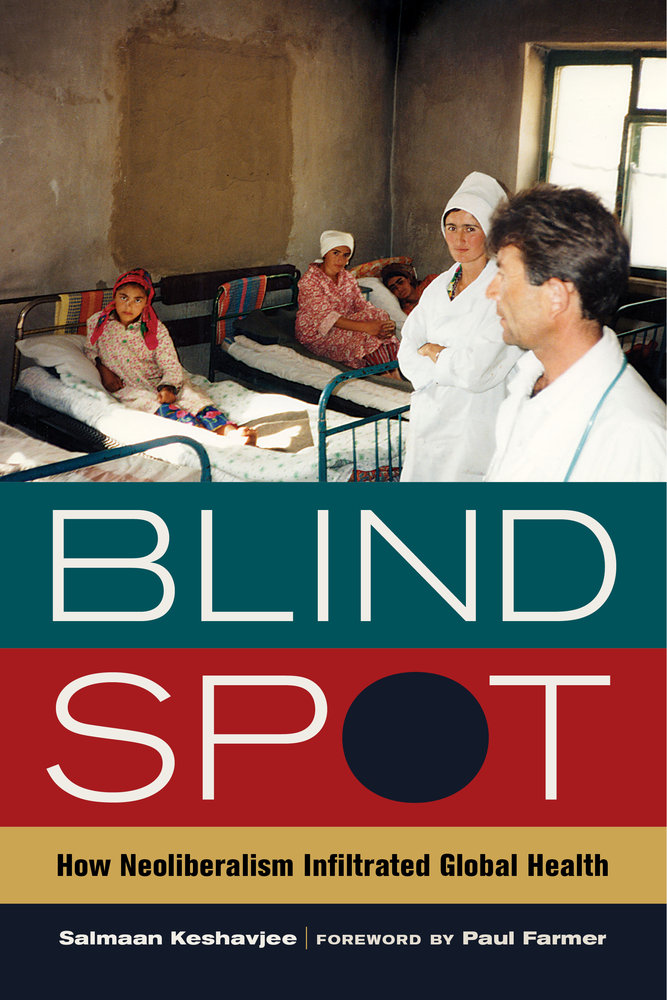
Blind Spot: How Neoliberalism Infiltrated Global Health

Salmaan Keshavjee

From the University of California Press, Blind Spot is a historical and anthropological case study of how market-based ideologies and neoliberal health policies impact global health and development programs. “A vivid illustration of the infiltration of neoliberal ideology into the design and implementation of development programs, this case study, set in post-Soviet Tajikistan’s remote eastern province of Badakhshan, draws on extensive ethnographic and historical material to examine a ‘revolving drug fund’ program — used by numerous nongovernmental organizations globally to address shortages of high-quality pharmaceuticals in poor communities.” The books discusses how the privatization of health care can impact outcomes for some of the world’s most vulnerable populations.

For more information, visit the University of California Press website here.


via Berghahn Books

via Berghahn Books

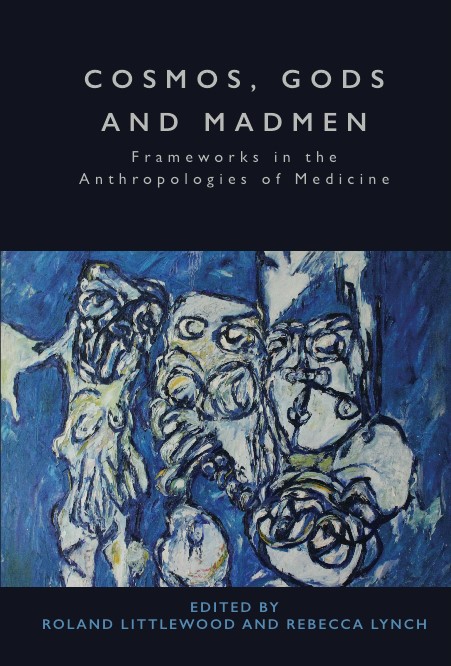
Cosmos, Gods, and Madmen: Frameworks in the Anthropologies of Medicine

Roland Littlewood and Rebecca Lynch, eds.

“The social anthropology of sickness and health has always been concerned with religious cosmologies: how societies make sense of such issues as prediction and control of misfortune and fate; the malevolence of others; the benevolence (or otherwise) of the mystical world; local understanding and explanations of the natural and ultra-human worlds. This volume presents differing categorizations and conflicts that occur as people seek to make sense of suffering and their experiences. Cosmologies, whether incorporating the divine or as purely secular, lead us to interpret human action and the human constitution, its ills and its healing and, in particular, ways which determine and limit our very possibilities.”

For more information, visit the Berghahn Books website here.


via UC Press

via UC Press

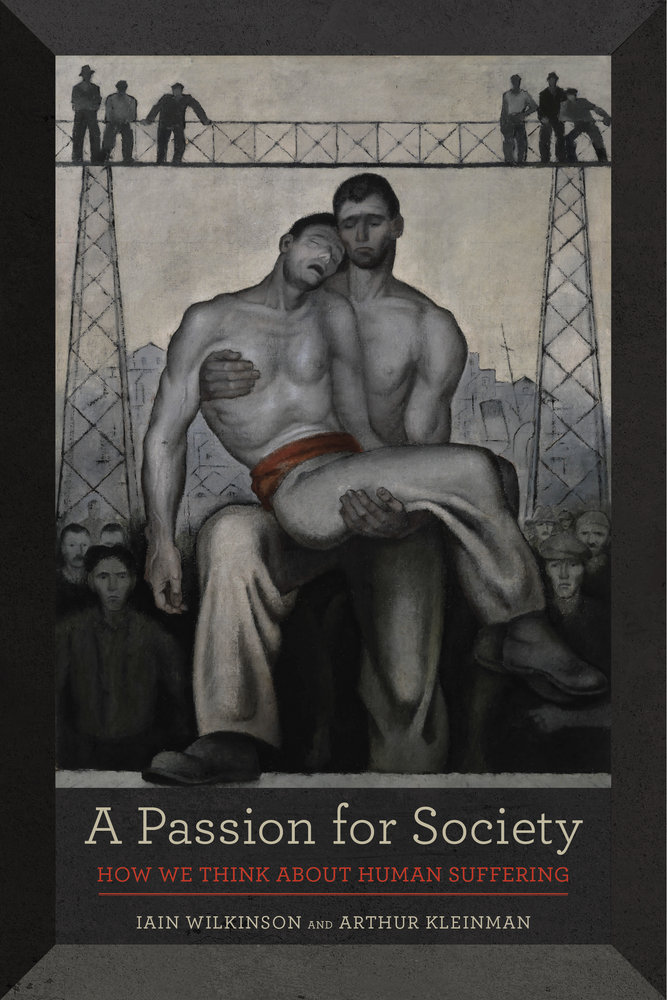
A Passion for Society: How We Think about Human Suffering

 Iain Wilkinson and Arthur Kleinman

“What does human suffering mean for society? And how has this meaning changed from the past to the present? In what ways does “the problem of suffering” serve to inspire us to care for others? How does our response to suffering reveal our moral and social conditions?” This highly anticipated book investigates how social science has been shaped by problems of social suffering. The authors discuss how social action, through caring for others, is reshaping the discipline of social science and offers a hopeful, intellectual basis for a fundamentally moral stance against indifference, cynicism, and inaction. They argue for an engaged social science that bridges critical thought with social action, seeking to learn through caregiving, and achieving greater understanding that operates with a commitment to establish and sustain compassionate forms of society.

For more information, visit the University of California Press website here.


via UC Press

via UC Press

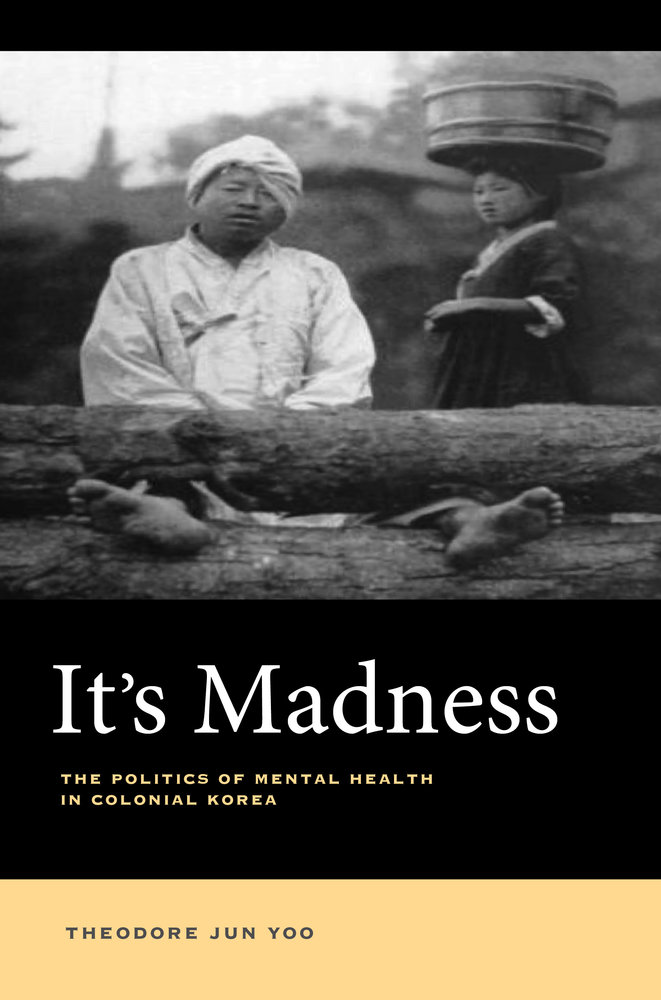
It’s Madness: The Politics of Mental Health in Colonial Korea

Theodore Jun Yoo

“This book examines Korea’s years under Japanese colonialism, when mental health first became defined as a medical and social problem. As in most Asian countries, severe social ostracism, shame, and fear of jeopardizing marriage prospects compelled most Korean families to conceal the mentally ill behind closed doors. This book explores the impact of Chinese traditional medicine and its holistic approach to treating mental disorders, the resilience of folk illnesses as explanations for inappropriate and dangerous behaviors, the emergence of clinical psychiatry as a discipline, and the competing models of care under the Japanese colonial authorities and Western missionary doctors. Drawing upon printed and unpublished archival sources, this is the first study to examine the ways in which “madness” was understood, classified, and treated in traditional Korea and the role of science in pathologizing and redefining mental illness under Japanese colonial rule.”

For more information, visit the University of California Press website here.

Special Issue 2016: The Clinic in Crisis

cropped-2009cover-copy

To help kick off a new year of articles, books, and highlights, Springer is featuring the June 2016 special issue of Culture, Medicine & Psychiatry, The Clinic in Crisis: Medicine and Politics in the Context of Social Upheaval, as part of a larger group of Special Issues in Social Sciences. Each article in the special issue is available for free here until February 3, 2017.

Over the summer we spotlighted several original papers from this special issue:

  1. Salih Can Aciksoz’s Medical Humanitarianism Under Atmospheric Violence: Health Professionals in the 2013 Gezi Protests in Turkey
  2. Emma Varley’s Abandonments, Solidarities and Logics of Care: Hospitals as Sites of Sectarian Conflict in Gilgit-Baltistan
  3. Elly Teman, Tsipy Ivry, and Heela Goren’s Obligatory Effort [Hishtadlut] as an Explanatory Model: A Critique of Reproductive Choice and Control

Each highlighted article discusses medical neutrality in areas of political conflict and how clinical space can be an extension of violence. While many clinicians strive to maintain an environment of safety and neutrality in the hospitals and clinics, the locations are routinely entangled with positions of violent local and international political struggles. The ethnographic accounts in each of the featured articles address the concept of “medical neutrality” – the ethical norm that medicine should be practiced impartially – in the context of conflict and social unrest, and suggest medical neutrality may work as a tool that is deeply cultural, social, and political.

Book Release: Solomon’s “Metabolic Living”

978-0-8223-6101-5_pr

Image via Duke UP website

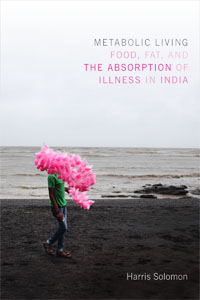
Newly released this May 2016 from Duke University Press is Harris Solomon’s Metabolic Living: Food, Fat, and the Absorption of Illness in India (available here.) In this text, Solomon takes an environmental approach to obesity as a global problem, drawing on ethnographic fieldwork in Mumbai, India. Rather than reading obesity as the result of the exportation of Western diets and food items, the author addresses food, fat, and the body as ‘porous’ with the city and the state. Obesity and diabetes, Solomon argues, are a matter of “absorption” between bodies and the environments in which they operate. Clinics, social service offices, food companies, markets, and kitchens exist between the domains of the body and the state: sites at which the relationship between the individual body and the larger societal structures emerge and develop, altering local experiences of obesity, food, and metabolic illnesses.

This text will interest medical social scientists and scholars of medical humanities interested in the intersections between urban life and human health, and between the environment and the body.


About the author: Harris Solomon is Assistant Professor of Cultural Anthropology and Global Health at Duke University.

In the News: Health Disparities and Water Quality in the 2016 Rio Summer Olympics


August 2016 – The 2016 Summer Olympic games in Rio de Janeiro, Brazil has dominated news headlines in recent weeks. The athletics event, taking place from August 5 to August 21, featured 207 countries in the Parade of Nations as well as the first ever Refugee Olympic Team. It is the first time the games have been held in South America. But besides highlights on the events and spotlights on athletes’ training regimens and backgrounds, there is another stream of news stories surrounding the Olympic Games. These stories have focused on two key public health issues related to this year’s Games: health disparities and water quality issues.

ap_16221704995649-2a9b5ac7291dd20a71781f18eaca8c4d3edb888a-s800-c85

Rio’s Olympic beach volleyball venue is on Copacabana Beach. Photo from Marcio Jose Sanchez for AP.

Only two years ago the FIFA World Cup was making similar headlines in Brazil. As reported in 2014, and highlighted in this blog[1], there have been past concerns about access to quality healthcare despite the surge of funds for the World Cup event. These reports unmasked a problematic system of health disparities to a global audience. The Daily Californian[2] stated that many Brazilians were “unhappy that their government [was] funding stadium renovations instead of spending on more instrumental matters like improved health care and emergency services.” Reports relating to the current Olympics have painted a similar picture for the present health scene. As Reuters[3] reported in December 2015, the governor of Rio de Janeiro declared a state of emergency “as hospitals, emergency rooms and health clinics cut services or closed units throughout the state as money ran out for equipment, supplies and salaries.” According to CNN[4], the financial crisis has been causing difficulties in the “provision of essential public services and can even cause a total breakdown in public security, health, education, mobility and environmental management.”. While the state of emergency declaration provides a critical 45 million reais ($25.3 million) in federal aid and may facilitate the transfer of future funds, estimates state that Rio de Janeiro owes approximately $355 million to employees and suppliers in the healthcare sector alone, and the state needs over $100 million to reopen the closed hospital units and clinics.[5] While the city of Rio spent approximately $7.1 billion on improving toll roads, ports and other infrastructure projects, the Brazil Ministry of Health devoted only $5.7 million to address health concerns[6].

rio-favelas--joao-velozo-9_custom-84b1822885fc72f97f7e9084730eb4397aa48b6e-s1300-c85

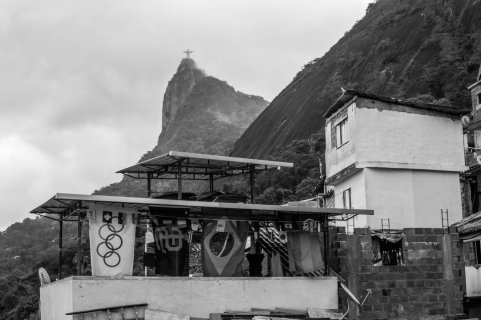
The Christ the Redeemer statue is visible above the Santa Marta favela in Rio de Janeiro. Photo from Joao Velozo for NPR. 

In addition to these issues (and the high-profile Zika virus, which is causing health concerns in multiple countries[7]), concerns surrounding water quality and cleanliness in Brazil has garnered considerable attention. A recent scene involving the diving and water polo pools turning a swamp-green color because of an algae bloom left some athletes complaining of itchy eyes.[8] While the Olympic Games have brought international attention to the impact of water quality on the athletes and visitors, the residents of Rio have been dealing with theses concerns on a daily basis for much longer. With almost 13 million people living in and around Rio, the current sewage system is struggling to cope. One news report[9] notes that “about 50 percent of what Brazilians flush down the toilet ends up in the country’s waterways. Diseases related to contaminated water are the second leading cause of death for children under five in Brazil.” Tests performed in a variety of areas, including the sailing venue of Guanabara Bay, over the course of a year found high levels of “superbugs of the sort found in hospitals on the shores of the bay.” The possibility of hospital sewage entering the municipal sewage system remains a concern.[10]

An economic recession, compounded by water concerns, political unrest, and a presently faltering healthcare system all leave many Cariocas— citizens of Rio– who rely on the public health system in a challenging and hazardous situation across the social, medical, and political spheres. With hopes of local profits from the Olympic Games ranging in the billions of dollars, much is at stake for both residents and investors.[11] Despite the risks and tribulations, many residents welcome the international event and attention, and credit the Olympics for cultivating “several underutilized, often abandoned spaces have been transformed to ones that appeal and cater to local residents”. Many “beautification” projects leave residents hoping the installation of new art and the newly constructed spaces will leave a lasting impression on its residents and visitors long after the games end.[12]  Despite this optimism, the citizens of Rio are not impacted equally by the Games.[13] The improved infrastructures will likely benefit those who already have access to services. Tourism, and tourism cash, has been weak in the favelas, or shantytowns, which house at least 25% of the population in Rio. The infrastructure inequities have even bypassed some neighborhoods entirely, leaving those residents out of the celebrations.[14]

Overall, these Olympic Games promise once again to bring the world’s cultures together in competition and camaraderie, yet they do not do so without controversy. This global spectacle illuminates athletics and sportsmanship, as well as the intersections between cultural events, politics and nationalism, power and profit, and community health. These larger issues lead to questions about what will happen to the residents of Rio after the Games have drawn to a close.


[1] https://culturemedicinepsychiatry.com/2014/07/11/news-the-2014-world-cup-and-healthcare-in-brazil/

[2] http://www.dailycal.org/2014/07/08/uc-berkeley-faculty-graduate-students-look-world-cup-different-light/

[3] http://www.reuters.com/article/us-brazil-health-emergency-idUSKBN0U716Q20151224

[4] http://www.cnn.com/2016/06/18/americas/brazil-rio-state-emergency-funding-olympics/

[5]http://www.reuters.com/article/us-brazil-health-emergency-idUSKBN0U716Q20151224

[6] http://wuwm.com/post/let-s-do-numbers-money-spent-rio-olympics#stream/0

[7] http://www.nytimes.com/2016/01/29/world/americas/brazil-zika-rio-olympics.html?_r=0

[8] http://uk.reuters.com/article/uk-olympics-rio-diving-pool-idUKKCN10O0UW?feedType=RSS&feedName=sportsNews

[9] http://wuwm.com/post/rios-water-problems-go-far-beyond-olympics#stream/0

[10] http://edition.cnn.com/2016/08/02/sport/rio-2016-olympic-games-water-quality-sailing-rowing/index.html

[11] http://www.newsweek.com/rio-2016-who-stands-benefit-successful-olympics-453094

[12] http://www.kvia.com/news/rio-olympics-bring-beautification-projects/40884340

[13] http://www.npr.org/sections/thetorch/2016/08/11/487769536/in-rios-favelas-hoped-for-benefits-from-olympics-have-yet-to-materialize

[14] http://www.reuters.com/video/2016/08/14/olympic-infrastructure-causes-suffering?videoId=369565427

Issue Highlight Vol 40 Issue 2: Global Health Diplomacy in Ethiopia

cropped-cards.jpg

Across the past few weeks, we have been spotlighting new articles from our June 2016 issue, which you can access in full here. The theme of this special issue is The Clinic in Crisis: Medicine and Politics in the Context of Social Upheaval. This week, we visit Lauren Carruth’s article “Peace in the Clinic: Rethinking ‘Global Health Diplomacy’ in the Somali Region of Ethiopia.” You can read the full article at this link.


In this article, Carruth argues that the politics of global health manifest not only at the scale of “interstate” interactions between governments, NGOs, and international assemblies, but at the local and interpersonal levels between individuals who are giving, receiving, and managing clinical care in “politically insecure” places. Through ethnographic research on two health programs in the Somali region of Ethiopia, the author argues that medical care provision can alternatively strain and strengthen political relationships between people across ethnic and social boundaries.

For instance, Somali people in Ethiopia often refused to seek medical services from the local clinic, Aysha Health Center. Somali patients complained that the Habesha (a native Ethiopian group) nurses were insensitive and uninterested in treating their health concerns. Many Somali informants offered up the same story as evidence: three mothers went to the clinic, and their three children had different ailments. Yet the Habesha nurses did not examine the children, and offered the same drugs to each of the mothers without diagnosing each patient. Somali patients also had difficulty securing a translator who could assist them in conversations with clinicians, who spoke Amharic. The Habesha clinic staff countered that the Somali patients were adverse to biomedical care, instead trusting native folk healers over the clinicians. They added that Somali patients would not adhere to the medication regimens or treatment plans that they recommended. In this case, the friction between Habesha caregivers and Somali patients intensified long-standing ethnic and political tensions at the local scale.

Carruth presents another case, however, where medical aid eases inter-ethnic relationships and ameliorate social rifts between opposing groups. She describes a mobile UNICEF clinic staffed by two Somali clinicians of the Ogaden clan operating in Ethiopia. Though these Somali clinicians were caring for fellow Somali patients, the patients descended from a less politically powerful line which did not have the dominant social standing of the Ogaden: a clan with significant regional power in Ethiopia. Though the patients were of opposing clans, such as the Issa, the two clinicians listened intently to the patients’ complaints, recalled their family lines when they returned for further treatment, and even offered resources like supplementary nutrition to ailing patients despite UNICEF limitations on what types of patients could receive these rations. The patients adored the mobile clinic staff, and the clinicians became integrated into the marginalized communities they served. This example, Carruth notes, highlights the potential for medical aid to facilitate positive and deeply personal relationships between factions in regions that have otherwise experienced significant social unrest.

Carruth concludes that in order to successfully deliver medical aid to places encountering social upheaval or unrest, it is critical to unite oppositional groups within clinical spaces themselves. Providing medical resources and building clinics alone, she notes, fails to address the need to facilitate positive relationships between individuals mired in conflict. Instead, to ease political and social tensions, Carruth posits that clinics and similar treatment centers can serve as sites of caring, communal exchange between otherwise opposed social groups.

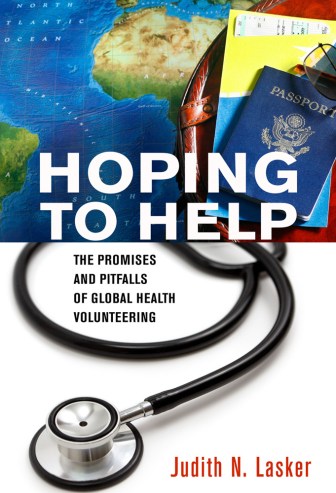
Book Release: Lasker’s “Hoping to Help: The Promises and Pitfalls of Global Health Volunteering”

80140100785730L.jpg

Image via Cornell UP website.

Released this January 2016 from Cornell University Press is Judith Lasker’s Hoping to Help: The Promises and Pitfalls of Global Health Volunteering (available for purchase here.) Lasker’s book examines the phenomenon of overseas medical volunteering, wherein individuals from wealthier countries travel for short periods to the developing world to offer humanitarian aid and medical services. These volunteers are sponsored by churches, non-profit organizations, or arrive in poorer countries via for-profit “voluntourism” companies that plan such travel.

Through participant observation, surveys, and interviews with volunteers, key figures in humanitarian organizations, and volunteer staff members native to developing nations, Lasker examines the impact of these ventures on host communities. She weighs present arguments that suggest that global health volunteering is a form of neo-colonialism, that this form of humanitarianism may cross ethical boundaries in the host community, and that volunteers’ need to “give back” may be otherwise misguided and harmful. Lasker places special emphasis on how volunteer organizations themselves benefit from the work of volunteers in developing countries. She likewise addresses whether or not these organizations’ objectives are truly responsive to the needs of the host community, or to what the host community identifies as a concern. She then weighs whether such aims place the volunteer’s experience ahead of the needs of the people who are the perceived recipients of aid.

Lasker’s text will be of equal interest to global health scholars and medical anthropologists and sociologists. Its attention to neo-colonialism and themes of globalization and power will likewise interest scholars who study global development and cross-cultural biomedicine.


About the author: Judith N. Lasker is N.E.H. Distinguished Professor of Sociology in the Department of Sociology and Anthropology at Lehigh University in Pennsylvania.

AAA 2015 Sessions: The Anthropology of Mental Health Care

Beginning last Fall 2014, we began compiling lists of sessions at the Annual Meeting of the American Anthropological Association that we thought would be of interest to our readers attending the conference. These sessions included topics such as drug use and abuse, reproductive medicine, and global health. This year, we again feature our series on the upcoming conference, to be held November 18-22 in Denver, Colorado (more information here.) You can also browse last week’s installment of the blog, where we highlighted sessions on biomedicine and the body at the upcoming Society for Social Studies of Science (4S) meeting, also in Denver, to be held November 11-14 (details here.) This week, we present three paper sessions on the anthropology of mental health care. The sessions are organized chronologically by time and date.

Image via AAA Website

Image via AAA Website

Re-Institutionalizing Care: Anthropological Engagements with Mental Health Courts and Alternative Forensic Psychiatry Interventions in North America

Saturday, November 21st 10:15am-12:00pm (details about this session.)

Topics in this session will include racial disparities in a mental health court in Canada; the relationship between criminal justice officials, psychiatric crisis, and mental health; dogma and psychiatry; and mental health care reform. The session lists itself as particularly of note to applied and practicing anthropologists, especially those with an interest in mental health care, policy, and reform.

From the Streets to the Asylum: Medicalizing Vulnerable Children

Saturday, November 21st 10:15am-12:00pm (details about this session.)

This session includes work on the following topics: humanitarian care and child homelessness in Cairo, Egypt; drug use and treatment amongst juvenile prisoners in Brazil; immigrant youth and mental health in France; and notions of American childhood in the context of mental health. Though the session is sponsored by the Anthropology of Children and Youth Interest Group, its topics overlap with many contemporary issues in medical anthropology and the social study of mental health care.

Making Sense of Mental Health Amidst Rising Rural Social Inequality in North America: Class, Race, and Identity in Treatment-Seeking

Saturday, November 21st, 1:45pm-3:30pm (details about this session.)

Presenters in this session will speak on these issues: mental health and poverty in rural New England; mental health and prescription drug abuse in Appalachia; citizenship and mental health in Oklahoma; care access in remote Alaskan communities; community mental health activism; and inequity and depression in rural Kentucky. These sessions will be of interest to scholars of social justice and medicine, as well as those studying mental health care access and the culture of psychiatry in the United States.

Issue Highlight: Vol 39 Issue 3, Suicide in Rural Kenya

When a new issue of Culture, Medicine & Psychiatry is released, we feature a series of blog posts that highlight these latest publications in our journal. The current September issue includes articles that address psychiatric conditions and the experiences of people with mental illness across cultures. Readers may access the full issue at Springer here: http://link.springer.com/journal/11013/39/3/page/1. In this issue highlight, we will discuss an article on ethnographic analyses of suicide and distress amongst three communities in northern Kenya.


cards3

Suicide in Three East African Pastoralist Communities and the Role of Researcher Outsiders for Positive Transformation: A Case Study

Bilinda Straight, Ivy Pike, Charles Hilton, and Matthias Oesterle – Pages 557-578

http://link.springer.com/article/10.1007/s11013-014-9417-4

The authors of this article strive to establish a nuanced and ethnographically rich understanding of suicide and mental distress in an under-studied population of three distinct, yet interacting, pastoral communities in northern central Kenya. These three groups– the Pokot, Samburu, and Turkana– are engaged in intercommunity conflicts over territory and land use agreements, despite the communities’ shared and entangled oral histories. Such tensions are only exacerbated by mutual fear of raids by other groups, dearths in food available for forage, and the theft of livestock from individuals who sell the animals to finance political campaigns. Poverty is likewise aggravated by these patterns of loss and violence.

This turbulent social environment creates widespread mental distress amongst the three communities, yet individuals from each group stressed to the research team that they felt obligated to persevere despite these pressures, making admitting psychological suffering (and especially confessing thoughts about suicide) deeply taboo. Therefore, any mental health intervention would have to be responsive to the extent to which Pokot, Samburu, and Turkana culture disallow individuals from discussing or even thinking about suicide: an act which could create even more social strain on the family of the person who committed it. The researchers confirmed this inability to discuss suicide by the high rates of non-response on a survey question which asked participants whether or not they had experienced suicidal thoughts.

Suicide thus proves to be a unique case for anthropological analysis because it is both driven by the social conditions of those who take their own lives, as well as disruptive to the communities in which these people lived. Its treatment by global health workers must in turn be sensitive to cultural beliefs that forbid conversation about suicide, especially in communities where the death of an individual may contribute to already extraordinary social distress.

From the Archive: Global Health, Biomedical Difference, and Medical Training

In our “From the Archive” series, we revisit articles from past issues of the journal. In this installment, we review Betsey Brada’s article “‘Not Here’: Making the Spaces and Subjects of ‘Global Health’ in Botswana,” from the June 2011 special issue on the theme of “Anthropologies of Clinical Training in the 21st Century.”

cropped-cropped-2009cover-copy1.jpg

What do we mean when we employ the term “global health,” particularly about the nature of caregiving in other cultural contexts? In her ethnographic research at a training hospital in Botswana, Betsey Brada posits one theory of the term as engaged with by medical and pre-medical students, missionary doctors, resident medical staff, and other key clinicians at the field site. Brada finds that while global health is often narrowly defined as biomedicine performed in “resource poor” or “resource limited” regions, this definition in fact relies intensely on a complex, comparative understanding of place, technology, and biomedical skill.

For example, Brada describes one case where a German man on vacation in Botswana broke his leg and required surgery. Upon returning to his home country for a follow-up examination of his healing leg, the man’s physicians were surprised at the skill of the procedure, remarking that it was commendable given that it was performed abroad. The German physicians had therefore assumed that care in a “resource limited” context was correspondingly of a lower quality than biomedical care delivered in a developed country, even though clinicians often tout the “universality” of biomedicine as a cultural boundary-crossing (if not hegemonic) mode of scientific healing. The medical staff in Botswana remarked that many physicians in developed countries believed biomedicine in the developing world to be crude, simplistic, and backwards: even though staff members at the Botswana hospital had been trained at advanced facilities across the world, many of them in developed countries.

Students studying and volunteering at the hospital were also repeatedly instructed in lectures to understand the differences between pharmaceutical use in the United States versus medications available in Botswana. American physicians described an extensive list of common medication available in the hospital’s pharmacy in terms of how it was no longer used in the United States, but had to suffice “here.” This example, too, underscores the tangled relationships between space, technology, and an understanding of global biomedicine primarily in terms of nations offering cutting-edge care versus those countries that had, in their perspectives, fallen behind.

Brada also argues that medical anthropology and linguistic anthropology have much to contribute to one another, although the disciplines are not often engaged in scholarly conversation. She notes that the careful analysis of language used to distinguish “here” (Botswana) from the developed world, including the United States and Europe, demonstrates the division between spaces that is central to definitions of global health as given in biomedicine. Brada asserts that an understanding of “global health” only emerges whenever we attend to the terminology that physicians, staff, and students use to separate medicine in the developed world, from medical standards implemented on the global scale by the WHO, to the terms used to describe medical care in local, foreign contexts.

The June 2011 special issue features other fascinating articles that address the cultural situatedness of biomedical knowledge, and how medical concepts are translated to future clinical practitioners. To learn more about this issue, see the links below.


To find the article and abstract on our Spring site, click here: http://link.springer.com/article/10.1007/s11013-011-9209-z

For the full special issue, including links to other articles in the June 2011 installment, click here: http://link.springer.com/journal/11013/35/2/page/1