Special Issue 2016: The Clinic in Crisis

cropped-2009cover-copy

To help kick off a new year of articles, books, and highlights, Springer is featuring the June 2016 special issue of Culture, Medicine & Psychiatry, The Clinic in Crisis: Medicine and Politics in the Context of Social Upheaval, as part of a larger group of Special Issues in Social Sciences. Each article in the special issue is available for free here until February 3, 2017.

Over the summer we spotlighted several original papers from this special issue:

  1. Salih Can Aciksoz’s Medical Humanitarianism Under Atmospheric Violence: Health Professionals in the 2013 Gezi Protests in Turkey
  2. Emma Varley’s Abandonments, Solidarities and Logics of Care: Hospitals as Sites of Sectarian Conflict in Gilgit-Baltistan
  3. Elly Teman, Tsipy Ivry, and Heela Goren’s Obligatory Effort [Hishtadlut] as an Explanatory Model: A Critique of Reproductive Choice and Control

Each highlighted article discusses medical neutrality in areas of political conflict and how clinical space can be an extension of violence. While many clinicians strive to maintain an environment of safety and neutrality in the hospitals and clinics, the locations are routinely entangled with positions of violent local and international political struggles. The ethnographic accounts in each of the featured articles address the concept of “medical neutrality” – the ethical norm that medicine should be practiced impartially – in the context of conflict and social unrest, and suggest medical neutrality may work as a tool that is deeply cultural, social, and political.

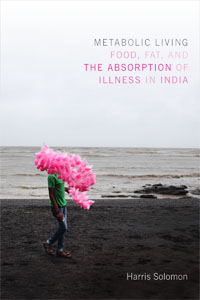
Book Release: Solomon’s “Metabolic Living”

978-0-8223-6101-5_pr

Image via Duke UP website

Newly released this May 2016 from Duke University Press is Harris Solomon’s Metabolic Living: Food, Fat, and the Absorption of Illness in India (available here.) In this text, Solomon takes an environmental approach to obesity as a global problem, drawing on ethnographic fieldwork in Mumbai, India. Rather than reading obesity as the result of the exportation of Western diets and food items, the author addresses food, fat, and the body as ‘porous’ with the city and the state. Obesity and diabetes, Solomon argues, are a matter of “absorption” between bodies and the environments in which they operate. Clinics, social service offices, food companies, markets, and kitchens exist between the domains of the body and the state: sites at which the relationship between the individual body and the larger societal structures emerge and develop, altering local experiences of obesity, food, and metabolic illnesses.

This text will interest medical social scientists and scholars of medical humanities interested in the intersections between urban life and human health, and between the environment and the body.


About the author: Harris Solomon is Assistant Professor of Cultural Anthropology and Global Health at Duke University.

AAA 2016 Session Highlights: Part 2, Discoveries

2016-aaa-annual-mtg-logo-4c-250x286

Image via AAA Website

This is the second in a two-part series spotlighting sessions in medical anthropology at the upcoming 2016 Annual Meeting of the American Anthropological Association (AAA) in Minneapolis, Minnesota. In this second installment, we present a selection of sessions on the theme of “discoveries.” For more information about this year’s meeting, click this link.


Sessions on “Discoveries”: New approaches to the anthropological study of medicine and medical systems, and studies of new and contemporary medical technologies/therapies

RETHINKING GENDER NORMATIVITY, SEXUALITY, AND MORALITY THROUGH NON-BIOMEDICAL EPISTEMOLOGIES

Thursday, November 17th 8:00 AM – 9:45 AM

Organizer(s): Venera Khalikova (University of Pittsburgh) and Kristin Bright (Carleton University, Canada)

Chair: Venera Khalikova (University of Pittsburgh)

Discussant(s): Lucinda Ramberg (Cornell University) and Kristin Bright (Carleton University, Canada)

This session will propose new ways of thinking about gender and sexuality as heterogeneous subjects. The papers will examine how gender and sex are configured and reconfigured in biomedicine and complementary or alternative medical and health systems.

DISCOVERING WAYS IN WHICH DEATH OCCURS IN A CULTURAL CONTEXT

Friday, November 18th 8:00 AM – 9:45 AM

Organizer: Erica Borgstrom (Open University, United Kingdom)

Chair: Erica Borgstrom (Open University, United Kingdom)

Discussant: James Green (University of Washington)

In this session, presenters will reveal how death occurs and is interpreted in both biomedical and local cultural contexts. Papers address death, dying, and aging in India, China, the United States, and in migrant communities in Australia.

(RE)DISCOVERING PSYCHEDELICS IN THE 21ST CENTURY

Friday, November 18th 10:15 AM – 12:00 PM

Organizer(s): Shana Harris (University of Central Florida) and Hilary Agro (University of British Columbia, Canada)

Chair(s): Shana Harris (University of Central Florida) and Hilary Agro (University of British Columbia, Canada)

Discussant: Michael Oldani (Concordia University Wisconsin)

Papers in this session will explore the (re)emergences of psychedelic drugs, particularly in the contexts of treatment and medical research, but also beyond the boundaries of biomedicine: including traditional use of ayahuasca, and the use of drugs in rave culture.
NEW DIRECTIONS IN THE INTERSECTION OF MEDICAL ANTHROPOLOGY AND BIOETHICS 

Friday, November 18th 4:00 PM – 5:45 PM

Organizer(s): Eileen Anderson-Fye (Case Western Reserve University) and Jonathan Sadowsky (Case Western Reserve University)

Chair: Paul Brodwin (University of Wisconsin, Milwaukee)

Discussant(s): Rebecca Lester (Washington University, St Louis) and Jonathan Sadowsky
(Case Western Reserve University)

In this session, presenters will offer four different anthropological cases that highlight the intersections of anthropology and bioethics: genomic research in Africa, physician-aided dying, body image and obesity, and transnational healthcare in Brazil.
“BODY-WORK”: SCIENCE AND TECHNOLOGY STUDIES IN MEDICAL ANTHROPOLOGY

Saturday, November 19th 2:30 PM – 2:45 PM

Papers in this session will explore the intersections of medical anthropology and contemporary studies in science and technology. Paper topics include the use of human tissue in continuing medical education, ‘smart machines’ and disability, new genetics sequences technologies in a cancer clinic, neuropsychiatry and resistance, and relationships between nurses and patients in HIV clinical settings.


From the Archive: Patients-as-Syndromes in Internal Medicine

In our “From the Archive” series, we highlight an article from a past issue of the journal. In this installment, we explore Robert A. Hahn’s piece “‘Treat the patient, not the lab’: Internal medicine and the concept of ‘Person,'” available in full here. This article was featured in Volume 6, Issue 3 (September 1982.)


cards

Throughout the history of the journal, our authors have turned the same anthropological gaze equally onto both biomedicine and other medical systems. As Hahn introduces this article, he states that the healer in all cultural contexts fashions medical and social truths together, such that the patient and patient body are reinterpreted (and potentially reordered) through medical treatment by the healer. Biomedicine, he states, also recasts illness in ways that alter the medical position of the patient. To understand how physicians of biomedicine engage with patients conceptually in this way, Hahn conducted an ethnographic study of four internists. As internal medicine is often characterized as highly rationalistic and thus emblematic of biomedical practice, Hahn argues, he states that understanding the internists’ perspectives may shed light more broadly on biomedicine as a particular method of envisioning illness and its relationship to the patient.

Hahn begins by positing that the nature of internal medicine as a profession itself is a form of interpretation of what constitutes the patient and body over which it has medical purview. Internal medicine does not focus on mental health (psychiatry) or on the internal visceral body (surgery.) Thus, the “body” it treats exists in relative isolation from the mind, yet is not a physical or functional body such as the one manipulated directly through surgery. The conditions internists treat exist apart from the person and, to a degree, from the patient’s body: instead, the internist focuses on internal diseases and pathologies that become entities of treatment divorced from the individual receiving care. These illnesses– forged into concrete ontological “things”– are countered with similarly material antidotes. Hahn adds that the prestigious status of the internist in the culture of clinical practice, both currently and historically, lends this physiologically-based view of the body and its treatment significant legitimacy in the biomedical landscape.

To demonstrate these concepts, Hahn presents the case of internist Dr. Barry Siegler. “Barry,” as he comes to be called, repeatedly instructs his residents and other clinicians to be wary of individual metrics and lab results, as these single numbers and tests cannot be incrementally fixed: rather, he contends, they must be examined and addressed in concert such that the whole patient is successfully treated. Hahn describes this as relational knowledge of pathology, rather than “singly” reading and responding to individual metrics. However, Barry does not mean to champion holistic, person-centered care: instead, he posits that the entire patient should serve as the point of focus such that no aspect of the patient’s pathology is excluded from diagnosis and subsequent treatment. For example, Barry argues that the patient interview is a tool for the extraction of cues that would lead the clinician to better understand the etiology and symptomatology at hand.

Thus the patient’s “syndrome” comes to exist as a materially and ontologically “real” entity that is distinct from the social, personal, and existential contexts of the patient’s life. This perspective is crystallized in Barry’s tendency to refer to patients as their diseases, such as “a conversion reaction.” He also refers to patients he believes to have mental illness in the same manner, such as the “neurotic,” although he admits that psychiatric pathologies are a “Pandora’s box” beyond the limits of his professional power to address. Again, the patient as a person (and even as a subject or individual mind) fades as the disease pathologies that characterize their illness are reified and made the central objects of the internist’s medical gaze. Due to the close alignment between physiology and organic sciences (chemistry and biology), Hahn notes that the internist’s ontological transformation of the patient into their pathologies– and the pathologies into discrete objects of attention– are deemed especially real, true, and justifiable. Likewise, the body itself is interpreted as a closed, contained system that becomes the object of internal medicine: the ‘whole patient’ is instead the ‘whole pathophysiology.’

Hahn concludes that this vision of the body is decidedly Western: it individualizes the body, and makes a Cartesian division between the body (physical) and the mind (psychological, social) such that it is made treatable and conceptually readable by internists who isolate it from other contexts and who distinguish diseases as concrete, material things. The article ultimately suggests that certain biomedical visions of the body and appropriate patterns for treatment may not align with the perspectives of patients, who understand their illness within the social, spiritual, cultural, and other frameworks that structure their daily lives.


Issue Highlight Vol 40 Issue 3: Asperger’s Syndrome, Subjectivity and the Senses

This week, we will highlight an Illness Narrative from the September 2016 issue of the journal (available here). Here we feature Ellen Badone, David Nicholas, Wendy Roberts, and Peter Kien’s article “Asperger’s Syndrome, Subjectivity and the Senses.” To read the full article, click here.


cards

As previous blog highlights suggest, the intersections of research and illness narratives are important to an anthropological perspective on subjectivity and experience. Badone and colleagues situate their article within narrative phenomenology. They discuss how constructing an illness narrative gives patients and families hope, and frames their experiences in a positive direction. The personal narrative, then, allows individuals to express their agency in hostile structural and environmental settings. The narrative also serves as a valuable first-hand account from which medical anthropologists can learn more about the subjective experience of illness.

The authors perform a close reading of an autobiographical narrative recounted by Peter, a young man diagnosed with Asperger’s Syndrome, a type of autism spectrum disorder (ASD.) Badone and colleagues aim to describe Peter’s case to widen understandings of the lived experience of people with autism. Responding to Olga Solomon’s 2010 article “Sense and the Senses: Anthropology and the Study of Autism,” this paper calls into question key assumptions in the clinical and popular literature about ASD relating to theory of mind, empathy, capacity for metaphorical thinking, and ASD as a life-long condition.

Badone and colleagues begin with a brief history of the diagnostic label of ASD, then describe the ethnographic-autobiographical process. Peter, the pseudonym chosen by the young man whose story is told in this article, reflects on his life experiences and articulates his awareness of autism and its impact on his life. An important recognition that Peter makes is that he senses many of the places he encountered were characterized by the “opposite of accommodation.” In the context of his elementary and high school for example, Peter describes how his need for calm and respite were disregarded in the noisy, abrasive environments. But it is Peter’s mother who is his metaphorical, and social, link to the world he felt dislocated from. Peter describes how it was his mother’s love and guidance which kept him alive and motivated to improve his life.

As Peter continues to narrate his experiences, however, he begins to intentionally seek out interactions in unwelcoming social environments. To Badone, Peter’s later decisions to submerse himself in activities that he found difficult, such as unexpected social situations and interactions, was an unconscious therapeutic response. This response mirrored the principles of cognitive behavioral therapy (CBT). To Badone’s astonishment, Peter had unintentionally started a treatment regimen to gradually lessen his anxiety, decrease his “meltdowns,” and become more independent. But to do so, Peter had to alter his own connection to a social environment that initially felt closed to him.

Badone and colleagues conclude, upon analyzing Peter’s narrative, that quality of life improves when individuals with autism are allowed to flourish in a social milieu of acceptance and understanding. Through the narrative, and through phenomenological examination of moments in Peter’s life, Badone and Peter hope to foster understanding and to urge others to create inclusive communities where social interaction is supported and individuals are not made to feel unwelcome. They seek to make autism more coherent to the non-autistic world and thereby to promote the larger ethical goal of creating flexible communities open to accommodating neurodiversity.

Issue Highlight Vol 40 Issue 3: The Mental Health Treatment Gap Across Africa

In the coming weeks, we will be presenting special highlights of our latest installment of the journal, released September 2016 (accessible here.) This week, we explore Sara Cooper’s article “‘How I Floated on Gentle Webs of Being’: Psychiatrists’ Stories About the Mental Health Treatment Gap in Africa.” The full article is available here.


cards3

As Cooper notes in the outset of her article, clinicians and global health workers have identified a “gap” in available mental health services in Africa, and developed programs targeted at the resolution of lacking mental health services across the continent. Despite widespread attempts to research and resolve this gap, however, there remains concern about the problems that arise when a global, top-down approach to mental health services is applied in African contexts. Responding to this concern, Cooper sought out views on the treatment gap at the local level, specifically amongst African psychiatrists. Cooper gathered and analyzed narratives from twenty-eight psychiatrists from South Africa, Uganda, Nigeria, and Ethiopia. She found that while a biomedical, rationalistic narrative about the gap was certainly present, another, more phenomenological understanding of the “gap” emerged from the narratives of three of her participants, which urged a more sensitive approach to the implementation of mental health services in Africa.

Cooper first found that some of the psychiatrists in her study repeatedly turned to a dominant (or master) biomedical narrative to explain why the mental health treatment gap existed in their respective countries. In other words, the psychiatrists relied on a rationalistic, deductive, and material explanation that accounted for the mental health treatment landscapes across Africa. For instance, many of the psychiatrists argued that the lack of physical resources– hospitals, beds, clinicians to staff treatment centers– led patients to seek out non-biomedical interventions like prayer-based or spiritual-based care. The participants agreed that if there were enough services available, patients would not turn to complementary or religious forms of treatment. In their perspective, alternative forms of care were a substitute for biomedicine, rather than a legitimate venue for patients to seek mental health assistance in the absence of (or even alongside) biomedical resources.

Indeed, the act of seeking out these alternative treatments was viewed by the psychiatrists as a rational response: one borne out of the creativity of patients who weighed available options and selected the most appropriate, present service (rather than a complex response to a pluralism of local medical systems.) Conversely, however, the psychiatrists also argued that patients underutilized health services and lacked “mental health literacy,” or the knowledge needed to preface the choice to seek out biomedical assistance. Through these examples, and others, Cooper observes that this sub-cohort of psychiatrists tended to return to a rationalistic understanding of medical treatment that may not always have been sensitive to other means of medical decision-making or to the scope of biomedical interventions.

Yet Cooper also discovered that there were notable fractures in the biomedical “master narrative,” wherein psychiatrists’ narratives reveal concerns about the role of biomedical mental health services in addressing treatment gaps. Three psychiatrists admitted that biomedicine might not necessarily address the full scope of a patient’s mental illness or health concerns in the broader context of their lives or personal needs. For example, these three participants noted that the psychiatrist might have to explain that available treatments could potentially fail to fully resolve a patient’s complaint, or that they might have to accept that a patient’s past traumas, or troubling social circumstances, were beyond that which the psychiatrist could ameliorate through medical means. Here, the treatment “gap” is conceptual: the ideological place where a patient’s hopes, experiences, and expectations about their care may not be perfectly matched to the psychiatrist’s available treatments and medical diagnoses.

In this sub-cohort, one psychiatrist remarked that the “paternalistic” method of biomedical treatment could be unproductive, as the clinician may not be able to fully mend the patient’s health due to the social, personal, and individual complexities of the patient case. Another psychiatrist recounted a patient’s case in detail, noting that while he believed this person suffered from delusions, it was his responsibility to help the patient by trying to understand his view of reality, suffering, and personal struggle. Yet another psychiatrist recounted equally challenging cases, where they recognized that patients often were not satisfied with simply a cleanly-defined diagnosis or treatment plan, but required a more robust means of reordering and improving their lives with the psychiatrist’s guidance.

Cooper states that “for these psychiatrists, in taking people’s experiences and meanings seriously, on their own terms, one comes to appreciate that their understandings and behaviours are deeply complex and varied, affected by all sorts of social, cultural and emotional realities and rationalities.” Though the master narrative of biomedical rationality remained prominent, these alternative narratives were sensitive to the lived experiences and individual realities of the patient. They also explored the treatment gap, but viewed the “gap” as the product of complex interactions between psychiatrists and their patients. For the latter three participants, the “gap” was caused not by a lack of resources or knowledge, but by the friction between practitioners’ and patients’ expectations about the treatment of mental illness, and a mismatch between practitioners’ medical skills and the self-professed needs and understandings of patients. “According to the three psychiatrists in this [part of the] study,” Cooper concludes, “increasing the availability of services necessitates first and foremost rethinking the nature of the kinds of services that are expanded, and the associated epistemologies upon which these are based.”

Blog Archive: ALS, Quality of Life, and Feeding Tubes

This week, we revisit an article highlight that originally debuted here in May 2016. The highlight explores Pols and Limburg’s qualitative research on the role and meaning of feeding tubes in the lives of people with ALS. The article was officially released in our latest September 2016 issue of the journal, and is accessible in full here.


cropped-cropped-2009cover-copy1.jpg

Pol and Limburg begin by suggesting that while “quality of life” has been transformed into a measurement used widely in health research, it is difficult to operationalize when considering the daily, lived experiences of patients. Rather than approaching quality of life as a measure of attainment or “outcome,” the authors instead choose to reframe it as a continual process: one that is negotiated by individual patients differently. To examine what quality of life entails in a qualitative sense, the authors interviewed a population of people with ALS in the Netherlands with feeding tubes, or ALS patients considering one.

The literature on feeding tubes, the authors note, present many perspectives on the relationships between quality of life and eating. Some sources argue that feeding tubes deprive individuals of the important social aspects of eating, while others note that feeding tubes can unburden patients for whom swallowing and the physical actions of eating are difficult, uncomfortable, or impossible.

Patients and their families interviewed by the researchers, on the other hand, demonstrate such ambiguity towards feeding tubes contextually, depending on the stage of their feeding tube transition. For many, the initial decision to have a feeding tube placed in their bodies was an upsetting signal of bodily deterioration. The procedure itself, though technically minimally invasive, was also viewed with trepidation by patients. They worried about the hospital stay, and whether or not their body would be strong enough to adapt to the tube quickly. Pols and Limburg found that for those who had undergone the procedure, “there was a remarkable consensus among patients in their evaluation of tube placement, with the main variations mentioning just how terrible it had been.” The authors later note that some patients continued to view the feeding tube negatively after it was placed, envisioning it as an unnatural, upsetting addition to their bodies. Others described it as a “necessity” that came with quality of life benefits, although it was not pleasant to have attached to their bodies.

However, for many patients who had feeding tubes already implanted at the time of the study, the response could be notably positive. These participants noted that the devices restored their health and function, and lessened distressing symptoms like choking and an inability to swallow. For one patient, the feeding tube ensured that she received the appropriate calories, such that any food she decided to eat normally could be at her discretion. Other patients who cared less about eating a range of foods appreciated that the feeding tube rid them of the need to worry about what could be easily consumed.

The authors conclude that “the feeding tube can best be understood not as an intervention that causes ‘impacts on quality of life’, but as a technology or prosthesis that may bring different qualities and appreciations that may shift over time.” They add that the feeding tube acts as an intervention that re-orders daily life for patients coping with the a ‘new normal’ of chronic illness: rather than serving to balance “good” and “bad” qualities, as outlined in the disability paradox. Lastly, they remind readers that instrumentalizing “quality of life” risks losing these facets of illness experience. This term is deeply contextual, and responsive to the needs, expectations, and hopes of each patient undergoing treatments or coping with chronic conditions.

Medical Humanities as an Intersection: Fostering Cross-Disciplinary Intellectual Spaces, A Commentary

This week, we are featuring a commentary on the medical humanities, which first appeared this week here on The Daily Dose blog. This piece explores the nature of interdisciplinary research on the social, cultural, and experiential dimensions of medicine. It also spotlights the new Medicine, Society & Culture initiatives at Case Western Reserve University.


When I set out to write this commentary, I first intended on penning a blog piece about my own definition of the medical humanities as someone trained in both the humanities and the social sciences. Having come to medical anthropology from a past life in literary studies, my work has straddled the fissure between humanities and qualitative social sciences. I have presented work both on the history and theatrical presence of anatomical learning in the English Renaissance, and on my ethnographic research with medical students in the gross anatomy lab today. Sometimes, my work is focused solely on the present; in other instances, I turn to the historical past to inform my work as a scholar of contemporary medical training. My vision of the medical humanities is one that arrives from both within and beyond traditional disciplinary boundaries.

cropped-2009cover-copy.jpg

My approach, however, is but one. I recognize that the medical humanities do not offer a single or unified outlook on human health, illness, and medical practice. In fact, the medical humanities are populated by historians and artists, poets and literary scholars, philosophers and social scientists. Our individual professional identities may be firm—I identify now as an ethnographer and anthropologist, not a literary scholar—but the social, cultural, historical, experiential, and existential study of medicine is simply too complex to be dominated by a single field. The medical humanities (and its ally, social medicine), welcomes perspectives on the humanistic study of medicine informed by our varied native disciplines. More than a single field, the medical humanities often serve as a crossroads: an intellectual intersection (physical, virtual, or social) at which scholars across fields gather in dialogue, whether they identify with a single specialty or as interdisciplinary scholars. For this reason, and regardless of disciplinary allegiances, we can all benefit from the medical humanities as a site of discussion that welcomes myriad voices. Diverse perspectives encourage us to analyze human health and medical problems from numerous angles. As we all carry with us our own analytical methods and theories to this junction, so too do we leave these dialogues having ourselves learned and gained the critical perspectives of our peers. This sharpens our focus anew on social, cultural, and medical problems for which one discipline lacks all answers.

The value of the medical humanities is that they enable all of us to see medical and social problems through multiple lenses. If we cannot fully grasp a complex medical problem through ethnography alone, we turn to historical approaches to complete our understanding of the issue at hand. If individual illness narratives beg to be woven together through other data, we look to sociology and economics to conceptualize the underlying health inequities faced by diverse populations, amongst other socio-medical problems. And, further, when we strive to understand how medical science is confronting illness and suffering today, we turn to nurses, social workers, therapists, physicians, and other health professionals whose day-to-day interaction with patients is deeply informative for our own research. Indeed, clinicians also benefit from our work: the humanities have been widely integrated into coursework for physicians in the United Kingdom[1] and the United States[2]. While obstacles remain in the creation and implementation of medical humanities curricula for future medical practitioners[3], this coursework has widened the intellectual space in which medical humanists exchange ideas with multiple audiences.

Whether medical humanities programs are physically housed within humanities departments, or whether they are exported into numerous health education venues, they remain a space for invaluable cross-disciplinary conversation. I have been fortunate to serve as the administrative coordinator of a medical humanities and social medicine collaborative that has overcome departmental boundaries in creating a new space for scholarly dialogue. This new university-wide initiative in medical humanities and social medicine (MHSM) is anchored by a Bioethics MA degree track entitled Medicine, Society and Culture at Case Western Reserve University. Though the degree program is housed in the School of Medicine, our MHSM (Medical Humanities and Social Medicine) advisory committee (which oversees university-wide activities in medical humanities[4]) includes historians, philosophers, literary scholars, social scientists, rhetoricians, and many others. Across the university, we facilitate lectures, administer competitive conference and research grants for students, and support faculty scholarship and teaching innovation. In the region, we collaborate with neighboring institutions to spearhead events that bring together scholars in all disciplines to discuss common themes in the social and contextual study of medicine, illness, and human health. In addition, we look forward to welcoming our first entering class of graduate students in the Medicine, Society, and Culture track in the Bioethics graduate program this Fall 2016. These students will complete clinical rotations, bioethics coursework, and multidisciplinary training in medical humanities and social medicine.

In sum, the Medicine, Society and Culture initiative has become another significant intersection at which scholars—both practicing academics and new graduate students alike—are able to trade theories, exchange methods, and discuss contemporary intellectual issues with fellow medical humanists and social scientists. Thus, our program seeks to both produce new scholars who approach illness and medicine as inherently multi-faceted human experiences, and to facilitate dialogues with current scholars within various departments who strive to complicate their own understandings of health and the human condition.

Beyond university programming, however, there are many ways that all medical humanities scholars strive—and should continue—to reach across departments and disciplines to share our methods, theories, approaches, and reflections on medicine with one another. This blog is one such space that beautifully forges virtual connections across academic audiences with a shared interest in health, illness, and medical practice. My own field, medical anthropology, by its nature requires researchers to inform their claims through many kinds of data that necessitate several forms of analysis: all which dovetail approaches in other fields. So too did my previous training in literary studies require me to be conversant in historical methods, in close reading techniques, and in the same inductive reasoning skills that I now apply to my ethnographic work. No discipline is an intellectual island: and if there is a universal value of the medical humanities, it is that it has made junctures out of disparate disciplines. It is at once clinical, scientific, and humanistic.


About the Author: Julia Knopes is a PhD candidate in anthropology at Case Western Reserve University, and serves as the administrative coordinator for the newly-launched MA Track in Medicine, Society & Culture in the CWRU Department of Bioethics. Julia’s research examines the socio-material basis of professional role development amongst American medical students. She holds an MA in Humanities from the University of Chicago and a BA in English from Washington & Jefferson College. You can learn more about Julia’s work and current research here.

References

[1] Macnaughton, Jane. (2000). “The humanities in medical education: context, outcomes and structures.” Journal of Medical Ethics: Medical Humanities 26: 23-30.

[2] Hunter, KM; Charon, Rita; Coulehan, Jack. (1995). “The study of literature in medical education.” Academic Medicine 70(9): 787-794.

[3] Shapiro, Johanna; Coulehan, Jack; Wear, Delese; Montello, Martha. (2009). “Medical Humanities and Their Discontents: Definitions, Critiques, and Implications.” Academic Medicine 84(2): 192-198.

[4] Information on members of the CWRU MHSM advisory committee can be found here: http://case.edu/medicine/msc/about/advisory-committee/

Fall 2016: Blog Update

cards3

The Culture, Medicine & Psychiatry blog will return to regular, once-weekly updates next week on Wednesday, following our reduced summer upload schedule. In the meantime, our readers can access articles and illness narratives from our new September 2016 issue here.

In the coming weeks, check back on the blog for special article highlights from the new issue, as well as “From the Archive” features, news posts, book release updates, commentaries, and other entries at the blog. As always, we continue to welcome submissions of guest commentaries on the cultural, social, and humanistic study of health and medicine. Please contact our social media editor, Julia Knopes (jcb193@case.edu) for more information.

Best wishes from the CMP Editorial Team!

In the News: Health Disparities and Water Quality in the 2016 Rio Summer Olympics


August 2016 – The 2016 Summer Olympic games in Rio de Janeiro, Brazil has dominated news headlines in recent weeks. The athletics event, taking place from August 5 to August 21, featured 207 countries in the Parade of Nations as well as the first ever Refugee Olympic Team. It is the first time the games have been held in South America. But besides highlights on the events and spotlights on athletes’ training regimens and backgrounds, there is another stream of news stories surrounding the Olympic Games. These stories have focused on two key public health issues related to this year’s Games: health disparities and water quality issues.

ap_16221704995649-2a9b5ac7291dd20a71781f18eaca8c4d3edb888a-s800-c85

Rio’s Olympic beach volleyball venue is on Copacabana Beach. Photo from Marcio Jose Sanchez for AP.

Only two years ago the FIFA World Cup was making similar headlines in Brazil. As reported in 2014, and highlighted in this blog[1], there have been past concerns about access to quality healthcare despite the surge of funds for the World Cup event. These reports unmasked a problematic system of health disparities to a global audience. The Daily Californian[2] stated that many Brazilians were “unhappy that their government [was] funding stadium renovations instead of spending on more instrumental matters like improved health care and emergency services.” Reports relating to the current Olympics have painted a similar picture for the present health scene. As Reuters[3] reported in December 2015, the governor of Rio de Janeiro declared a state of emergency “as hospitals, emergency rooms and health clinics cut services or closed units throughout the state as money ran out for equipment, supplies and salaries.” According to CNN[4], the financial crisis has been causing difficulties in the “provision of essential public services and can even cause a total breakdown in public security, health, education, mobility and environmental management.”. While the state of emergency declaration provides a critical 45 million reais ($25.3 million) in federal aid and may facilitate the transfer of future funds, estimates state that Rio de Janeiro owes approximately $355 million to employees and suppliers in the healthcare sector alone, and the state needs over $100 million to reopen the closed hospital units and clinics.[5] While the city of Rio spent approximately $7.1 billion on improving toll roads, ports and other infrastructure projects, the Brazil Ministry of Health devoted only $5.7 million to address health concerns[6].

rio-favelas--joao-velozo-9_custom-84b1822885fc72f97f7e9084730eb4397aa48b6e-s1300-c85

The Christ the Redeemer statue is visible above the Santa Marta favela in Rio de Janeiro. Photo from Joao Velozo for NPR. 

In addition to these issues (and the high-profile Zika virus, which is causing health concerns in multiple countries[7]), concerns surrounding water quality and cleanliness in Brazil has garnered considerable attention. A recent scene involving the diving and water polo pools turning a swamp-green color because of an algae bloom left some athletes complaining of itchy eyes.[8] While the Olympic Games have brought international attention to the impact of water quality on the athletes and visitors, the residents of Rio have been dealing with theses concerns on a daily basis for much longer. With almost 13 million people living in and around Rio, the current sewage system is struggling to cope. One news report[9] notes that “about 50 percent of what Brazilians flush down the toilet ends up in the country’s waterways. Diseases related to contaminated water are the second leading cause of death for children under five in Brazil.” Tests performed in a variety of areas, including the sailing venue of Guanabara Bay, over the course of a year found high levels of “superbugs of the sort found in hospitals on the shores of the bay.” The possibility of hospital sewage entering the municipal sewage system remains a concern.[10]

An economic recession, compounded by water concerns, political unrest, and a presently faltering healthcare system all leave many Cariocas— citizens of Rio– who rely on the public health system in a challenging and hazardous situation across the social, medical, and political spheres. With hopes of local profits from the Olympic Games ranging in the billions of dollars, much is at stake for both residents and investors.[11] Despite the risks and tribulations, many residents welcome the international event and attention, and credit the Olympics for cultivating “several underutilized, often abandoned spaces have been transformed to ones that appeal and cater to local residents”. Many “beautification” projects leave residents hoping the installation of new art and the newly constructed spaces will leave a lasting impression on its residents and visitors long after the games end.[12]  Despite this optimism, the citizens of Rio are not impacted equally by the Games.[13] The improved infrastructures will likely benefit those who already have access to services. Tourism, and tourism cash, has been weak in the favelas, or shantytowns, which house at least 25% of the population in Rio. The infrastructure inequities have even bypassed some neighborhoods entirely, leaving those residents out of the celebrations.[14]

Overall, these Olympic Games promise once again to bring the world’s cultures together in competition and camaraderie, yet they do not do so without controversy. This global spectacle illuminates athletics and sportsmanship, as well as the intersections between cultural events, politics and nationalism, power and profit, and community health. These larger issues lead to questions about what will happen to the residents of Rio after the Games have drawn to a close.


[1] https://culturemedicinepsychiatry.com/2014/07/11/news-the-2014-world-cup-and-healthcare-in-brazil/

[2] http://www.dailycal.org/2014/07/08/uc-berkeley-faculty-graduate-students-look-world-cup-different-light/

[3] http://www.reuters.com/article/us-brazil-health-emergency-idUSKBN0U716Q20151224

[4] http://www.cnn.com/2016/06/18/americas/brazil-rio-state-emergency-funding-olympics/

[5]http://www.reuters.com/article/us-brazil-health-emergency-idUSKBN0U716Q20151224

[6] http://wuwm.com/post/let-s-do-numbers-money-spent-rio-olympics#stream/0

[7] http://www.nytimes.com/2016/01/29/world/americas/brazil-zika-rio-olympics.html?_r=0

[8] http://uk.reuters.com/article/uk-olympics-rio-diving-pool-idUKKCN10O0UW?feedType=RSS&feedName=sportsNews

[9] http://wuwm.com/post/rios-water-problems-go-far-beyond-olympics#stream/0

[10] http://edition.cnn.com/2016/08/02/sport/rio-2016-olympic-games-water-quality-sailing-rowing/index.html

[11] http://www.newsweek.com/rio-2016-who-stands-benefit-successful-olympics-453094

[12] http://www.kvia.com/news/rio-olympics-bring-beautification-projects/40884340

[13] http://www.npr.org/sections/thetorch/2016/08/11/487769536/in-rios-favelas-hoped-for-benefits-from-olympics-have-yet-to-materialize

[14] http://www.reuters.com/video/2016/08/14/olympic-infrastructure-causes-suffering?videoId=369565427