From the Archive: Biomedicine, Chinese Medicine, and Psychiatry

In the “From the Archive” series, we will highlight articles published throughout the journal’s history. We look forward to sharing with our readers these samples of the innovative research that CMP has published on the cultural life of medicine across the globe.
cards3

At the journal, we often present fascinating work on psychiatric care throughout the world, including Joshua Breslau’s 2001 article “Pathways through the Border of Biomedicine and Traditional Chinese Medicine: A Meeting of Medical Systems in a Japanese Psychiatry Department” (volume 25 issue 3.) 

In this piece, Breslau recounts stories of the two medical systems interacting during a meeting of clinicians employing, to varying degrees, traditional Chinese medicine (TCM) alongside biomedical interventions within a Japanese psychiatric department. The author asserts that Japan is perhaps the most common ground for the two medical systems to meet, and that it represents the “traffic” of medical knowledge between Japan, the Asiatic mainland, and the rest of the world. Indeed, Japan has had a lengthy history of exchange with foreign medical systems,beginning with the 18th-century import of anatomy textbooks from Holland. Combined with expanded trade with “the West” in the 19th century and the later resurgence of local Japanese interest in Chinese herbal remedies during the 1970s, we see that the two medical systems have both held a prominent position in the dynamic medical landscape in Japan.

Breslau observes that the two medical systems complement one another most strikingly in psychiatry, where kanpo (herbal treatments) are used both to diminish the uncomfortable side effects of psychoactive medications and to treat conditions for which there are few biomedical interventions. Exemplifying this blended approach to care, the author notes that Dr. Nakai, professor of psychiatry at Kobe University, examines the tongue to diagnose his patients. This method of diagnosis has its roots in TCM, and was taught to Dr. Nakai from a visiting Chinese student; many such Chinese students, having studied TCM, go to Japan to learn “Western medicine.” Although there is little formal education in TCM available in Japan, these interpersonal (and intercultural) exchanges are important mechanisms for sharing diverse medical techniques.

Another physician, Dr. Song, initially specialized in the use of acupuncture to treat psychiatric patients in China. Breslau theorizes that although it seems anomalous for traditional medicine to find a niche in conditions that generally fall under the scope of biomedicine, Dr. Song’s work is a productive blend of psychiatric treatments from both medical systems. Whereas patients in the Chinese biomedical settings were admitted alone, patients and their families stayed together in the TCM centers for mental health, thereby offering a support network that the biomedical patients lacked. In Japan, Dr. Song combined TCM and biomedical approaches. She established an “open ward” psychiatric unit that welcomed patients and their families, and employed both pharmaceutical and herbal remedies depending on the severity and the stage of psychiatric distress suffered by the patient.

Breslau’s piece reminds us of the complicated ways in which cultures are in contact with one another. Rather than reading medicine in China and Japan as a contest, where biomedicine and traditional Chinese medicine are at odds in the race to be deemed “most effective,” it is more accurate to describe the ways that the systems are in dialogue– often in the same clinical settings.

You can find the contents of the full issue in which Breslau’s article is published here: http://link.springer.com/journal/11013/25/3/page/1

Current Issue: Preview of Books Received, Part One

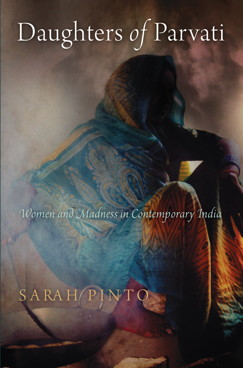
In this special feature on the blog, we’re highlighting recent book publications that have been submitted for review to Culture, Medicine, and Psychiatry. This week, we’d like to give you a short overview of Sarah Pinto’s new book Daughters of Parvati: Women and Madness in Contemporary India, from the University of Pennsylvania Press (more information here: http://www.upenn.edu/pennpress/book/15224.html)

Book cover image courtesy of the University of Pennsylvania Press website

Book cover image courtesy of the University of Pennsylvania Press website

Released earlier this year, Sarah Pinto’s book chronicles the experiences of women at a number of different psychiatric care institutions throughout Northern India. Pinto questions the poor treatment of female patients, the licensing process for mental health caregivers in these settings, as well as the overprescription of psychoactive medications to Indian women. Pinto pays close attention to the ways women in particular experience difficulty and distress as the primary caretakers of their families and households.

The goddess Parvati, whom the book is in part titled after, represents intense love for someone far away that borders on, and becomes, a form of suffering. Pinto invokes the name of this figure as a way to remind us of the mental strain that familial love can cause, especially for the Indian women at the heart of her moving ethnographic account.


These brief summaries are intended to give our readers a glimpse into the newest academic publications that we’re excited to discuss in our journal and with our followers on social media. For a full list of books that have been submitted for review at CMP, click this link: http://link.springer.com/article/10.1007/s11013-014-9383-x. This page also has information regarding the submissions process for authors who’d like their academic releases reviewed in the journal, as well as information for those interested in composing a review. For more information on this process, please contact managing editor Brandy Schillace.

Current Issue Highlight: September 2014 (Vol 38 Issue 3) Part Two

Welcome back to our two-week special update featuring glimpses into some of the articles published in the latest release of Culture, Medicine, and Psychiatry. These brief synopses of a few of our newest pieces from the September 2014 issue are only some of the publications that the current issue has to offer. We hope they invite you to explore the many other fascinating articles housed in this issue and in past volumes of CMP.

Swapnaushadhi: The Embedded Logic of Dreams and Medical Innovation in Bengal
Projit Bihari Mukharji

Mukharji’s article discusses the prevalent but little-researched history of indigenous therapeutic practices in Bengal that stem from therapies revealed in healers through dreams. Instead of grouping this practice into the indiscriminate category of “indigenous practice” or “dream culture,” the author asserts that all dream cultures are locally specific. They also do not draw stringent religious boundaries, as healers (and their patients) may receive visions of divine figures like Jesus or Muhammed despite not being of the creed the prophet represents. Because of this cross-cultural and “borderless” dialogue, medical innovation in dream medicine occurs regularly as the product of contact between numerous religious, spiritual, and local traditions. As Mukharji argues, “the logic of dreams opens up a space: the swapna-sthana or the dreamland where such cross-boundary transactions can take place without undermining the sanctity of the boundary itself in everyday social life.”

‘‘Pensando Mucho’’ (‘‘Thinking Too Much’’): Embodied Distress Among Grandmothers in Nicaraguan Transnational Families
Kristin Elizabeth Yarris

Yarris chronicles the difficulties faced by Nicaraguan grandmothers serving as the primary caregivers of grandchildren whose mothers have migrated to another country for employment. The author asks us to reconsider the simplistic mind-body connection in lieu of a more complicated view of the body and mind as experiencing distress: physical, emotional, and cultural all at once. In this paper, we discover that the term “thinking too much” ultimately describes the difficult self-sacrifice faced by grandmothers who tend to their grandchildren to allow their own children to succeed elsewhere. The stress of geographically dispersed and fractured families, the burden of caregiving later in life, and anxieties surrounding the grandmothers’ “hopes for the future” generate a particular form of psychosomatic suffering connected to broader economic, social, and political pressures manifested at the local level among these Nicaraguan families.