From the Archive: Patients-as-Syndromes in Internal Medicine

In our “From the Archive” series, we highlight an article from a past issue of the journal. In this installment, we explore Robert A. Hahn’s piece “‘Treat the patient, not the lab’: Internal medicine and the concept of ‘Person,'” available in full here. This article was featured in Volume 6, Issue 3 (September 1982.)


cards

Throughout the history of the journal, our authors have turned the same anthropological gaze equally onto both biomedicine and other medical systems. As Hahn introduces this article, he states that the healer in all cultural contexts fashions medical and social truths together, such that the patient and patient body are reinterpreted (and potentially reordered) through medical treatment by the healer. Biomedicine, he states, also recasts illness in ways that alter the medical position of the patient. To understand how physicians of biomedicine engage with patients conceptually in this way, Hahn conducted an ethnographic study of four internists. As internal medicine is often characterized as highly rationalistic and thus emblematic of biomedical practice, Hahn argues, he states that understanding the internists’ perspectives may shed light more broadly on biomedicine as a particular method of envisioning illness and its relationship to the patient.

Hahn begins by positing that the nature of internal medicine as a profession itself is a form of interpretation of what constitutes the patient and body over which it has medical purview. Internal medicine does not focus on mental health (psychiatry) or on the internal visceral body (surgery.) Thus, the “body” it treats exists in relative isolation from the mind, yet is not a physical or functional body such as the one manipulated directly through surgery. The conditions internists treat exist apart from the person and, to a degree, from the patient’s body: instead, the internist focuses on internal diseases and pathologies that become entities of treatment divorced from the individual receiving care. These illnesses– forged into concrete ontological “things”– are countered with similarly material antidotes. Hahn adds that the prestigious status of the internist in the culture of clinical practice, both currently and historically, lends this physiologically-based view of the body and its treatment significant legitimacy in the biomedical landscape.

To demonstrate these concepts, Hahn presents the case of internist Dr. Barry Siegler. “Barry,” as he comes to be called, repeatedly instructs his residents and other clinicians to be wary of individual metrics and lab results, as these single numbers and tests cannot be incrementally fixed: rather, he contends, they must be examined and addressed in concert such that the whole patient is successfully treated. Hahn describes this as relational knowledge of pathology, rather than “singly” reading and responding to individual metrics. However, Barry does not mean to champion holistic, person-centered care: instead, he posits that the entire patient should serve as the point of focus such that no aspect of the patient’s pathology is excluded from diagnosis and subsequent treatment. For example, Barry argues that the patient interview is a tool for the extraction of cues that would lead the clinician to better understand the etiology and symptomatology at hand.

Thus the patient’s “syndrome” comes to exist as a materially and ontologically “real” entity that is distinct from the social, personal, and existential contexts of the patient’s life. This perspective is crystallized in Barry’s tendency to refer to patients as their diseases, such as “a conversion reaction.” He also refers to patients he believes to have mental illness in the same manner, such as the “neurotic,” although he admits that psychiatric pathologies are a “Pandora’s box” beyond the limits of his professional power to address. Again, the patient as a person (and even as a subject or individual mind) fades as the disease pathologies that characterize their illness are reified and made the central objects of the internist’s medical gaze. Due to the close alignment between physiology and organic sciences (chemistry and biology), Hahn notes that the internist’s ontological transformation of the patient into their pathologies– and the pathologies into discrete objects of attention– are deemed especially real, true, and justifiable. Likewise, the body itself is interpreted as a closed, contained system that becomes the object of internal medicine: the ‘whole patient’ is instead the ‘whole pathophysiology.’

Hahn concludes that this vision of the body is decidedly Western: it individualizes the body, and makes a Cartesian division between the body (physical) and the mind (psychological, social) such that it is made treatable and conceptually readable by internists who isolate it from other contexts and who distinguish diseases as concrete, material things. The article ultimately suggests that certain biomedical visions of the body and appropriate patterns for treatment may not align with the perspectives of patients, who understand their illness within the social, spiritual, cultural, and other frameworks that structure their daily lives.


In the News: Health Disparities and Water Quality in the 2016 Rio Summer Olympics


August 2016 – The 2016 Summer Olympic games in Rio de Janeiro, Brazil has dominated news headlines in recent weeks. The athletics event, taking place from August 5 to August 21, featured 207 countries in the Parade of Nations as well as the first ever Refugee Olympic Team. It is the first time the games have been held in South America. But besides highlights on the events and spotlights on athletes’ training regimens and backgrounds, there is another stream of news stories surrounding the Olympic Games. These stories have focused on two key public health issues related to this year’s Games: health disparities and water quality issues.

ap_16221704995649-2a9b5ac7291dd20a71781f18eaca8c4d3edb888a-s800-c85

Rio’s Olympic beach volleyball venue is on Copacabana Beach. Photo from Marcio Jose Sanchez for AP.

Only two years ago the FIFA World Cup was making similar headlines in Brazil. As reported in 2014, and highlighted in this blog[1], there have been past concerns about access to quality healthcare despite the surge of funds for the World Cup event. These reports unmasked a problematic system of health disparities to a global audience. The Daily Californian[2] stated that many Brazilians were “unhappy that their government [was] funding stadium renovations instead of spending on more instrumental matters like improved health care and emergency services.” Reports relating to the current Olympics have painted a similar picture for the present health scene. As Reuters[3] reported in December 2015, the governor of Rio de Janeiro declared a state of emergency “as hospitals, emergency rooms and health clinics cut services or closed units throughout the state as money ran out for equipment, supplies and salaries.” According to CNN[4], the financial crisis has been causing difficulties in the “provision of essential public services and can even cause a total breakdown in public security, health, education, mobility and environmental management.”. While the state of emergency declaration provides a critical 45 million reais ($25.3 million) in federal aid and may facilitate the transfer of future funds, estimates state that Rio de Janeiro owes approximately $355 million to employees and suppliers in the healthcare sector alone, and the state needs over $100 million to reopen the closed hospital units and clinics.[5] While the city of Rio spent approximately $7.1 billion on improving toll roads, ports and other infrastructure projects, the Brazil Ministry of Health devoted only $5.7 million to address health concerns[6].

rio-favelas--joao-velozo-9_custom-84b1822885fc72f97f7e9084730eb4397aa48b6e-s1300-c85

The Christ the Redeemer statue is visible above the Santa Marta favela in Rio de Janeiro. Photo from Joao Velozo for NPR. 

In addition to these issues (and the high-profile Zika virus, which is causing health concerns in multiple countries[7]), concerns surrounding water quality and cleanliness in Brazil has garnered considerable attention. A recent scene involving the diving and water polo pools turning a swamp-green color because of an algae bloom left some athletes complaining of itchy eyes.[8] While the Olympic Games have brought international attention to the impact of water quality on the athletes and visitors, the residents of Rio have been dealing with theses concerns on a daily basis for much longer. With almost 13 million people living in and around Rio, the current sewage system is struggling to cope. One news report[9] notes that “about 50 percent of what Brazilians flush down the toilet ends up in the country’s waterways. Diseases related to contaminated water are the second leading cause of death for children under five in Brazil.” Tests performed in a variety of areas, including the sailing venue of Guanabara Bay, over the course of a year found high levels of “superbugs of the sort found in hospitals on the shores of the bay.” The possibility of hospital sewage entering the municipal sewage system remains a concern.[10]

An economic recession, compounded by water concerns, political unrest, and a presently faltering healthcare system all leave many Cariocas— citizens of Rio– who rely on the public health system in a challenging and hazardous situation across the social, medical, and political spheres. With hopes of local profits from the Olympic Games ranging in the billions of dollars, much is at stake for both residents and investors.[11] Despite the risks and tribulations, many residents welcome the international event and attention, and credit the Olympics for cultivating “several underutilized, often abandoned spaces have been transformed to ones that appeal and cater to local residents”. Many “beautification” projects leave residents hoping the installation of new art and the newly constructed spaces will leave a lasting impression on its residents and visitors long after the games end.[12]  Despite this optimism, the citizens of Rio are not impacted equally by the Games.[13] The improved infrastructures will likely benefit those who already have access to services. Tourism, and tourism cash, has been weak in the favelas, or shantytowns, which house at least 25% of the population in Rio. The infrastructure inequities have even bypassed some neighborhoods entirely, leaving those residents out of the celebrations.[14]

Overall, these Olympic Games promise once again to bring the world’s cultures together in competition and camaraderie, yet they do not do so without controversy. This global spectacle illuminates athletics and sportsmanship, as well as the intersections between cultural events, politics and nationalism, power and profit, and community health. These larger issues lead to questions about what will happen to the residents of Rio after the Games have drawn to a close.


[1] https://culturemedicinepsychiatry.com/2014/07/11/news-the-2014-world-cup-and-healthcare-in-brazil/

[2] http://www.dailycal.org/2014/07/08/uc-berkeley-faculty-graduate-students-look-world-cup-different-light/

[3] http://www.reuters.com/article/us-brazil-health-emergency-idUSKBN0U716Q20151224

[4] http://www.cnn.com/2016/06/18/americas/brazil-rio-state-emergency-funding-olympics/

[5]http://www.reuters.com/article/us-brazil-health-emergency-idUSKBN0U716Q20151224

[6] http://wuwm.com/post/let-s-do-numbers-money-spent-rio-olympics#stream/0

[7] http://www.nytimes.com/2016/01/29/world/americas/brazil-zika-rio-olympics.html?_r=0

[8] http://uk.reuters.com/article/uk-olympics-rio-diving-pool-idUKKCN10O0UW?feedType=RSS&feedName=sportsNews

[9] http://wuwm.com/post/rios-water-problems-go-far-beyond-olympics#stream/0

[10] http://edition.cnn.com/2016/08/02/sport/rio-2016-olympic-games-water-quality-sailing-rowing/index.html

[11] http://www.newsweek.com/rio-2016-who-stands-benefit-successful-olympics-453094

[12] http://www.kvia.com/news/rio-olympics-bring-beautification-projects/40884340

[13] http://www.npr.org/sections/thetorch/2016/08/11/487769536/in-rios-favelas-hoped-for-benefits-from-olympics-have-yet-to-materialize

[14] http://www.reuters.com/video/2016/08/14/olympic-infrastructure-causes-suffering?videoId=369565427

Book Release: Tomes’ “Remaking the American Patient”

9781469622781

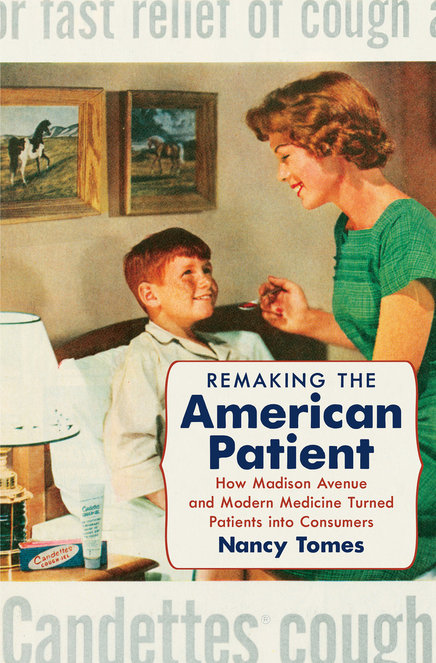
Images via UNC Press website

Released in January 2016 from the University of North Carolina Press is Nancy Tomes’ Remaking the American Patient: How Madison Avenue and Modern Medicine Turned Patients into Consumers. Through historical and cultural analysis, Tomes illuminates the threads between public relations and marketing in medicine, asking throughout: how have patients in the United States come to view health care as a commodity to be “shopped” for? What connections are shared between the history of medicine and the growth of consumer culture? Likewise, Tomes investigates what it means to be a “good patient” in this system of marketed care, and how “shopping” for care can both empower and disorient patients in the contemporary age. She also reviews the resistance, and ultimate yielding, of the medical profession to this model of care seeking. The book was recently reviewed in the New York Times (read the article here.)

The book will prove insightful for both historians of medicine and medical anthropologists who study the political-economic landscape of biomedicine and patienthood in the United States. It will also speak to conversations in bioethics about patient autonomy, choice, and medical decision-making.

About the Author

Nancy Tomes serves as professor of history at Stony Brook University. She is also the author of The Gospel of Germs: Men, Women, and the Microbe in American Life, published by Harvard University Press (details here.)

Have you published a recent book in medical anthropology, history of medicine, social medicine, or medical humanities? Email our blog editor (Julia Knopes) at jcb193@case.edu with a link to the book’s page at the academic publisher’s website, and we will feature it here.

Issue Highlight: Vol 39 Issue 4, Stimulant Use in the University

This blog post is the last in a three-part series highlighting our newest installment of Culture, Medicine & Psychiatry (released December 2015) which readers can access here. This week, we explore Petersen, Nørgaard, and Traulsen’s research on the use of prescription stimulants amongst university students in New York City. The full article is available here.


cropped-cards.jpg

In recent dialogues on the widespread use of prescription stimulants amongst university students, drugs are often described as enhancing productivity or a student’s ability to successfully focus on academic work. However, Petersen, Nørgaard, and Traulsen found that university students in New York City often cited the use of these drugs as rendering their work more pleasurable, “fun,” and “rewarding.” Their study included 20 students spanning BA, MA, and PhD programs: representing a diverse sample that, in the aggregate, universally suggested that the use of stimulants in an educational setting was not centrally connected to academic output or production. This outcome, the researchers assert, complicates existing neoliberal readings of American personhood, premised on the idea that the self is primarily cultivated and disciplined through labor and individual productivity.

For example, rather than feeling shameful about using stimulants to improve study skills or produce better work, the students instead expressed guilt for enjoying their academic labors and for transforming “monotonous” and “boring” activities into an engaging experience. The “optimization” of the mind to perform intensive intellectual labor was not related strictly to productivity, which would evoke traditional neoliberal notions of the person-as-producer. Instead, the students described the drugs as optimizing pleasure first, which rendered them more productive as a secondary consequence.

Take this instance: a 32-year old PhD student, identified as Ben, reported using Adderall when he felt too “lazy” to initiate work. Rather than continuing by discussing the extent of his productivity while on the drug, he instead explains that the drug makes him eager “to tackle” his projects. This is often the case for students who struggle to find the desire to complete academic tasks that are not interesting enough to begin without being made pleasurable through stimulant use. Further, another student added that using stimulants helped him to “reconnect” with his interest in sociology during a difficult class on social science theory. In other cases, using Adderall kept students from being distracted from social media or entertainment websites: not because they lacked the inherent ability to be productive, but because without the drug, these sources of interest were simply more engaging than the work at hand. In other instances, students noted that stimulants made them feel more secure and positive about the quality of their work, and helped them to diminish the physical and mental stresses that came with “all-nighters,” or extended overnight studying stints.

Throughout all these cases, enhancement is not described as a means to make the human brain meet the demands of a “high-speed society.” Instead, “enhancement” relates to students’ satisfaction with their resulting work, to their enjoyment of otherwise “boring” tasks, and to reduced the negative psychosomatic effects of studying or working on a limited time frame.

The authors do not eschew the neoliberal model through these cases: indeed, they suggest that the use of stimulants does have cognitive effects that bolster students’ abilities to produce academic work. However, they note that we must complicate a strictly neoliberal model that would indicate that stimulants are employed by students strictly in order to achieve a certain amount of studying or to complete an assigned amount of work. Enhancement may include productivity, but for students who use stimulant drugs, it also involves increasing the pleasure of finishing intellectual labors, and decreasing the negative consequences of engaging in challenging or otherwise tedious academic work.

In this way, cognitive-enhancing drugs indeed fortify the mind and the conception of the self as a producer and academic laborer. However, they also shape human experience by altering students’ sense of confidence, their satisfaction with academic work, and their passion for their chosen topics of study. In these ways, enhancement drugs not only increase productivity in the neoliberal sense: they also broadly impact notions of pleasure and individual ability related to students’ quest to heighten academic production.


Issue Highlight: Vol 39 Issue 4, Incarceration & Medical Anthropology

This blog post is the second installment of our three-part issue highlight on the new December 2015 issue of Culture, Medicine & Psychiatry (the full issue is accessible here.) In this week’s blog, we examine Carolyn Sufrin’s article on the shared roles of clinicians and anthropologists working with incarcerated women in the United States.


cropped-cards.jpg

Clinician-anthropologists are in a unique position to lend voice to their participants and to care for their medical needs. For Carolyn Sufrin, who served both as a physician and an ethnographic researcher for incarcerated women in the United States, the clinical and anthropological roles intersected in deeply meaningful ways. Sufrin notes that in these dual roles, she observed with female prisoners and analyzed their experiences, and provided reproductive health care and delivering the same women’s babies in a county hospital, where imprisoned women gave birth. The women were alternately enrolled in Sufrin’s study upon ceasing to officially be her patients, or were individuals that Sufrin cared for during her tenure as their OB/GYN.

Sufrin uses her case as an example of how to interpret the ethical consequences of working as a clinician-anthropologist. Part of the challenge she faced as both a physician and anthropologist to the women was that IRB and HIPAA regulations divided the types of data she could use in her anthropological research. Though some details of her participants’ lives, such as past trauma or childhood abuse, were essential to their experiences as mothers and as incarcerated women, she could not use this data inasmuch as it had been shared with her in the context of a patient-practitioner interaction: in other words, it was considered classified personal health information that could not be subsequently utilized in her ethnographic research. These methodological hurdles, Sufrin explains, shed light on the complexities of what constitutes “sacrosanct” data. It also suggests how the safeguarding of medical data does not necessarily translate to the “protective” collection of ethnographic data which is not isolated to the case of individual patients, and which relies on knowledge of participants and their connections to other people (in this instance, to individuals in the participant’s life who had caused past psychological harm.)

Likewise, as stated earlier, relationships between the participant/patient and the clinician/anthropologist are another form of interpersonal connection which must be reconfigured depending on the nature of the exchange taking place. In Sufrin’s case, this meant being clear with her participants that– upon entry into her anthropological study– she was no longer their physician, and that the nature of their exchanges and their professional relationship would take a new form. She could share their information (albeit de-identified), unlike information drawn solely from their medical records or from an examination.

Yet here, Sufrin notes that the anthropologist– like the clinician– is still engaged in an ethic of care. For example, one of Sufrin’s former patients in the prison was charged with child endangerment after giving birth in an alley and handing her child to a stranger, unable to afford treatment at a hospital following her release from prison. The story made news headlines, and as public knowledge, was within the realm of information that Sufrin employed in her ethnographic analysis of reproductive health in the American prison system. However, Sufrin knew an added piece of information that was not already publicized from her interaction with the woman in prison: a clinical detail that she understood as a physician, but was shared during her time as an ethnographic researcher. This detail would have enhanced her analysis of the situation, but she chose to omit it out of concern that to publicize the detail would be to betray the woman’s trust in her as a researcher and as someone who served in the prison as a physician.

In other instances that Sufrin discusses, her role as both an anthropologist and clinician led the women she worked with in each capacity to feel as if she was especially attentive and caring. Rather than always relying on her medical authority, Sufrin underscores her decision to remain non-judgmental and supportive even when the women in her study had made potentially harmful choices; for example, she chose not to openly admonish a woman who was continuing to use crack upon release from jail, despite being thirty-two weeks pregnant. Sufrin notes that her silence hid her own frustration with this choice, but it strengthened the woman’s trust in her as an anthropologist and “as a doctor.”

In sum, these dual roles ultimately bolstered her relationships to the incarcerated and formerly incarcerated women that she served. Thus, the author argues that both anthropologists and clinicians share an “ethic of care” in their relationships with research subjects or patients. This ethic involves a careful fostering of the professional, interpersonal connections that ethnographers make with research participants, or that physicians make with their patients. This care entails the protection of private information and the researcher/clinician’s conscious attendance to interpersonal exchanges that bolster the patient/participant’s trust in the clinician/anthropologist. Likewise, an analysis of the clinician role alongside the anthropological one demonstrates both the delineations between multiple forms of care and social connection, as well as the shared commitment in medicine and anthropology to the sensitive attendance to patient and participant experiences.

News: UN Releases New Sustainable Development Goals (SDGs)

On Friday, September 25th, the UN released its new plan for global development through 2030: the sustainable development goals (SDGs).[i] This plan replaces the millennium development goal (MDG) plan that expires at the end of 2015, and offers a new 17-point agenda focused on social equality, infrastructure, technology, and environmental conservation.[ii] Of note to medical anthropologists, global health workers, and other scholars in social medicine is the continued focus on health and well being as the third item amidst the seventeen goals. The SDG plan champions health “for all at all ages,” although it proposes no specific goals for improving elder care despite the language stressing health across ages. Maternal and reproductive health, substance abuse, traffic deaths, and universal health care coverage are key issues addressed in the SDGs.

Emblem of the UN via Wikimedia Commons

Emblem of the UN via Wikimedia Commons

Proponents of the new SDGs, like the World Bank, argue that the plan’s emphasis on both developed and developing countries creates a shared impetus for bolstering food security, education, and access to quality health care; likewise, it suggests that these issues are global ones that cross national borders, and do not exist at the state level alone.[iii] Others criticize the SDGs as too ambitious, arguing that global authorities already struggle to aid migrants and peoples in crisis[iv], stating that the goals are too broad and thus not focused enough to produce observable change[v], and highlighting the irony of combating climate change while promising electricity for all by 2030.[vi]

Anthropologists have long held an interest in international development as a site of cross-cultural exchange, a relic of colonialism, and as a paternalistic model of societal shepherding of developing nations by the wealthy West and Global North.[vii] Amongst development anthropologists, the sustainable development goals will certainly generate new questions about the connectedness of social inequities with health, autonomy, and human rights in the contemporary age. The goals will similarly continue to attract the interest of scholars studying biomedicine and global health in diverse cultural settings.

In addition, the SDGs will no doubt capture the attention of anthropologists in science and technology studies (STS) with the plan’s robust emphasis on technologies, energy, infrastructure, and the environment. This sharpened focus on the connection between social order, science, and technology attests to the applicability of STS approaches to the study of development.

The SDGs arrive at a time of increased concern over social justice and equity on the transnational scale, particularly in the face of the Syrian refugee crisis[viii] and given wide income gaps that impact people in the United States, Chile, Greece, Mexico, and Turkey alike.[ix] Anthropologists are ideally situated to explore the impact of development goals across cultures, and to question how and why these goals may face considerable challenges as they are translated into action, law, and practice at the local level.


[i] http://www.theguardian.com/global-development/2015/sep/25/global-goals-summit-2015-new-york-un-pope-shakira-malala-yousafzai

[ii] https://sustainabledevelopment.un.org/topics

[iii] https://blogs.worldbank.org/voices/global-goals-economic-transformation-in-an-interconnected-world

[iv] http://www.npr.org/sections/goatsandsoda/2015/09/28/444188463/are-the-new-u-n-global-goals-too-ambitious

[v] http://www.scientificamerican.com/article/sustainable-development-goals-offer-something-for-everyone-and-will-not-work/

[vi] http://www.theatlantic.com/international/archive/2015/09/energy-access-sdgs-un-climate-change/407734/

[vii] http://www.wiley.com/WileyCDA/WileyTitle/productCd-0631228802.html

[viii] http://www.cnn.com/2015/09/28/world/united-nations-main/

[ix] http://www.reuters.com/article/2015/09/27/us-development-goals-challenges-analysis-idUSKCN0RR0TV20150927

Issue Highlight: Vol 39 Issue 3, Depression & Psychiatry in Iran

With each new issue of Culture, Medicine & Psychiatry, we feature a series of blog posts that highlight the latest publications in our journal. This September’s issue features articles that address psychiatric conditions and the experiences of people with mental illness across cultures. The articles span studies in India, the United States, East Africa, Iran, and Belize. Readers may access the full issue at Springer here: http://link.springer.com/journal/11013/39/3/page/1. In this issue highlight, we will explore the emergence of public discourse about mental illness, suffering, and political struggle in Iran.


cropped-cards.jpg

Writing Prozak Diaries in Tehran: Generational Anomie and Psychiatric Subjectivities

Orkideh Behrouzan – Pages 399-426

http://link.springer.com/article/10.1007/s11013-014-9425-4

Behrouzan’s study began upon noticing young Iranians discussing mental illness in blogs and in public forums in the early 2000s. At the same time, the author examined unpublished public health records maintained by the state, and noticed that there was a sharp rise in the prescription rate of antidepressants in the mid to late 1990s. This pattern correlated with a shift in the understanding of suffering: during the Iran-Iraq war of the 1980s, PTSD and anxiety disorders were considered the most pressing mental health concerns, but these illnesses became supplanted by a shared culture of loss and hopelessness amongst young Iranians in the period following the war.

Unlike the narrative of depression in other places, however, Behrouzan found that the Iranian category of depreshen held deep political meanings. The illness category reflected the condition of those unable to publicly mourn for friends and family who may have been executed as political prisoners, or to process grief about continued political unrest that seemed to have no resolution, or to understand the loss of a parent during wartime as a young child. As one Iranian blogger described, “our delights were small: cheap plastic footballs, cartoons and game cards… But our fears were big: what if a bomb targets our house?” Thus depreshen becomes an experience of suffering that reverberates throughout a generation.

However, Iranian psychiatry responds to this condition outside of its cultural context, and continues to treat depreshen as an individual patient pathology that can be understood in biological terms. By biomedicalizing depreshen in this way without understanding its connection to political struggle, Iranian psychiatry minimizes suffering and “takes away subjects’ abilities to interpret and/or draw on their pain as a political resource.” When we interpret depreshen from the perspective of patients, therefore, we gain a nuanced view of suffering that is at once culturally specific and politically powerful.

Guest Blog: The Autism Spectrum, Anorexia, and Gender

This week on the blog, we are hosting a guest post by Carolyn Smith, MA, a third-year PhD student in medical anthropology at Case Western Reserve University. Carolyn studies the intersections of mental health, eating, and the body, blending biological and cultural approaches. This blog post complements our July 2015 issue on autism, which you can read more about in the links provided at the end of the guest post.


In Autism spectrum disorders: Toward a gendered embodiment model, Cheslack-Postava and Jordan-Young[1] argue the importance of gender theory in understanding the preponderance of male cases with autism spectrum disorders (ASD) in the United States. In addition to evidence of autism as sex-linked, the authors argue that there is evidence as well for biases in diagnosing autism, and that social environment likely plays a role in male susceptibility. The literature on anorexia nervosa offers a parallel argument: anorexia nervosa, like autism, is often described in terms of biological risk factors[2] yet it remains a socially charged, deeply gendered diagnosis. In the USA and other societies with thin female beauty ideals, for instance, anorexia nervosa is most widely attributed to women.[3]

Both anorexia nervosa and ASD are recognized by the American Psychological Association (APA) and have specific criteria. While these categorizations are justifiably scrutinized by medical anthropologists, here I use the APA criteria as a cultural document that reflect what conditions that biomedical practitioners in the United States are cataloguing when they demarcate mental conditions. Anorexia nervosa is an eating disorder characterized as one of the most fatal mental illnesses in the United States.[4] Diagnostic criteria in the Diagnostic and Statistical Manual of Mental Disorders, Fifth Edition (DSM-V) includes restrictive eating and an intense fear of gaining weight/persistent behaviors to prevent weight gain. [5] One key criterion for anorexia is being of low body weight with the absence of any other pathology. The inclusion criteria have changed over the years, as have social ideas about the disorder and who suffers from it. Meanwhile, autism is classified as a neurodevelopmental disorder with social deficits and rigid behaviors.[6] The understandings of autism, like anorexia nervosa, have also changed over time in the United States.
cards3

Yet gendered categories for these conditions persist. In the realm of psychiatric health, autism is assumed to be a male disorder, and anorexia nervosa, a woman’s diagnosis. This simple categorization overlooks the extent to which anorexia and autism are demonstrably comorbid in studies carried out in the USA and the UK.[7] [8] [9] One study from the UK, in fact, found that anorexics, restrictive-type were five times more likely than the general population to score as high on the Autism Questionnaire as someone with an ASD. 9 This finding offers no simple cause-and-effect explanation for how the two disorders are linked. However, this new data suggests that the body, the mind, gender roles, and dieting behaviors may be entwined in ways that resonate with cultural beliefs and categories.

There are competing theories about the etiologies of anorexia as well as autism, each with gendered overtones that do not reflect the findings of associations between the two psychiatric conditions. One theory of autism is that it is linked to a “hypermasculinized” brain.[10] Meanwhile, in a 2012 article for Psychology Today, Maestripieri argues that anorexia may be due to a “hyperfeminine” brain. The two conditions, it seems, appear to be “oppositional.”[11] However, these theories do not capture the wide diversity of cultural perspectives within the USA or UK, meaning there may be unique gendered understandings of psychiatric disorders between social groups that are not accounted for in existing research. In either case, what is clear is that cultural categories of psychiatric conditions in the US and UK may be missing how patients (of any gender, from numerous cultural backgrounds) live and seek care with either condition.

These gendered categories become even more complex for individuals diagnosed as both autistic and anorexic. The comorbidity of ASD and anorexia is complicated by the fact that restrictive dieting in anorexia may lead to cognitive impairment, which subsequently causes behaviors that might be confused with cognitive patterns on the autism spectrum. However, people with anorexia do report having autistic traits prior to the onset of their eating disorder, and people recovering from anorexia appear more often than non-anorexics to fall along the autism spectrum. 6,7 Thus, the two illnesses co-produce one another in ways that cross traditional gender lines (autism as male, anorexia as female) while also making it difficult, if not impossible, to isolate each condition from the other. Here medical anthropologists can offer valuable perspectives from the view of patients, who may describe their eating patterns and body image in terms that span and challenge existing diagnostic divisions.

Though there may be no empirical means to measure the extent to which ASD and anorexia overlap, existing theories about socialization may shed some light on how these two illnesses co-occur. There are numerous common traits between anorexia nervosa and ASD, including perfectionism, social withdrawal, and obsessive thinking.6 Girls and women with anorexia appear to have other similar traits to boys and men with autism: systematizing, a fascination with details, and resistance to change. Anorexic individuals with these autistic traits, Baron-Cohen hypothesizes, could become fixated on the systemic relationships behind body weight, shape, and food intake.[12]Of course, this would depend on whether or not the person with autism was brought up in a cultural environment where food intake and body shape are viewed as something that can and should be regulated at all. Here is where socialization may play a crucial role in the development of anorexia nervosa out of behavioral patterns attributed most often to autism.

The comorbidity of ASD and anorexia nervosa presents an anthropologically complex case where discrete classifications of mental illness may not reflect the connectedness of the two conditions. Likewise, the gendering of each illness as dualistic male-autistic and female-anorexic overlooks the extent to which the conditions share behaviors, tendencies, and thought patterns. Though national clinical studies in the USA and the UK suggest a connection between autism and anorexia, cultural readings of gender, eating, and self-regulation amongst patients with comorbid cases might better illuminate how these conditions manifest on the local scale, and between cultural groups.


Additional Reading

Publications:

Jaffa, T., Davies, S., Auyeung, B., Allison, C., & Wheelwright, S. (2013). Do girls with anorexia nervosa have elevated autistic traits. Mol Autism, 4(1), 24.

Nilsson, E. W., Gillberg, C., Gillberg, I. C., & Raastam, M. (1999). Ten-year follow-up of adolescent-onset anorexia nervosa: personality disorders. Journal of the American Academy of Child & Adolescent Psychiatry, 38(11), 1389-1395.

Oldershaw, A., Treasure, J., Hambrook, D., Tchanturia, K., & Schmidt, U. (2011). Is anorexia nervosa a version of autism spectrum disorders?. European Eating Disorders Review, 19(6), 462-474.

Websites: 

ASD and Autism

https://www.psychologytoday.com/blog/games-primates-play/201208/the-extreme-female-brain

http://www.medicalnewstoday.com/articles/264666.php

https://books.google.com/books?hl=en&lr=&id=iPGFAgAAQBAJ&oi=fnd&pg=PR10&dq=malson+the+thin+woman&ots=sQPGnzOFN1&sig=ZSv8OMyuNAFQ3UgBOWZTEX5lHAg#v=onepage&q=malson%20the%20thin%20woman&f=false

CMP Special Issue Features: July 2015 Issue on Autism

https://culturemedicinepsychiatry.com/2015/07/08/special-issue-highlight-the-anthropology-of-autism-part-1/

https://culturemedicinepsychiatry.com/2015/07/22/special-issue-highlight-the-anthropology-of-autism-part-2/

https://culturemedicinepsychiatry.com/2015/08/05/autism-in-brazil-and-italy-two-cases-from-the-june-2015-special-issue/


References Cited

[1] Cheslack-Postava, K., & Jordan-Young, R. M. (2012). Autism spectrum disorders: toward a gendered embodiment model. Social science & medicine, 74(11), 1667-1674. “Our argument is fully biosocial, and our main points in advancing it are to articulate a model for autism, specifically for explaining the male-female disparities in prevalence, that does not exclude social environmental variables, and is therefore more biologically satisfying; and to demonstrate concrete mechanisms whereby autism may become more prevalent in males as a result of social structures and processes related to gender (p. 1673).”

[2] Bulik, C. M., Slof-Op’t Landt, M. C., van Furth, E. F., & Sullivan, P. F. (2007). The genetics of anorexia nervosa. Annu. Rev. Nutr., 27, 263-275.

[3] Malson, H. (2003). The thin woman: Feminism, post-structuralism and the social psychology of anorexia nervosa. Routledge.

[4] Arcelus J, Mitchell AJ, Wales J, Nielsen S. Mortality Rates in Patients With Anorexia Nervosa and Other Eating Disorders: A Meta-analysis of 36 Studies. Arch Gen Psychiatry. 2011;68(7):724-731.

[5] IBD

[5] IBD

[6] American Psychiatric Association. (2013). Diagnostic and statistical manual of mental disorders: DSM-5 (5th ed.).

[7] Zucker, N. L., Losh, M., Bulik, C. M., LaBar, K. S., Piven, J., & Pelphrey, K. A. (2007). Anorexia nervosa and autism spectrum disorders: guided investigation of social cognitive endophenotypes. Psychological bulletin, 133(6), 976.

[8] Nilsson, E. W., Gillberg, C., Gillberg, I. C., & Raastam, M. (1999). Ten-year follow-up of adolescent-onset anorexia nervosa: personality disorders. Journal of the American Academy of Child & Adolescent Psychiatry, 38(11), 1389-1395.

[9] Baron-Cohen., Jaffa, T., Davies, S., Auyeung, B., Allison, C., & Wheelwright, S. (2013). Do girls with anorexia nervosa have elevated autistic traits. Mol Autism, 4(1), 24.

[10] Baron-Cohen, S. (2002). The extreme male brain theory of autism. Trends in cognitive sciences, 6(6), 248-254.

[11] Maestripieri, D. (2012 August 23). The Extreme Female Brain: Where eating disorders really come from. Psychology Today. Retrieved from https://www.psychologytoday.com “Therefore, just like Autism Spectrum Disorders may be the product of the combination of the extremely high systemizing and low empathizing tendencies that characterize the extreme male brain, eating disorders may be a manifestation of high negative evaluation anxiety that originates from the combination of the extremely high empathizing and low systemizing characteristics of the extreme female brain.”

[12] (2013 August 10). Anorexia and autism – are they related? Medical News Today. Retrieved from http://www.medicalnewstoday.com

Special Issue Highlight: The Anthropology of Autism, Part 1

The newly released June 2015 special issue of Culture, Medicine & Psychiatry addresses anthropological studies of autism from around the world, including the United States, India, and Italy. In this installment and the next entry on the blog, we will explore four articles published in the latest issue. This research spans the fields of disability studies, psychological anthropology, and medical anthropology, and touch on themes of identity, subjectivity, family caregiving, and community. Here, we will focus on two articles in this publication.


Parenting a Child with Autism in India: Narratives Before and After a Parent–Child Intervention Program

Rachel S. Brezis, et al.

Throughout India, there are limited social services and support networks for individuals with autism and their families. Furthermore, neurodiverse (and mentally ill) individuals have historically been cared for in private by family members in India, where they are hidden from the community and may be treated as a mark of shame on the household. However, despite these challenges, Indian parents of children with autism are increasingly seeking out professional programs that educate them about autism and appropriate caregiving strategies.

One such program in New Delhi, the Parent-Child Training Program (PCTP), evidences the changing view towards autism in India. The program aims to educate parents about autism and, in so doing, encourage them to educate others about the experience of raising a child with the condition. Parents bring their child to PCTP and learn alongside them. As the first program in India to provide such training, its examination proves essential in understanding the way that various populations (here in India) are now approaching the shifting landscape of autism.

Brezis and colleagues studied the PCTP to discover how the training was altering parents’ perceptions of autism and relationships with their children. They interviewed 40 pairs of parents at the beginning and end of the 3-month program, encouraging the parents to speak for five minutes without prompts regarding their child and their relationship to the child.

The authors found that parents who participated in the three-month program were less likely to describe their children in relation to an assumed “normality,” although mothers proved to be more likely than fathers to self-reflect on their relationship with their child. Similarly, while parents described their child’s behaviors no less frequently in the second and final interview, they did not note behavior in relation to other individuals’ behavior perceived as “normal.”

To learn more about this research, click here for a link to the article: http://link.springer.com/article/10.1007/s11013-015-9434-y

cards3

Custodial Homes, Therapeutic Homes, and Parental Acceptance: Parental Experiences of Autism in Kerala, India and Atlanta, GA USA

Jennifer C. Sarrett

Like Brezis et al, Sarrett also investigates Indian caregiving and parental experiences of autism, while comparing this context to autism and the family in the United States. In both cases, Sarrett asks how the home as space and place impacts the meaning of disability for people with autism. She interviewed seventeen caregivers in Atlanta and thirty-one in Kerala, and observed seventeen families in Kerala and five families in Atlanta who had also participated in interviews. Sarrett concludes that though there are some similarities in the constellation of autism-specific and biomedical services that may be available to Keralite and American families, the arrangement of households themselves drastically changes the way autistic children are cared for in each location.

In Kerala, for example, mothers serve as both full-time child caregivers as well as domestic laborers, often spending long hours washing clothes by hand and cooking from scratch. Keralite children with autism have few interactive toys that are specifically geared to engaging them, few devices that may control their movements and behaviors (such as baby gates) or assist them in communication (such as an electronic device that voices requests for food or other needs.) Such tools are common in Atlanta households. However, they have consistent household care from mothers who manage all domestic labor with no outside employment.

Households with autistic children in Atlanta, meanwhile, are specifically retrofitted for the needs of the child. There are picture cards that children may use to show caregivers and parents an item of food that they wish to eat, as well as a calendar in the kitchen or office that marks doctors’ appointments and family events geared for socialization with the autistic child. Baby gates, cabinet locks, and other safety devices ensure the child does not come into contact with household dangers (such as kitchen knives and cleaning solutions.)

In sum, these tools are designed to change and improve the behavior of the child. The home itself is structured to be a therapeutic space: requiring material and financial resources that Keralite families do not have to physically adjust their households. Instead, Keralite families focus not on improving or altering an autistic child’s behavior, but rather emphasize consistent caregiving for the child. In both cases, however, parents are committed to creating an environment (be it material or social) in which a child with autism can be integrated into the activities of the household, and thus into the family’s social world. Despite cultural, and certainly resource, differences between Indian and American families, they share a common commitment to building home support systems for their developmentally disabled children.

Click here to access the full text of this article: http://link.springer.com/article/10.1007/s11013-015-9441-z


To access all of the articles in this issue, click here: http://link.springer.com/journal/11013/39/2/page/1

Book Release: Wailoo’s “Pain: A Political History”

Image via JHU Press

Image via JHU Press

This October 2015, Johns Hopkins University Press is slated to release Keith Wailoo’s Pain: A Political History. Wailoo’s book examines how the definition of chronic pain in the United States developed and changed alongside broader political and economic changes. The book begins with the culture of treatment following World War II, when public and political attitudes towards pain considered physical suffering real and potentially disabling. With decreasing support of disability programs throughout the 1980s, however, the validity and legitimacy of chronic pain came under question.

New conversations beginning in the 1990s about euthanasia reinvigorated the conversation surrounding pain, no doubt bolstered today by current discussions of medical marijuana laws and the burgeoning use of prescription painkillers for recreation purposes. This renewed interest in the nature and the extent of pain have enlivened the debate around who experiences pain, how we certify pain, and at what point pain requires medical intervention.

The book strives to illuminate the historical foundations of today’s contemporary pain medication and treatment market, particularly in terms of the liberal and conservative political trends between the 1950s and today. Wailoo’s account culminates with an exploration of the contemporary state of pain care: a severe imbalance between the overmedicated and the underserved who cannot access treatment for their chronic pain. Pain: A Political History will certainly prove insightful for historians of medicine as well as political-economic medical anthropologists, theorists of neoliberalism, and medical anthropologists carrying out research in the United States.

Wailoo is Professor of History and Public Affairs as well as the Vice Dean of the Woodrow Wilson School of Public and International Affairs at Princeton University.


To learn more about the book, click on JHU Press’ page here: https://jhupbooks.press.jhu.edu/content/pain