
As part of our ongoing content, we feature authors who have published in Culture, Medicine, and Psychiatry.
Today, we are excited to bring you our interview with Hisako Wada and Tadaaki Furuhashi!

What is your article “Six Core Conflictual Themes Identified in the Narratives of Hikikomori“ about?
This article explores the lived experiences of people experiencing hikikomori. We were interested in gaining a deeper understanding of how people experiencing hikikomori make sense of their lives and struggles through their own narratives.
Through qualitative analysis of participants’ narratives, we identified six recurring conflictual themes that appeared across individual stories. What emerged was not a single cause or explanation for hikikomori, but the ways participants described struggling with tensions around agency, belonging, achievement, self-worth, and relationships.
Our findings point to the importance of understanding hikikomori not simply as an expression of individual psychopathology, but as an ongoing social–existential struggle shaped by personal vulnerabilities, relationships, and broader social and cultural worlds.
Tell us a little bit about yourself and your research interests.
I work in international student support, advising, and counselling at Nagoya University in Japan, while also maintaining a psychotherapy practice. At Nagoya University, more than 2,500 international students from over 100 countries are enrolled, and the backgrounds and needs of international students have become increasingly diverse. Some have experienced conflict, trauma, or other forms of structural vulnerability, while others have navigated a wide range of social, cultural, and personal challenges. Many also face the task of building a life in Japan while navigating a new language, culture, relationships, and academic environment.
Through both research and clinical practice, I have become interested in how psychological suffering takes shape through the interplay of people’s life histories, relationships, and broader sociocultural contexts. I have found myself drawn to questions of how people encounter existential tensions and make sense of themselves amid uncertainty, contradiction, and competing social demands, as well as the role of shame in these processes.
In response to the needs of an increasingly diverse student population, I have been exploring how trauma-informed care (TIC) can be meaningfully integrated into Japanese university settings.
What drew you to this project?
I was initially invited to join this project by senior colleagues at my institution. As I became more involved in the research, I came to see hikikomori as reflecting not only experiences of withdrawal and isolation but also broader questions about how people navigate the challenges and uncertainties of contemporary life. It also led me to think more deeply about the ways in which rapid social change can create new forms of vulnerability and existential struggle.
What was one of the most interesting findings?
What stood out to me most was that, despite the uniqueness of each person’s story, similar struggles emerged across many narratives, even among people whose lives and circumstances were remarkably different. These recurring tensions seemed to reinforce one another over time. Rather than existing as isolated difficulties, they may form self-perpetuating cycles that deepen feelings of uncertainty, isolation, and paralysis. The findings also highlighted the importance of understanding the underlying struggles that may persist beneath outward social participation, whether or not people have returned to work, school, or other social roles.
Taken together, these findings call for a broader understanding of hikikomori—one that looks beyond social withdrawal to the underlying struggles through which people seek to develop a viable sense of self and place in contemporary society.
What are you reading, listening to, and/or watching right now?
I enjoy reading for pleasure, but I also read clinical, anthropological, and philosophical works in connection with my work. I recently read Guilt and Shame by Dr Jan McGregor Hepburn and A Different Existence: Principles of Phenomenological Psychopathology by Dr Jan Hendrik van den Berg.
I also enjoy listening to a wide range of music, including performances featured on Tiny Desk Concerts. Living in Japan, I appreciate being able to discover music and artists from many different cultures and parts of the world.
If there was one takeaway or action point you hope people will get from your work, what would it be?
Through my work with people from diverse backgrounds and through my research on hikikomori, I have been continually reminded that much of what matters is not yet known—often not only by those around us, but also by the people themselves. Staying curious, resisting premature closure, and remaining with what is not yet known have become essential to my work.
I hope this work encourages greater curiosity about the lives and experiences that lie behind suffering, and greater attentiveness to the relationships, contexts, and vulnerabilities that shape them, rather than reducing people’s experiences to individual psychopathology.
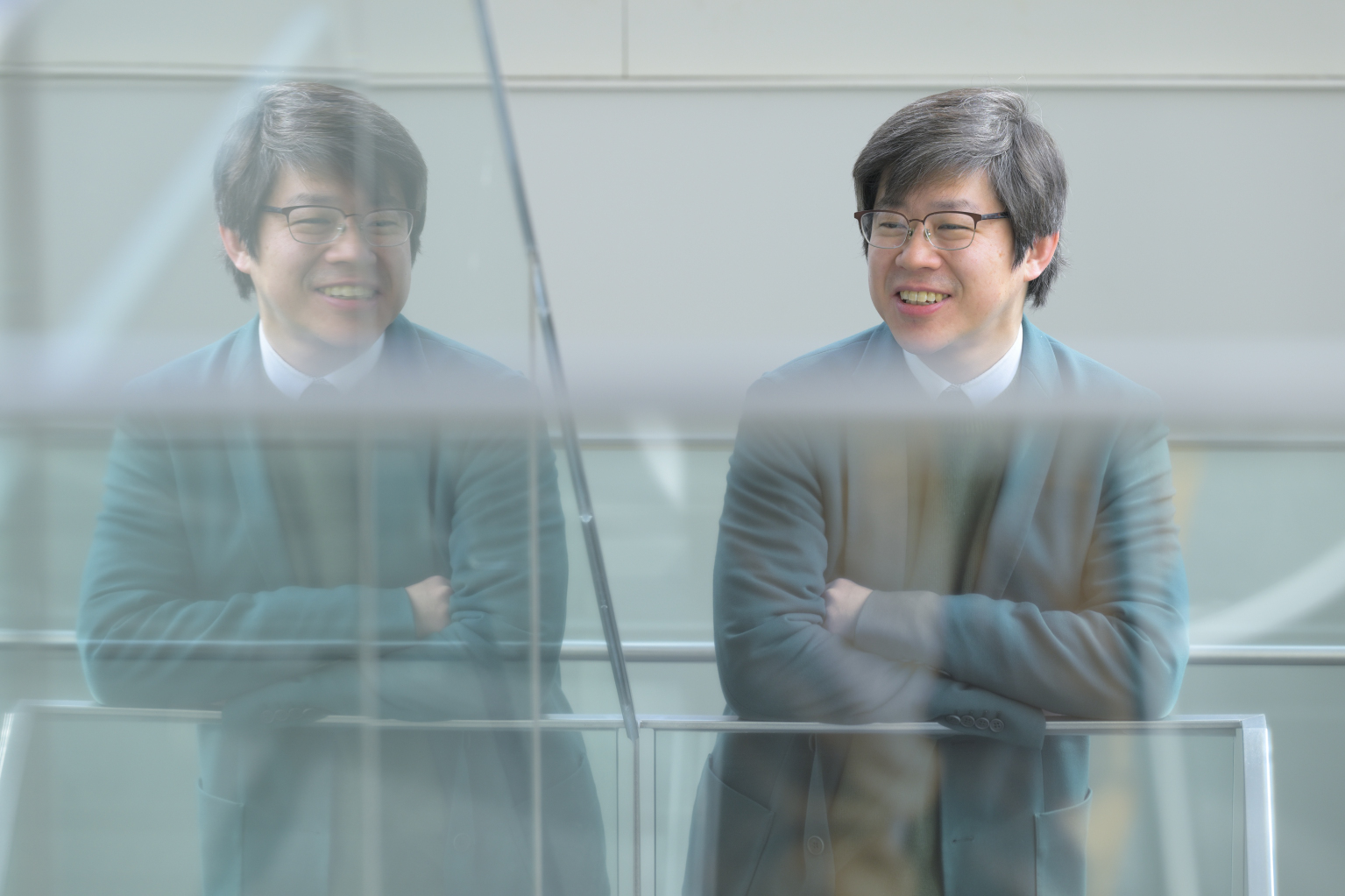
What is your article “Six Core Conflictual Themes Identified in the Narratives of Hikikomori“ about?
I think that Dr Wada, the first author, will explain this point, but this paper is about hikikomori (social withdrawal). Whilst the diversity of hikikomori is often highlighted, this is a thoroughly researched paper that delves into the question of what constitutes the common essence of hikikomori.
Tell us a little bit about yourself and your research interests.
I have been studying French psychiatry and psychoanalysis, and have stayed in France often. As I did so, I found that there were young people also in France who withdraw from society (i.e. “Hikikomori”) just like the socially withdrawn students I usually consult at Nagoya University. Thus I began to indicate that they could be explained more with the word “Hikikomori”. In France, there were young people who had socially withdrawn from before, however, there was no term to refer to them. Currently, there are some French Hikikomori that I regularly follow-up, and there are times I am asked to give a lecture in various parts of France and recently also in other European countries (UK, the Netherlands, Sweden, etc.). Leaving that aside, after all, it is necessary to have some kind of traditional base of existing psychiatry to academically describe what kind of new phenomena it is.
Please refer to the website below for further details.
https://www.linkedin.com/in/furuhashi-tadaaki-70301aaa/?locale=fr
ResearchGate
https://www.researchgate.net/profile/Tadaaki-Furuhashi?ev=hdr_xprf
Nagoya University
https://profs.provost.nagoya-u.ac.jp/html/100003201_en.html
What drew you to this project?
Hikikomori is a culture-bound phenomenon; in terms of research methodology, the priority lies in describing its clinical characteristics rather than identifying its causes. The first author, Dr Wada, had the idea of describing these characteristics in detail within this paper, and I was strongly drawn to that idea.
What was one of the most interesting findings?
It is that hikikomori has been understood within a cultural and social context, and that the inner worlds they experience and the characteristics of those inner worlds have been clinically described in detail.
What are you reading, listening to, and/or watching right now?
I read a great deal of Japanese and French philosophy and fiction. This is because these works are closely linked to my clinical interests.
If there was one takeaway or action point you hope people will get from your work, what would it be?
When we encounter the clinical problem of hikikomori, we tend to immediately wonder how to resolve it; however, it is important to first properly understand the inner worlds they experience.

