Blog Archive: ALS, Quality of Life, and Feeding Tubes

This week, we revisit an article highlight that originally debuted here in May 2016. The highlight explores Pols and Limburg’s qualitative research on the role and meaning of feeding tubes in the lives of people with ALS. The article was officially released in our latest September 2016 issue of the journal, and is accessible in full here.

cropped-cropped-2009cover-copy1.jpg

Pol and Limburg begin by suggesting that while “quality of life” has been transformed into a measurement used widely in health research, it is difficult to operationalize when considering the daily, lived experiences of patients. Rather than approaching quality of life as a measure of attainment or “outcome,” the authors instead choose to reframe it as a continual process: one that is negotiated by individual patients differently. To examine what quality of life entails in a qualitative sense, the authors interviewed a population of people with ALS in the Netherlands with feeding tubes, or ALS patients considering one.

The literature on feeding tubes, the authors note, present many perspectives on the relationships between quality of life and eating. Some sources argue that feeding tubes deprive individuals of the important social aspects of eating, while others note that feeding tubes can unburden patients for whom swallowing and the physical actions of eating are difficult, uncomfortable, or impossible.

Patients and their families interviewed by the researchers, on the other hand, demonstrate such ambiguity towards feeding tubes contextually, depending on the stage of their feeding tube transition. For many, the initial decision to have a feeding tube placed in their bodies was an upsetting signal of bodily deterioration. The procedure itself, though technically minimally invasive, was also viewed with trepidation by patients. They worried about the hospital stay, and whether or not their body would be strong enough to adapt to the tube quickly. Pols and Limburg found that for those who had undergone the procedure, “there was a remarkable consensus among patients in their evaluation of tube placement, with the main variations mentioning just how terrible it had been.” The authors later note that some patients continued to view the feeding tube negatively after it was placed, envisioning it as an unnatural, upsetting addition to their bodies. Others described it as a “necessity” that came with quality of life benefits, although it was not pleasant to have attached to their bodies.

However, for many patients who had feeding tubes already implanted at the time of the study, the response could be notably positive. These participants noted that the devices restored their health and function, and lessened distressing symptoms like choking and an inability to swallow. For one patient, the feeding tube ensured that she received the appropriate calories, such that any food she decided to eat normally could be at her discretion. Other patients who cared less about eating a range of foods appreciated that the feeding tube rid them of the need to worry about what could be easily consumed.

The authors conclude that “the feeding tube can best be understood not as an intervention that causes ‘impacts on quality of life’, but as a technology or prosthesis that may bring different qualities and appreciations that may shift over time.” They add that the feeding tube acts as an intervention that re-orders daily life for patients coping with the a ‘new normal’ of chronic illness: rather than serving to balance “good” and “bad” qualities, as outlined in the disability paradox. Lastly, they remind readers that instrumentalizing “quality of life” risks losing these facets of illness experience. This term is deeply contextual, and responsive to the needs, expectations, and hopes of each patient undergoing treatments or coping with chronic conditions.

Medical Humanities as an Intersection: Fostering Cross-Disciplinary Intellectual Spaces, A Commentary

This week, we are featuring a commentary on the medical humanities, which first appeared this week here on The Daily Dose blog. This piece explores the nature of interdisciplinary research on the social, cultural, and experiential dimensions of medicine. It also spotlights the new Medicine, Society & Culture initiatives at Case Western Reserve University.


When I set out to write this commentary, I first intended on penning a blog piece about my own definition of the medical humanities as someone trained in both the humanities and the social sciences. Having come to medical anthropology from a past life in literary studies, my work has straddled the fissure between humanities and qualitative social sciences. I have presented work both on the history and theatrical presence of anatomical learning in the English Renaissance, and on my ethnographic research with medical students in the gross anatomy lab today. Sometimes, my work is focused solely on the present; in other instances, I turn to the historical past to inform my work as a scholar of contemporary medical training. My vision of the medical humanities is one that arrives from both within and beyond traditional disciplinary boundaries.

cropped-2009cover-copy.jpg

My approach, however, is but one. I recognize that the medical humanities do not offer a single or unified outlook on human health, illness, and medical practice. In fact, the medical humanities are populated by historians and artists, poets and literary scholars, philosophers and social scientists. Our individual professional identities may be firm—I identify now as an ethnographer and anthropologist, not a literary scholar—but the social, cultural, historical, experiential, and existential study of medicine is simply too complex to be dominated by a single field. The medical humanities (and its ally, social medicine), welcomes perspectives on the humanistic study of medicine informed by our varied native disciplines. More than a single field, the medical humanities often serve as a crossroads: an intellectual intersection (physical, virtual, or social) at which scholars across fields gather in dialogue, whether they identify with a single specialty or as interdisciplinary scholars. For this reason, and regardless of disciplinary allegiances, we can all benefit from the medical humanities as a site of discussion that welcomes myriad voices. Diverse perspectives encourage us to analyze human health and medical problems from numerous angles. As we all carry with us our own analytical methods and theories to this junction, so too do we leave these dialogues having ourselves learned and gained the critical perspectives of our peers. This sharpens our focus anew on social, cultural, and medical problems for which one discipline lacks all answers.

The value of the medical humanities is that they enable all of us to see medical and social problems through multiple lenses. If we cannot fully grasp a complex medical problem through ethnography alone, we turn to historical approaches to complete our understanding of the issue at hand. If individual illness narratives beg to be woven together through other data, we look to sociology and economics to conceptualize the underlying health inequities faced by diverse populations, amongst other socio-medical problems. And, further, when we strive to understand how medical science is confronting illness and suffering today, we turn to nurses, social workers, therapists, physicians, and other health professionals whose day-to-day interaction with patients is deeply informative for our own research. Indeed, clinicians also benefit from our work: the humanities have been widely integrated into coursework for physicians in the United Kingdom[1] and the United States[2]. While obstacles remain in the creation and implementation of medical humanities curricula for future medical practitioners[3], this coursework has widened the intellectual space in which medical humanists exchange ideas with multiple audiences.

Whether medical humanities programs are physically housed within humanities departments, or whether they are exported into numerous health education venues, they remain a space for invaluable cross-disciplinary conversation. I have been fortunate to serve as the administrative coordinator of a medical humanities and social medicine collaborative that has overcome departmental boundaries in creating a new space for scholarly dialogue. This new university-wide initiative in medical humanities and social medicine (MHSM) is anchored by a Bioethics MA degree track entitled Medicine, Society and Culture at Case Western Reserve University. Though the degree program is housed in the School of Medicine, our MHSM (Medical Humanities and Social Medicine) advisory committee (which oversees university-wide activities in medical humanities[4]) includes historians, philosophers, literary scholars, social scientists, rhetoricians, and many others. Across the university, we facilitate lectures, administer competitive conference and research grants for students, and support faculty scholarship and teaching innovation. In the region, we collaborate with neighboring institutions to spearhead events that bring together scholars in all disciplines to discuss common themes in the social and contextual study of medicine, illness, and human health. In addition, we look forward to welcoming our first entering class of graduate students in the Medicine, Society, and Culture track in the Bioethics graduate program this Fall 2016. These students will complete clinical rotations, bioethics coursework, and multidisciplinary training in medical humanities and social medicine.

In sum, the Medicine, Society and Culture initiative has become another significant intersection at which scholars—both practicing academics and new graduate students alike—are able to trade theories, exchange methods, and discuss contemporary intellectual issues with fellow medical humanists and social scientists. Thus, our program seeks to both produce new scholars who approach illness and medicine as inherently multi-faceted human experiences, and to facilitate dialogues with current scholars within various departments who strive to complicate their own understandings of health and the human condition.

Beyond university programming, however, there are many ways that all medical humanities scholars strive—and should continue—to reach across departments and disciplines to share our methods, theories, approaches, and reflections on medicine with one another. This blog is one such space that beautifully forges virtual connections across academic audiences with a shared interest in health, illness, and medical practice. My own field, medical anthropology, by its nature requires researchers to inform their claims through many kinds of data that necessitate several forms of analysis: all which dovetail approaches in other fields. So too did my previous training in literary studies require me to be conversant in historical methods, in close reading techniques, and in the same inductive reasoning skills that I now apply to my ethnographic work. No discipline is an intellectual island: and if there is a universal value of the medical humanities, it is that it has made junctures out of disparate disciplines. It is at once clinical, scientific, and humanistic.


About the Author: Julia Knopes is a PhD candidate in anthropology at Case Western Reserve University, and serves as the administrative coordinator for the newly-launched MA Track in Medicine, Society & Culture in the CWRU Department of Bioethics. Julia’s research examines the socio-material basis of professional role development amongst American medical students. She holds an MA in Humanities from the University of Chicago and a BA in English from Washington & Jefferson College. You can learn more about Julia’s work and current research here.

References

[1] Macnaughton, Jane. (2000). “The humanities in medical education: context, outcomes and structures.” Journal of Medical Ethics: Medical Humanities 26: 23-30.

[2] Hunter, KM; Charon, Rita; Coulehan, Jack. (1995). “The study of literature in medical education.” Academic Medicine 70(9): 787-794.

[3] Shapiro, Johanna; Coulehan, Jack; Wear, Delese; Montello, Martha. (2009). “Medical Humanities and Their Discontents: Definitions, Critiques, and Implications.” Academic Medicine 84(2): 192-198.

[4] Information on members of the CWRU MHSM advisory committee can be found here: http://case.edu/medicine/msc/about/advisory-committee/

Fall 2016: Blog Update

cards3

The Culture, Medicine & Psychiatry blog will return to regular, once-weekly updates next week on Wednesday, following our reduced summer upload schedule. In the meantime, our readers can access articles and illness narratives from our new September 2016 issue here.

In the coming weeks, check back on the blog for special article highlights from the new issue, as well as “From the Archive” features, news posts, book release updates, commentaries, and other entries at the blog. As always, we continue to welcome submissions of guest commentaries on the cultural, social, and humanistic study of health and medicine. Please contact our social media editor, Julia Knopes (jcb193@case.edu) for more information.

Best wishes from the CMP Editorial Team!

In the News: Health Disparities and Water Quality in the 2016 Rio Summer Olympics


August 2016 – The 2016 Summer Olympic games in Rio de Janeiro, Brazil has dominated news headlines in recent weeks. The athletics event, taking place from August 5 to August 21, featured 207 countries in the Parade of Nations as well as the first ever Refugee Olympic Team. It is the first time the games have been held in South America. But besides highlights on the events and spotlights on athletes’ training regimens and backgrounds, there is another stream of news stories surrounding the Olympic Games. These stories have focused on two key public health issues related to this year’s Games: health disparities and water quality issues.

ap_16221704995649-2a9b5ac7291dd20a71781f18eaca8c4d3edb888a-s800-c85

Rio’s Olympic beach volleyball venue is on Copacabana Beach. Photo from Marcio Jose Sanchez for AP.

Only two years ago the FIFA World Cup was making similar headlines in Brazil. As reported in 2014, and highlighted in this blog[1], there have been past concerns about access to quality healthcare despite the surge of funds for the World Cup event. These reports unmasked a problematic system of health disparities to a global audience. The Daily Californian[2] stated that many Brazilians were “unhappy that their government [was] funding stadium renovations instead of spending on more instrumental matters like improved health care and emergency services.” Reports relating to the current Olympics have painted a similar picture for the present health scene. As Reuters[3] reported in December 2015, the governor of Rio de Janeiro declared a state of emergency “as hospitals, emergency rooms and health clinics cut services or closed units throughout the state as money ran out for equipment, supplies and salaries.” According to CNN[4], the financial crisis has been causing difficulties in the “provision of essential public services and can even cause a total breakdown in public security, health, education, mobility and environmental management.”. While the state of emergency declaration provides a critical 45 million reais ($25.3 million) in federal aid and may facilitate the transfer of future funds, estimates state that Rio de Janeiro owes approximately $355 million to employees and suppliers in the healthcare sector alone, and the state needs over $100 million to reopen the closed hospital units and clinics.[5] While the city of Rio spent approximately $7.1 billion on improving toll roads, ports and other infrastructure projects, the Brazil Ministry of Health devoted only $5.7 million to address health concerns[6].

rio-favelas--joao-velozo-9_custom-84b1822885fc72f97f7e9084730eb4397aa48b6e-s1300-c85

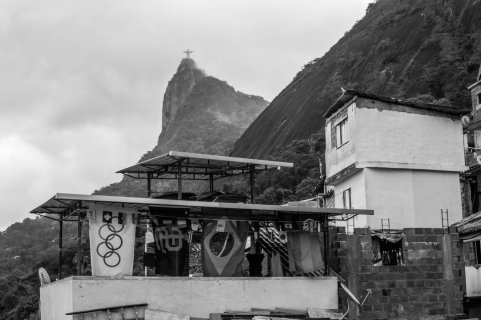
The Christ the Redeemer statue is visible above the Santa Marta favela in Rio de Janeiro. Photo from Joao Velozo for NPR. 

In addition to these issues (and the high-profile Zika virus, which is causing health concerns in multiple countries[7]), concerns surrounding water quality and cleanliness in Brazil has garnered considerable attention. A recent scene involving the diving and water polo pools turning a swamp-green color because of an algae bloom left some athletes complaining of itchy eyes.[8] While the Olympic Games have brought international attention to the impact of water quality on the athletes and visitors, the residents of Rio have been dealing with theses concerns on a daily basis for much longer. With almost 13 million people living in and around Rio, the current sewage system is struggling to cope. One news report[9] notes that “about 50 percent of what Brazilians flush down the toilet ends up in the country’s waterways. Diseases related to contaminated water are the second leading cause of death for children under five in Brazil.” Tests performed in a variety of areas, including the sailing venue of Guanabara Bay, over the course of a year found high levels of “superbugs of the sort found in hospitals on the shores of the bay.” The possibility of hospital sewage entering the municipal sewage system remains a concern.[10]

An economic recession, compounded by water concerns, political unrest, and a presently faltering healthcare system all leave many Cariocas— citizens of Rio– who rely on the public health system in a challenging and hazardous situation across the social, medical, and political spheres. With hopes of local profits from the Olympic Games ranging in the billions of dollars, much is at stake for both residents and investors.[11] Despite the risks and tribulations, many residents welcome the international event and attention, and credit the Olympics for cultivating “several underutilized, often abandoned spaces have been transformed to ones that appeal and cater to local residents”. Many “beautification” projects leave residents hoping the installation of new art and the newly constructed spaces will leave a lasting impression on its residents and visitors long after the games end.[12]  Despite this optimism, the citizens of Rio are not impacted equally by the Games.[13] The improved infrastructures will likely benefit those who already have access to services. Tourism, and tourism cash, has been weak in the favelas, or shantytowns, which house at least 25% of the population in Rio. The infrastructure inequities have even bypassed some neighborhoods entirely, leaving those residents out of the celebrations.[14]

Overall, these Olympic Games promise once again to bring the world’s cultures together in competition and camaraderie, yet they do not do so without controversy. This global spectacle illuminates athletics and sportsmanship, as well as the intersections between cultural events, politics and nationalism, power and profit, and community health. These larger issues lead to questions about what will happen to the residents of Rio after the Games have drawn to a close.


[1] https://culturemedicinepsychiatry.com/2014/07/11/news-the-2014-world-cup-and-healthcare-in-brazil/

[2] http://www.dailycal.org/2014/07/08/uc-berkeley-faculty-graduate-students-look-world-cup-different-light/

[3] http://www.reuters.com/article/us-brazil-health-emergency-idUSKBN0U716Q20151224

[4] http://www.cnn.com/2016/06/18/americas/brazil-rio-state-emergency-funding-olympics/

[5]http://www.reuters.com/article/us-brazil-health-emergency-idUSKBN0U716Q20151224

[6] http://wuwm.com/post/let-s-do-numbers-money-spent-rio-olympics#stream/0

[7] http://www.nytimes.com/2016/01/29/world/americas/brazil-zika-rio-olympics.html?_r=0

[8] http://uk.reuters.com/article/uk-olympics-rio-diving-pool-idUKKCN10O0UW?feedType=RSS&feedName=sportsNews

[9] http://wuwm.com/post/rios-water-problems-go-far-beyond-olympics#stream/0

[10] http://edition.cnn.com/2016/08/02/sport/rio-2016-olympic-games-water-quality-sailing-rowing/index.html

[11] http://www.newsweek.com/rio-2016-who-stands-benefit-successful-olympics-453094

[12] http://www.kvia.com/news/rio-olympics-bring-beautification-projects/40884340

[13] http://www.npr.org/sections/thetorch/2016/08/11/487769536/in-rios-favelas-hoped-for-benefits-from-olympics-have-yet-to-materialize

[14] http://www.reuters.com/video/2016/08/14/olympic-infrastructure-causes-suffering?videoId=369565427

Book Release: Eigen’s “Mad-Doctors in the Dock”

Screen Shot 2016-06-28 at 4.00.17 PM

Image via JHU Press website

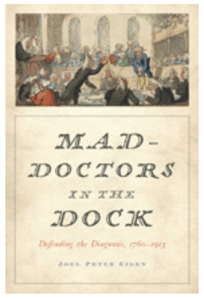
To be published this November 2016 from Johns Hopkins University Press is Joel Peter Eigen’s Mad-Doctors in the Dock: Defending the Diagnosis, 1760-1913. This medical history examines the foundations and early development of the criminal insanity defense in England. Drawing on testimony and documents from almost 1,000 trials, this text examines how physicians, surgeons, and other health care providers connected diagnosis with legal culpability.  The text promises to carefully assess the dynamic relationships between criminal justice, mental health, medicine, and the emergent disciplines of forensic psychology and psychiatry. This book will be of equal interest to anthropologists of medicine and law, as well as psychological anthropologists, historians and sociologists of medicine, and cross-disciplinary scholars in the medical humanities.

To learn more about this upcoming release, click here.

About the Author: Joel Peter Eigen serves as the Charles A. Dana Professor of Sociology at Franklin and Marshall College as well as Principal Fellow (Honorary) at the University of Melbourne. This text is the third in a series that Eigen has published on the history of the insanity defense. The first book, Witnessing Insanity: Madness and Mad-Doctors in the English Court, was released in 1995 by Yale University Press and is available here. The second book, Unconscious Crime: Mental Absence and Criminal Responsibility in Victorian London, was published in 2003 by Johns Hopkins University Press. It can be purchased here.

Conference Feature: “Other Psychotherapies”

2012cover

This week on the blog, we are highlighting an upcoming conference on global psychotherapies across geography and time. This feature was written by our CMP social media intern Sonya Petrakovitz, PhD student in anthropology at Case Western Reserve University.


“Other Psychotherapies – across time, space, and culture”

University of Glasgow

Monday, April 3, 2017 – Tuesday, April 4, 2017

This conference brings contemporary forms of Western knowledge about mental health and well-being into dialogue with psychotherapeutic approaches from ‘other’ geographically, historically, or otherwise ‘distant’ cultures. Specifically, presentations will address ancient and medieval approaches to psychotherapy and how those techniques have become incorporated into today’s approaches. The sessions will also explore the development of psychological practices over time and across changing spatialities of care practices, specifically how post-colonial and indigenous forms of healing influenced the perceived credibility of psychotherapies. They will likewise examine the therapeutic/salutogenic dimensions of subcultures.

Addressing psychotherapy in this way brings together multiple disciplines and expands our understandings of medicine, health, culture, therapies, and pedagogies. The themes of the conference would be of interest to historians, physicians, literary scholars, mental health practitioners, anthropologists, and anyone interested in learning about different perspectives on psychotherapies within a broader global context.

For interested applicants, visit the Call for Papers page at http://otherpsychs.academicblogs.co.uk/. The Conference Committee invites abstracts of up to 300 words for 20-minute presentations, to be submitted by no later than August 31, 2016. Abstracts should be emailed to  arts-otherpsychs@glasgow.ac.uk along with a short biography of 100 words or less.

Blog Archive: Neuropsychiatry and Culture

This week on the blog, we revisit a guest commentary piece written last year by M. Ariel Cascio, PhD (originally posted here.) Dr. Cascio is an anthropologist specializing in the cultural study of science and biomedicine, psychological anthropology, and the anthropology of youth. Her research explores the biopolitical dimensions of autism and autism-related services in northern Italy. She can be reached at ariel.cascio@case.edu.

cropped-2009cover-copy.jpg


In the 21st century, anthropologists and allied scholars talk frequently of the biologization, cerebralization or neurologization of psychiatry. Many make reference to the 1990s, the “Decade of the Brain” that closed out the last century. They talk about “brain diseases” as a dominant discourse in discussions of mental illness. The 2014 Annual Meeting of the American Anthropological Association hosted a panel on “reflections on mind and body in the era of the ‘cerebral subject.’” In these and other ways, scholars write and talk about increasing dominance of brain discourses in discussion of psychological and psychiatric topics. This dominance has historical roots, for example in German (Kraepelinian) psychiatry, and authors in Culture, Medicine & Psychiatry and elsewhere have written about the historical context and local manifestations of this dominance of the neurological in the psy- sciences.

In this blog post I explore a situation in which neurology and psychiatry have long co-existed: the Italian field of neuropsychiatry. While the field “neuropsychiatry” is not unknown in the United States, and similar terms are used in other countries as well, I offer some comments specifically on the Italian context. The example of Italian neuropsychiatry provides one case of a particular historical relationship between neurology, psychiatry, and psychology that would be of interest to any historical or anthropological scholars of psychiatry.

The Italian medical system distinguishes between neuropsychiatry and psychiatry, neuropsichiatria infantile and psichiatria. Neuropsichiatria infantile (child neuropsychiatry), abbreviated NPI but sometimes referred to simply as neuropsichiatria (neuropsychiatry), addresses neurological, psychiatric, and developmental problems in children under age 18. Psichiatria (psychiatry) treats adults starting at age 18. As such, it is tempting to simply distinguish child and adult psychiatry. However, neuropsychiatry and psychiatry actually have distinct origins and practices. As the names imply, neuropsychiatry links neurology and psychiatry. Adult psychiatry, however, does not.

While Italian psychiatry has its roots in early 19th century organicist and biological approaches, in the 1960s a younger generation of psychiatrists, most prominently Franco Basaglia, aligned themselves with phenomenology and existential psychiatry. These psychiatrists crystallized their ideas into the ideology of Psichiatra Democratica (Democratic Psychiatry) and the initiative of “Basaglia’s Law,” the 1978 Law 180 which began Italy’s process of deinstitutionalization, generally considered to be very successful (Donnelly 1992). While childhood neuropsychiatry is indeed the counterpart to adult psychiatry, more than just the age group served differentiates these fields. If Italian psychiatry has its roots in Basaglia and the ideology of democratic psychiatry, neuropsychiatry has its roots at the turn of the 20th century, in the works of psychiatrist Sante de Sanctis, psychopedagogue Giuseppe F. Montesano, and pedagogue Maria Montessori.

In this way, neuropsychiatry’s origins bridged psychiatry and pedagogy (Bracci 2003; Migone 2014). Giovanni Bollea has been called the father of neuropsychiatry for his role in establishing the professional after World War II (Fiorani 2011; Migone 2014). Fiorani (2011) traces the use of the term neuropsychiatry (as opposed to simply child psychiatry, for example) to Bollea’s desire to honor the distinctly Italian tradition and legacy following Sante de Sanctis.

Several features distinguish psychiatry and neuropsychiatry. Migone (2014) argues that child neuropsychiatry has taken more influence from French psychoanalytic schools, whereas adult psychiatry has taken more influence from first German and then Anglo-Saxon psychiatries. Migone further explains:

Child and adolescent psychiatry in Italy is therefore characterized by a reduced use of medications (if compared to the United States), and by a diffuse use of dynamic psychotherapy, both individual and family therapy (from the mid-1970s systemic therapy spread). The attention to the family and the social environment is extremely important for understand the clinical case during the developmental years. [My translation]

Moreover, neuropsychiatry is known for being multidisciplinary and working in equipe, teams of psychiatrists, psychologists, social workers and so on. It incorporates psychoanalysis, psychotherapy, dynamic psychology, psychological testing, social interventions, and more (Fiorani 2011).

This extremely brief overview outlines key characteristics of Italian neuropsychiatry and the ways it is distinguished from Italian psychiatry, as well as from U.S. psychiatry. Italian neuropsychiatry provides one example of a long-standing relationship between neurology, psychiatry, psychology, philosophy, and pedagogy. By drawing attention to this medical specialty and the complexities of the different fields it addresses, I hope to have piqued the interest of historical and anthropological scholars. I include English and Italian language sources for further reading below.

References and Further Reading – English

Donnelly, Michael. 1992. The Politics of Mental Health in Italy. London ; New York: Routledge.

Feinstein, Adam. 2010. A History of Autism: Conversations with the Pioneers. Malden, MA: Wiley-Blackwell.

Levi, Gabriel, and Paola Bernabei. 1997. Italy. In Handbook of Autism and Pervasive Developmental Disorders. 2nd edition. Donald J. Cohen and Fred R. Volkmar, eds. New York, NY: John Wiley & Sons.

Nardocci, Franco. 2009. The Birth of Child and Adolescent Neuropsychiatry: From Rehabilitation and Social Inclusion of the Mentally Handicapped, to the Care of Mental Health during Development. Ann Ist Super Sanità 45: 33–38.

References and Further Reading – Italian

Bracci, Silvia. 2003. Sviluppo della neuropsichiatria in Italia ed Europa. Storia delle istituzioni psichiatriche per l’infanzia. In L’Ospedale psichiatrico di Roma. Dal Manicomio Provinciale alla Chiusura. Antonio Iaria, Tommaso Losavio, and Pompeo Martelli, eds. Pp. 145–161. Bari: Dedalo.

Fiorani, Matteo. 2011. Giovanni Bollea, 1913-2011: Per Una Storia Della Neuropsichiatria Infantile in Italia. Medicina & Storia 11(21/22): 251–276.

Migone, Paolo. 2014. Storia Della Neuropsichiatria Infantile (prima Parte). Il Ruolo Terapeutico 125: 55–70.

Russo, Concetta, Michele Capararo, and Enrico Valtellina. 2014. A sé e agli altri. Storia della manicomializzazione dell’autismo e delle altre disabilità relazionali nelle cartelle cliniche di S. Servolo. 1. edizione. Milano etc.: Mimesis.


Book Releases: New Texts on Sex Tourism, Biotechnology

This week, we are featuring two book releases from the University of Chicago Press. The first book is Gregory Mitchell’s Tourist Attractions: Performing Race and Masculinity in Brazil’s Sexual EconomyThis new book, published in December 2015, presents an ethnographic perspective on gay sex tourism in Rio de Janeiro, Salvador de Bahia, and the Amazon. Mitchell examines issues of race, masculinity, and sexual identity amongst both sex workers and sex tourists. In particular, he asks how men of various racial, cultural, and national backgrounds come to understand their own identities and one another’s within this complex series of commercial, sexual, and cultural exchanges. Details about the book can be found here.

About the author: Gregory Mitchell is assistant professor at Williams College, where he teaches in the Women’s, Gender and Sexuality Studies program and in the Department of Anthropology and Sociology.

9780226309101

Image via UC Press website

The second book, debuting in September 2016, is Hallam Stevens’ Biotechnology and Society: An Introduction (cover image not yet available.) Each chapter of the text will address a different topic in the cultural and historical study of biotechnology, from gene patents, to genetically-modified foods, to genetic testing and disability, assisted reproductive technologies (ARTs), and the intersections of race, diversity, and biotechnologies. The text will be of equal interest to scholars of science and technology studies (STS), posthuman theory, and the history and culture of medical technology. Details about the book can be found here.

About the author: Hallam Stevens is assistant professor at Nanyang Technological University in Singapore. He teaches courses in the history of the life sciences and information technologies. He is the author of Life Out of Sequence: A Data-Driven History of Bioinformatics, also available here via the University of Chicago Press.


In the News: Telemedicine in the United States

cropped-2009cover-copy

The intersections between technology, medicine, and health are a frequent site of discussion at Culture, Medicine & Psychiatry. In our last issue of 2015, for instance, Yael Hashiloni-Dolev[1] examined the role of new medical technologies that enable posthumous reproduction, while Petersen and Traulsen[2] shed light on the nuanced social uses of psychoactive medications amongst university students. These articles underscore the centrality of technology in everyday human health behaviors, and on the cultural meaning of these new tools in local medical landscapes.

Another technological innovation altering the social world of medicine—one making headlines in recent months—is telemedicine. In the Journal of the American Medical Association[3] (JAMA), telemedicine has been described as “the use of telecommunications technologies to provide medical information and services,” often a shorthand “for remote electronic clinical consultation” via phones and internet applications.

In the December 2015 AARP Bulletin, author Charlotte Huff[4] remarked that over 1 million patients will use telemedicine services this year, and remote access to physicians by phone, video chat, and email is more and more commonly covered by American employers’ health insurance packages. A Reuters article[5] adds that in Texas, a telemedicine company is working to block a state law that would require physicians to see a patient in-person before consulting with them via phone, email, or other means. And in the New York Times[6], a physician observed that telemedicine may prove a useful tool for children and adolescents: many of whom have grown up in a digital culture of “oversharing” and would not balk at texting their physicians images of strange rashes or lesions on their bodies. As this new tool of health care delivery is negotiated in different societal arenas, so too are its implications increasingly worthy of anthropological attention.

Telemedicine is altering the social fabric of medicine in a number of significant ways. Here, we will outline two potential outcomes of telemedicine on medical exchanges facilitated by technology. First, telemedicine extends the professional reach of biomedical clinicians. Areas where biomedical care is inaccessible, or where only indigenous medical systems exist, may now fall under the electronic eye of a faraway practitioner. This has extraordinary consequences for the ubiquity of biomedicine and the consolidation of biomedical power. Second, and rather conversely, telemedicine empowers the patient in the clinical encounter. Because the physician or clinician is not physically present to examine the patient’s body, the patient themself is the one who touches a swollen throat, or flexes a stiff joint, and relays their response through phone or web camera. In sum, the patient gains greater control over bodily (and verbal) narratives that, unlike an in-person exam, the clinician does not have total access to.

The rise of telemedicine speaks to medical anthropologists, certainly, but it also presents a fascinating case more broadly for science and technology theorists and scholars in health communication. As the topic of telemedicine continues to capture the interest of medicine and the media, so too will it fall under the consideration of researchers piecing together the networks that bring patients and their caregivers together in novel ways.

[1] http://link.springer.com/article/10.1007/s11013-015-9447-6

[2] http://link.springer.com/article/10.1007/s11013-015-9457-4

[3] http://jama.jamanetwork.com/article.aspx?articleid=386892

[4] http://www.aarp.org/health/conditions-treatments/info-2015/telemedicine-health-symptoms-diagnosis.html#slide1

[5] http://www.reuters.com/article/health-case-to-watch-teladoc-idUSL1N14H0CT20151228

[6] http://well.blogs.nytimes.com/2016/01/18/using-phones-to-connect-children-to-health-care/?ref=health


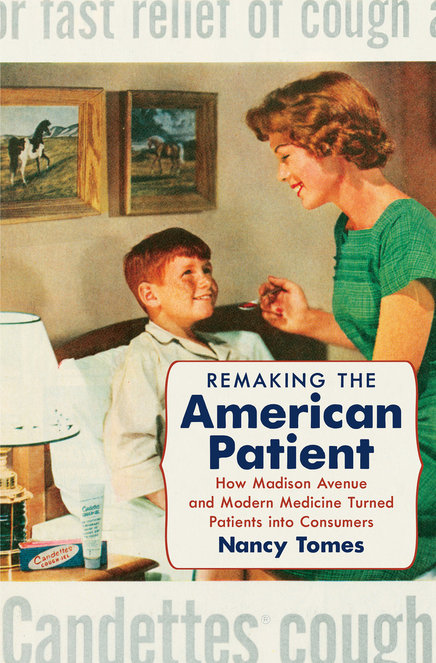
Book Release: Tomes’ “Remaking the American Patient”

9781469622781

Images via UNC Press website

Released in January 2016 from the University of North Carolina Press is Nancy Tomes’ Remaking the American Patient: How Madison Avenue and Modern Medicine Turned Patients into Consumers. Through historical and cultural analysis, Tomes illuminates the threads between public relations and marketing in medicine, asking throughout: how have patients in the United States come to view health care as a commodity to be “shopped” for? What connections are shared between the history of medicine and the growth of consumer culture? Likewise, Tomes investigates what it means to be a “good patient” in this system of marketed care, and how “shopping” for care can both empower and disorient patients in the contemporary age. She also reviews the resistance, and ultimate yielding, of the medical profession to this model of care seeking. The book was recently reviewed in the New York Times (read the article here.)

The book will prove insightful for both historians of medicine and medical anthropologists who study the political-economic landscape of biomedicine and patienthood in the United States. It will also speak to conversations in bioethics about patient autonomy, choice, and medical decision-making.

About the Author

Nancy Tomes serves as professor of history at Stony Brook University. She is also the author of The Gospel of Germs: Men, Women, and the Microbe in American Life, published by Harvard University Press (details here.)

Have you published a recent book in medical anthropology, history of medicine, social medicine, or medical humanities? Email our blog editor (Julia Knopes) at jcb193@case.edu with a link to the book’s page at the academic publisher’s website, and we will feature it here.