Book Release: Kleinman and Wilkinson’s “A Passion for Society”

To herald in the New Year 2016, today we feature a book publication highlight of a new text in medical anthropology co-authored by Culture, Medicine & Psychiatry‘s 2016 Honoree, Arthur Kleinman. Read our editor-in-chief Atwood Gaines’ announcement of the annual honoree here.

9780520287235

Image via UC Press website.

Out this month from the University of California Press is Arthur Kleinman and Iain Wilkinson’s A Passion for Society: How We Think About Human Sufferin(paperback edition details here.) The book examines the concept of suffering as a broader social “problem,” both in the contemporary age and through history. The authors explore how notions of suffering and care are reflective of present social and moral conditions, and how social science as a profession responds to “social suffering.” They argue that enlivened discussions about care have invigorated a new approach to the study of suffering by social scientists, who no longer engage with human suffering dispassionately. This shift has widespread implications for an “engaged social science” that takes a humanitarian approach to analyzing, understanding, and ameliorating human suffering. The text will interest applied social scientists as well as medical anthropologists and scholars of social medicine, who study illness and social inequities both across time and in cross-cultural contexts. The book can be purchased in hardcover here.

About the Authors: Arthur Kleinman is a medical anthropologist and psychiatrist who serves as professor in the departments of Anthropology, Social Medicine, and Psychiatry, and Director of the Asia Center, at Harvard University. Iain Wilkinson is a sociologist and Reader in Sociology in the School of Social Policy, Sociology and Social Research at the University of Kent.

Issue Highlight: Vol 39 Issue 4, Incarceration & Medical Anthropology

This blog post is the second installment of our three-part issue highlight on the new December 2015 issue of Culture, Medicine & Psychiatry (the full issue is accessible here.) In this week’s blog, we examine Carolyn Sufrin’s article on the shared roles of clinicians and anthropologists working with incarcerated women in the United States.


cropped-cards.jpg

Clinician-anthropologists are in a unique position to lend voice to their participants and to care for their medical needs. For Carolyn Sufrin, who served both as a physician and an ethnographic researcher for incarcerated women in the United States, the clinical and anthropological roles intersected in deeply meaningful ways. Sufrin notes that in these dual roles, she observed with female prisoners and analyzed their experiences, and provided reproductive health care and delivering the same women’s babies in a county hospital, where imprisoned women gave birth. The women were alternately enrolled in Sufrin’s study upon ceasing to officially be her patients, or were individuals that Sufrin cared for during her tenure as their OB/GYN.

Sufrin uses her case as an example of how to interpret the ethical consequences of working as a clinician-anthropologist. Part of the challenge she faced as both a physician and anthropologist to the women was that IRB and HIPAA regulations divided the types of data she could use in her anthropological research. Though some details of her participants’ lives, such as past trauma or childhood abuse, were essential to their experiences as mothers and as incarcerated women, she could not use this data inasmuch as it had been shared with her in the context of a patient-practitioner interaction: in other words, it was considered classified personal health information that could not be subsequently utilized in her ethnographic research. These methodological hurdles, Sufrin explains, shed light on the complexities of what constitutes “sacrosanct” data. It also suggests how the safeguarding of medical data does not necessarily translate to the “protective” collection of ethnographic data which is not isolated to the case of individual patients, and which relies on knowledge of participants and their connections to other people (in this instance, to individuals in the participant’s life who had caused past psychological harm.)

Likewise, as stated earlier, relationships between the participant/patient and the clinician/anthropologist are another form of interpersonal connection which must be reconfigured depending on the nature of the exchange taking place. In Sufrin’s case, this meant being clear with her participants that– upon entry into her anthropological study– she was no longer their physician, and that the nature of their exchanges and their professional relationship would take a new form. She could share their information (albeit de-identified), unlike information drawn solely from their medical records or from an examination.

Yet here, Sufrin notes that the anthropologist– like the clinician– is still engaged in an ethic of care. For example, one of Sufrin’s former patients in the prison was charged with child endangerment after giving birth in an alley and handing her child to a stranger, unable to afford treatment at a hospital following her release from prison. The story made news headlines, and as public knowledge, was within the realm of information that Sufrin employed in her ethnographic analysis of reproductive health in the American prison system. However, Sufrin knew an added piece of information that was not already publicized from her interaction with the woman in prison: a clinical detail that she understood as a physician, but was shared during her time as an ethnographic researcher. This detail would have enhanced her analysis of the situation, but she chose to omit it out of concern that to publicize the detail would be to betray the woman’s trust in her as a researcher and as someone who served in the prison as a physician.

In other instances that Sufrin discusses, her role as both an anthropologist and clinician led the women she worked with in each capacity to feel as if she was especially attentive and caring. Rather than always relying on her medical authority, Sufrin underscores her decision to remain non-judgmental and supportive even when the women in her study had made potentially harmful choices; for example, she chose not to openly admonish a woman who was continuing to use crack upon release from jail, despite being thirty-two weeks pregnant. Sufrin notes that her silence hid her own frustration with this choice, but it strengthened the woman’s trust in her as an anthropologist and “as a doctor.”

In sum, these dual roles ultimately bolstered her relationships to the incarcerated and formerly incarcerated women that she served. Thus, the author argues that both anthropologists and clinicians share an “ethic of care” in their relationships with research subjects or patients. This ethic involves a careful fostering of the professional, interpersonal connections that ethnographers make with research participants, or that physicians make with their patients. This care entails the protection of private information and the researcher/clinician’s conscious attendance to interpersonal exchanges that bolster the patient/participant’s trust in the clinician/anthropologist. Likewise, an analysis of the clinician role alongside the anthropological one demonstrates both the delineations between multiple forms of care and social connection, as well as the shared commitment in medicine and anthropology to the sensitive attendance to patient and participant experiences.

From the Archive: Witchcraft and Healing in the Colonial Andes, 16th-17th Centuries

In our “From the Archive” series, we revisit articles published throughout the journal’s history, and explore the meaning of these publications for contemporary issues in medical anthropology, medical humanities, and social medicine. This week, we explore Irene Silverblatt’s December 1983 article “The evolution of witchcraft and the meaning of healing in colonial Andean society.”cropped-cropped-2009cover-copy1.jpg

Silverblatt writes that while the Spanish conquistadors were laying claim to land and peoples in South America in the 16th and 17th centuries, their countrymen in Spain were in the throes of the Spanish Inquisition. Traditional healers (most often women) were tortured and killed as agents of the devil. These healers were assumed to either mask deadly curses in the form of cures, or to have received their healing knowledge from a diabolical pact. Rather than leaving this battle against traditional healing at home in Europe, the Spanish conquistadors carried the legacy of the Inquisition with them across the world, imposing similar religious restrictions on traditional healers in the societies they conquered by holding Inquisition-style court hearings.

European cosmologies, based intensely on the dualistic struggle between good and evil, did not evenly graft onto the Andean worldview. In the Peruvian Andes, where Silverblatt focuses her paper, women were not considered morally inferior to men and more susceptible to evil; likewise, native Andean models of disease viewed illness as the result of an imbalance between the individual, society, and supernatural forces, rather than caused directly by evil spirits. Andean healers thus served as both priests (who placated the spirits to seek balance in the universe) and as healers (who treated the individual sufferer with herbs or medicines.) Their treatments relied on the connectedness between the community, spirits, and the healers themselves.

Yet throughout the 16th century, in the period of Spanish colonization, exposure to Christian mythology and cosmology led these healers to view their practice differently. By the 17th century, Andean healers tried by Spanish inquisitors confessed to dreams and visions wherein they received recipes for herbal medicines from the spirits. The devil in these accounts, though, took on particular forms: that of the Christian saint Santiago (the patron of Spain), as tiny angels (also Christian entities), men dressed in cloaks, or as snakes. The latter proved the closest form of Satan to appear in the Spanish religious canon, but these spirits were scarcely the hideous, bestial demons known to Spanish lore. Indeed, Silverblatt posits that the healers envisioned Saint Santiago as their spiritual contact because they fashioned him as another form of the Thunder God, a native figure representing conquest who could also ward off diseases caused by sorcery.

Throughout the primary legal documents that Silverblatt reviews, the healers also argued that the spirits– even when described as malignant– served them equally to help and to cause harm. The spirits were not agents of evil alone in their stories. These confessions suggest that the Andean relationship to spirits in the Christian narrative remained connected to their native ideology of cosmological balance and harmony, wherein the spirits could be responsible for imbalance or harmony. In this fashion, traditional healers on trial resisted traditional Spanish notions of devil-worship, while simultaneously asserting the validity of their own indigenous notions of spiritual and social balance within healing.

Silverblatt’s piece contains a valuable lesson for continued inquiry into colonialism and neocolonialism. She invites us to analyze colonization as a dialectical relationship between colonizers and the colonized, and consider the way that the tensions between these two populations’ ideologies come to create novel cosmologies, beliefs, and perspectives. Likewise, she suggests that the authority of a medical system is tightly woven into the social and political worlds in which it is practiced. Silverblatt similarly concludes that rather than reading colonial threats towards indigenous medicines as hegemonic, we discover much more by locating the resistance of native healers to newly-introduced ideas about healing, and by analyzing the ways that they integrate foreign beliefs into their outlook on medical practice.


To access the full article through Springer, click here: http://link.springer.com/article/10.1007/BF00052240

Book Release: Harding’s “Objectivity and Diversity”

Via UC Press website

Via UC Press website

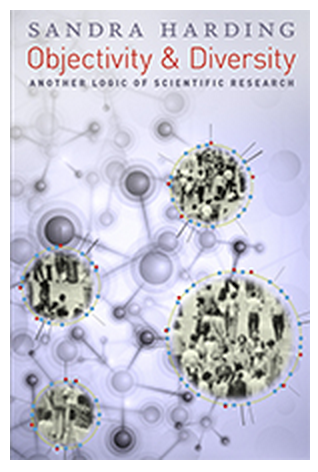
Released this May 2015 from Duke University Press is Sandra Harding’s Objectivity and Diversity: Another Logic of Scientific Research. Harding’s book critically examines the notion of objectivity, and posits a new framework for scientific thought that does not strive to be politically and culturally neutral. Instead, Harding argues, scientists must consider the economic, social, and political dimensions of their work, and seek to produce knowledge and new technologies that are sensitive to the ways in which these innovations may impact disenfranchised populations. In this way, Harding suggests that science may be truly “objective” by reflecting the social reality of the world in which it is practiced and produced.

Harding’s book contributes to the constructivist body of literature on the social and cultural dimensions of scientific practice, alongside the likes of Daston and Galison’s Objectivity (2010), Agazzi’s Scientific Objectivity and its Contexts (2014), and Shapin’s The Scientific Revolution (1996). Harding similarly demonstrates the cultural situatedness of science, while underscoring the responsibility of contemporary science to promoting social justice. This publication will be of interest for science and technology (STS) scholars as well as anthropologists researching biomedicine and the culture of scientific and evidence-based care practices, particularly amongst underserved or marginal populations.

Sandra Harding is Distinguished Research Professor at UCLA. Her work explores the philosophy of science, epistemology, and feminist and postcolonial theories.


To learn more about Harding’s book, click here: http://www.press.uchicago.edu/ucp/books/book/chicago/O/bo19804521.html

Other books cited on objectivity:

Daston and Galison 2010: http://mitpress.mit.edu/books/objectivity

Agazzi 2014: http://www.springer.com/us/book/9783319046594

Shapin 1996: http://www.press.uchicago.edu/ucp/books/book/chicago/S/bo3620548.html

Book Release: Wailoo’s “Pain: A Political History”

Image via JHU Press

Image via JHU Press

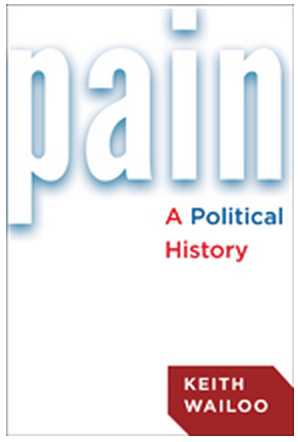
This October 2015, Johns Hopkins University Press is slated to release Keith Wailoo’s Pain: A Political History. Wailoo’s book examines how the definition of chronic pain in the United States developed and changed alongside broader political and economic changes. The book begins with the culture of treatment following World War II, when public and political attitudes towards pain considered physical suffering real and potentially disabling. With decreasing support of disability programs throughout the 1980s, however, the validity and legitimacy of chronic pain came under question.

New conversations beginning in the 1990s about euthanasia reinvigorated the conversation surrounding pain, no doubt bolstered today by current discussions of medical marijuana laws and the burgeoning use of prescription painkillers for recreation purposes. This renewed interest in the nature and the extent of pain have enlivened the debate around who experiences pain, how we certify pain, and at what point pain requires medical intervention.

The book strives to illuminate the historical foundations of today’s contemporary pain medication and treatment market, particularly in terms of the liberal and conservative political trends between the 1950s and today. Wailoo’s account culminates with an exploration of the contemporary state of pain care: a severe imbalance between the overmedicated and the underserved who cannot access treatment for their chronic pain. Pain: A Political History will certainly prove insightful for historians of medicine as well as political-economic medical anthropologists, theorists of neoliberalism, and medical anthropologists carrying out research in the United States.

Wailoo is Professor of History and Public Affairs as well as the Vice Dean of the Woodrow Wilson School of Public and International Affairs at Princeton University.


To learn more about the book, click on JHU Press’ page here: https://jhupbooks.press.jhu.edu/content/pain

Book Release: Buchbinder’s “All in Your Head: Making Sense of Pediatric Pain”

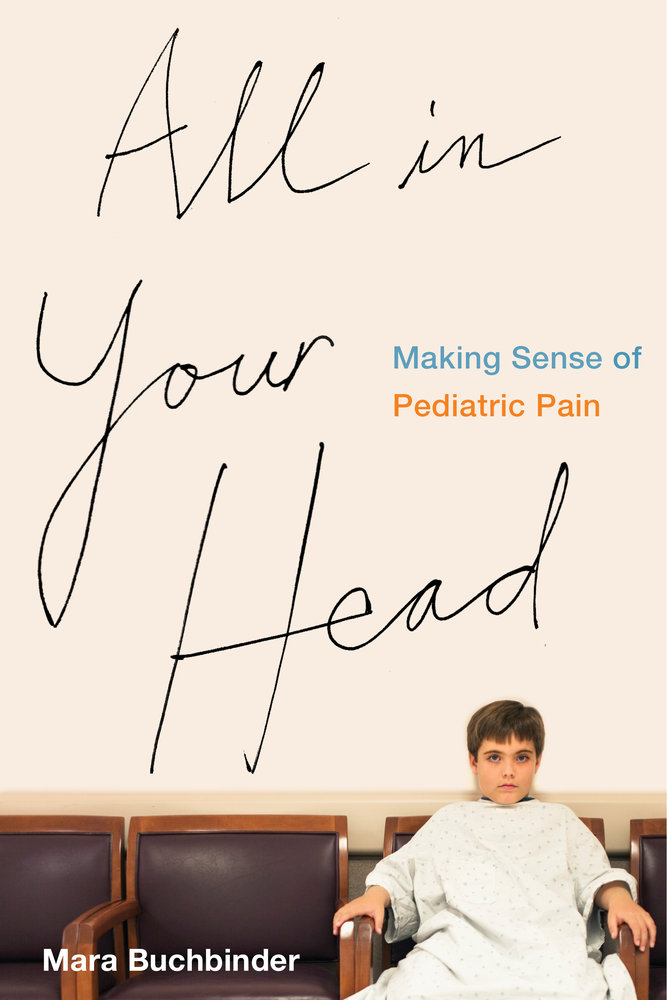
This May 2015, Mara Buchbinder’s book All in Your Head: Making Sense of Pediatric Pain will be released by the University of California Press. The book grapples with the difficulty of expressing internal states to others via language, as these inner subjective experiences are often considered impossible to actualize in words. Buchbinder strives to honor this private experience of pain while studying how language surrounding pain and pain management is relational in nature. She explores how pain is described, managed, and treated in medical settings.

Image via UC Press

Image via UC Press

The text is a product of ethnographic research in numerous pediatric units in California hospitals. Buchbinder considers the social lives of physicians, caregivers, clinicians, parents, and children, all with a stake in alleviating pain and interpreting troubling or perplexing symptoms. Rather than allowing pain to be read solely as an isolating, private matter, the author argues that the treatment of pain is a complex social phenomenon. By focusing on narratives, conversations, and metaphors used by participants to illustrate the nature of pain, Buchbinder’s account underscores the power of language to generate shared meanings for human suffering.

All in Your Head will prove of interest to linguistic and medical anthropologists alike, as well as to scholars in the medical humanities with an interest in textual and communicative analysis in clinical settings. To learn more about this upcoming book, visit the publication page at the University of California Press here: http://www.ucpress.edu/book.php?isbn=9780520285224

ABOUT THE AUTHOR

Mara Buchbinder is Assistant Professor of Social Medicine at UNC-Chapel Hill, where she also teaches coursework in anthropology. She has previously coauthored the book Saving Babies? The Consequences of Newborn Genetic Screening.

Upcoming Conferences in Social Studies of Science/Medicine: Fall 2015

If you have an event to add to this list, please contact Julia Balacko at jcb193@case.edu with the name of the event/conference, date(s), location, and a link to the event page or a brief description. This list is for conference in the Fall of 2015 (August-December.) All conferences/events are organized chronologically by date.


 Seventh International Conference on Science in Society: “Educating Science”

October 1-2 2015 – Chicago, Illinois

http://science-society.com/the-conference/call-for-papers

A Critical Moment: Sex/Gender Research at the Intersection of Culture, Brain, & Behavior Conference

October 23-24 2015 – Los Angeles, California

http://www.thefprconference2015.org/

Society for Social Studies of Science (4S) Annual Meeting

November 11-14 2015 – Denver, Colorado

http://www.4sonline.org/meeting

American Anthropological Association 2015 Annual Meeting: “Familiar/Strange”

November 18-22 2015 – Denver, Colorado

http://www.aaanet.org/meetings/

Logo via AAA website

Logo via AAA website

History of Science Society Annual Meeting

November 19-22 – San Francisco, California

http://hssonline.org/meetings/annual-meeting-archive/

From the Archive: AMC’s Breaking Bad, Empowerment, and Terminal Illness

In the “From the Archive” series, we highlight articles published throughout the journal’s history. We look forward to sharing with our readers these samples of the innovative research that CMP has published on the cultural life of medicine across the globe.


In “From the Archive,” we generally highlight older publications from the journal and discuss their importance for medical anthropology and cultural studies of medicine today. This week, we are taking a turn to revisit a newer piece from 2013 that has been one of CMP’s most popular articles: Mark A. Lewis’ “From Victim to Victor: ‘Breaking Bad’ and the Dark Potential of the Terminally Empowered.”

cards

Lewis, an oncologist, opens by describing a recent shift in the treatment of cancer. With new and experimental treatments growing in number, patients are encouraged to feel hopeful about therapy for their cancer, rather than defeated in the face of a potentially terminal condition. These new scientific innovations in treatment, therefore, are altering the rhetorics surrounding cancer diagnoses. Cancer is something to be overcome, or even battled. In the age of the “Live Strong” campaign, and the casting of cancer patients into fighters, new notions of what it means to endure this illness are developing.

The key to AMC’s Breaking Bad, Lewis argues, is that the creators seize upon this new model of the cancer patient and then betray the audience’s expectations that his battle against illness is a “noble” one. Rather than having a diagnosis opening a realm to hope, it lends Walter White the potential to take risks he would not have taken in good health. Imminent death “emboldens” Walter, yet this newfound audacity is channeled towards selfish, perhaps prideful, and certainly criminal ends.

Lewis notes that these behavioral, psychological shifts in cancer patients come under the purview of a new field deemed psycho-oncology. This budding discipline addresses the mental wellness and conditions of cancer patients, whose diagnosis carries somatic as well as psychological effects. As the article suggests, stress for cancer patients extends beyond the worries they have about the severity of their illness: it includes anxiety about the financial and personal costs of the treatment needed to ‘battle off’ the disease. For White, this entails not only having the means to treat his illness and support his family, but also to be self-sustaining, hence why he turns down assistance from wealthy benefactors and instead makes and sells crystal meth.

Walter White therefore follows in the steps of a cancer patient whose diagnosis opens a realm of possibilities and encourages him to take risks in fighting off his condition. However, this transformation alters what victory means for Walter. As he descends deeper into the meth business, the terms of victory are no longer noble. Walter murders his competitors, and after the publication of Lewis’ article, declares at the end of the series that his drug-dealing empire is what gives him life. His pride is in his business, not in overcoming his cancer. Walter’s potential is unlocked by the cancer, yet he subverts the narrative of a “noble” patient who survives his dire diagnosis. His cancer has merely positioned him to accomplish what he would have not otherwise set out to do.

Lewis’ article demonstrates the centrality of illness narratives and new models of illness experience to popular media. His article draws on medical science, popular health campaigns, and on modern-day encounters with terminal illness to inform viewers’ expectations of what path patients might, and should, follow.

To access the article and read an abstract, click here:

http://link.springer.com/article/10.1007/s11013-013-9341-z

“Making” Anatomical Bodies: T. Kenny Fountain’s Rhetoric in the Flesh

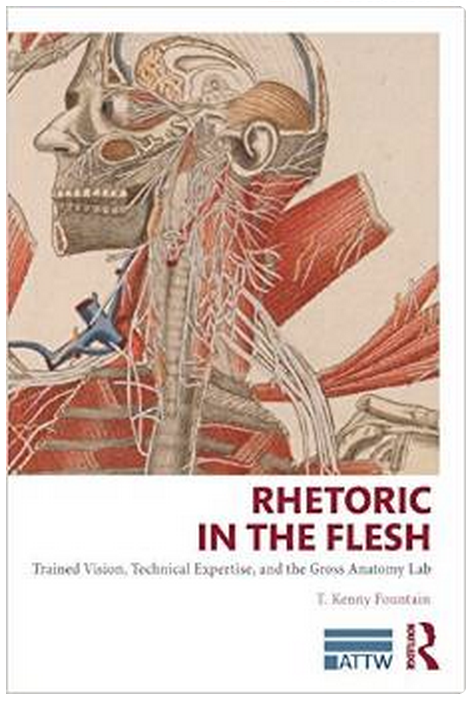
Recently, I had the pleasure of attending the book launch for T. Kenny Fountain’s Rhetoric in the Flesh: Trained Vision, Technical Expertise, and the Gross Anatomy Lab. At the event, Fountain discussed some of the key arguments from the book, and shared anecdotes from his participant observation in the human gross anatomy lab.
Book cover via ATTW

Book cover via ATTW

Fountain’s text is an ethnographic account penned from the perspective of a rhetorician of science communication. His focus on language offers a lens into anatomical learning and clinical training that is at once pointed and engrossing. Through his account, Fountain reveals the underlying relationships and tensions between students of anatomy and the bodies they dissect.

As I learned from the book launch talk and from an initial reading of the text, one term that Fountain’s participants in the laboratory frequently returned to was “making.” This word appears counterintuitive, given that dissection entails acts that are more closely associated with destruction than creation: scraping fat from tissues, disarticulating bones, removing organs to see structures beneath of them. However, “making” meant something quite particular to those who carried out dissections.

Students, instructors, and teaching assistants in the cadaver laboratories employed “making” to describe cutting and preparing the corpse in ways that would mimic the beautifully colored, flawlessly sketched anatomical drawings in their medical atlases. To dissect a body in a careful fashion that would reveal biological structures as cleanly and as clearly as the textbooks was to “make” the body, both into a mimicry of the visuals in the textbooks, and into a body that was representative of what the books deemed anatomical truth. Some students alternatively deemed this process “Netterizing,” or rendering their cadaver’s anatomy to appear as manifestly as the eminent anatomical artist and physician Frank Netter did in his illustrations.

Yet bodies can be “made” by more than the students and faculty alone. Fountain’s text also argues that bodies can make themselves. In one case, a woman who donated her body to science accompanied her anatomical gift with a letter. The letter contained details of the domestic abuse she suffered, as she explained the scars medical students would discover on her skin when they began to dissect her. The woman cast her body in a context that the students who received her body, and read her correspondence, could not ignore when considering the conditions under which that body lived and died. This woman “made” her body a representation of its life, its embodied struggles, and its significance as a precious gift to the students who received it.

Cadavers can also “make” themselves in death. One cadaver in the laboratory Fountain observed at had late-stage cancer that had not been reported on her medical records before she was embalmed for dissection. The cancerous tissue was stiff and impossible to cut through. It obscured structures, encased organs, and halted the dissection. In this instance, the cadaver makes itself both anomalous– by not representing “true” anatomical structures like the textbooks– and simultaneously representative of the reality of disease, which medical students will confront as future physicians.

For linguistic and medical anthropologists alike, as well as all humanistic scholars of medicine, Fountain’s book presents fresh analysis on an age-old tradition of medical learning: anatomical dissection. By attending closely to the language used to describe bodies, the language used by donors to describe their own bodies, and to the visual displays that mediate experience in anatomical learning, Fountain provides an innovative account that blends science and technology studies, visual studies, and rhetorical research.


You can learn more about and purchase Rhetoric in the Flesh here:

http://www.attw.org/publications/book-series/rhetoric-in-the-flesh

A similar version of this post appears at the Dittrick Museum blog, which you may find here:

http://dittrickmuseumblog.com/

Book Release: Haeckel’s Embryos by Nick Hopwood

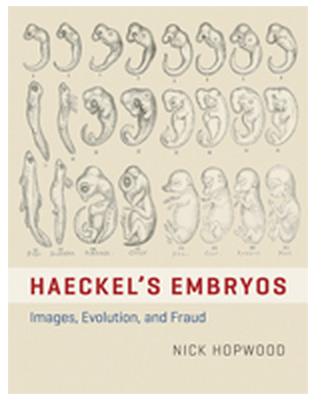
Debuting May 2015 from the University of Chicago Press is Nick Hopwood’s Haeckel’s Embryos: Images, Evolution, and Fraud. The book describes the lasting cultural impact of 19th-century illustrations that demonstrate the identical appearance of human and other vertebrate embryos in the earliest stages of gestation, only later morphing into their adult-like forms. These drawings, produced by Darwinist Ernst Haeckel in 1868, caused an uproar in the scientific community at the time as well as in the 1990s, when biologists and creationists alike argued against their accuracy and inclusion into scientific textbooks.

Image courtesy University of Chicago Press

Image courtesy University of Chicago Press

Hopwood traces the heated history of Haeckel’s drawings from their initial publication in the 19th century through their controversial presence in the current age. In addition to considering the impact of these images on developing understandings of biology, Haeckel simultaneously draws attention to the continued power of these images in contemporary discourse. The book will prove of interest to scholars of medicine who are curious about how popular as well as scientific knowledge of the human body is shaped by visual media, as well as how scientific information is culturally and historically situated.

Nick Hopwood is Reader in History of Science and Medicine and the Director of Graduate Studies at the University of Cambridge’s Department of History and Philosophy of Science.


To learn more about the book, check out its feature page at UCP here: http://www.press.uchicago.edu/ucp/books/book/chicago/H/bo18785800.html