News: UN Releases New Sustainable Development Goals (SDGs)

On Friday, September 25th, the UN released its new plan for global development through 2030: the sustainable development goals (SDGs).[i] This plan replaces the millennium development goal (MDG) plan that expires at the end of 2015, and offers a new 17-point agenda focused on social equality, infrastructure, technology, and environmental conservation.[ii] Of note to medical anthropologists, global health workers, and other scholars in social medicine is the continued focus on health and well being as the third item amidst the seventeen goals. The SDG plan champions health “for all at all ages,” although it proposes no specific goals for improving elder care despite the language stressing health across ages. Maternal and reproductive health, substance abuse, traffic deaths, and universal health care coverage are key issues addressed in the SDGs.

Emblem of the UN via Wikimedia Commons

Emblem of the UN via Wikimedia Commons

Proponents of the new SDGs, like the World Bank, argue that the plan’s emphasis on both developed and developing countries creates a shared impetus for bolstering food security, education, and access to quality health care; likewise, it suggests that these issues are global ones that cross national borders, and do not exist at the state level alone.[iii] Others criticize the SDGs as too ambitious, arguing that global authorities already struggle to aid migrants and peoples in crisis[iv], stating that the goals are too broad and thus not focused enough to produce observable change[v], and highlighting the irony of combating climate change while promising electricity for all by 2030.[vi]

Anthropologists have long held an interest in international development as a site of cross-cultural exchange, a relic of colonialism, and as a paternalistic model of societal shepherding of developing nations by the wealthy West and Global North.[vii] Amongst development anthropologists, the sustainable development goals will certainly generate new questions about the connectedness of social inequities with health, autonomy, and human rights in the contemporary age. The goals will similarly continue to attract the interest of scholars studying biomedicine and global health in diverse cultural settings.

In addition, the SDGs will no doubt capture the attention of anthropologists in science and technology studies (STS) with the plan’s robust emphasis on technologies, energy, infrastructure, and the environment. This sharpened focus on the connection between social order, science, and technology attests to the applicability of STS approaches to the study of development.

The SDGs arrive at a time of increased concern over social justice and equity on the transnational scale, particularly in the face of the Syrian refugee crisis[viii] and given wide income gaps that impact people in the United States, Chile, Greece, Mexico, and Turkey alike.[ix] Anthropologists are ideally situated to explore the impact of development goals across cultures, and to question how and why these goals may face considerable challenges as they are translated into action, law, and practice at the local level.


[i] http://www.theguardian.com/global-development/2015/sep/25/global-goals-summit-2015-new-york-un-pope-shakira-malala-yousafzai

[ii] https://sustainabledevelopment.un.org/topics

[iii] https://blogs.worldbank.org/voices/global-goals-economic-transformation-in-an-interconnected-world

[iv] http://www.npr.org/sections/goatsandsoda/2015/09/28/444188463/are-the-new-u-n-global-goals-too-ambitious

[v] http://www.scientificamerican.com/article/sustainable-development-goals-offer-something-for-everyone-and-will-not-work/

[vi] http://www.theatlantic.com/international/archive/2015/09/energy-access-sdgs-un-climate-change/407734/

[vii] http://www.wiley.com/WileyCDA/WileyTitle/productCd-0631228802.html

[viii] http://www.cnn.com/2015/09/28/world/united-nations-main/

[ix] http://www.reuters.com/article/2015/09/27/us-development-goals-challenges-analysis-idUSKCN0RR0TV20150927

Book Release: “The Law of Possession: Ritual, Healing, and the Secular State”

Screen Shot 2015-09-13 at 7.10.00 PM

Image via Oxford UP website

Out this November 2015 from Oxford University Press is an edited collection by William S. Sax and Helene Basu entitled The Law of Possession: Ritual, Healing, and the Secular State. The text presents both contemporary and historical case studies of the relationship between spiritual conflict and judicial exchanges across cultures. While rituals to exorcise spirits from the afflicted are typically characterized solely as acts of healing, they are also scenarios in which spirit healers do justice by the possessed by driving out a spirit who has committed an act of evil against the person they inhabit. Spirit possession may similarly provide valuable opportunities for members of a community to contact restless spirits through a human oracle. These otherworldly entities may then offer evidence to the living as to how to avenge or appease them, thereby restoring social harmony. Healing, justice, cosmic order, and religion are thus closely integrated within these culturally meaningful negotiations.

The authors of the text challenge the assumption that these spiritual encounters– which have consequences for both medicine and the law in many societies– are antiquated and do not belong in modern societies or in secular governments. By drawing on examples from East Asia, South Asia, and Africa, the authors assert that spiritual healing and law nevertheless persist in the contemporary age as a way to meet social and religious needs in many cultures.

Learn more about the book (in paperback) by clicking here.

Link to the hardcover copy: https://global.oup.com/academic/product/the-law-of-possession-9780190275747?cc=us&lang=en

About the editors: William Sax teaches at the University of Heidelberg, where he serves as the Chair of Cultural Anthropology at the South Asia Institute. Helene Basu is the director of the Institute of Social Anthropology at Münster University.

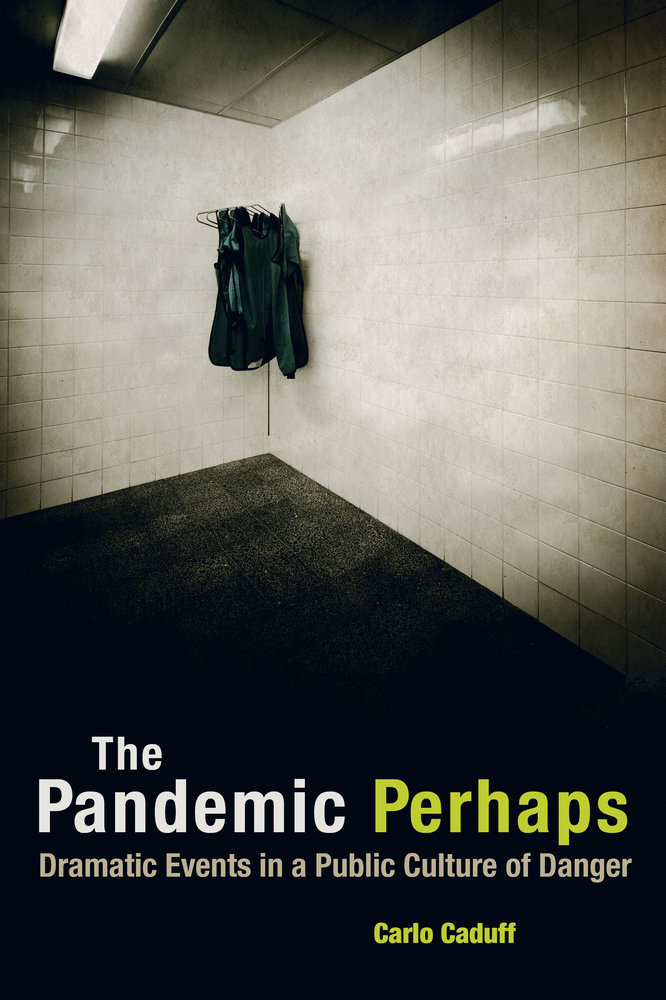
Book Release: Carlo Caduff’s “The Pandemic Perhaps”

Image via UC Press site

Image via UC Press site

Released this August 2015 from University of California Press is Carlo Caduff’s The Pandemic Perhaps: Dramatic Events in a Public Culture of Danger. In the text, Caduff focuses on alerts in 2005 posted by American experts about a deadly, approaching influenza outbreak. These urgent messages warned that the outbreak would have crippling effects on the economy and potentially end the lives of millions of people. Even though this potentially-catastrophic outbreak ultimately never occurred, preparedness efforts for the slated pandemic carried on.

The text is the product of anthropological fieldwork carried out amongst public health agents, scientists, and other key players in New York City surrounding the influenza scare. Caduff demonstrates how these figures framed the potential outbreak, and how they sought to capture the public’s attention regarding the disease. The book grapples with questions about information, perceived danger, and the meaning of safety in the face of large-scale epidemics. Likewise, Caduff examines how institutions and individuals come to cope with the uncertainty of new outbreaks.

The book will be of interest to cultural medical anthropologists as well as epidemiologists and scholars in public health. Caduff’s work will no doubt shed a timely new light on the way that the threat of epidemics shapes health policy and public perceptions of disease and security.

Caduff is Lecturer in the Department of Social Science, Health, and Medicine at King’s College London. His research addresses the anthropology of science, technology, and medicine, as well as issues surrounding knowledge, expertise, safety, and disease.


For more information on the book, visit the publisher’s website here: http://www.ucpress.edu/book.php?isbn=9780520284098

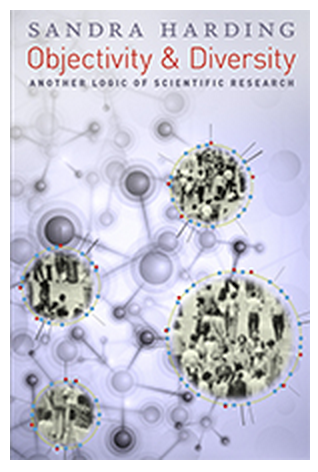
Book Release: Harding’s “Objectivity and Diversity”

Via UC Press website

Via UC Press website

Released this May 2015 from Duke University Press is Sandra Harding’s Objectivity and Diversity: Another Logic of Scientific Research. Harding’s book critically examines the notion of objectivity, and posits a new framework for scientific thought that does not strive to be politically and culturally neutral. Instead, Harding argues, scientists must consider the economic, social, and political dimensions of their work, and seek to produce knowledge and new technologies that are sensitive to the ways in which these innovations may impact disenfranchised populations. In this way, Harding suggests that science may be truly “objective” by reflecting the social reality of the world in which it is practiced and produced.

Harding’s book contributes to the constructivist body of literature on the social and cultural dimensions of scientific practice, alongside the likes of Daston and Galison’s Objectivity (2010), Agazzi’s Scientific Objectivity and its Contexts (2014), and Shapin’s The Scientific Revolution (1996). Harding similarly demonstrates the cultural situatedness of science, while underscoring the responsibility of contemporary science to promoting social justice. This publication will be of interest for science and technology (STS) scholars as well as anthropologists researching biomedicine and the culture of scientific and evidence-based care practices, particularly amongst underserved or marginal populations.

Sandra Harding is Distinguished Research Professor at UCLA. Her work explores the philosophy of science, epistemology, and feminist and postcolonial theories.


To learn more about Harding’s book, click here: http://www.press.uchicago.edu/ucp/books/book/chicago/O/bo19804521.html

Other books cited on objectivity:

Daston and Galison 2010: http://mitpress.mit.edu/books/objectivity

Agazzi 2014: http://www.springer.com/us/book/9783319046594

Shapin 1996: http://www.press.uchicago.edu/ucp/books/book/chicago/S/bo3620548.html

Book Release: Jenkin’s “Extraordinary Conditions: Culture and Experience in Mental Illness”

Via UC Press website

Via UC Press website

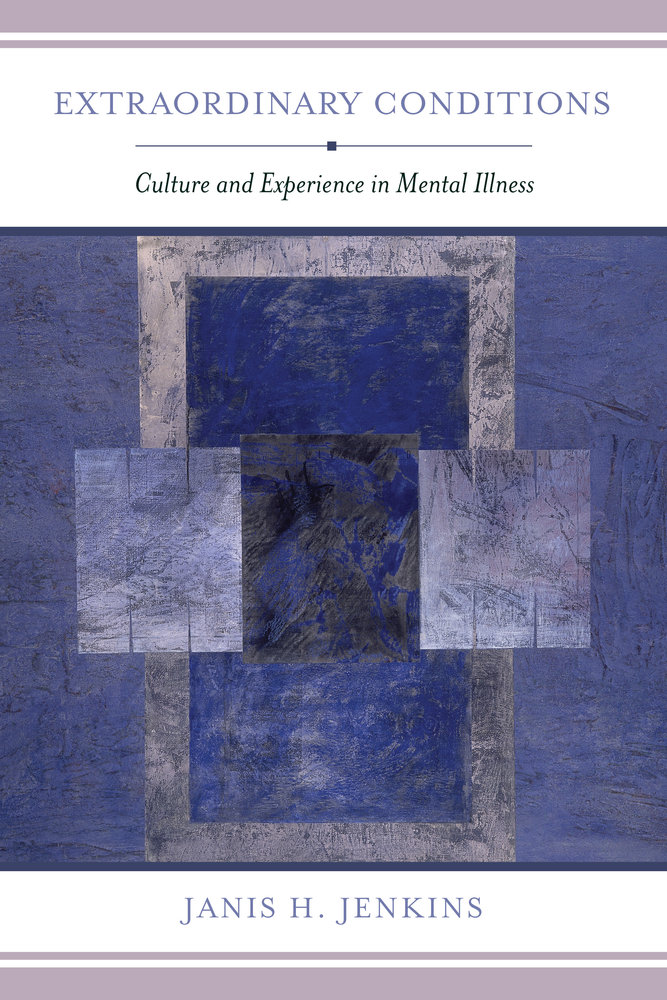
Out this August 2015 from the University of California Press is Janis H. Jenkin’s Extraordinary Conditions: Culture and Experience in Mental Illness. This ethnographic text explores the lives of patients of diverse ethnic and cultural backgrounds experiencing trauma, depression, and psychosis, taking into account the identity, self, desires, gender, and cultural milieu of the participants. Jenkins’ text pays special attention to the reduction of the severely mentally ill to a subhuman status, and the nature of this social repression.

Jenkins argues for a new, dynamic model of mental illness as a struggle rather than a constellation of discrete symptoms, noting that such a model should consider the ways that culture is implicated in mental illness experience from onset through recovery. The book posits that inclusion of culture into the clinical practice of psychiatry is crucial to the successful treatment of patients, and that anthropologists must not only consider the normative, day-to-day lives of participants but also the “extraordinary” and uncommon conditions regularly faced by those with mental illness.

This book will be of interest to psychological and psychiatric anthropologists, as well as those studying mental health care delivery systems. It will also shed light on medical narratives in mental health, and on generating new theories of human experience and medicalization.

For more information about this book, click on the publisher’s website here: http://www.ucpress.edu/book.php?isbn=9780520287112

News: Home Health Care for the Elderly in the United States

Culture, Medicine & Psychiatry, and the medical anthropological community at large, is committed to understanding the changing landscape of aging as both developed and developing countries experience demographic shifts, social change, and economic transformations that have impacted the way older adults receive care and treatment. Our December 1999 special issue addressed the anthropological complexity of family care dynamics, dementia, and global aging, and our journal continues to publish articles on this pressing theme in the field.[1]

In recent news, there has been a flurry of articles that address the variety of new programs across the United States that strive to address this timely and critical issue in the field of medicine and care delivery. Mount Sinai Hospital in New York City, for example, has initiated a home hospitalization program for elderly patients.[2] The program recognizes the desire of older adult patients to heal in their home environment, and visiting clinicians employed by the program are able to perform basic tests as well as deliver IV medications at the patient’s home in what is called a “mobile acute care” model.

This shift does, of course, benefit the hospital: it opens valuable bed space for other patients and allows staff to focus on the management of more serious cases. But it also has advantages for the patient, including reduced cost, the comfort of healing in the home, reduction in hospital-borne infections and symptoms of delirium in the unfamiliar hospital environment (common amongst older patients), and the ability for family members to be available at all times of the day to supplement care rather than being strictly permitted during visitation hours. A similar program for treating acute conditions in the elderly at home was instated in New Mexico, with promising results and improved patient outcomes.

Another piece in The Atlantic, however, outlines the difficulties of receiving extended at-home medical care for older adults with chronic illnesses like Parkinson’s.[3] As children of the elderly generation continue to work longer, and in married families both spouses are employed, there is no one at home to deliver lasting care to older family members who have chronic rather than acute conditions. Visiting home health aides, who are equipped to assist with basic tasks such as helping older adults shower and get in and out of bed, are typically underpaid and do not service outlying suburban or rural areas in the United States where many older individuals now live. Although the majority of elderly individuals prefer to live at home and not enter an assisted care facility, without consistent home care delivery available, it becomes extraordinarily difficult to do so.

Other organizations are generating creative solutions to delivering at-home care assistance for the elderly, particularly those without debilitating health conditions but who nevertheless require other forms of assistance. As NPR reports, many older adults struggle with the physical tasks required to cook healthy meals, such as lifting heavy pots and preparing fresh ingredients.[4] Some rely on microwaveable dinners, and do not get the nutrients they need to support their health. The company “Chefs for Seniors” has met this need in the Madison, Wisconsin area by sending professional chefs to older adults’ homes, where they cook a week’s worth of healthy meals for the resident. To ensure the plan is affordable for seniors, the company charges $15 for groceries and $30 per hour for the chef to prepare the meals: on average, this costs the customer $45 to $75 per week. The meals can also be personalized to the customer’s dietary preferences and needs.

While the United States faces numerous struggles to provide inclusive and accessible elderly care to an expanding older adult population, these smaller changes to the dynamics of caregiving—however flawed, as in the case of limited home health aides—demonstrates a broader recognition of this vital social and medical concern.

For another piece on elderly caregiving, be sure to check out this “From the Archive” blog post on dementia and family caregiving in urban India: https://culturemedicinepsychiatry.com/2014/11/19/from-the-archive-caregiving-and-dementia-in-urban-india/


Sources

[1] http://link.springer.com/journal/11013/23/4/page/1

[2] http://well.blogs.nytimes.com/2015/04/27/admitted-to-your-bedroom-some-hospitals-try-treating-patients-at-home/?smid=tw-share&_r=0

[3] http://www.theatlantic.com/business/archive/2015/04/who-will-care-for-americas-seniors/391415/

[4] http://www.npr.org/blogs/health/2015/04/27/401749819/drop-in-home-chefs-may-be-an-alternative-to-assisted-living

June 2015 Issue Preview: Guest Editor M. Ariel Cascio, on Global Autism Studies

Culture, Medicine & Psychiatry’s second installment of the year arrives June 2015. This special issue will address anthropological studies of autism throughout the world. To give our readers a preview of the upcoming issue, special issue guest editor M. Ariel Cascio, PhD joined our social media editor for an interview to discuss compiling the issue, what topics the articles will address, and new themes in the study of autism.


Can you tell us a little about the upcoming June 2015 special issue?

The special issue, “Conceptualizing autism around the globe,” shares anthropological (and allied field) research on autism in Brazil, India, Italy, and the United States. We talk about “conceptualizing” autism as a way to counter the idea that autism “is” or “means” one specific thing. Sometimes autism means the diagnosis measured by a certain instrument (such as ADOS), sometimes it means a more broadly defined set of characteristics (such as those in the DSM), sometimes it means an individual identity, and so many more things. The articles in this issue explore how autism is conceptualized at several different levels: in national policy, in treatment settings, and in the home.

What’s been your favorite part of working on the special issue?

I’ve just enjoyed the opportunity to greater familiarize myself with the group of scholars who are pursuing the anthropology of autism, and to work alongside scholars whose work I have long followed.

So how did you become interested in the study of autism?

I’ve been studying autism since 2008. I actually came to anthropology before I came to autism, and when I first began learning about autism, I saw it as rich for anthropological inquiry (isn’t everything!) because of anthropology’s strengths in focusing on lived experience, challenging deficit narratives of so-called “disorders,” and placing medicine and psychiatry in sociocultural context.

What was it like doing fieldwork in Italy? How do Italians see autism differently than other places in the world?

I’ve studied the autism concept more in Italy than in any other place in the world, and I’m very grateful to everyone there from whom I learned – autism professionals, family members of people with autism, and people on the spectrum themselves. I could hazard comparisons with the literature that address perceptions in other parts of the world – and some of these comparisons come through in the special issue – but for now I would like to focus on the strength of the rich description of the Italian context without external comparison. As my article in the special issue shows, autism professionals tended to take a social model of autism, focusing on creating environments that were tailored to the needs of people on the spectrum and structured to help them learn.

What are some of the challenges you’ve faced in studying autism?

As in many areas of inquiry familiar to readers of CMP, it can be challenging to communicate information about my study to people who study autism in other fields (clinical, psychological, social work, etc.). A lot of research about autism takes a positivist stance, whereas my research takes an interpretivist stance and focuses on autism as a concept whose meaning may vary rather than a diagnosis measured in a particular way. Nonetheless, I love talking about my research interests with a broad audience because in many contexts (especially in the U.S.), so many people have personal or professional interest in autism and we can always have interesting and stimulating conversations.

What’s something you think would surprise non-anthropologists about the anthropology of autism?

I would imagine non-anthropologists would be surprised by the anthropology of autism for the same reasons they might be surprised by anthropology (or medical anthropology) in general. For example, they might be surprised that anthropologists study autism all over the world, particularly if they think of the autism concept as something that represents a universal set of characteristics and experiences that are unaffected by context. The articles in this special issue really show that context matters in all conceptualizations of autism, from Brazil to the United States, from national policy to the family home.

Where do you see the anthropology of autism heading next?

I see the anthropology of autism becoming more inclusive. In her commentary, Pamela Block expresses optimism that the anthropology of autism will increasingly include researchers who identify as autistic themselves, and I agree. In addition to including more researchers with autism, I anticipate that the anthropology of autism will increasingly work to include participants with higher levels of support needs (those whom some people call “people with low-functioning autism”), and delve deeper into their lived experiences as well.


Many thanks to Dr. Cascio for sharing her insights! Look for the special issue on conceptualizing autism in June 2015, and be sure to check back for more previews of the issue, article features, and other blog entries about the new installment here on our website.

Book Release: Wailoo’s “Pain: A Political History”

Image via JHU Press

Image via JHU Press

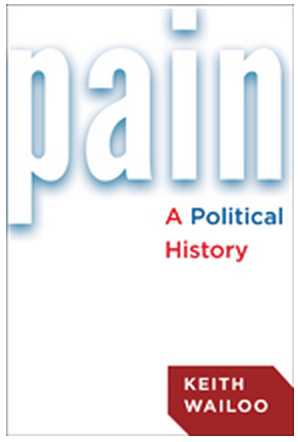
This October 2015, Johns Hopkins University Press is slated to release Keith Wailoo’s Pain: A Political History. Wailoo’s book examines how the definition of chronic pain in the United States developed and changed alongside broader political and economic changes. The book begins with the culture of treatment following World War II, when public and political attitudes towards pain considered physical suffering real and potentially disabling. With decreasing support of disability programs throughout the 1980s, however, the validity and legitimacy of chronic pain came under question.

New conversations beginning in the 1990s about euthanasia reinvigorated the conversation surrounding pain, no doubt bolstered today by current discussions of medical marijuana laws and the burgeoning use of prescription painkillers for recreation purposes. This renewed interest in the nature and the extent of pain have enlivened the debate around who experiences pain, how we certify pain, and at what point pain requires medical intervention.

The book strives to illuminate the historical foundations of today’s contemporary pain medication and treatment market, particularly in terms of the liberal and conservative political trends between the 1950s and today. Wailoo’s account culminates with an exploration of the contemporary state of pain care: a severe imbalance between the overmedicated and the underserved who cannot access treatment for their chronic pain. Pain: A Political History will certainly prove insightful for historians of medicine as well as political-economic medical anthropologists, theorists of neoliberalism, and medical anthropologists carrying out research in the United States.

Wailoo is Professor of History and Public Affairs as well as the Vice Dean of the Woodrow Wilson School of Public and International Affairs at Princeton University.


To learn more about the book, click on JHU Press’ page here: https://jhupbooks.press.jhu.edu/content/pain

Vol. 39 Issue 1 March 2015: Ethnography & Clinical Practice

In addition to our From the Archive series, where we highlight past articles in the journal’s history, the CMP blog features selected previews and sneak peeks into our latest issue. This week, we gain a glimpse into an article from the March issue: the first installment of 2015’s Volume 39 of Culture, Medicine & Psychiatry.


A Model for Translating Ethnography and Theory into Culturally Constructed Clinical Practices

Bonnie Kaul Nastasi, et al. Pages 92-120. Link to article: http://link.springer.com/article/10.1007/s11013-014-9404-9

In this article, Nastasi and colleagues have developed a new model for preventative care of HIV and STIs over the course of a 6-year research project in Mumbai, India. This clinical approach, called the Narrative Intervention Model (NIM), implores married men in Mumbai to construct narratives around their sexual health and related problems. With the clinician, patients then deconstruct the narrative to locate discrepancies between their accounts of sexual health and their desired health status. The last stage of the preventative approach entails clinicians coaching patients on how to minimize risk while meeting patient expectations surrounding sexual health. In this way, health counseling becomes a more dynamic process than medical history taking alone.

cropped-cards.jpgThe NIM model in this initial study was employed by both allopathic physicians and traditional Indian medical practitioners. By analyzing patients’ accounts and creating models for health behavior that minimized risks of HIV or STIs, caregivers were able to blend an anthropological and public health approach to preventative medicine. Likewise, the model drew on principles of cognitive behavioral psychology: inquiring about patients’ logic in rationalizing health choices, and intervening in this narrative to display where risks might be prevalent.
In the NIM model, the clinician’s interview with the patient takes on a semi-structured form (which the authors assert is “ethnographic” in nature.) Rather than traditional history-taking, which is an elicitation of information from the patient rather than a more fluid conversation, the NIM encourages patients to make connections between their cultural beliefs, behaviors, and their health.

Given the widespread interest in both medicine and anthropology on patient-clinician communication, this case presents an informative glance into how caregivers might draw on ethnographic practices to improve patient health. NIM offers one methodology for meaningful exchanges between clinicians and patients, and unites the aims of medicine and anthropology in illuminating culturally specific health behaviors, beliefs, and practices for the direct benefit of patients.

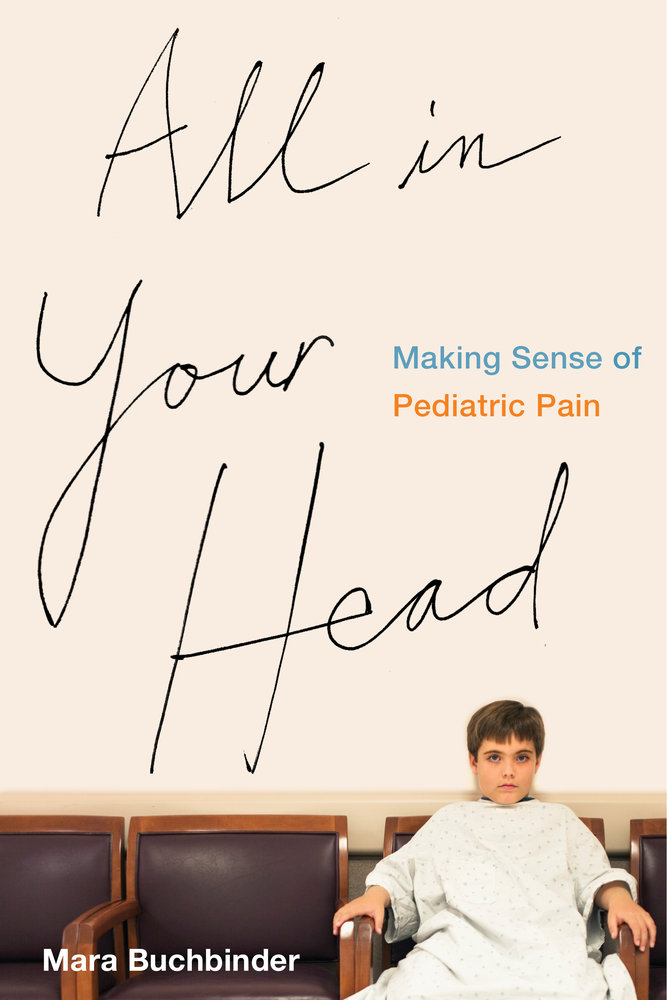
Book Release: Buchbinder’s “All in Your Head: Making Sense of Pediatric Pain”

This May 2015, Mara Buchbinder’s book All in Your Head: Making Sense of Pediatric Pain will be released by the University of California Press. The book grapples with the difficulty of expressing internal states to others via language, as these inner subjective experiences are often considered impossible to actualize in words. Buchbinder strives to honor this private experience of pain while studying how language surrounding pain and pain management is relational in nature. She explores how pain is described, managed, and treated in medical settings.

Image via UC Press

Image via UC Press

The text is a product of ethnographic research in numerous pediatric units in California hospitals. Buchbinder considers the social lives of physicians, caregivers, clinicians, parents, and children, all with a stake in alleviating pain and interpreting troubling or perplexing symptoms. Rather than allowing pain to be read solely as an isolating, private matter, the author argues that the treatment of pain is a complex social phenomenon. By focusing on narratives, conversations, and metaphors used by participants to illustrate the nature of pain, Buchbinder’s account underscores the power of language to generate shared meanings for human suffering.

All in Your Head will prove of interest to linguistic and medical anthropologists alike, as well as to scholars in the medical humanities with an interest in textual and communicative analysis in clinical settings. To learn more about this upcoming book, visit the publication page at the University of California Press here: http://www.ucpress.edu/book.php?isbn=9780520285224

ABOUT THE AUTHOR

Mara Buchbinder is Assistant Professor of Social Medicine at UNC-Chapel Hill, where she also teaches coursework in anthropology. She has previously coauthored the book Saving Babies? The Consequences of Newborn Genetic Screening.