Issue Highlight Vol 40 Issue 2: Global Health Diplomacy in Ethiopia

cropped-cards.jpg

Across the past few weeks, we have been spotlighting new articles from our June 2016 issue, which you can access in full here. The theme of this special issue is The Clinic in Crisis: Medicine and Politics in the Context of Social Upheaval. This week, we visit Lauren Carruth’s article “Peace in the Clinic: Rethinking ‘Global Health Diplomacy’ in the Somali Region of Ethiopia.” You can read the full article at this link.


In this article, Carruth argues that the politics of global health manifest not only at the scale of “interstate” interactions between governments, NGOs, and international assemblies, but at the local and interpersonal levels between individuals who are giving, receiving, and managing clinical care in “politically insecure” places. Through ethnographic research on two health programs in the Somali region of Ethiopia, the author argues that medical care provision can alternatively strain and strengthen political relationships between people across ethnic and social boundaries.

For instance, Somali people in Ethiopia often refused to seek medical services from the local clinic, Aysha Health Center. Somali patients complained that the Habesha (a native Ethiopian group) nurses were insensitive and uninterested in treating their health concerns. Many Somali informants offered up the same story as evidence: three mothers went to the clinic, and their three children had different ailments. Yet the Habesha nurses did not examine the children, and offered the same drugs to each of the mothers without diagnosing each patient. Somali patients also had difficulty securing a translator who could assist them in conversations with clinicians, who spoke Amharic. The Habesha clinic staff countered that the Somali patients were adverse to biomedical care, instead trusting native folk healers over the clinicians. They added that Somali patients would not adhere to the medication regimens or treatment plans that they recommended. In this case, the friction between Habesha caregivers and Somali patients intensified long-standing ethnic and political tensions at the local scale.

Carruth presents another case, however, where medical aid eases inter-ethnic relationships and ameliorate social rifts between opposing groups. She describes a mobile UNICEF clinic staffed by two Somali clinicians of the Ogaden clan operating in Ethiopia. Though these Somali clinicians were caring for fellow Somali patients, the patients descended from a less politically powerful line which did not have the dominant social standing of the Ogaden: a clan with significant regional power in Ethiopia. Though the patients were of opposing clans, such as the Issa, the two clinicians listened intently to the patients’ complaints, recalled their family lines when they returned for further treatment, and even offered resources like supplementary nutrition to ailing patients despite UNICEF limitations on what types of patients could receive these rations. The patients adored the mobile clinic staff, and the clinicians became integrated into the marginalized communities they served. This example, Carruth notes, highlights the potential for medical aid to facilitate positive and deeply personal relationships between factions in regions that have otherwise experienced significant social unrest.

Carruth concludes that in order to successfully deliver medical aid to places encountering social upheaval or unrest, it is critical to unite oppositional groups within clinical spaces themselves. Providing medical resources and building clinics alone, she notes, fails to address the need to facilitate positive relationships between individuals mired in conflict. Instead, to ease political and social tensions, Carruth posits that clinics and similar treatment centers can serve as sites of caring, communal exchange between otherwise opposed social groups.

Issue Highlight Vol 40 Issue 2: Reproductive Experiences Amongst Haredi Jewish Women

cropped-cards.jpg

Over the next few blog updates, we will be spotlighting new articles from our June 2016 issue, which you can access in full here. The theme of this special issue is The Clinic in Crisis: Medicine and Politics in the Context of Social Upheaval. In addition to articles that address the topics of societal unrest, political change, and human health, this installment also turns to how people navigate change and decision-making within the contexts of their own lives. Specifically, one article questions whether individual autonomy over medical decisions is a characteristic of medical care across cultural contexts. In Teman, Ivry, and Goren’s article “Obligatory Effort [Hishtadlut] as an Explanatory Model: A Critique of Reproductive Choice and Control,” we learn that the notion of reproductive choice and control does not cleanly map onto the procreative experiences of Haredi (ultra-Orthodox Jewish) women. To access this article in full, click here.


Reproductive technologies have expanded the range of procreative choices a woman and members of her family confront: should birth control be used to limit the number of children she wishes to have? Should assisted reproductive technologies (ARTs) be used to facilitate conception, or should a woman abort a fetus that has tested positive for a developmental or congenital ailment? The authors of this article suggest that in these discussions, another question has emerged. Are these decisions truly reflective of individual choice, or do individual mothers and members of their community perceive the reproductive course as one over which no person has ultimate control?

Amongst Haredi (ultra-Orthodox Jewish) women in both the United States and Israel, the authors observed another way that individuals framed their reproductive experiences. Rather than describing their procreative choices as a form of individual control over one’s life course, the Haredi women referenced hishtadlut, or obligatory effort: the notion that they were obliged to God to try to become pregnant, but not responsible for the outcome if they were unable to do so. In hishtadlut, women have “room for effort” in that they may flexibly interpret and enact what constitutes a serious attempt to become pregnant or maintain a healthy pregnancy per their religious duty to God to have children. In this explanatory framing, women recognize that they must consciously make choices that would enable God to enact a divine plan for them: however, they are not accountable for the outcome if, having invested the “effort,” God’s plan does not come to fruition or leads to the birth of a child with a developmental disability or congenital condition.

The concept of hishtadlut extended to the use of various reproductive technologies. For instance, there are many concerns about hereditary genetic illnesses like Tay-Sachs disease within the Haredi community. To ameliorate this issue, blood samples from young Haredi men and women enrolled in high school are collected and catalogued into an anonymous database. If two families are arranging a marriage between a son and a daughter, they are able to consult the database to confirm whether or not both individuals are genetic carriers of an illness. This prevents unions between two carriers who would have a greater likelihood of having a child with a genetic illness; thus a genetic carrier would be paired with a non-carrier spouse. Most women interviewed for the article agreed that this technological system facilitated the will of God, as it reduced the chance that a couple would face the difficulty of raising a disabled or an ill child. Here the technology is seen as a “blessing” from God, as it allows families and couples to avoid “heartbreak,” while bolstering a couple’s ability to have healthy children per God’s divine plan.

In other instances, technology is viewed as irrelevant out of the hishtadlut principle. For example, the Haredi women perceived genetic testing for fetal developmental or other congenital illnesses as having little purpose. In Jewish law, abortions beyond 40 days after conception are prohibited, and all fetal diagnostic testing occurs after this point in a woman’s pregnancy. Thus, the women held that the test was inconsequential, as God’s will for them and their fetus had already been ordained. If a baby was born with a disability, this was part of their fate as decided by God. Here “choice” is viewed as God’s choice for the mother and baby, rather than the mother’s own control over whether or not to give birth to a child with potential developmental or congenital conditions.

As Teman, Ivry, and Goren’s research illustrates, “choice” and “control” do not necessarily apply to the reproductive experiences of women and their families across cultures. Indeed, in a deeply religious community such as the Haredi Jews, “choice” is attributed to God while individual reproductive decision-making is cast as a means to allow God to work through individuals to enact divine will. Haredi women did not describe themselves as accountable for becoming pregnant (or having a healthy child), but they did feel obligated to use technologies and consciously make reproductive decisions or avoid certain interventions. These actions, they held, would enable God to direct their journey to motherhood and to fulfill their purpose as parents.


Issue Highlight Vol 40 Issue 2: Hospitals as Sites of Conflict in Pakistan

cropped-cards.jpg

In the coming blog posts, we will be highlighting new articles from our June 2016 issue, which you can access in full here. The theme of this special issue is The Clinic in Crisis: Medicine and Politics in the Context of Social Upheaval. This week, we will overview Emma Varley’s article “Abandonments, Solidarities and Logics of Care: Hospitals as Sites of Sectarian Conflict in Gilgit-Baltistan.” Read the full article here.


As our past blog highlights have suggested, the clinical space can both act as a site of political protest and serve to facilitate political unity. Varley’s article expands upon these themes by arguing that the clinic can also become a microcosm of inter-group tensions, wherein the hospital itself relays a picture of broader social conflict. Through her analysis of a crisis in a Pakistani hospital, Varley ethnographically demonstrates how Sunni-Shia conflicts manifest in the clinic, and how these tensions are navigated by health professionals employed there.

Varley recounts a shooting and raid which occurred at a hospital in Gilgit-Baltistan in January 2005. Shia gunmen had entered the regional hospital to hunt down Sunni male patients, aiming to retaliate after the assassination of a Shia leader killed by Sunnis. One women’s health ward, operated by nurses of the neutral Ismaili group, was left untouched after the nurses hid Sunni male patients. The nurses protected the men by insisting to the gunmen that there would be no male patients on a female ward: drawing both upon their social role as neutral Ismaili and their gendered role as caregivers of women, who were seen as uninvolved in the conflict at hand. Meanwhile, in a surgical theatre, physicians pretended as if the assassinated Shia leader on their operating table was still alive: hoping to placate the gunmen who threatened them until police or military forces could arrive to dispel the violence. Orderlies and other guards on the wards had, in some cases, fled: leaving clinical staff to defend or otherwise conceal the Sunni patients, and in other cases, fellow Sunni providers.

In reflecting on this incident, Varley notes that the hospital became an example of an “abandoned” space, one in which the necessary governmental protections and securities were not in place to ensure the safety of all patients and clinicians. The onus of protecting patients fell upon the clinicians who staffed the hospital: illustrating both the selflessness of individuals in assisting one another across oppositional group divides, and the potential for hospitals to become sites of medical and political refuge. This increased the trust between Shia providers and their Sunni colleagues in medicine. Conversely, the incident intensified professional divisions between Shia and Sunni providers, as Sunni clinicians later departed the larger regional hospital and took up employment in new Sunni health centers where they felt less at risk.

Though Varley reminds us that conflict is “corrosive” within medical professional relationships, it may also enable “renewed” feelings of trust between caregivers of opposing groups when political unrest unites them under a common aim. In sum, the hospital may serve a site of caregiving exchanges that expand beyond the bounds of medical encounters, as it becomes a sites of political action and negotiation between social groups.

Issue Highlight Vol 40 Issue 2: Medical Humanitarianism and Conflict in Turkey

cropped-cards.jpg

In the next few blog updates, we will be spotlighting new articles from our June 2016 issue, which you can access in full here. The theme of this special issue is The Clinic in Crisis: Medicine and Politics in the Context of Social Upheaval. This week, we will overview Salih Can Aciksoz’s article “Medical Humanitarianism Under Atmospheric Violence: Health Professionals in the 2013 Gezi Protests in Turkey.” Read the full article here.


Aciksoz’s article begins by painting a scene. In the summer of 2013, protests erupted throughout Turkey, leading to violent clashes between armed police forces and civilian protestors. Humanitarian health workers began to establish make-shift infirmaries near known sites of conflict to treat wounded protestors, yet soon themselves became targets of the police who directed tear gas and turned their weapons upon the infirmaries. Those tasked with quashing riots and subduing protests soon fixed their ire on the health professionals who cared for wounded protestors: viewing these clinicians not as neutral aid workers, but instead as complicit members of the uprisings they were attempting to quell. In time, emergency healthcare offered to protestors was deemed criminal activity by the Turkish government.

The author frames the Gezi Protests in terms of the security of medical spaces. Medical humanitarianism, he notes, is premised on the neutrality of care giving centers which serve as a “safe space” for medical aid to be delivered in times of “crisis” to anyone in need. However, this designation as a safe space relies on the authority of a state to recognize it as such. The Turkish government’s criminalization of the humanitarian infirmaries aligned health professionals with protestors, despite any claims to political neutrality. In Turkey, the ability for make-shift infirmaries to serve as neutral care centers was further threatened by the use of a particular weapon: tear gas and similar chemical weapons. An indiscriminate gas could transform entire physical areas– especially enclosed ones– into dangerous structures where all people were at risk of exposure. The use of gas by police forces inside clinics prevented these spaces from being both politically neutral and medically safe for patients and health professionals within.

The state’s designation of infirmaries as a site of criminal activity, and health professionals’ attendance to protestors as insurgent, did not always align with the accounts that Ackisoz collected from Turkish clinicians themselves. Even whenever health professionals confessed that they sympathized with the cause of the protestors, they nevertheless distinguished their political beliefs from their medical obligation. Many described their medical involvement with the protests as a natural response to crisis: as understandable as if they were responding to victims of an earthquake or other disaster. Yet their work also bordered on activism, as numerous clinicians sought to aid protestors after noting the failures of state-operated hospitals and ambulances to attend to the medical needs of all injured protestors.

In sum, Ackisoz argues that what constitutes “medical humanitarianism” borders on many other domains of society: on the state, on the government’s definition of both criminality and on appropriate use of force, on what constitutes political dissidence and whether or not “humanitarianism” is strictly neutral whenever any medical action has the potential to shed light on political failings. The article demonstrates that the ethnographic and social constructivist lenses are well-suited to the analysis of the troubled boundaries between politics and medicine, and between healing and the state in periods of upheaval.


Summer 2016 Update Schedule

cards3

As we head into June, the Culture, Medicine & Psychiatry blog will shift into its summer update schedule of bi-monthly posts. New updates will continue to go live here on our website, and will be spotlighted on our Twitter and Facebook accounts. This summer, we look forward to sharing our latest articles with you, which will arrive in the June 2016 issue. Want to see what will be published at the journal soon? Check out our online first articles here.

As always, we continue to accept submissions for guest commentaries and blog posts on our website. We are also happy to feature new academic book releases by our colleagues in medical anthropology, sociology, and humanities, as well as medical science and technology studies. For details, contact our social media editor Julia Knopes at jcb193@case.edu.

Wishing all the best to our readers,

The CMP Editorial Team


Article Highlight: Feeding Tubes and Quality of Life in ALS Patients

cards

This week on the blog, we are highlighting Jeannette Pols and Sarah Limburg’s article “A Matter of Taste? Quality of Life in Day-to-Day Living with ALS and a Feeding Tube.” The article is open-access and can be read in full here on our publisher’s website.

The authors begin by suggesting that while “quality of life” has been transformed into a measurement used widely in health research, it is difficult to operationalize when considering the daily, lived experiences of patients. Rather than approaching quality of life as a measure of attainment or “outcome,” the authors instead choose to reframe it as a continual process: one that is negotiated by individual patients differently. To examine what quality of life entails in a qualitative sense, the authors interviewed a population of people with ALS in the Netherlands with feeding tubes, or ALS patients considering one.

The literature on feeding tubes, the authors note, present many perspectives on the relationships between quality of life and eating. Some sources argue that feeding tubes deprive individuals of the important social aspects of eating, while others note that feeding tubes can unburden patients for whom swallowing and the physical actions of eating are difficult, uncomfortable, or impossible.

Patients and their families interviewed by the researchers, on the other hand, demonstrate such ambiguity towards feeding tubes contextually, depending on the stage of their feeding tube transition. For many, the initial decision to have a feeding tube placed in their bodies was an upsetting signal of bodily deterioration. The procedure itself, though technically minimally invasive, was also viewed with trepidation by patients. They worried about the hospital stay, and whether or not their body would be strong enough to adapt to the tube quickly. Pols and Limburg found that for those who had undergone the procedure, “there was a remarkable consensus among patients in their evaluation of tube placement, with the main variations mentioning just how terrible it had been.” The authors later note that some patients continued to view the feeding tube negatively after it was placed, envisioning it as an unnatural, upsetting addition to their bodies. Others described it as a “necessity” that came with quality of life benefits, although it was not pleasant to have attached to their bodies.

However, for many patients who had feeding tubes already implanted at the time of the study, the response could be notably positive. These participants noted that the devices restored their health and function, and lessened distressing symptoms like choking and an inability to swallow. For one patient, the feeding tube ensured that she received the appropriate calories, such that any food she decided to eat normally could be at her discretion. Other patients who cared less about eating a range of foods appreciated that the feeding tube rid them of the need to worry about what could be easily consumed.

The authors conclude that “the feeding tube can best be understood not as an intervention that causes ‘impacts on quality of life’, but as a technology or prosthesis that may bring different qualities and appreciations that may shift over time.” They add that the feeding tube acts as an intervention that re-orders daily life for patients coping with the a ‘new normal’ of chronic illness: rather than serving to balance “good” and “bad” qualities, as outlined in the disability paradox. Lastly, they remind readers that instrumentalizing “quality of life” risks losing these facets of illness experience. This term is deeply contextual, and responsive to the needs, expectations, and hopes of each patient undergoing treatments or coping with chronic conditions.

Book Release: Haraway’s “Staying with the Trouble”

Screen Shot 2016-04-28 at 4.28.34 PM.png

Image via Duke UP website

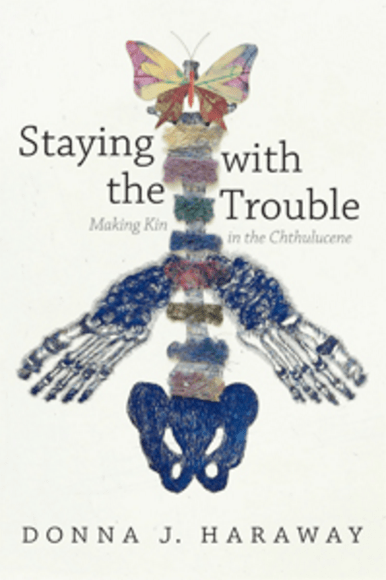
Debuting this September 2016 from Duke University Press is Donna Haraway’s Staying with the Trouble: Making Kin in the Chthulucene (available here.) Haraway’s text challenges the concept of the anthropocene, noting that in an age of ever-increasing environmental degradation, any centralization of the human detracts from the ill-effects of a “damaged earth” on all forms of life. Haraway posits a new term, the Chthulucene:, to describe the contemporary state of human and non-human existence. She argues that this new term highlights the multi-directional, tentacular ways in which life forms are bound together as kin in this new world. Moreover, this term encourages us to consider not human self-making, but rather sym-poiesis: the mutual entanglements of human and inhuman life as they “make” and define one another. The text unites an environmental approach with themes that resonate throughout Haraway’s work: including feminism, technoscience, kinship, and the destabilization of the “human” category.

This publication will be of interest to anthropologists spanning environmental studies, medical anthropology, and anthropological theory, as well as scholars of science and technology studies. Haraway’s commentary on “making kin”and the Chthulucene previously appeared in the open-access journal Environmental Humanities and is available in full here.


About the Author

Donna Haraway serves as Distinguished Professor Emerita at the University of California Santa Cruz in the History of Consciousness Department. In addition to Staying with the Trouble and many past publications, Haraway has also released a collection of her manifestos this year, entitled Manifestly Haraway. The collection is available here through the University of Minnesota Press.

Guest Blog: ‘In-Betweenness’: Liminality, Legality, and Migrant Health in Siracusa, Italy

This week on the blog, we are hosting a guest post by Adam Kersch, an MA Candidate who will begin his PhD in anthropology at the University of California – Davis this fall. Here, he presents findings from his ethnographic research on the health and wellbeing of migrants entangled in the legal webs of relocation in southern Italy.

cropped-cropped-2009cover-copy1.jpg


In January to July 2015, I conducted ethnographic research at a reception center for migrants in Siracusa, Italy, focusing on the struggles they faced upon arrival. Although the legal difficulties and hurdles that migrants faced were readily apparent, the toll that these policies took on the health and well-being of these migrants became increasingly visible during my research. Migrants coming to Italy and to Europe have often endured traumatic events resulting from war, violence, and poverty. Once migrants come to Europe, this crucial period of psychological and physical recovery is marked by ongoing anxiety and hardship as they navigate a complex web of legal processes as they seek asylum. That is, procedures and policies that compose the migration reception apparatus commonly have direct and deleterious effects on migrants’ health.

Abraham was one such migrant whose mental well-being was harmed by slow moving legislative mechanisms. Abraham, a 25 year-old Pakistani man, had been waiting in Umberto I, a primary reception center for migrants in Siracusa, Italy, for nearly six weeks and had heard nothing regarding the status of his asylum request. The poorly-supplied center was only designed to hold migrants for 72 hours, and no legal information was provided to its residents, leaving the migrants waiting in Umberto I without a clue as to their futures in Italy. Abraham left Pakistan fleeing sectarian violence and lack of economic opportunity. After some travel, he found himself in Libya, seeking passage to Europe. Like many other migrants, he was tortured and robbed by militias while in Libya as he worked to pay for his passage to Europe. Reeling from torture, the stress of his liminal status in Italy became unbearable. The center had given him no idea as to when he would be transferred, why he was there, or what his future might be like. Like many others before him, one day Abraham had enough of the waiting and clandestinely left the reception center. He contacted me a few days after leaving, begging for help. He was in Northern Italy, trying to cross the border into France to meet with a friend in Spain, but he kept getting caught and sent back to Italy. “I want to die,” he confessed, “I am a failure. I cannot support myself, I cannot support my family. No money, no work.” Having come to Europe for safety and to help support his family back in Pakistan, the painfully lethargic process of legal recognition prevented Abraham from being able to achieve his goals. His lack of documents prevented him from legally seeking work, but the longer he waited for these documents, the longer his family in Pakistan went hungry, unable to support themselves. Trying to seek asylum elsewhere seemed to him the only logical choice.

During my fieldwork in 2015, I found that migrants waiting to hear about their legal status in Italy had little to no access to legal information, and that this state of liminality facilitated social, psychological, and somatic trauma. Centers like Umberto I function as a part of the migrant reception apparatus in Italy that treats migrants with spotty assistance at best, and absolute negligence at worst. This lack of legal knowledge contributes to an environment of anxiety and leads to the physical and mental suffering of the hundreds of thousands of migrants who have come to Italy in recent years. This dearth of information violates United Nations and European Union (EU) policies on migrant reception, both of which stress that migrants should have access to any legal personnel willing to provide services. In this way, these policies suspend migrants in an ambiguous, unresolved legal status that both directly and indirectly impacts the psychological and somatic health of the migrants and their families.

Lamin, a 20-year-old migrant from Gambia, was another temporary resident of Umberto I. He, like Abraham, experienced deteriorating health as a result of the migrant reception policies and procedures in Siracusa. He had unknowingly agreed to serve as a legal witness for the state against the captain of the boat that brought him across the Mediterranean, who was being charged with human trafficking. The police had effectively coerced Lamin to sign the papers, which were in Italian. They assured him the papers were for his own benefit as they would secure him legal protection. However, since signing them, he had no updates about the court proceedings or about his own legal status. Lamin languished in Umberto I for the moment that he might be transferred or summoned, all the while ignoring the severe pain he was experiencing as a result of holes that had been drilled into his teeth when he was tortured in Libya. He refused to seek medical help, fearing that he may miss his chance to leave Umberto I and finally move forward while getting his teeth fixed. It was only after significant encouraging that he finally sought care from Emergency, a local medical NGO. Thankfully, Lamin successfully recovered and was finally transferred a few weeks later.

In cases such as Lamin’s, legal liminality takes priority over physical suffering. As a result, the slow and onerous migrant reception apparatus exacerbates and prolongs the wounds of migration, whether they are psychological, physical, or social. Those in Umberto I are far from the only sufferers of legal liminality. Cutiyo and her daughter, both refugees from Somalia, came into the legal office late one night in Siracusa. Cutiyo had regularly been coming to speak with Giulia, a local legal activist, to help file a family reunification to bring her husband living in Somalia to Italy. She often saw Giulia simply to ask about the progress of her husband’s case, wondering when she might finally see him again and when he would finally be safe from the violence in Somalia. Cutiyo spoke softly and left quietly after speaking to Giulia. Giulia turned to me, on the verge of tears, and explained that Cutiyo’s husband had been shot in the head five times by militants the night before in Somalia. This happened only a day or two before Cutiyo’s husband was finally to be brought to Italy to be with his wife and daughter. If the sluggish process had been streamlined, perhaps the family could have been reunited. Instead, Cutiyo was now alone in Italy with her daughter, faced with both an uncertain legal status and the social distress and strain caused by the death of her husband. The slow-moving Italian legal system had produced another casualty.

These moments of “in-betweenness” that migrants experience are crucial periods of temporal and social displacement that exacerbate the traumas from which many migrants are attempting to recover. As migrants wait to receive documentation or for their families to be reunited, the physical and psychological risks inherent to seeking a new future in Europe are placed in migrants’ peripheries as they seek legal recognition. As observed by anthropologists Cristiana Giordano (2014) and Miriam Ticktin (2011), granting asylum is often a process of recognizing and validating the suffering migrants experience before arriving in Europe. In circumstances such as these, suffering can become a migrant’s path to legal protection, functioning as a perverse currency that promises security and safety. But during the period in Europe preceding asylum decisions, migrants’ pains are perhaps ironically exacerbated by obtuse and labyrinthine legal processes in the very countries they have come to for protection. Whether it be by anxiety that defers attention to health issues, an uncertain future prompting a rejection of the reception apparatus, or documentation that arrives too late, migrant legislation and reception procedures in Siracusa, Italy have severe consequences for the well-being of people seeking a new future in Europe.

Sources Cited

Giordano, Cristiana. (2014). Migrants in Translation: Caring and the Logics of Difference in Contemporary Italy. Berkeley: University of California Press.

Ticktin, Miriam. (2011). Casualties of Care: Immigration and the Politics of Humanitarianism in France. Berkeley: University of California Press.


About the Author: Adam Kersch is currently a MA Candidate at the University of Central Florida and in September 2016 will begin his first year of PhD studies in Sociocultural Anthropology at the University of California, Davis as a Mellon Institute Comparative Border Studies Fellow. His research is focused on provision of health and legal services to migrants in Italy. He is particularly interested in human rights, imaginaries of Europe, and the politics of care in the context of austerity.

Blog Archive: Neuropsychiatry and Culture

This week on the blog, we revisit a guest commentary piece written last year by M. Ariel Cascio, PhD (originally posted here.) Dr. Cascio is an anthropologist specializing in the cultural study of science and biomedicine, psychological anthropology, and the anthropology of youth. Her research explores the biopolitical dimensions of autism and autism-related services in northern Italy. She can be reached at ariel.cascio@case.edu.

cropped-2009cover-copy.jpg


In the 21st century, anthropologists and allied scholars talk frequently of the biologization, cerebralization or neurologization of psychiatry. Many make reference to the 1990s, the “Decade of the Brain” that closed out the last century. They talk about “brain diseases” as a dominant discourse in discussions of mental illness. The 2014 Annual Meeting of the American Anthropological Association hosted a panel on “reflections on mind and body in the era of the ‘cerebral subject.’” In these and other ways, scholars write and talk about increasing dominance of brain discourses in discussion of psychological and psychiatric topics. This dominance has historical roots, for example in German (Kraepelinian) psychiatry, and authors in Culture, Medicine & Psychiatry and elsewhere have written about the historical context and local manifestations of this dominance of the neurological in the psy- sciences.

In this blog post I explore a situation in which neurology and psychiatry have long co-existed: the Italian field of neuropsychiatry. While the field “neuropsychiatry” is not unknown in the United States, and similar terms are used in other countries as well, I offer some comments specifically on the Italian context. The example of Italian neuropsychiatry provides one case of a particular historical relationship between neurology, psychiatry, and psychology that would be of interest to any historical or anthropological scholars of psychiatry.

The Italian medical system distinguishes between neuropsychiatry and psychiatry, neuropsichiatria infantile and psichiatria. Neuropsichiatria infantile (child neuropsychiatry), abbreviated NPI but sometimes referred to simply as neuropsichiatria (neuropsychiatry), addresses neurological, psychiatric, and developmental problems in children under age 18. Psichiatria (psychiatry) treats adults starting at age 18. As such, it is tempting to simply distinguish child and adult psychiatry. However, neuropsychiatry and psychiatry actually have distinct origins and practices. As the names imply, neuropsychiatry links neurology and psychiatry. Adult psychiatry, however, does not.

While Italian psychiatry has its roots in early 19th century organicist and biological approaches, in the 1960s a younger generation of psychiatrists, most prominently Franco Basaglia, aligned themselves with phenomenology and existential psychiatry. These psychiatrists crystallized their ideas into the ideology of Psichiatra Democratica (Democratic Psychiatry) and the initiative of “Basaglia’s Law,” the 1978 Law 180 which began Italy’s process of deinstitutionalization, generally considered to be very successful (Donnelly 1992). While childhood neuropsychiatry is indeed the counterpart to adult psychiatry, more than just the age group served differentiates these fields. If Italian psychiatry has its roots in Basaglia and the ideology of democratic psychiatry, neuropsychiatry has its roots at the turn of the 20th century, in the works of psychiatrist Sante de Sanctis, psychopedagogue Giuseppe F. Montesano, and pedagogue Maria Montessori.

In this way, neuropsychiatry’s origins bridged psychiatry and pedagogy (Bracci 2003; Migone 2014). Giovanni Bollea has been called the father of neuropsychiatry for his role in establishing the professional after World War II (Fiorani 2011; Migone 2014). Fiorani (2011) traces the use of the term neuropsychiatry (as opposed to simply child psychiatry, for example) to Bollea’s desire to honor the distinctly Italian tradition and legacy following Sante de Sanctis.

Several features distinguish psychiatry and neuropsychiatry. Migone (2014) argues that child neuropsychiatry has taken more influence from French psychoanalytic schools, whereas adult psychiatry has taken more influence from first German and then Anglo-Saxon psychiatries. Migone further explains:

Child and adolescent psychiatry in Italy is therefore characterized by a reduced use of medications (if compared to the United States), and by a diffuse use of dynamic psychotherapy, both individual and family therapy (from the mid-1970s systemic therapy spread). The attention to the family and the social environment is extremely important for understand the clinical case during the developmental years. [My translation]

Moreover, neuropsychiatry is known for being multidisciplinary and working in equipe, teams of psychiatrists, psychologists, social workers and so on. It incorporates psychoanalysis, psychotherapy, dynamic psychology, psychological testing, social interventions, and more (Fiorani 2011).

This extremely brief overview outlines key characteristics of Italian neuropsychiatry and the ways it is distinguished from Italian psychiatry, as well as from U.S. psychiatry. Italian neuropsychiatry provides one example of a long-standing relationship between neurology, psychiatry, psychology, philosophy, and pedagogy. By drawing attention to this medical specialty and the complexities of the different fields it addresses, I hope to have piqued the interest of historical and anthropological scholars. I include English and Italian language sources for further reading below.

References and Further Reading – English

Donnelly, Michael. 1992. The Politics of Mental Health in Italy. London ; New York: Routledge.

Feinstein, Adam. 2010. A History of Autism: Conversations with the Pioneers. Malden, MA: Wiley-Blackwell.

Levi, Gabriel, and Paola Bernabei. 1997. Italy. In Handbook of Autism and Pervasive Developmental Disorders. 2nd edition. Donald J. Cohen and Fred R. Volkmar, eds. New York, NY: John Wiley & Sons.

Nardocci, Franco. 2009. The Birth of Child and Adolescent Neuropsychiatry: From Rehabilitation and Social Inclusion of the Mentally Handicapped, to the Care of Mental Health during Development. Ann Ist Super Sanità 45: 33–38.

References and Further Reading – Italian

Bracci, Silvia. 2003. Sviluppo della neuropsichiatria in Italia ed Europa. Storia delle istituzioni psichiatriche per l’infanzia. In L’Ospedale psichiatrico di Roma. Dal Manicomio Provinciale alla Chiusura. Antonio Iaria, Tommaso Losavio, and Pompeo Martelli, eds. Pp. 145–161. Bari: Dedalo.

Fiorani, Matteo. 2011. Giovanni Bollea, 1913-2011: Per Una Storia Della Neuropsichiatria Infantile in Italia. Medicina & Storia 11(21/22): 251–276.

Migone, Paolo. 2014. Storia Della Neuropsichiatria Infantile (prima Parte). Il Ruolo Terapeutico 125: 55–70.

Russo, Concetta, Michele Capararo, and Enrico Valtellina. 2014. A sé e agli altri. Storia della manicomializzazione dell’autismo e delle altre disabilità relazionali nelle cartelle cliniche di S. Servolo. 1. edizione. Milano etc.: Mimesis.


Book Release: Lasker’s “Hoping to Help: The Promises and Pitfalls of Global Health Volunteering”

80140100785730L.jpg

Image via Cornell UP website.

Released this January 2016 from Cornell University Press is Judith Lasker’s Hoping to Help: The Promises and Pitfalls of Global Health Volunteering (available for purchase here.) Lasker’s book examines the phenomenon of overseas medical volunteering, wherein individuals from wealthier countries travel for short periods to the developing world to offer humanitarian aid and medical services. These volunteers are sponsored by churches, non-profit organizations, or arrive in poorer countries via for-profit “voluntourism” companies that plan such travel.

Through participant observation, surveys, and interviews with volunteers, key figures in humanitarian organizations, and volunteer staff members native to developing nations, Lasker examines the impact of these ventures on host communities. She weighs present arguments that suggest that global health volunteering is a form of neo-colonialism, that this form of humanitarianism may cross ethical boundaries in the host community, and that volunteers’ need to “give back” may be otherwise misguided and harmful. Lasker places special emphasis on how volunteer organizations themselves benefit from the work of volunteers in developing countries. She likewise addresses whether or not these organizations’ objectives are truly responsive to the needs of the host community, or to what the host community identifies as a concern. She then weighs whether such aims place the volunteer’s experience ahead of the needs of the people who are the perceived recipients of aid.

Lasker’s text will be of equal interest to global health scholars and medical anthropologists and sociologists. Its attention to neo-colonialism and themes of globalization and power will likewise interest scholars who study global development and cross-cultural biomedicine.


About the author: Judith N. Lasker is N.E.H. Distinguished Professor of Sociology in the Department of Sociology and Anthropology at Lehigh University in Pennsylvania.