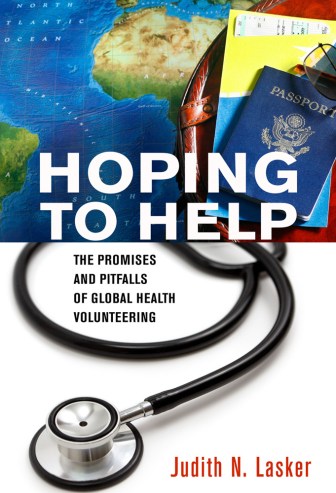
Book Release: Lasker’s “Hoping to Help: The Promises and Pitfalls of Global Health Volunteering”

80140100785730L.jpg

Image via Cornell UP website.

Released this January 2016 from Cornell University Press is Judith Lasker’s Hoping to Help: The Promises and Pitfalls of Global Health Volunteering (available for purchase here.) Lasker’s book examines the phenomenon of overseas medical volunteering, wherein individuals from wealthier countries travel for short periods to the developing world to offer humanitarian aid and medical services. These volunteers are sponsored by churches, non-profit organizations, or arrive in poorer countries via for-profit “voluntourism” companies that plan such travel.

Through participant observation, surveys, and interviews with volunteers, key figures in humanitarian organizations, and volunteer staff members native to developing nations, Lasker examines the impact of these ventures on host communities. She weighs present arguments that suggest that global health volunteering is a form of neo-colonialism, that this form of humanitarianism may cross ethical boundaries in the host community, and that volunteers’ need to “give back” may be otherwise misguided and harmful. Lasker places special emphasis on how volunteer organizations themselves benefit from the work of volunteers in developing countries. She likewise addresses whether or not these organizations’ objectives are truly responsive to the needs of the host community, or to what the host community identifies as a concern. She then weighs whether such aims place the volunteer’s experience ahead of the needs of the people who are the perceived recipients of aid.

Lasker’s text will be of equal interest to global health scholars and medical anthropologists and sociologists. Its attention to neo-colonialism and themes of globalization and power will likewise interest scholars who study global development and cross-cultural biomedicine.


About the author: Judith N. Lasker is N.E.H. Distinguished Professor of Sociology in the Department of Sociology and Anthropology at Lehigh University in Pennsylvania.

Issue Highlight Vol 40 Issue 1: Regulating Anger in Urban China

The March 2016 issue of Culture, Medicine & Psychiatry is here! Over the coming weeks, we will feature article highlights from a selection of the newest research published at our journal. To access the full issue, click here.

cards3

In today’s article highlight, we examine Jie Yang’s research in “The Politics and Regulation of Anger in Urban China” (accessible here.) Yang’s article ethnographically maps the connections between statewide therapeutic programs and the management and expression of anger amongst largely working-class, urban Chinese men and women.

Yang begins by noting that urban social workers and other clinicians place a strong emphasis on the treatment of negative psychosocial symptoms, and frequently relate poor physical health– as well as social unrest– to unmanaged expressions of anger. Their agenda reflects that of the Chinese state, which simultaneously values individuals’ happiness and pathologizes anger. Amongst the working class and the poor in China, however, some social ills which lead to detrimental emotional outbursts are indeed related to the state’s management of social life. Yang cites one example in which a Chinese man masterminded a bus explosion which resulted in numerous fatalities. His outburst was a heated response to the government, which repeatedly failed to approve his pension and dismantled his street stall: his only source of income. Thus anger proves to be a harmful, yet powerful, mechanism for the working class to vocalize frustrations with the government and injustices stemming from the failings of the state.

The author continues by describing a range of anger “genres” employed by the Chinese working class. These “genres” describe performative types of anger expression that have different roles depending on the nature of the injustice one is responding to. One form of expression, maije, is a form of public cursing– often on the street– to widely verbalize one’s frustrations and vulnerability due to poor working conditions. Another form, xiangpi
ren, refers to “a human punching bag,” or someone who does not outwardly respond to an injustice and seems to passively internalize their negative emotions. The advantage to this form, however, is that such individuals may be preparing for a specific opportunity to “rise up” in protest.

In addition to the array of expressions and forms that anger may take, Chinese individuals have an equally pluralistic selection of therapeutic interventions to manage or alleviate their anger. This includes Confucian, Daoist, Western, and folk Chinese remedies for psychological distress. Conversely, therapists who serve the state have social access to this range of modalities and psychological concepts, thus arming them with various mechanisms for managing and controlling “angry” individuals.

After exploring genres of anger in greater detail, both from the individual and clinical perspectives, Yang closes by positing that “the domestication of anger is key to sustaining
stability in the Changping factory and in China at large. It contributes to the relative
peacefulness in China amidst widespread socioeconomic transformation.” As therapists and state-employed clinicians seek to tame anger, so too do they attempt to recast anger as a personal expression of injustice rather than a social symptom of widespread unrest. Anger thus remains a prominent vehicle for the expression of individual as well as social injustice across a shifting socio-economic landscape.


Issue Highlight Vol 40 Issue 1: Depression, Gender & Power

The March 2016 issue of Culture, Medicine & Psychiatry has recently debuted. Over the coming weeks, we will feature article highlights from a selection of the newest research published at our journal. To access the full issue, click here.

cards3

This week’s article highlight examines Alex B. Nietzke’s piece “An Illness of Power: Gender and the Social Causes of Depression” (accessible here.) Nietzke argues that a mechanistic and biological model of depression overlooks the extent to which women across the world are frequently diagnosed with the disorder at a higher rate than men. When bioscience and biomedicine fail to attend to underlying social and gendered dimensions of depression as a diagnosis, the author holds, they are “silencing women” and “marginalizing” a discourse surrounding the problematic social power of the biomedical model.

The article opens with a review of the literature on medicalization, which describes the shift from a psychodynamic model (where external factors were typically considered the source of reactive mental distress) to a biopsychiatric one (where, given the development of medications for mental disorders, mental illness was increasing viewed as seated within the patient’s biology.) The DSM-III later “eliminated” the categories for “reactive” mental illness, and placed physical symptoms (like weight loss) alongside psychological ones (like feelings of hopelessness) such that both expressions of illness were physiologically equated to one another.

Upon biologizing symptoms, the causes of depression thus fall wholly within the realm of biomedicine to diagnose and to treat. This leads to a nearly unilateral assumption of control over depression by psychiatrists and clinicians, even if other individuals such as family and friends– and the patient herself– has insights into the social determinants of a psychological condition. Furthermore, when biomedicine interests itself only in the biological and not social basis of women’s mental illness, it delegitimizes the very roots of many women’s distress and reinforces their inability to verbalize forms of oppression. Nietzke thus adds that “what begins to emerge here is that the psychiatric disease model of depression may actually be disempowering women by legitimizing the pathologies of a social system of gender as it delimits one’s expression of suffering and testimony to its causes.”

When biopsychiatry quiets the discussion of social determinants of mental illness, so too does it lend power to the systems of oppression that enable women’s suffering to continue, and limits their ability to express their psychological state. Put another way, by biologizing rather than contextualizing depression, women are inherently marginalized because they may have few other recourses outside of biomedicine for ameliorating the psychological ramifications of social disenfranchisement. The “silencing” Nietzke cues in the early paragraphs of the article returns here, as the author reminds readers that biomedicine’s biologizing of depression may problematically close the conversation around the social situatedness of women’s psychological experience and social status.

Issue Highlight Vol 40 Issue 1: Hope, Despair, and Chronic Pain

The first 2016 issue of Culture, Medicine & Psychiatry has arrived! Over the coming weeks, we will feature article highlights from a selection of the newest research published at our journal. To access the full issue, click here.

cards3

In this week’s blog, we visit Eaves, Nichter, and Ritenbaugh’s article “Ways of Hoping: Navigating the Paradox of Hope and Despair in Chronic Pain” (accessible here.) The authors carried out a series of qualitative interviews with patients experiencing temporomandibular disorders (TMDs) throughout a clinical trial where these patients received traditional Chinese medical treatments (TCM.) The authors’ research with 44 patients in the clinical trial highlight the paradoxical nature of hope: that is, a tendency to both place faith in the possible efficacy of a treatment, while cautiously gauging these expectations to avoid feelings of despair should treatment fail to produce a positive result. The authors argue that hope serves as a complex placebo, in that while not itself being an active pharmaceutical or other intervention, it can have significant implications for a patients’ course of care.

Following a review of methodology and the theoretical basis of medical “hope,” the authors present a diverse array of examples from their interviews that illustrate the range of expectations, beliefs, and experiences of the chronic pain patients. For some patients, hope is secular: related to realistic treatment goals (such as a small reduction in overall pain), or to utopian ideas about the treatment’s future potential for other patients. For others, hope is an expression of spiritual faith, or a form of almost religious belief in the effectiveness of bioscientific breakthroughs, or even a belief that biomedicine has failed the patient and a remedy for their pain can only be found in other medical systems (like TCM.) Other patients described an embodied response to the treatment that, the authors comment, underscores the relationship between placebo and (psycho)somatic healing.

In all these examples, however, what is perennially apparent is the patients’ tenuous balancing of hope with tempered expectations for a cure. However it comes to be framed, hope both enhances and complicates the treatment of chronic pain. In some cases, hope acts as a “positive” placebo in that it bolsters the patients’ faith or trust in the potential (or even observable) efficacy of the treatment. In other instances, hope can prove to be a harmful placebo in that it may promise beneficial change and render any failing of an experimental treatment more troubling for the patient. Because hope offers such conflicting possibilities for patients’ satisfaction and trust in a treatment modality, it is essential for both anthropologists and clinicians to consider the cultural, cognitive, embodied, and religious frameworks in which a patient conceptualizes and subsequently approaches treatment.

Book Releases: New Texts on Sex Tourism, Biotechnology

This week, we are featuring two book releases from the University of Chicago Press. The first book is Gregory Mitchell’s Tourist Attractions: Performing Race and Masculinity in Brazil’s Sexual EconomyThis new book, published in December 2015, presents an ethnographic perspective on gay sex tourism in Rio de Janeiro, Salvador de Bahia, and the Amazon. Mitchell examines issues of race, masculinity, and sexual identity amongst both sex workers and sex tourists. In particular, he asks how men of various racial, cultural, and national backgrounds come to understand their own identities and one another’s within this complex series of commercial, sexual, and cultural exchanges. Details about the book can be found here.

About the author: Gregory Mitchell is assistant professor at Williams College, where he teaches in the Women’s, Gender and Sexuality Studies program and in the Department of Anthropology and Sociology.

9780226309101

Image via UC Press website

The second book, debuting in September 2016, is Hallam Stevens’ Biotechnology and Society: An Introduction (cover image not yet available.) Each chapter of the text will address a different topic in the cultural and historical study of biotechnology, from gene patents, to genetically-modified foods, to genetic testing and disability, assisted reproductive technologies (ARTs), and the intersections of race, diversity, and biotechnologies. The text will be of equal interest to scholars of science and technology studies (STS), posthuman theory, and the history and culture of medical technology. Details about the book can be found here.

About the author: Hallam Stevens is assistant professor at Nanyang Technological University in Singapore. He teaches courses in the history of the life sciences and information technologies. He is the author of Life Out of Sequence: A Data-Driven History of Bioinformatics, also available here via the University of Chicago Press.


Spring 2016 Blog Hiatus & Update

cards

This week, we are taking a one-week Spring hiatus on the blog. In our coming installments, we will return to highlight articles published in the first issue of Culture, Medicine & Psychiatry for 2016. You can access the full March 2016 issue here from our publisher’s website.

As always, we continue to accept guest submissions to our blog showcasing research and recent projects by our readers. We are also pleased to invite authors of newly-published books in medical anthropology, sociology, history of medicine, and medical humanities to contact us with publication information so that these new works can be featured here on the blog. For details on guest submissions and book features, please contact our social media editor Julia Knopes at jcb193@case.edu.

In the meantime, we look forward to sharing previews of the latest research in our journal in the coming weeks.

Best wishes from the Editorial Staff at Culture, Medicine & Psychiatry

From the Archive: Revisiting Neurasthenia in Japan

cards3

In 1989, our June special issue centered on the theme of neurasthenia: an illness category made most recognizable in current medical anthropology by Arthur Kleinman in his book Social Origins of Stress and Disease: Depression, Neurasthenia, and Pain in Modern China (1988.) Neurasthenia is a flexible diagnosis that encompasses a set of broad psychosomatic symptoms: fatigue, emotional unease, irritability, and bodily pains. It has fallen in and out of favor throughout history, yet in China and other Asian countries, it continues to be used to describe psychiatric distress. The special issue was published during the final year of Kleinman’s tenure as the editor-in-chief of Culture, Medicine & Psychiatry, and represents the culmination of research carried out throughout Asia on the diagnosis and treatment of the illness. You can access the full issue here.


The focus of this From the Archive feature is Tomonori Suzuki’s article on the diagnosis and treatment of neurasthenia in Japan. Unlike China, where neurasthenia continued to be clinically relevant through Kleinman’s research in the 1980s-1990s, the disease category fell out of its original use in Japan following World War II. Suzuki writes that this shift was not directly due to changes in Western psychiatry, in which European and American physicians replaced ‘neurasthenia’ with new categories under the umbrellas of neuroses, depression, or anxiety. These shifts may have influenced psychiatric disease models elsewhere, but in Japan, neurasthenia was instead rebranded and treated via a different historical pathway.

Morita, a renowned Japanese psychiatrist who lived in the late nineteenth and early twentieth centuries, was the first to suggest that neurasthenia was not exogenous: in other words, it did not stem from social disorder on the outside, but from psychological unrest within the mind. His therapeutic regimen for this newly-conceived “neurasthenia” became widely adopted, even into the contemporary age. Thus neurasthenia– while formally removed from the diagnostic lexicon– took a new form with an accompanying treatment as proposed by Morita.

Following WWII, when Japanese medical practitioners did begin to employ American principles of psychiatry, clinicians began to replace “neurasthenia” with the new category “neurosis.” Although this aligned with shifts in the nature of treatment that occurred in other places where biomedicine was practiced, Japan was unique in that many patients labeled as neurotic nevertheless sought out Morita therapy: a treatment initially designed to ameliorate an illness closer to the original form of neurasthenia. Some patients also opted for Naikan therapy, another indigenous psychotherapy based on Buddhist principles similar to those woven into the practice of Morita therapies. While the importation of “Western” diagnoses of neurosis brought with it accompanying forms of therapy native to Europe and North American, Morita and Naikan proved to be durable therapies equipped to treat Japanese patients with illnesses somewhere within the neuroses-neurasthenia spectrum.

Although the author notes that the use of these therapies (in the 1980s) could decline as Western models of psychotherapy continue to spread, Suzuki’s research into Japanese psychiatry practice revealed that many patients continued to seek out indigenous Morita and Naikan therapies. The two treatments’ focus on inner self-mastery, connectedness to the social and physical worlds, and the minimization rather than elimination of symptoms echo native Japanese spiritual beliefs, making these therapies legitimate alternatives to imported models of treatment. In sum, though the category for neurasthenia changed across time, foreign models for the conceptualization of mental illness did not always neatly correspond to foreign models for treatment. For the Japanese, local therapies such as Morita and Naikan proved to be quite resilient, as the therapies adapted to address psychiatric disorders despite the repackaging of mental illness into new forms.


2016 Preview: Books Received at the Journal

First made available online last month, Culture, Medicine & Psychiatry has released its most recent lists of books received for review at the journal (which you can access on our publisher’s website at this link.) These books include Carlo Caduff’s The Pandemic Perhaps: Dramatic Events in a Public Culture of Danger and Janis Jenkins’ Extraordinary Conditions: Culture and Experience in Mental Illness. Last year, we featured Caduff’s text (here) and Jenkin’s text (here) in book release features here on the blog.

The journal has also received the following two books for review. Here are the two releases:

15407

Image via UPenn Press website

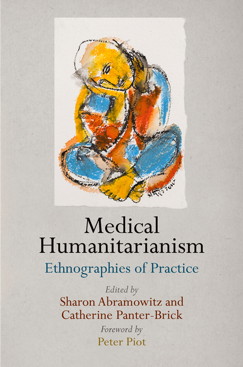
New from the University of Pennsylvania Press is a collection of essays entitled Medical Humanitarianism: Ethnographies of Practice (available here.) Edited by Sharon Abramowitz and Catherine Panter-Brick, with a foreword by Peter Piot, the book explores the experiences of health workers and other practitioners who deliver humanitarian medical aid throughout the world. The book promises a “critical” yet “compassionate” account of humanitarian projects spanning Indonesia, Ethiopia, Haiti, Liberia, and other nations.

80140100970020M

Image via Cornell UP website.

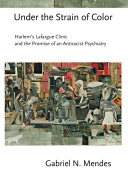
From Cornell University Press comes Gabriel Mendes’ Under the Strain of Color:
Harlem’s Lafargue Clinic and the Promise of an Antiracist Psychiatry (available here.) This historical text examines a mental health clinic in the 1940s established to treat psychiatric complaints amongst a primarily black, urban, underserved population. Unlike other treatment centers for mental illness at the time, the Lafargue Clinic was unique in its emphasis on the medical as well as the social contexts in which its patients experienced distress. The clinic challenged existing notions of “color-blind” psychiatry and became both a scientific and equally political institution, highlighting the “interlocking relationships” between biomedicine, the state, racial inequity, and community-based health care.

In the News: Telemedicine in the United States

cropped-2009cover-copy

The intersections between technology, medicine, and health are a frequent site of discussion at Culture, Medicine & Psychiatry. In our last issue of 2015, for instance, Yael Hashiloni-Dolev[1] examined the role of new medical technologies that enable posthumous reproduction, while Petersen and Traulsen[2] shed light on the nuanced social uses of psychoactive medications amongst university students. These articles underscore the centrality of technology in everyday human health behaviors, and on the cultural meaning of these new tools in local medical landscapes.

Another technological innovation altering the social world of medicine—one making headlines in recent months—is telemedicine. In the Journal of the American Medical Association[3] (JAMA), telemedicine has been described as “the use of telecommunications technologies to provide medical information and services,” often a shorthand “for remote electronic clinical consultation” via phones and internet applications.

In the December 2015 AARP Bulletin, author Charlotte Huff[4] remarked that over 1 million patients will use telemedicine services this year, and remote access to physicians by phone, video chat, and email is more and more commonly covered by American employers’ health insurance packages. A Reuters article[5] adds that in Texas, a telemedicine company is working to block a state law that would require physicians to see a patient in-person before consulting with them via phone, email, or other means. And in the New York Times[6], a physician observed that telemedicine may prove a useful tool for children and adolescents: many of whom have grown up in a digital culture of “oversharing” and would not balk at texting their physicians images of strange rashes or lesions on their bodies. As this new tool of health care delivery is negotiated in different societal arenas, so too are its implications increasingly worthy of anthropological attention.

Telemedicine is altering the social fabric of medicine in a number of significant ways. Here, we will outline two potential outcomes of telemedicine on medical exchanges facilitated by technology. First, telemedicine extends the professional reach of biomedical clinicians. Areas where biomedical care is inaccessible, or where only indigenous medical systems exist, may now fall under the electronic eye of a faraway practitioner. This has extraordinary consequences for the ubiquity of biomedicine and the consolidation of biomedical power. Second, and rather conversely, telemedicine empowers the patient in the clinical encounter. Because the physician or clinician is not physically present to examine the patient’s body, the patient themself is the one who touches a swollen throat, or flexes a stiff joint, and relays their response through phone or web camera. In sum, the patient gains greater control over bodily (and verbal) narratives that, unlike an in-person exam, the clinician does not have total access to.

The rise of telemedicine speaks to medical anthropologists, certainly, but it also presents a fascinating case more broadly for science and technology theorists and scholars in health communication. As the topic of telemedicine continues to capture the interest of medicine and the media, so too will it fall under the consideration of researchers piecing together the networks that bring patients and their caregivers together in novel ways.

[1] http://link.springer.com/article/10.1007/s11013-015-9447-6

[2] http://link.springer.com/article/10.1007/s11013-015-9457-4

[3] http://jama.jamanetwork.com/article.aspx?articleid=386892

[4] http://www.aarp.org/health/conditions-treatments/info-2015/telemedicine-health-symptoms-diagnosis.html#slide1

[5] http://www.reuters.com/article/health-case-to-watch-teladoc-idUSL1N14H0CT20151228

[6] http://well.blogs.nytimes.com/2016/01/18/using-phones-to-connect-children-to-health-care/?ref=health


Book Release: Tomes’ “Remaking the American Patient”

9781469622781

Images via UNC Press website

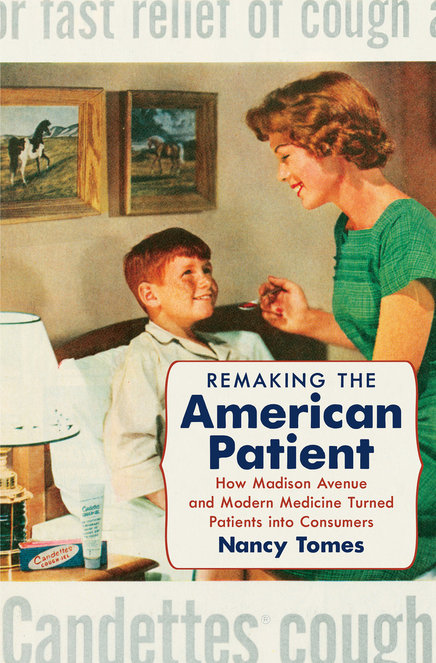
Released in January 2016 from the University of North Carolina Press is Nancy Tomes’ Remaking the American Patient: How Madison Avenue and Modern Medicine Turned Patients into Consumers. Through historical and cultural analysis, Tomes illuminates the threads between public relations and marketing in medicine, asking throughout: how have patients in the United States come to view health care as a commodity to be “shopped” for? What connections are shared between the history of medicine and the growth of consumer culture? Likewise, Tomes investigates what it means to be a “good patient” in this system of marketed care, and how “shopping” for care can both empower and disorient patients in the contemporary age. She also reviews the resistance, and ultimate yielding, of the medical profession to this model of care seeking. The book was recently reviewed in the New York Times (read the article here.)

The book will prove insightful for both historians of medicine and medical anthropologists who study the political-economic landscape of biomedicine and patienthood in the United States. It will also speak to conversations in bioethics about patient autonomy, choice, and medical decision-making.

About the Author

Nancy Tomes serves as professor of history at Stony Brook University. She is also the author of The Gospel of Germs: Men, Women, and the Microbe in American Life, published by Harvard University Press (details here.)

Have you published a recent book in medical anthropology, history of medicine, social medicine, or medical humanities? Email our blog editor (Julia Knopes) at jcb193@case.edu with a link to the book’s page at the academic publisher’s website, and we will feature it here.