Interview With Henry J. Whittle

The next few months we’ll be highlighting authors who have published in Culture, Medicine, and Psychiatry.
Doctoral researcher, Department of Anthropology and Sociology & Centre for Anthropology and Mental Health Research in Action (CAMHRA), SOAS University of London

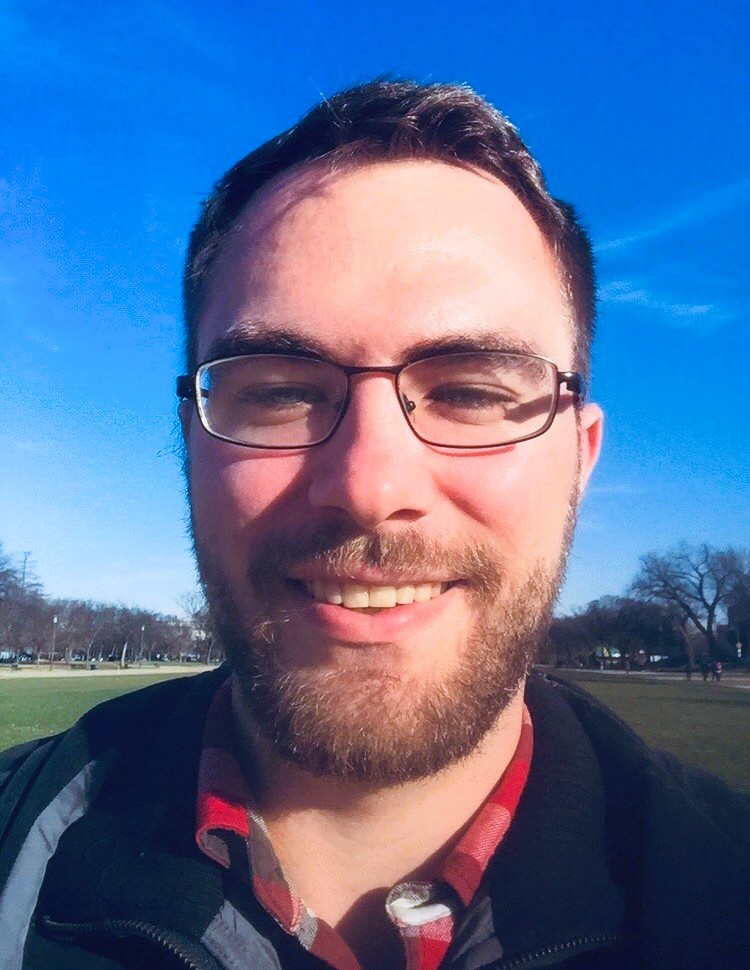
Dr Henry Whittle is a psychiatrist and anthropologist in training. He began his research career using mixed methods to study food insecurity, before pivoting towards mental health rehabilitation after specialising in psychiatry. Following further training in medical anthropology, he is currently working towards a PhD at SOAS University of London.

What is your article Ronaldo on the Clapham Omnibus: Complex Recoveries in Complex Psychosis about?

In the article, I think about what we mean by recovery in psychosis. I ask how it complicates our current understanding of recovery if we consider the experiences of people with the most complex forms of psychosis. These people are inadvertently excluded from much debate on this topic. Ethnography is one of the few ways that their experiences can be incorporated meaningfully. Drawing on six months of ethnography on an inpatient psychiatric rehabilitation unit, the article centres around a man I call Shepherd, whose journey to becoming a more confident, calmer, happier person looked very different to most portraits of recovery in the existing literature. This is important because our understanding of recovery shapes mental health policy in material ways. If we oversimplify recovery by missing people like Shepherd, we risk structurally undermining the interventions—including inpatient rehabilitation—that may be most effective in supporting them to live well.

Tell us a little bit about yourself and your research interests.

I am a psychiatrist and anthropologist, still working through my training in both disciplines. I currently work in an Early Intervention in Psychosis service in London and I will be part of the new Centre for Anthropology and Mental Health Research in Action (CAMHRA) at SOAS University of London. My research interests broadly relate to the social, cultural, and structural influences on mental health care and recovery, particularly for people living with more severe and enduring mental illnesses. Above all, I am an advocate for using applied social science as a basis for dialogue with service users, clinicians, practitioners, relatives, carers, and everyone else invested in improving mental health services.

What drew you to this project?

I have been intrigued by inpatient units ever since I first started working in psychiatry. Even though things are a little different now from how they were in Goffman’s time, the ‘total institution’ was still the main conceptual apparatus I received from my professional training to think through these places. Contributing towards addressing that gap, even slightly, was part of my motivation for taking on this project. The other part was that I have always been drawn to working with people with complex psychosis. I have learned so much from them, mainly about the limits of my own frameworks and my own imagination, but also about the complex, conflicting, and sometimes unexpected roles that institutions play in their lives. This is poorly captured in a clinical evidence base that, on the whole, tends to privilege streamlined understandings and analytic closure. I thought that ethnography could be particularly useful here—to help us hold onto that complexity as we make pragmatic decisions about care.

What are you reading, listening to, and/or watching right now? (Doesn’t have to be anthropological!)

Music and sport are big parts of my life. Both were important for this study. I bonded with Shepherd over a shared love of sport, and when I think of Apollo Ward I mainly think of playing pool and taking requests to play music on my phone—Orbital, Ed Sheeran, the Darkness, and the Rolling Stones were the soundtrack to this study. So now I’m watching my beloved Liverpool play football again after celebrating England Lionesses win the European Championship, and I’m listening to a lot of exciting British and Irish post-punk bands—Big Special, Wet Leg, and Sprints at the moment. I also recently started reading The Brown Sahib Revisited by Tarzie Vittachi, a searing takedown of the legacies of British colonialism in South Asia that was a wonderful gift given to me by my mentor and friend Sushrut Jadhav.

If there was one takeaway or action point you hope people will get from your work, what would it be?

That we need to take people’s ambivalent feelings and contradictory dispositions towards mental health services seriously in imperfect systems, even if it makes us uncomfortable. These contradictions may be our only glimpses of the life-sustaining roles that some institutions play in people’s lives. That is not to say that we should avoid radical critique, just that we need to proceed with caution. It is easy to miss complexity in this field, and missing complexity has material consequences that tend to impact the most marginalised people disproportionately.

Interview With Jennifer Karlin

The next few months we’ll be highlighting authors who have published in Culture, Medicine, and Psychiatry.

Associate Professor, University of California-San
Francisco

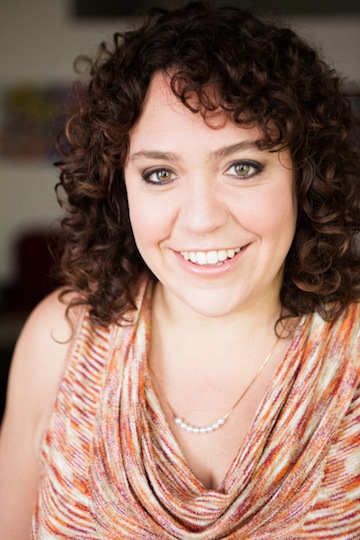
Dr. Jennifer Karlin is an Associate Professor at UCSF. With fellowship
training in family planning and clinical medical ethics and a PhD in anthropology and history of medicine, Dr. Karlin is a researcher and full-scope family physician whose work aims to find ways to empower people through their healthcare experiences.

What is your article “Intimacy, Anonymity, and “Care with Nothing in the Way” on an Abortion Hotline” about?

The article explores the operations and emotional dynamics of a reproductive health hotline. It examines how the hotline offers intimate, yet anonymous support to individuals seeking information about miscarriages and abortion. This support system is characterized by a non-judgmental and compassionate approach, providing “care with nothing in the way.” The hotline serves as a crucial lifeline, offering both emotional support and vital information during a potentially distressing time for callers. Despite the anonymity, the interactions create a safe and supportive environment where callers can freely express their concerns and receive guidance without the fear of stigma or judgment. Volunteers on the hotline often find the experience more rewarding and impactful compared to in-clinic care, as they can connect deeply with callers in a unique and supportive manner without having the regulatory climate that often can cause additional trauma to people seeking in-person care through more formal networks.

Tell us a little bit about yourself and your research interests.

As a board-certified family physician and fellowship-trained family-planning specialist, my research bridges clinical practice with anthropological inquiry to enhance person-centered care for historically underserved populations. My background in anthropology and history of medicine informs my understanding of how social, political, and institutional structures shape health care experiences. I investigate a range of topics, including rheumatoid arthritis, grief, end-stage renal disease, reproductive and sexual health, and community engagement in medical research. My work emphasizes ethically informed care, empowering individuals through biopsychosocial analysis, patient-care team dynamics, and structural aspects of health systems. In reproductive health, I focus on de-medicalizing contraceptive methods and abortion care to reduce stigma. Additionally, I examine access to care for vulnerable populations and the incorporation of DEI initiatives in medical education. Through interdisciplinary research, I aim to improve complex disease management and promote equitable health care by challenging and reimagining traditional norms and structures.

What drew you to this project?

I was inspired by this project because of my long-standing interest in understanding and improving person-centered care for historically underserved populations. This was a natural field site to explore my commitment to de-medicalized and de-stigmatized care. This hotline offered an invaluable opportunity to examine how intimate, anonymous support can profoundly impact individuals seeking abortions, providing insights into creating more compassionate and accessible reproductive health services in all settings. Additionally, my interest in how social, political, and institutional structures affect health care experiences motivated me to think about how hotlines can serve as crucial resources within these contexts.

What are you reading, listening to, and/or watching right now? (Doesn’t have to be anthropological!)

I just started reading ‘High Magick’ by Damien Echols, which explores the spiritual practices Echols
developed while wrongfully imprisoned for murder. A marathon swim group recommended it to me for
its mental training techniques, as I am currently preparing for a 21-mile open water swim.

If there was one takeaway or action point you hope people will get from your work, what would it be?

A main action takeaway from the paper “Intimacy, Anonymity, and ‘Care with Nothing in the Way’ On an
Abortion Hotline” is the recommendation to support and expand support for informal structures of care.
The hotline provides a crucial space for individuals to receive compassionate, non-judgmental support
and guidance in a stigmatized and often challenging context. The anonymity and intimacy offered by
these services can significantly improve the quality of care and emotional support for those pregnant
people, emphasizing the importance of such resources in reproductive health care systems.

Other places to connect:

Website

Linkedin

Interview with Sandrine Vollebregt

The next few months we’ll be highlighting authors who have published in Culture, Medicine, and Psychiatry.

Sandrine Vollebregt, MD, is affiliated with Doctors of the World in Amsterdam, the Netherlands. Sandrine is a 30-year old medical doctor from the Netherlands, based in Amsterdam. She has worked in a primary health clinic for refugees on the Greek island Samos, and in acute psychiatry and the emergency department in the Netherlands. In her free time, she likes to listen to podcasts, cycle and write. 

What is your article Help-Seeking Undocumented Migrants in the Netherlands: Mental Health, Adverse Life Events, and Living Conditionsabout?

In this article we looked at how many undocumented migrants visiting a low-threshold free non-governmental health service had mental health problems. Undocumented migrants are a diverse group comprised of amongst others rejected asylum seekers or labor migrants without a visa. They do not exist officially, cannot work legally, often have poor and uncertain housing conditions, and have in practice a restricted access to health care due to logistical and cultural barriers.

Tell us a little bit about yourself and your research interests.

I am 30 years old and I live in Amsterdam, the Netherlands, in a living community. I am a medical doctor and I have a specific interest in psychiatry. Currently, I am doing a course on global health and tropical medicine at the Royal Tropical Institute. I am very interested in migrant and refugee health, as I believe dealing with migration in a way that respects human rights is one of the great issues of our time. I hope that studying the health of migrants, and looking at how this connects to migration policies, can contribute to this discussion in a positive way by providing evidence based arguments.

What drew you to this project?

I was still a medical student when I saw a call for a student to analyze data on mental health of undocumented migrants in the Netherlands. At the time I just came back from volunteering for the first time in a refugee camp on the island Lesbos in Greece, and I was shocked by the conditions that refugees live in at the borders of Europe. I wanted to learn more about the situation of refugees and undocumented migrants in the Netherlands, my own country. When I started working on this study, I also became a volunteer doctor in a mobile clinic for undocumented migrants that visits certain neighborhoods, squats and shelters. By doing this, I gained deeper connection to and understanding of the people I was studying.

What was one of the most interesting findings?

Mental health problems are very common amongst the group of undocumented migrants we studied. In our study, 81% of the people scored above a threshold for common mental disorders. Common mental disorders are anxiety disorder, depression and psychosomatic disorders. We saw that having traumatic experiences was strongly linked to mental health issues and also to psychotic phenomena, like hearing voices. The traumatic experiences that were documented in the medical files were often severe, like torture and rape.

What are you reading, listening to, and/or watching right now?

I am currently reading a Dutch book of Lieke Marsman which would in English be called ‘The opposite of a human being’, a poetic novel on climate change. I just started the podcast ‘Burn It Down’, an American podcast about a discriminatory and masculine culture at the Amsterdam Fire Department.

If there was one takeaway or action point you hope people will get from your work, what would it be?

Mental health problems are common in undocumented migrants. Health care professionals should be aware of this, explore problems actively and refer to psychological help when necessary. But on a deeper level, I hope that we start asking each other critical questions about how our policies shape the health of undocumented migrants.

Thank you for your time!


Other ways to connect:
LinkedIn

Issue Highlight Vol 40 Issue 1: Depression, Gender & Power

The March 2016 issue of Culture, Medicine & Psychiatry has recently debuted. Over the coming weeks, we will feature article highlights from a selection of the newest research published at our journal. To access the full issue, click here.

cards3

This week’s article highlight examines Alex B. Nietzke’s piece “An Illness of Power: Gender and the Social Causes of Depression” (accessible here.) Nietzke argues that a mechanistic and biological model of depression overlooks the extent to which women across the world are frequently diagnosed with the disorder at a higher rate than men. When bioscience and biomedicine fail to attend to underlying social and gendered dimensions of depression as a diagnosis, the author holds, they are “silencing women” and “marginalizing” a discourse surrounding the problematic social power of the biomedical model.

The article opens with a review of the literature on medicalization, which describes the shift from a psychodynamic model (where external factors were typically considered the source of reactive mental distress) to a biopsychiatric one (where, given the development of medications for mental disorders, mental illness was increasing viewed as seated within the patient’s biology.) The DSM-III later “eliminated” the categories for “reactive” mental illness, and placed physical symptoms (like weight loss) alongside psychological ones (like feelings of hopelessness) such that both expressions of illness were physiologically equated to one another.

Upon biologizing symptoms, the causes of depression thus fall wholly within the realm of biomedicine to diagnose and to treat. This leads to a nearly unilateral assumption of control over depression by psychiatrists and clinicians, even if other individuals such as family and friends– and the patient herself– has insights into the social determinants of a psychological condition. Furthermore, when biomedicine interests itself only in the biological and not social basis of women’s mental illness, it delegitimizes the very roots of many women’s distress and reinforces their inability to verbalize forms of oppression. Nietzke thus adds that “what begins to emerge here is that the psychiatric disease model of depression may actually be disempowering women by legitimizing the pathologies of a social system of gender as it delimits one’s expression of suffering and testimony to its causes.”

When biopsychiatry quiets the discussion of social determinants of mental illness, so too does it lend power to the systems of oppression that enable women’s suffering to continue, and limits their ability to express their psychological state. Put another way, by biologizing rather than contextualizing depression, women are inherently marginalized because they may have few other recourses outside of biomedicine for ameliorating the psychological ramifications of social disenfranchisement. The “silencing” Nietzke cues in the early paragraphs of the article returns here, as the author reminds readers that biomedicine’s biologizing of depression may problematically close the conversation around the social situatedness of women’s psychological experience and social status.

Issue Highlight Vol 40 Issue 1: Hope, Despair, and Chronic Pain

The first 2016 issue of Culture, Medicine & Psychiatry has arrived! Over the coming weeks, we will feature article highlights from a selection of the newest research published at our journal. To access the full issue, click here.

cards3

In this week’s blog, we visit Eaves, Nichter, and Ritenbaugh’s article “Ways of Hoping: Navigating the Paradox of Hope and Despair in Chronic Pain” (accessible here.) The authors carried out a series of qualitative interviews with patients experiencing temporomandibular disorders (TMDs) throughout a clinical trial where these patients received traditional Chinese medical treatments (TCM.) The authors’ research with 44 patients in the clinical trial highlight the paradoxical nature of hope: that is, a tendency to both place faith in the possible efficacy of a treatment, while cautiously gauging these expectations to avoid feelings of despair should treatment fail to produce a positive result. The authors argue that hope serves as a complex placebo, in that while not itself being an active pharmaceutical or other intervention, it can have significant implications for a patients’ course of care.

Following a review of methodology and the theoretical basis of medical “hope,” the authors present a diverse array of examples from their interviews that illustrate the range of expectations, beliefs, and experiences of the chronic pain patients. For some patients, hope is secular: related to realistic treatment goals (such as a small reduction in overall pain), or to utopian ideas about the treatment’s future potential for other patients. For others, hope is an expression of spiritual faith, or a form of almost religious belief in the effectiveness of bioscientific breakthroughs, or even a belief that biomedicine has failed the patient and a remedy for their pain can only be found in other medical systems (like TCM.) Other patients described an embodied response to the treatment that, the authors comment, underscores the relationship between placebo and (psycho)somatic healing.

In all these examples, however, what is perennially apparent is the patients’ tenuous balancing of hope with tempered expectations for a cure. However it comes to be framed, hope both enhances and complicates the treatment of chronic pain. In some cases, hope acts as a “positive” placebo in that it bolsters the patients’ faith or trust in the potential (or even observable) efficacy of the treatment. In other instances, hope can prove to be a harmful placebo in that it may promise beneficial change and render any failing of an experimental treatment more troubling for the patient. Because hope offers such conflicting possibilities for patients’ satisfaction and trust in a treatment modality, it is essential for both anthropologists and clinicians to consider the cultural, cognitive, embodied, and religious frameworks in which a patient conceptualizes and subsequently approaches treatment.

Book Release: Jenkin’s “Extraordinary Conditions: Culture and Experience in Mental Illness”

Via UC Press website

Via UC Press website

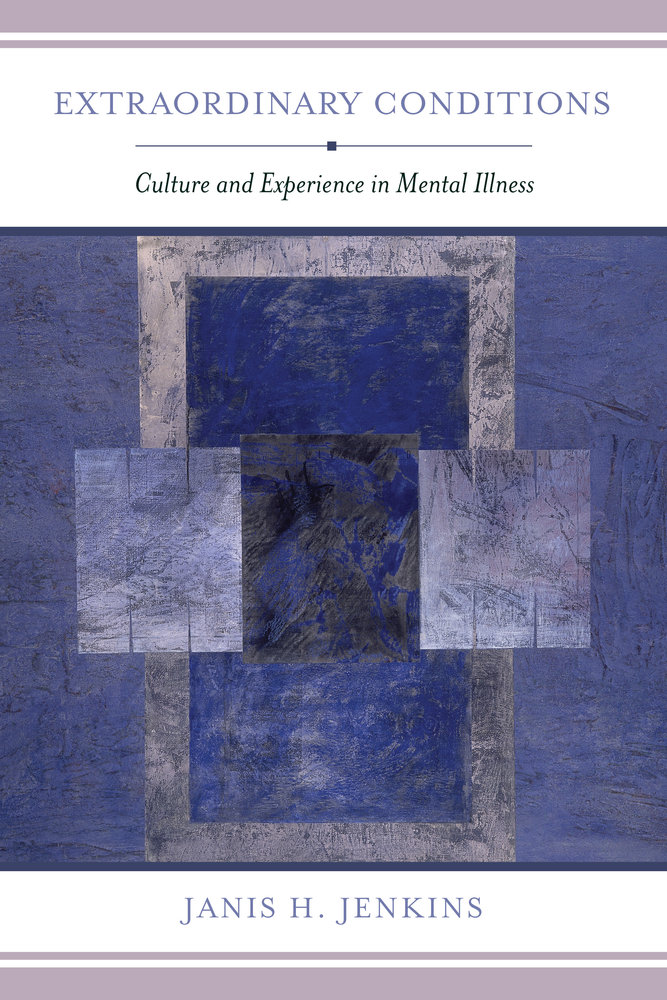
Out this August 2015 from the University of California Press is Janis H. Jenkin’s Extraordinary Conditions: Culture and Experience in Mental Illness. This ethnographic text explores the lives of patients of diverse ethnic and cultural backgrounds experiencing trauma, depression, and psychosis, taking into account the identity, self, desires, gender, and cultural milieu of the participants. Jenkins’ text pays special attention to the reduction of the severely mentally ill to a subhuman status, and the nature of this social repression.

Jenkins argues for a new, dynamic model of mental illness as a struggle rather than a constellation of discrete symptoms, noting that such a model should consider the ways that culture is implicated in mental illness experience from onset through recovery. The book posits that inclusion of culture into the clinical practice of psychiatry is crucial to the successful treatment of patients, and that anthropologists must not only consider the normative, day-to-day lives of participants but also the “extraordinary” and uncommon conditions regularly faced by those with mental illness.

This book will be of interest to psychological and psychiatric anthropologists, as well as those studying mental health care delivery systems. It will also shed light on medical narratives in mental health, and on generating new theories of human experience and medicalization.

For more information about this book, click on the publisher’s website here: http://www.ucpress.edu/book.php?isbn=9780520287112