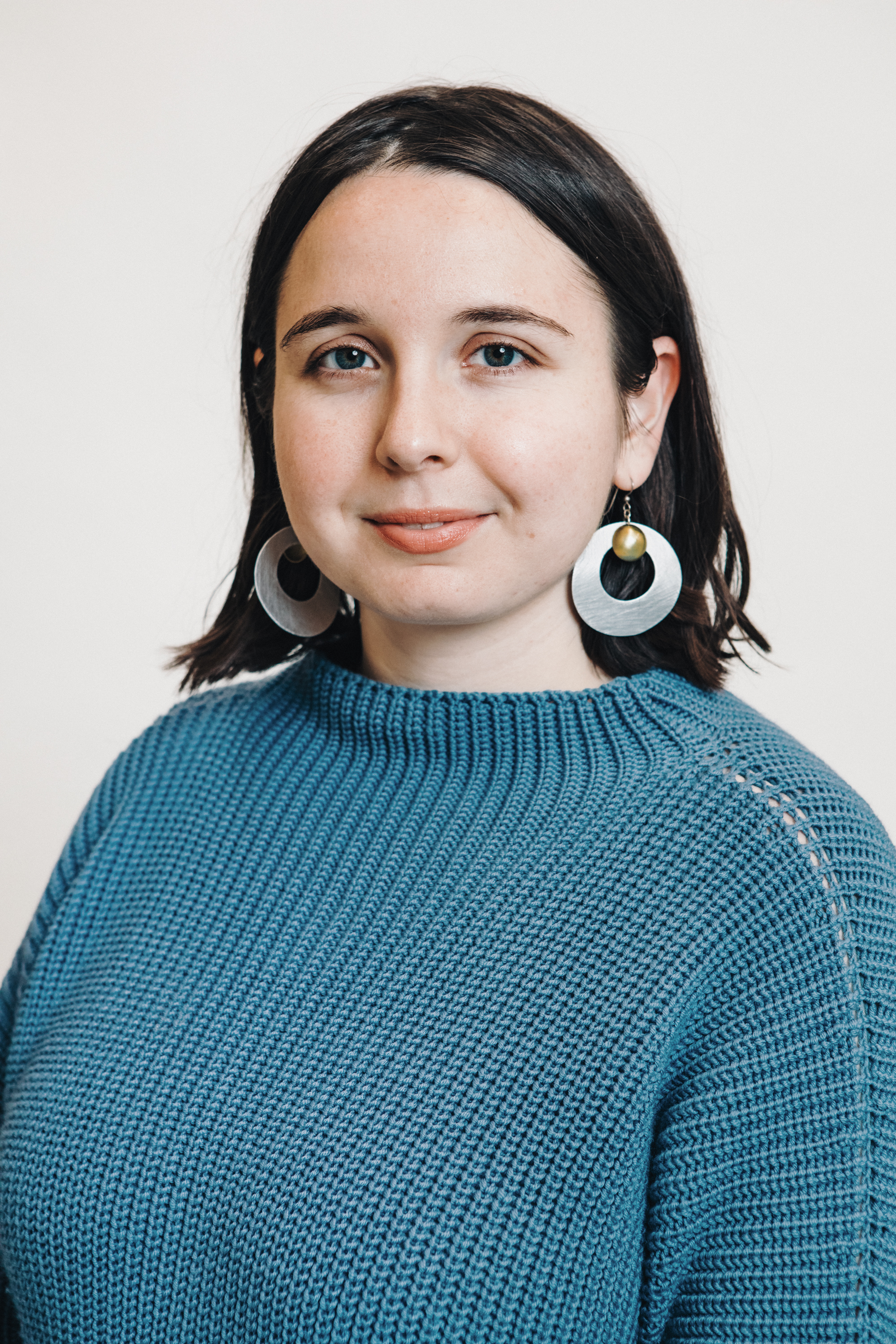
Interview With Ángela Cifuentes Astete

The next few months we’ll be highlighting authors who have published in Culture, Medicine, and Psychiatry.

Professor, Department of Humanistic Studies, Universidad Técnica Federico Santa María, Santiago, Chile. Associate researcher, Transdisciplinary Laboratory on Social Practices and Subjectivity (LaPSoS), Faculty of Social Sciences, Universidad de Chile. External member, Medical Anthropology Research Center (MARC), Universitat Rovira i Virgili, España

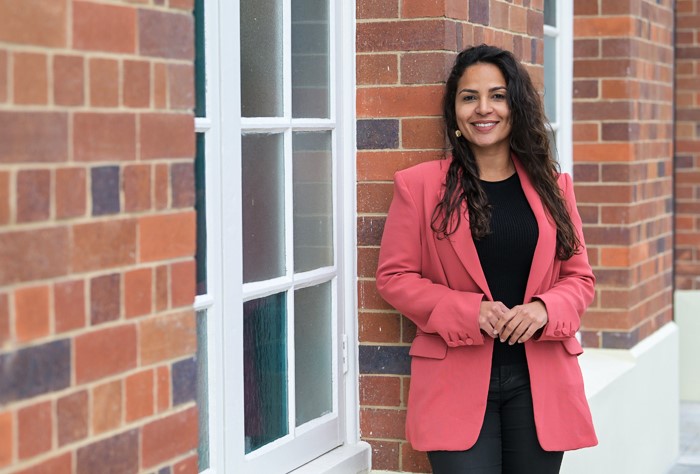
Ángela Cifuentes is a transdisciplinary researcher, clinical psychologist and psychoanalyst, holding PhDs in Social Sciences and in Medical Anthropology and Global Health. In recent years, she has focused on exploring experiences of anxiety, forms of affectation, and mental health care practices in contemporary Chilean universities shaped by neoliberal logic.

What is your article “The University Lives Anxiety and De-pression”: Diagnostic Uses and Affective Negotiations in Mental Health Care Services for University Students in Chile” about?

In this article, I explore how mental health problems are experienced and named in Chilean universities, especially in contexts marked by competition, performance, and inequality. Based on interviews I conducted with students and mental health professionals across three types of institutions, I analyze the everyday uses of diagnoses like “anxiety” and “depression.” I show that, both for students and for professionals, these diagnoses do not necessarily reflect clinical illnesses but often serve as ways of naming forms of distress tied to the demands of academic life. In many cases, they allow students to access institutional support or justify difficult decisions, such as taking a break or changing degrees. I argue that these diagnostic uses are also affective negotiations in response to pressures of academic performance and social adjustment, and they open space for imagining alternatives in the face of failure. Mental health in the university thus emerges as a complex, contested, and constantly shifting field.

Tell us a little bit about yourself and your research interests.

My experience as a clinical psychologist and psychoanalyst in various public and private mental health institutions has shaped a critical lens on experiences of suffering, affects, and the modes of management and care within institutions, leading me to focus on their political, cultural, and socio-historical dimensions. I am interested in generating knowledge that enables a deeper understanding of complex phenomena and contributes to social transformation. Currently, I am particularly interested in continuing research on university mental health, especially how global mental health discourses are locally reconfigured in Chilean universities in the post-pandemic context, exploring the affects, interdependencies, and technical mediations that shape students’ everyday care practices.

What drew you to this project?

The article is based on part of the findings from my doctoral research. Initially, the project aimed to study so-called ‘anxiety disorders’ in the context of public health in Chile. However, during the course of my doctoral studies, various expressions of distress erupted in Chilean universities: first, in May 2018, feminist protests against abuse and gender-based violence within universities; and then, in April 2019 (just a few months before the ‘chilean social uprising’), protests demanding greater access to mental health treatment services in universities. In those protests, student banners—echoed in the title of my article—declared that ‘at university we live anxiety and de-pression.’ This shifted my attention toward the use of mental health language in expressions of discontent, the institutional management of anxious affects, and its relationship to performance demands in universities.

What are you reading, listening to, and/or watching right now? (Doesn’t have to be anthropological!)


This year, I’ve immersed myself in the work of Ursula K. Le Guin, fascinated by her ability to imagine alternative forms of life, relationships, and vital persistence. Her literature has become a source of inspiration for rethinking research as a political gesture. After reading several of her science fiction novels, I’ve now begun reading the fantasy saga “The Earthsea Cycle” with my daughter. Musically, I tend to move between very different registers — from dense, dark sounds to fusions that open up to something more hopeful. Lately, while working, I’ve been listening a lot to Tigran Hamasyan, an Armenian jazz pianist whose music helps me stay grounded and focused. On screen, I’m watching the final season of “The Handmaid’s Tale”.

If there was one takeaway or action point you hope people will get from your work, what would it be?

The main conclusion I aim to convey through my work is that mental health in university settings cannot be understood or addressed solely through reductionist and biomedical perspectives—nor can it be fully captured by interpretations that frame it exclusively as a form of inescapable social control. My research shows that while diagnoses and expressions of distress often involve individualized uses, they also function as affective languages and negotiation strategies in response to the demands of neoliberal academia. The key takeaway I propose is to rethink university mental health as a situated, collective, and political issue that reflects structural forms of exclusion, precarity, and inequality. It is urgent that public policies and institutional interventions acknowledge this pragmatic-political dimension of diagnoses, and move toward co-constructed strategies that do not reduce the complexity of student suffering to the private or clinical realm, but instead open up spaces for listening, recognition, and transformation of the structural conditions that produce it.

Other places to connect:

Website

Linkedin

Interview With Talia S. Katz, PhD

The next few months we’ll be highlighting authors who have published in Culture, Medicine, and Psychiatry.

Assistant Professor of Israel Studies, State University
of New York (SUNY) at Binghamton

Talia Katz is a cultural anthropologist whose research
intersects the medical humanities, childhood studies, and gender studies. Her first book project, A Healing Stage: Violence, Self-Knowledge, and Therapeutic Theater in Israel, is a historical and ethnographic study of psychodrama in Israel, focusing on the mixed Jewish-Palestinian city of Lod.

What is your article “A Ring Transforms: Children Learning Life and Death in Lod” about?

My article develops an ethnographic method of attending to children’s voices, showing how what I call the ‘fragmented’ texture of children’s knowledge yields new insights about Israeli society and its conflicts. The article is based on sixteen months of participant observation at a community theater center in Lod, Israel. Taking elementary school children as ethnographers, I show how their play reveals that they learn political violence not as a specific event but rather as part of the conceptual structure of their world. This finding is particularly important for debates on trauma in the social sciences, illustrating how the biomedical focus on the etiological event can eclipse foundational ways in which violence shapes one’s self and world.

Tell us a little bit about yourself and your research interests.

Trained as a cultural anthropologist at Johns Hopkins University, I use
ethnographic methods to ask questions about health, illness, trauma, and subjectivity. At its core, my research seeks to understand how both psychological experts and everyday people respond to the marks of violence on their milieu. I am interested in what repair looks like from the perspective of the everyday and how the frameworks I encounter in my fieldwork differ from dominant legal and biomedical model.

What drew you to this project?

Having grown up in a household shaped by chronic illness and migration, I have always been passionate about how children put together that which adults, for one reason or another, may not share directly. When I began exploratory research for my dissertation, I learned that the Lod Theater held a weekly
children’s theater group. It seemed like a natural fit for the dissertation research – a chance to empirically study questions towards which I already had an affinity.

What are you reading, listening to, and/or watching right now? (Doesn’t have to be anthropological!)

A colleague introduced me to the powerful and beautifully written book Liliana’s Invincible Summer by Cristina Rivera Garza. I appreciated the astute rendering of how grief reverberates through kinship relations and reflections on subjectivity.

If there was one takeaway or action point you hope people will get from your work, what would it be?

Often adults – whether clinicians, educators, or care-givers – will ponder how best to explain X event or X challenge to a child. My research points to the ways in which children are already putting such knowledge together, whether adults have the courage to recognize this or not. Shifting the questions we ask about children’s knowledge can meaningfully reshape our understanding of what constitutes an adequate response.

Other places to connect:

Twitter: @TaliaSKatz

Linkedin

Website

SPA 2017 Biennial Meeting: Breakfast Lecture with Richard Shweder and Byron Good

This week we’re featuring a summary of The 2017 Biennial Meeting of The Society for Psychological Anthropology Breakfast Lecture. This year, the Breakfast Lecture presented a conversation with the 2016 Lifetime Achievement Awardee, Richard Shweder, and the 2017 Lifetime Achievement Awardee, Byron Good. In this event, Dr. Shweder and Dr. Good reflect on morality and “the mental” in both Cultural Psychology and Psychological Anthropology, discussing how profoundly different worlds still share some moralities and orientations. They also discuss some critical challenges and opportunities for psychological anthropology. By interviewing each other, a foundational technique in anthropology itself, Dr. Shweder and Dr. Good explore their past works, theoretical orientations, and their anticipation of where anthropological explorations of psychological processes are heading.
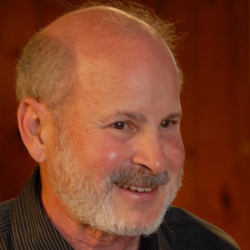
2016 SPA Lifetime Achievement Awardee Richard Shweder

The conversation begins with Dr. Good asking Dr. Shweder to “tell us about your history.” Dr. Shweder delves into his upbringing in Great Neck on the north shore of Long Island, at the time an emerging suburb with a very progressive, left-wing population. He discusses the first time he heard the word anthropology in his 11th grade English class when “Mr. Beal” said, “for any of you who don’t know what to do in life, there’s this thing called anthropology.” After graduation Dr. Shweder went to the University of Pittsburgh where Dr. Arthur Tuden, an Africanist and Cultural Anthropologist, taught his Introduction to Anthropology class, bringing in the study of culture with current events and ultimately solidifying Dr. Shweder’s path in Anthropology. From Pittsburgh, Dr. Shweder progressed to Harvard, where he states several figures had an impact on his intellectual growth, including Cora DuBois and John Whiting. After finishing his Ph.D. at Harvard, Dr. Shweder taught at the University of Nairobi in Kenya before finally landing at the University of Chicago.

Dr. Shweder then, discussing approaches and schools of thought in Cultural Psychology, defines Cultural Psychology as “the study of differences in mentalities across human populations.” Psychological Anthropology, for Dr. Shweder, has been more interested in taking universal psychological schemes and applying them to particular cultures to see whether or not different practices or beliefs were essentially manifestations of a broader psychological concept, such as a variation on an Oedipus complex. There is not a denial of universals in Cultural Psychology, however, since, to Dr. Shweder, there is not a way of studying differences without also studying universals. Dr. Shweder describes his way of defining the Cultural Psychology of Morality as “investigating the fates of moral absolutes in history and to show the way they get transformed, take on different content, and lead to different judgments.” To Dr. Shweder, behind a culture or individual is a set of moral absolutes, or rules of moral reason. Yet these moral absolutes and rules are abstract concepts which do not present determinations of actual cases, histories, or cultural contexts. Cultural Psychology is not about looking for likenesses, but looking for the differentiations and local adaptations that have taken place. For Dr. Shweder, the psychological means looking at differences in “the mental.” “The mental” refers to what people know, think, feel, want, and value as good and bad. Dr. Shweder states, “Anywhere you look in the world you’re going to find that people know, think, feel, want, and value things as good and bad. In some sense, that’s what it means to be a person.”

Dr. Shweder follows up with a discussion that anthropologists are supposed to fairly represent the groups they study; to try to portray their way of life in a way that the people the anthropologist is writing for might see them not as “exotic aliens,” but as morally sensitive persons who do things for recognizable reasons. Dr. Shweder proposes the conspicuous use of the notion of “oppression,” or seeing the social order as oppressive, combined with the now popular term “agency,” suggests that to have agency was to be opposed to culture. Thus, for Dr. Shweder, the concept that there might be people whose agency was used to carry forward a cultural tradition which was in a framework where they felt they could be fulfilled, was gone. “When I went to India I was in a world where if I approached it as ‘a good liberal,’ assuming everything is free choice and the world is there to satisfy my preferences, I would have seen it as an oppressive order. Yet the people who live there, for the most part, feel quite at home with rich, meaningful lives,” Dr. Shweder states.

Building off the discussion of morality, Dr. Good then engages with concepts of morality and oppression. Dr. Good states that for him, the experience of morality is often an experience of oppression. He expresses that many people spend at least parts of their lives resisting or fighting against morality, feeling that the moral system around them is actually an oppressive system causing them to live their lives “wrongly” within it. It seems to Dr. Good that reading ethics with a grand “they” or a grand “we” misses, ethnographically, another side of the story. Dr. Shweder responds that there is a multiplicity of the moral world. The moral world has many goods and desires that are in conflict with each other, and one cannot have them all. This sets up the dynamic of resistance since the system of conflict and prioritization pushes alternatives to the side. Dr. Shweder states that within any society there is the orthodox and the heterodox, that which is center stage and that which is done covertly. The mistake is to privilege one ethic over another, to act as if that privileging itself is not a choice or commitment, or to label the ethic of autonomy as the “natural way” in which anyone who is fully enlightened will ultimately go. Dr. Shweder cautions against the view of “liberalism as destiny,” where there are stages of moral development, the height of moral development being an autonomous, individualized person or society.
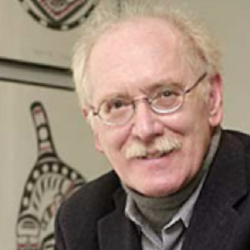
2017 SPA Lifetime Achievement Awardee Byron Good

Dr. Good then discusses his personal and academic history. He starts by commenting that his childhood and upbringing couldn’t have been more different than Dr. Shweder’s, growing up on a Mennonite farm in the Republican mid-west. Dr. Good spent much of his life feeling that religion and divinity grounded and oriented aspects of his academic life. “I don’t romanticize ethical norms if they, over time, have become more and more interested in controlling our lives in ways that we have very little direct knowledge of,” Dr. Good states. “I don’t romanticize suffering.” While at Goshen College in Goshen, Indiana, Dr. Good started studying mathematics before spending a year at the University of Nigeria. Dr. Good expressed this time as having a powerful impact which changed his life. “My worldview became profoundly different,” he states. Coming back from Africa convinced that there had to be something more than mathematics, Dr. Good decided to go to Harvard Divinity School. It was there that he began taking courses in anthropology and religion. Attending the University of Chicago for his Ph.D., Dr. Good states his first year at Chicago was Clifford Geertz’s last year. Yet even after Geertz left, Dr. Good still considered him a mentor and inspiration. This was also a very political moment for universities and the country in general. Dr. Good describes how he came of age in anthropology in a time of the Vietnam War, in a time of activism, and in the time of the Civil Rights Movement. These were all very powerful influences on how Dr. Good conceptualized the importance of anthropology.

Discussing his research, Dr. Good describes the time he spent in a genuinely post-colonial conflict setting of Aceh, Indonesia.  He became very aware of colonialism and its colonial history and how it had impacted political life along with a diverse set of religious and cultural influences. It was a setting that had a history of tremendous violence. “It was my first experience of working in areas of really intensive conflict,” Dr. Good states, “and I have to say that I went home from that experience very affected by listening to stories of violence.” Terms like “post-colonialism” and “post-colonial subjectivity,” and even terms like “haunting” and “hauntology” became central to his vision of what Psychological Anthropology can be today. Dr. Good poses the question of how one does Psychological Anthropology in settings of violence. “My thinking about hauntology started off with being in Aceh, and thinking about what Aceh was like post-tsunami and post-conflict,” Dr. Good remarks. Aceh was a place where ghosts and spirits of the dead were everywhere, alongside the ghosts of the recent violence and the emergence of political gorillas who had been previously hidden away. “Suddenly Aceh was no longer in the midst of a war and people who had been fighting were coming back and appearing in everyday life,” Dr. Good explains, “and I began thinking about post-authoritarian Indonesia and why it is that there are certain moments in a society that ghosts begin to appear in a very powerful way, and ghosts that are related to historical violence.” Dr. Good became fascinated with the relationship between historical memory, histories of violence, how they make themselves present, and how they reintroduce themselves in psychological experience.

To wrap up the Breakfast Lecture, Dr. Shweder discusses how the issue of nationalism is front and center in a very powerful way at the moment. He suggests that anthropologists should be qualified to talk about the ethno-national impulses people are facing and examine why it is that some people feel like their way of life, or their control over their life, is being threatened by globalization, for example. He calls on anthropologists to give a native point of view instead of simply reacting with fear and mainstream ideology. “This is anthropology. There are in-groups and there are out-groups. People have ways of life and traditions; they want to exercise control over their way of life. This has to be examined,” Dr. Shweder states. He further discusses that one of the things that’s exceptional to the United States is that we are a nation in which constitutional patriotism is the binding feature. In principle, that means there is space for cultural diversity. “The ways in which tyranny can be built up and balanced through distribution of power are all rich topics right now. Immigration. Making sure we represent minority views in a way that majority groups understand them and why the way they live is both meaningful and justifiable.” Dr. Shweder finishes by stating that there are also threats to anthropology from within. He warns against a “liberal tyranny” which can be compared to a “white-man’s-burden-style” of thinking with regard to cultural differences. Dr. Shweder sees this as using the notion of oppression or exploitation as an excuse for interventions into other people’s ways of life rather than starting by seeing whether or not one can understand other practices and social organizations in a morally-motivated way. Dr. Good closes the conversation session by encouraging anthropologists to be engaged in both theoretical debates within the discipline as well as policy and implementation projects and practices which can benefit the people in the communities we study.


Richard Shweder is the Harold H. Swift Distinguished Service Professor of Human Development in the Department of Comparative Human Development at the University of Chicago. He is the author of Thinking Through Cultures: Expeditions in Cultural Psychology (1991) and Why Do Men Barbecue? Recipes for Cultural Psychology (2003), both published by Harvard University Press. Dr. Shweder is also an editor or co-editor of many books in the areas of cultural psychology, psychological anthropology, and comparative human development. For more information on Dr. Shweder, visit his page at the University of Chicago here, as well as the Society for Psychological Anthropology 2017 Biennial Conference Breakfast Lecture website, available here.

Byron Good is a Professor of Medical Anthropology at, and former Chair (2000-2006) of, the Department of Social Medicine, Harvard Medical School, and Professor in the Department of Anthropology, Harvard University. Dr. Good is director of the International Mental Health Training Program, funded by the Fogarty International Center to train psychiatrists from China in mental health services research. Dr. Good’s broader interests focus on the theorization of subjectivity in contemporary societies, focusing on the relation of political, cultural, and psychological renderings of the subject and experience, with a special interest in Indonesia. He is the editor or co-editor of many significant volumes, books, and is a former editor-in-chief of our Culture, Medicine, and Psychiatry journal (1986-2004). For more information on Dr. Good, visit the Harvard Medical School Department of Global Health and Social Medicine website here, as well as the Society for Psychological Anthropology 2017 Biennial Conference Breakfast Lecture website, available here.
Medical Humanities as an Intersection: Fostering Cross-Disciplinary Intellectual Spaces, A Commentary

This week, we are featuring a commentary on the medical humanities, which first appeared this week here on The Daily Dose blog. This piece explores the nature of interdisciplinary research on the social, cultural, and experiential dimensions of medicine. It also spotlights the new Medicine, Society & Culture initiatives at Case Western Reserve University.


When I set out to write this commentary, I first intended on penning a blog piece about my own definition of the medical humanities as someone trained in both the humanities and the social sciences. Having come to medical anthropology from a past life in literary studies, my work has straddled the fissure between humanities and qualitative social sciences. I have presented work both on the history and theatrical presence of anatomical learning in the English Renaissance, and on my ethnographic research with medical students in the gross anatomy lab today. Sometimes, my work is focused solely on the present; in other instances, I turn to the historical past to inform my work as a scholar of contemporary medical training. My vision of the medical humanities is one that arrives from both within and beyond traditional disciplinary boundaries.

cropped-2009cover-copy.jpg

My approach, however, is but one. I recognize that the medical humanities do not offer a single or unified outlook on human health, illness, and medical practice. In fact, the medical humanities are populated by historians and artists, poets and literary scholars, philosophers and social scientists. Our individual professional identities may be firm—I identify now as an ethnographer and anthropologist, not a literary scholar—but the social, cultural, historical, experiential, and existential study of medicine is simply too complex to be dominated by a single field. The medical humanities (and its ally, social medicine), welcomes perspectives on the humanistic study of medicine informed by our varied native disciplines. More than a single field, the medical humanities often serve as a crossroads: an intellectual intersection (physical, virtual, or social) at which scholars across fields gather in dialogue, whether they identify with a single specialty or as interdisciplinary scholars. For this reason, and regardless of disciplinary allegiances, we can all benefit from the medical humanities as a site of discussion that welcomes myriad voices. Diverse perspectives encourage us to analyze human health and medical problems from numerous angles. As we all carry with us our own analytical methods and theories to this junction, so too do we leave these dialogues having ourselves learned and gained the critical perspectives of our peers. This sharpens our focus anew on social, cultural, and medical problems for which one discipline lacks all answers.

The value of the medical humanities is that they enable all of us to see medical and social problems through multiple lenses. If we cannot fully grasp a complex medical problem through ethnography alone, we turn to historical approaches to complete our understanding of the issue at hand. If individual illness narratives beg to be woven together through other data, we look to sociology and economics to conceptualize the underlying health inequities faced by diverse populations, amongst other socio-medical problems. And, further, when we strive to understand how medical science is confronting illness and suffering today, we turn to nurses, social workers, therapists, physicians, and other health professionals whose day-to-day interaction with patients is deeply informative for our own research. Indeed, clinicians also benefit from our work: the humanities have been widely integrated into coursework for physicians in the United Kingdom[1] and the United States[2]. While obstacles remain in the creation and implementation of medical humanities curricula for future medical practitioners[3], this coursework has widened the intellectual space in which medical humanists exchange ideas with multiple audiences.

Whether medical humanities programs are physically housed within humanities departments, or whether they are exported into numerous health education venues, they remain a space for invaluable cross-disciplinary conversation. I have been fortunate to serve as the administrative coordinator of a medical humanities and social medicine collaborative that has overcome departmental boundaries in creating a new space for scholarly dialogue. This new university-wide initiative in medical humanities and social medicine (MHSM) is anchored by a Bioethics MA degree track entitled Medicine, Society and Culture at Case Western Reserve University. Though the degree program is housed in the School of Medicine, our MHSM (Medical Humanities and Social Medicine) advisory committee (which oversees university-wide activities in medical humanities[4]) includes historians, philosophers, literary scholars, social scientists, rhetoricians, and many others. Across the university, we facilitate lectures, administer competitive conference and research grants for students, and support faculty scholarship and teaching innovation. In the region, we collaborate with neighboring institutions to spearhead events that bring together scholars in all disciplines to discuss common themes in the social and contextual study of medicine, illness, and human health. In addition, we look forward to welcoming our first entering class of graduate students in the Medicine, Society, and Culture track in the Bioethics graduate program this Fall 2016. These students will complete clinical rotations, bioethics coursework, and multidisciplinary training in medical humanities and social medicine.

In sum, the Medicine, Society and Culture initiative has become another significant intersection at which scholars—both practicing academics and new graduate students alike—are able to trade theories, exchange methods, and discuss contemporary intellectual issues with fellow medical humanists and social scientists. Thus, our program seeks to both produce new scholars who approach illness and medicine as inherently multi-faceted human experiences, and to facilitate dialogues with current scholars within various departments who strive to complicate their own understandings of health and the human condition.

Beyond university programming, however, there are many ways that all medical humanities scholars strive—and should continue—to reach across departments and disciplines to share our methods, theories, approaches, and reflections on medicine with one another. This blog is one such space that beautifully forges virtual connections across academic audiences with a shared interest in health, illness, and medical practice. My own field, medical anthropology, by its nature requires researchers to inform their claims through many kinds of data that necessitate several forms of analysis: all which dovetail approaches in other fields. So too did my previous training in literary studies require me to be conversant in historical methods, in close reading techniques, and in the same inductive reasoning skills that I now apply to my ethnographic work. No discipline is an intellectual island: and if there is a universal value of the medical humanities, it is that it has made junctures out of disparate disciplines. It is at once clinical, scientific, and humanistic.


About the Author: Julia Knopes is a PhD candidate in anthropology at Case Western Reserve University, and serves as the administrative coordinator for the newly-launched MA Track in Medicine, Society & Culture in the CWRU Department of Bioethics. Julia’s research examines the socio-material basis of professional role development amongst American medical students. She holds an MA in Humanities from the University of Chicago and a BA in English from Washington & Jefferson College. You can learn more about Julia’s work and current research here.

References

[1] Macnaughton, Jane. (2000). “The humanities in medical education: context, outcomes and structures.” Journal of Medical Ethics: Medical Humanities 26: 23-30.

[2] Hunter, KM; Charon, Rita; Coulehan, Jack. (1995). “The study of literature in medical education.” Academic Medicine 70(9): 787-794.

[3] Shapiro, Johanna; Coulehan, Jack; Wear, Delese; Montello, Martha. (2009). “Medical Humanities and Their Discontents: Definitions, Critiques, and Implications.” Academic Medicine 84(2): 192-198.

[4] Information on members of the CWRU MHSM advisory committee can be found here: http://case.edu/medicine/msc/about/advisory-committee/