Book Release: Tomes’ “Remaking the American Patient”

9781469622781

Images via UNC Press website

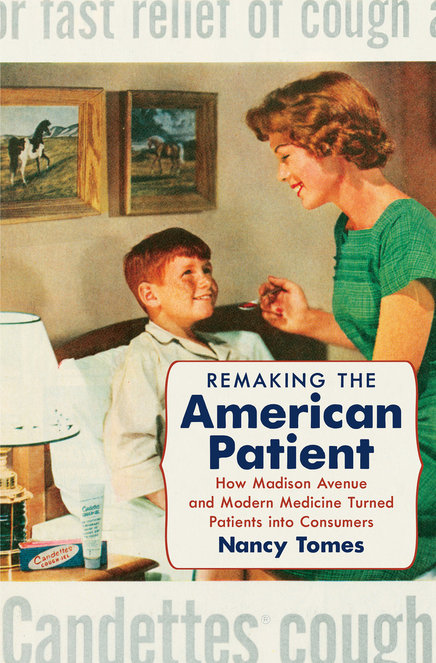
Released in January 2016 from the University of North Carolina Press is Nancy Tomes’ Remaking the American Patient: How Madison Avenue and Modern Medicine Turned Patients into Consumers. Through historical and cultural analysis, Tomes illuminates the threads between public relations and marketing in medicine, asking throughout: how have patients in the United States come to view health care as a commodity to be “shopped” for? What connections are shared between the history of medicine and the growth of consumer culture? Likewise, Tomes investigates what it means to be a “good patient” in this system of marketed care, and how “shopping” for care can both empower and disorient patients in the contemporary age. She also reviews the resistance, and ultimate yielding, of the medical profession to this model of care seeking. The book was recently reviewed in the New York Times (read the article here.)

The book will prove insightful for both historians of medicine and medical anthropologists who study the political-economic landscape of biomedicine and patienthood in the United States. It will also speak to conversations in bioethics about patient autonomy, choice, and medical decision-making.

About the Author

Nancy Tomes serves as professor of history at Stony Brook University. She is also the author of The Gospel of Germs: Men, Women, and the Microbe in American Life, published by Harvard University Press (details here.)

Have you published a recent book in medical anthropology, history of medicine, social medicine, or medical humanities? Email our blog editor (Julia Knopes) at jcb193@case.edu with a link to the book’s page at the academic publisher’s website, and we will feature it here.

Book Release: Harding’s “Objectivity and Diversity”

Via UC Press website

Via UC Press website

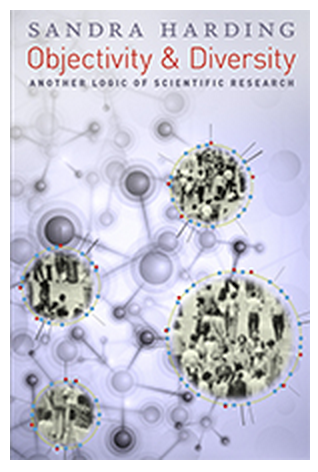
Released this May 2015 from Duke University Press is Sandra Harding’s Objectivity and Diversity: Another Logic of Scientific Research. Harding’s book critically examines the notion of objectivity, and posits a new framework for scientific thought that does not strive to be politically and culturally neutral. Instead, Harding argues, scientists must consider the economic, social, and political dimensions of their work, and seek to produce knowledge and new technologies that are sensitive to the ways in which these innovations may impact disenfranchised populations. In this way, Harding suggests that science may be truly “objective” by reflecting the social reality of the world in which it is practiced and produced.

Harding’s book contributes to the constructivist body of literature on the social and cultural dimensions of scientific practice, alongside the likes of Daston and Galison’s Objectivity (2010), Agazzi’s Scientific Objectivity and its Contexts (2014), and Shapin’s The Scientific Revolution (1996). Harding similarly demonstrates the cultural situatedness of science, while underscoring the responsibility of contemporary science to promoting social justice. This publication will be of interest for science and technology (STS) scholars as well as anthropologists researching biomedicine and the culture of scientific and evidence-based care practices, particularly amongst underserved or marginal populations.

Sandra Harding is Distinguished Research Professor at UCLA. Her work explores the philosophy of science, epistemology, and feminist and postcolonial theories.


To learn more about Harding’s book, click here: http://www.press.uchicago.edu/ucp/books/book/chicago/O/bo19804521.html

Other books cited on objectivity:

Daston and Galison 2010: http://mitpress.mit.edu/books/objectivity

Agazzi 2014: http://www.springer.com/us/book/9783319046594

Shapin 1996: http://www.press.uchicago.edu/ucp/books/book/chicago/S/bo3620548.html

Upcoming Conferences in Social Studies of Science/Medicine: Fall 2015

If you have an event to add to this list, please contact Julia Balacko at jcb193@case.edu with the name of the event/conference, date(s), location, and a link to the event page or a brief description. This list is for conference in the Fall of 2015 (August-December.) All conferences/events are organized chronologically by date.


 Seventh International Conference on Science in Society: “Educating Science”

October 1-2 2015 – Chicago, Illinois

http://science-society.com/the-conference/call-for-papers

A Critical Moment: Sex/Gender Research at the Intersection of Culture, Brain, & Behavior Conference

October 23-24 2015 – Los Angeles, California

http://www.thefprconference2015.org/

Society for Social Studies of Science (4S) Annual Meeting

November 11-14 2015 – Denver, Colorado

http://www.4sonline.org/meeting

American Anthropological Association 2015 Annual Meeting: “Familiar/Strange”

November 18-22 2015 – Denver, Colorado

http://www.aaanet.org/meetings/

Logo via AAA website

Logo via AAA website

History of Science Society Annual Meeting

November 19-22 – San Francisco, California

http://hssonline.org/meetings/annual-meeting-archive/

“Making” Anatomical Bodies: T. Kenny Fountain’s Rhetoric in the Flesh

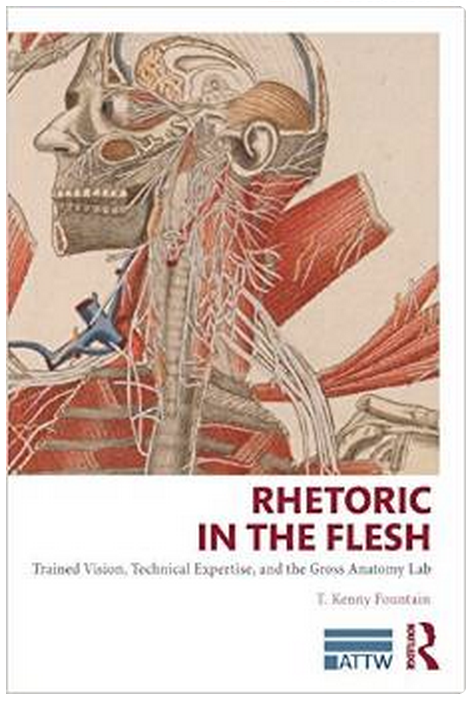
Recently, I had the pleasure of attending the book launch for T. Kenny Fountain’s Rhetoric in the Flesh: Trained Vision, Technical Expertise, and the Gross Anatomy Lab. At the event, Fountain discussed some of the key arguments from the book, and shared anecdotes from his participant observation in the human gross anatomy lab.
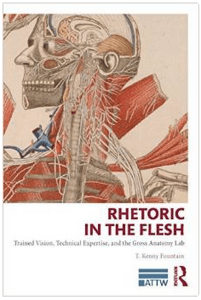
Book cover via ATTW

Book cover via ATTW

Fountain’s text is an ethnographic account penned from the perspective of a rhetorician of science communication. His focus on language offers a lens into anatomical learning and clinical training that is at once pointed and engrossing. Through his account, Fountain reveals the underlying relationships and tensions between students of anatomy and the bodies they dissect.

As I learned from the book launch talk and from an initial reading of the text, one term that Fountain’s participants in the laboratory frequently returned to was “making.” This word appears counterintuitive, given that dissection entails acts that are more closely associated with destruction than creation: scraping fat from tissues, disarticulating bones, removing organs to see structures beneath of them. However, “making” meant something quite particular to those who carried out dissections.

Students, instructors, and teaching assistants in the cadaver laboratories employed “making” to describe cutting and preparing the corpse in ways that would mimic the beautifully colored, flawlessly sketched anatomical drawings in their medical atlases. To dissect a body in a careful fashion that would reveal biological structures as cleanly and as clearly as the textbooks was to “make” the body, both into a mimicry of the visuals in the textbooks, and into a body that was representative of what the books deemed anatomical truth. Some students alternatively deemed this process “Netterizing,” or rendering their cadaver’s anatomy to appear as manifestly as the eminent anatomical artist and physician Frank Netter did in his illustrations.

Yet bodies can be “made” by more than the students and faculty alone. Fountain’s text also argues that bodies can make themselves. In one case, a woman who donated her body to science accompanied her anatomical gift with a letter. The letter contained details of the domestic abuse she suffered, as she explained the scars medical students would discover on her skin when they began to dissect her. The woman cast her body in a context that the students who received her body, and read her correspondence, could not ignore when considering the conditions under which that body lived and died. This woman “made” her body a representation of its life, its embodied struggles, and its significance as a precious gift to the students who received it.

Cadavers can also “make” themselves in death. One cadaver in the laboratory Fountain observed at had late-stage cancer that had not been reported on her medical records before she was embalmed for dissection. The cancerous tissue was stiff and impossible to cut through. It obscured structures, encased organs, and halted the dissection. In this instance, the cadaver makes itself both anomalous– by not representing “true” anatomical structures like the textbooks– and simultaneously representative of the reality of disease, which medical students will confront as future physicians.

For linguistic and medical anthropologists alike, as well as all humanistic scholars of medicine, Fountain’s book presents fresh analysis on an age-old tradition of medical learning: anatomical dissection. By attending closely to the language used to describe bodies, the language used by donors to describe their own bodies, and to the visual displays that mediate experience in anatomical learning, Fountain provides an innovative account that blends science and technology studies, visual studies, and rhetorical research.


You can learn more about and purchase Rhetoric in the Flesh here:

http://www.attw.org/publications/book-series/rhetoric-in-the-flesh

A similar version of this post appears at the Dittrick Museum blog, which you may find here:

http://dittrickmuseumblog.com/

Book Release: Haeckel’s Embryos by Nick Hopwood

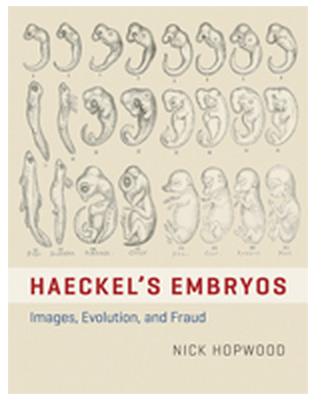
Debuting May 2015 from the University of Chicago Press is Nick Hopwood’s Haeckel’s Embryos: Images, Evolution, and Fraud. The book describes the lasting cultural impact of 19th-century illustrations that demonstrate the identical appearance of human and other vertebrate embryos in the earliest stages of gestation, only later morphing into their adult-like forms. These drawings, produced by Darwinist Ernst Haeckel in 1868, caused an uproar in the scientific community at the time as well as in the 1990s, when biologists and creationists alike argued against their accuracy and inclusion into scientific textbooks.

Image courtesy University of Chicago Press

Image courtesy University of Chicago Press

Hopwood traces the heated history of Haeckel’s drawings from their initial publication in the 19th century through their controversial presence in the current age. In addition to considering the impact of these images on developing understandings of biology, Haeckel simultaneously draws attention to the continued power of these images in contemporary discourse. The book will prove of interest to scholars of medicine who are curious about how popular as well as scientific knowledge of the human body is shaped by visual media, as well as how scientific information is culturally and historically situated.

Nick Hopwood is Reader in History of Science and Medicine and the Director of Graduate Studies at the University of Cambridge’s Department of History and Philosophy of Science.


To learn more about the book, check out its feature page at UCP here: http://www.press.uchicago.edu/ucp/books/book/chicago/H/bo18785800.html

News: 2015 Conferences in Cultural Studies of Medicine and Medical Humanities

The following is a list of conferences in 2015 with upcoming submission deadlines in the fall. If you are a conference organizer or have a conference you’d like to share in the fields of medical anthropology, medical humanities, or the social science of medicine, please email blog editor Julia Balacko at jcb193@case.edu with the location and date(s) of the conference, as well as submission deadlines. Conferences are listed by the date they will be held.

Medical Humanities for Drew University Transatlantic Connections Conference

January 14-18 2015 Donegal, Ireland

Deadline for submissions: Nov 1st 2014

Ageing Histories, Mythologies and Taboos: CFP Interdisciplinary Conference

University of Bergen, January 30th-31st 2015

Deadline for submissions: Sept 1st 2014

Vesalius and the Invention of the Modern Body

February 26-28th 2015

Washington University in St. Louis and Saint Louis University

(No submissions – invited speakers)

Playing Age (Anthropology and Gerontology)

University of Toronto, Feb. 27-28, 2015

Deadline for submissions: Sept 5th 2014

Medicine and Poetry: From the Greeks to the Enlightenment

March 20th, 2015 University of Miami Coral Gables, Florida

Deadline for abstracts: October 3rd, 2014

The Examined Life Conference: Writing, Humanities, and the Arts of Medicine

The University of Iowa, April 16th-18th 2015

(No submissions- workshop-based conference)

The American Association for the History of Medicine Conference

New Haven, CT, April 30th-May 3rd

Deadline for abstracts: Sept 26th 2014