Interview: Jonathan Sadowsky and “Electroconvulsive Therapy in America”

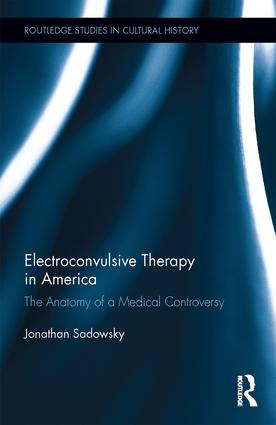
9781138696969This week on the blog we’re highlighting an interview with Dr. Jonathan Sadowsky about his new book Electroconvulsive Therapy in America: The Anatomy of a Medical Controversy, released November 2016 by Routledge. The book (available here) follows the American history of one of the most controversial procedures in medicine, electroconvulsive therapy (ECT), and seeks to provide an explanation of why it has been so controversial, juxtaposing evidence from clinical science, personal memoir, and popular culture. ECT is widely demonized or idealized. Some detractors consider its very use to be a human rights violation, while some promoters depict it as a miracle, as the “penicillin of psychiatry.” Sadowsky contextualizes the controversies about ECT, instead of simply engaging in them, making the history of ECT more richly revealing of wider changes in culture and medicine. He shows that the application of electricity to the brain to treat illness is not only a physiological event, but also one embedded in culturally patterned beliefs about the human body, the meaning of sickness, and medical authority.

Dr. Sadowsky is the Theodore J. Castele Professor of Medical History at Case Western Reserve University in Cleveland, OH, the Associate Director of Medical Humanities and Social Medicine, the Medical Humanities and Social Medicine Initiative co-founder, the Associate Director of Medicine, Society, and Culture in the Bioethics department of the Case Western Reserve University School of Medicine, and on the Editorial Board here at Culture, Medicine, and Psychiatry. Sadowsky’s research concentrates largely on the history of medicine and psychiatry in Africa and the United States. His previous publications include Imperial Bedlam: Institutions of Madness in Colonial Southwest Nigeria (1999), available here from the University of California Press.

From all of us at CMP, we hope you enjoy our new interview category!

  1. For someone who is thinking about reading your book or about to start, is there anything you would like them to know beforehand?

I would urge everyone to understand that not everybody’s experience of a medical therapy is the same. People should be careful not to generalize from experiences they’ve had, or that loved ones have had, and assume everyone has had the same experience. People who’ve had bad experiences with ECT have criticized me for to wanting to pay attention to the voices of people who’ve had good experiences, and people who’ve have good experiences have wanted to say “oh sure that might have been true in the 1950s but everything’s fine now.” ECT has a complicated story. I have met people who have told me that this treatment saved their lives and that it did so with either none or only the most mild of adverse effects. Those people are very concerned to make sure that the therapy gets represented in positive light because there are so many negative depictions. At the same time I’ve heard from and spoken to people who say they’ve lost 20 points off their IQ after having this treatment, or who had huge gaps in memory, or that they know somebody who had killed themselves after an ECT treatment. And what I find a little bit puzzling still after all these years of working on this book, is the way people are so unwilling to see that other people might have had a different experience than their own. But it’s my feeling as a social and cultural historian that it’s my responsibility to take into account all voices. So that’s the main thing that I want people to know and think about, that experiences of this treatment do vary and people shouldn’t be too quick to generalize from their own experience.

  1. How did you become interested in ECT?

I was already several years into my career as a historian of medicine, and in particular psychiatry, and had no knowledge of the treatment other than the images that many of us have from movies like One Flew Over the Cuckoo’s Nest. Images that it was a highly frightening and abusive treatment. I was a well-trained student of medicine and psychiatry and I didn’t know anything more than that. And then I began to hear stories, both from patients and from clinicians, about it being a valuable treatment and that was just so intriguing to me. So I began to look at some of the clinical literature and it was represented in almost completely the opposite way, as this safe, effective, humane treatment that’s been unfairly stigmatized. I felt like these were two completely distinct realities. It wasn’t so much that I wanted to reconcile them, but I just wanted to understand how views of this treatment became so bifurcated. And that became the central goal of the project: to understand why it became a controversy and have such strongly held opinions on either side.

  1. What did you find most exciting to research and write about?

I worked on this project for a long time and one of the things that sustained me was that there are so many different angles to it. I was interested in learning about how it was used to treat homosexuals in 1950s, to see what the reaction of the psychoanalytic community was, and how it figured as a symbol for all that was worst in psychiatry in the antipsychiatry moment. And then there were all the debates going back to the inception of the treatment, ongoing continual debates about the extent of memory loss. Is it a serious problem? Is it a rare problem? These debates are still raging. All of this I found so intriguing. The history of ECT is also replete with ironies. Such as the irony that it was developed initially as a treatment for schizophrenia based on a hypothesis that schizophrenia has an inverse relationship with epilepsy. That hypothesis is no longer even believed in, and schizophrenia is not the main indication anymore, and yet it’s effective. That’s so weird and so seemly random! Another irony is that this treatment which become an icon for frightening medical treatment, and became almost like people’s haunting nightmare of how medicine could abuse you if you came into its clutches, was initially developed as a way to try to create a safer, less frightening treatment than chemical convulsive therapy. So it’s these layers of irony that I just found so interesting and kept me intrigued in the book.

  1. Did you come across anything unexpected?

Yes, I did come across things that were unexpected. I found the gender politics to be very elusive. I found very little evidence for the idea that women were given ECT for simply protesting against their social role as housewives, which was promoted in another book on ECT. But it does appear likely that over the course of the treatment’s history more women have gotten it than men, and there is likely a gender politics to this. Minimally it may mean simply that more women are getting diagnosed with depression, and that’s the main indication. And we know that. The diagnosis of depression has predominated among women. There is a darker possibility, which is that women’s cognitive abilities haven’t been as valued, and so doctors have been more willing to use a treatment that might damage cognitive abilities on women than they were on men. I didn’t see any proof for that. But I think there were suggestive circumstances that might indicate that that played a role. In many realms of medicine, and this has been really well documented by historians, anthropologists, and sociologists of medicine, women’s complaints about medical treatments are more quickly dismissed than men’s complaints. So it’s quite possible that some of the complaints about memory loss, which have persisted throughout the history of this treatment, have been taken less seriously because they were so often voiced by women. I’m not arguing that women had more memory loss than men, but if they predominated in the treatment, and there were complaints about memory loss, it is plausible to suggest that perhaps there has been too much dismissal. I didn’t have evidence such as clearly sexist language in clinical reports that would strengthen a speculation like that, but one thing I do argue in the book is that the history of ECT is filled with doctors dismissing patient complaints of adverse effects. There are a number of ECT providers now, however, who are trying to be very sensitive to these complaints about memory and cognitive deficits following the treatment, but there still exists in clinical manuals the claim that serious memory problems are extremely rare, and that rarity really hasn’t been proven. So it remains a problem. The history of ECT treatment has shown a tendency to dismiss patient complaints about adverse effects, and this has not served anyone well. If anything, the tendency to dismiss complaints has worsened the stigma attached to the treatment. It’s understandable that some clinicians might feel some defensiveness for a treatment they feel is helpful and safe, but the dismissal of complaints of adverse effects has led to embittered patients and worsened the stigma. In a recent piece in The Conversation (available here), I argued that if we wanted to spell the stigma attached to ECT, it’s going to take more than attesting to its therapeutic efficacy. It’s going to mean we have to reconcile with its full costs.

  1. Why was it important for you to try and remain neutral and not argue for or against ECT?

I’m not trying to presume objectivity. Everyone has a point of view. But I thought I could tell a more interesting story by taking a step back and making the controversy itself my study rather than becoming a disputant in the controversy. There’s some precedent for this. Didier Fassin, an anthropologist, did a book on AIDS in South Africa, When Bodies Remember (available here), in which he did the same thing; he tried to look at the structure of the controversy. He was trying to understand the medical controversy over HIV as an anthropologist, even though he did actually side more with one than the other. But I do argue in the book there are good reasons to attest to efficacy of ECT and it is a valuable part of psychiatry’s repertoire, that it has a place in medicine. But I also argue that there were good grounds for people to contest it and have fear of the treatment. I really try to resist the view, which is very common in clinical literature on ECT, that opposition to ECT is irrational. There are rational reasons for the resistance rooted in some of its historical uses, some of which were abusive, and rooted in the experiences of adverse effects. At the end of the book I lay it all out and I say exactly what I think about ECT after trying to look at it from a step back. I think it’s an invaluable part of psychiatry and could be very useful for many people. But I don’t think it should be used as a first or second resort; other things should be tried first because there are risks. I’m glad it’s there if I should ever need it, but I hope I never need it.

  1. Would ECT be perceived differently if it didn’t treat the brain but some other organ?

Probably. In our society now, more than any other organ your brain is you. It is the seed of the self in our self-conception. I would go beyond that. The side effects do occur, without making any kind of representation about how common these problems are, but at least some people do experience permanent memory losses. I used a lot of patient memoirs in the chapter on memory as my source material. And as one of the memoirists wrote: We are our pasts. You lose your memory it’s like you lose a part of yourself. I think in some ways people feel they lose a part of themselves if they lose their memories more than even if they were to lose a limb. Losing a limb is very traumatic, I don’t mean to minimize that. But in a way, you lose your leg and you say “I lost my leg.” It’s something that belongs to you, but it isn’t you in the same way that maybe you feel your memories are you. Memories are not just something that you have, they’re something that you are.

I think ECT is a treatment for the very ill and as a society we do generally accept that treatments for the very ill sometimes involve radical interventions. Chemotherapy for cancers for example. Most of us are glad we have it, and there isn’t a large anti-chemotherapy movement. My leading theory for why ECT treatment occasions this kind of resistance is because of depression’s uncertain status as illness. No one disagrees that cancer is an illness. When you have cancer you accept that you need surgery or radiation or chemotherapy. These are things that you normally wouldn’t do to your body if you were healthy and you didn’t need them. Cancer is clearly different from normal. But depression has this ambiguous status for two reasons. It is an ambiguous word in the English language because it refers both to an illness which can be extremely severe, yet it also refers to a mood that’s normal and that everybody at some point in their lives gets a little bit depressed. We might have disagreements about how long it has to go on and how severe it has to be to be considered an illness. But it becomes something different when we call it an illness. Secondly why I think depression’s status is a bit uncertain, is that there continue to be people who reject medical models for what we call mental illness altogether. Some might believe what people need is talk therapy and they shouldn’t have drugs or shock therapies or anything like that. Some might believe that they don’t need any treatment at all; they might want to de-medicalize the entire thing. For example, for something to qualify as disease, there has to be some kind of lesion, or something physical that can be identified. Since we don’t have the means to do that with depression, it should be removed from the medical realm. I argue against this view. The idea that there has to be some kind of visual marker is arbitrary. I do think what we consider an illness is a social decision. But if you look at it historically and anthropologically, the idea that things we call madness are medical problems is pretty widespread. And in some ways having to have something be visually identifiable is buying into a lot of biomedical hegemony. I just don’t see why that should be the criteria for illness. Ultimately it’s a philosophical question. Most people in our society do accept that severe depression actually constitutes an illness category, but I think these kinds of ambiguities leave people unsure whether this is something worthy of very strong medicine. ECT is strong medicine. It’s a big decision to undergo ECT and it’s the right decision for some people. It’s a decision that shouldn’t be made lightly and shouldn’t be treated like a trip to the dentist.

  1. Is there anything else you want to add?

I was really gratified by the number of anthropologists who read and used my first book on insanity in Nigeria, Imperial Bedlam (available here), and I would be thrilled if anthropologists gave this book the same attention. And I’d also like to add that Routledge says there will probably be a paperback within the next year and a half.

Issue Highlight Vol 40 Issue 3: Asperger’s Syndrome, Subjectivity and the Senses

This week, we will highlight an Illness Narrative from the September 2016 issue of the journal (available here). Here we feature Ellen Badone, David Nicholas, Wendy Roberts, and Peter Kien’s article “Asperger’s Syndrome, Subjectivity and the Senses.” To read the full article, click here.


cards

As previous blog highlights suggest, the intersections of research and illness narratives are important to an anthropological perspective on subjectivity and experience. Badone and colleagues situate their article within narrative phenomenology. They discuss how constructing an illness narrative gives patients and families hope, and frames their experiences in a positive direction. The personal narrative, then, allows individuals to express their agency in hostile structural and environmental settings. The narrative also serves as a valuable first-hand account from which medical anthropologists can learn more about the subjective experience of illness.

The authors perform a close reading of an autobiographical narrative recounted by Peter, a young man diagnosed with Asperger’s Syndrome, a type of autism spectrum disorder (ASD.) Badone and colleagues aim to describe Peter’s case to widen understandings of the lived experience of people with autism. Responding to Olga Solomon’s 2010 article “Sense and the Senses: Anthropology and the Study of Autism,” this paper calls into question key assumptions in the clinical and popular literature about ASD relating to theory of mind, empathy, capacity for metaphorical thinking, and ASD as a life-long condition.

Badone and colleagues begin with a brief history of the diagnostic label of ASD, then describe the ethnographic-autobiographical process. Peter, the pseudonym chosen by the young man whose story is told in this article, reflects on his life experiences and articulates his awareness of autism and its impact on his life. An important recognition that Peter makes is that he senses many of the places he encountered were characterized by the “opposite of accommodation.” In the context of his elementary and high school for example, Peter describes how his need for calm and respite were disregarded in the noisy, abrasive environments. But it is Peter’s mother who is his metaphorical, and social, link to the world he felt dislocated from. Peter describes how it was his mother’s love and guidance which kept him alive and motivated to improve his life.

As Peter continues to narrate his experiences, however, he begins to intentionally seek out interactions in unwelcoming social environments. To Badone, Peter’s later decisions to submerse himself in activities that he found difficult, such as unexpected social situations and interactions, was an unconscious therapeutic response. This response mirrored the principles of cognitive behavioral therapy (CBT). To Badone’s astonishment, Peter had unintentionally started a treatment regimen to gradually lessen his anxiety, decrease his “meltdowns,” and become more independent. But to do so, Peter had to alter his own connection to a social environment that initially felt closed to him.

Badone and colleagues conclude, upon analyzing Peter’s narrative, that quality of life improves when individuals with autism are allowed to flourish in a social milieu of acceptance and understanding. Through the narrative, and through phenomenological examination of moments in Peter’s life, Badone and Peter hope to foster understanding and to urge others to create inclusive communities where social interaction is supported and individuals are not made to feel unwelcome. They seek to make autism more coherent to the non-autistic world and thereby to promote the larger ethical goal of creating flexible communities open to accommodating neurodiversity.

Issue Highlight Vol 40 Issue 3: Contradictory Notions of Violence and Trauma in the Military

This is the second post in a series of article highlights from our new September 2016 issue, available here. In this installment, we explore Tine Molendijk, Eric-Hans Kramer, and Désirée Verweij’s article “Conflicting Notions on Violence and PTSD in the Military: Institutional and Personal Narratives of Combat-Related Illness.” To read the full article, click here.


cards

Molendijk, Kramer, and Verweij observe that contemporary quantitative research reports that members of the military tend to underuse mental health services, most notably for PTSD. The reports note that soldiers’ beliefs about these services may be hindering utilization: however, existing studies have not specifically identified the beliefs or cultural factors that lead to under-utilization. Through a qualitative analysis of the literature, the authors argue that existing mental health interventions carry contradictory statements about violence and PTSD that may be casting particular social and moral frames onto mental illness. These interventions thus situate PTSD within a pre-figured framework, rather than presenting PTSD and trauma in a manner that individualizes and “decontextualizes” its presentation amongst members of the military: whose personal narratives also offer a distinct perspective on the experience of PTSD. The study focuses on PTSD and its treatment namely amongst the US, UK, and Dutch contexts.

To begin, the authors state that the diagnostic category of PTSD per the DSMV (and its implementation in practice) itself imposes a particular cadence on the disorder, stipulating that it emerges in response to an isolated or otherwise triggering single event, rather than to a diffuse string of violent occurrences or social disruptions. The diagnosis also pathologizes the degree of transition between military and civilian life which, to some degree, must and does occur for all soldiers. “The current mainstream PTSD-concept, with its focus on trauma exposure and individual susceptibilities,” the authors argue, “frames PTSD as the response of an individual to an event,” rather than an individual to a series of events, or many people to a range of traumas.

Beyond the diagnostic category, the “infrastructure” surrounding PTSD and its treatment in the military also impacts the way the illness is conceived and given meaning. The authors “divided the PTSD-infrastructure into five categories: pre-enlistment screening, basic training programs, counseling during deployment and pre- and post-deployment psycho-education, post-deployment screening through a survey and a meeting, and therapy.” In the earliest stages, potential military recruits are screened for existing mental illness, while those who pass screening are then subjected to psychological conditioning in their training intended to bolster soldiers’ emotional and psychological fortitude against combat scenarios. Throughout and after deployment, soldiers are also counseled and receive mental health guidance intended to ease adjustments between the “battlemind” state and the “civilian” mindset. These numerous institutional mechanisms indicate that the military infrastructure situates PTSD as a dysfunctional “deviation” from the ‘functional’ “battlemind,” rather than a natural response to trauma. Thus PTSD is cast as the failure of an individual to integrate and compartmentalize a traumatic event within the mental frameworks for coping that they have already been given, even though the military has already anticipated trauma and attempted to prepare soldiers in the event of psychological disturbance.

From the personal perspective of soldiers, however, the experience of PTSD is presented in a different but equally conflicting light. The authors note that soldiers are expected to psychologically identify and process traumatic events, but are also instructed to resist considering the emotional impact of these events: thereby cognitively preventing them from narrating, contextualizing, and giving meaning to traumatic instances. Furthermore, as violence is a routine aspect of military labor, responses to it are not necessarily “exceptional.” Entire squads may experience the same trauma, although they may not all be later diagnosed with PTSD, or share the belief that mental health care is appropriate for overcoming psychological trauma. Indeed, in military culture, many soldiers may not perceive violence as a trigger, but– as noted earlier– an expected and normal part of daily work. Additionally, acts of military violence may not be perceived as traumatic if they are viewed as necessary, just, or appropriate. Amongst soldiers themselves, PTSD therefore carries conflicting and multiple meanings. The authors summarize that “soldiers have learned that exposure to violence can harm a soldier, and that PTSD-like symptoms are not unusual. However, at the same time, they have learned that violence and stress are inherent to a soldier’s job, and that ‘good soldiers’ should be able to deal with it.” Soldiers who struggle with trauma, therefore, are given resources to address it, but may suspect that it is normal and does not (or should not) require medical intervention. Thus both the institution and the nature of the profession generate conflicting messages about the etiology and treatment of PTSD amongst soldiers.

To some degree, the authors remark, the transition from active deployment (and its related trauma or exposure to violence) to civilian life contains unavoidable contradictions, as the psychological mindset needed for combat versus the mindset for civilian life differ greatly, and the adjustments between them may be difficult. However, the contradictions within the institutional narrative of PTSD– that it is dysfunctional, yet expected, and provided with interventions–may be preventing soldiers from understanding whether or not their response to violence requires treatment, or if seeking help is a stigmatized act. Ultimately, the authors conclude, “the [existing institutional] PTSD-narrative can give soldiers the feeling that important elements of their problems are not taken into account, or that they are translated into an individual problem. If so, soldiers then hear no narrative through which they can understand and articulate their experiences and potential inner struggles about the meaning of these experiences.” The authors’ findings therefore indicate that there are significant and potentially problematic conceptual rifts in the understanding of PTSD between soldiers and institutions, and amongst soldiers acting within the military infrastructure.


Blog Archive: ALS, Quality of Life, and Feeding Tubes

This week, we revisit an article highlight that originally debuted here in May 2016. The highlight explores Pols and Limburg’s qualitative research on the role and meaning of feeding tubes in the lives of people with ALS. The article was officially released in our latest September 2016 issue of the journal, and is accessible in full here.


cropped-cropped-2009cover-copy1.jpg

Pol and Limburg begin by suggesting that while “quality of life” has been transformed into a measurement used widely in health research, it is difficult to operationalize when considering the daily, lived experiences of patients. Rather than approaching quality of life as a measure of attainment or “outcome,” the authors instead choose to reframe it as a continual process: one that is negotiated by individual patients differently. To examine what quality of life entails in a qualitative sense, the authors interviewed a population of people with ALS in the Netherlands with feeding tubes, or ALS patients considering one.

The literature on feeding tubes, the authors note, present many perspectives on the relationships between quality of life and eating. Some sources argue that feeding tubes deprive individuals of the important social aspects of eating, while others note that feeding tubes can unburden patients for whom swallowing and the physical actions of eating are difficult, uncomfortable, or impossible.

Patients and their families interviewed by the researchers, on the other hand, demonstrate such ambiguity towards feeding tubes contextually, depending on the stage of their feeding tube transition. For many, the initial decision to have a feeding tube placed in their bodies was an upsetting signal of bodily deterioration. The procedure itself, though technically minimally invasive, was also viewed with trepidation by patients. They worried about the hospital stay, and whether or not their body would be strong enough to adapt to the tube quickly. Pols and Limburg found that for those who had undergone the procedure, “there was a remarkable consensus among patients in their evaluation of tube placement, with the main variations mentioning just how terrible it had been.” The authors later note that some patients continued to view the feeding tube negatively after it was placed, envisioning it as an unnatural, upsetting addition to their bodies. Others described it as a “necessity” that came with quality of life benefits, although it was not pleasant to have attached to their bodies.

However, for many patients who had feeding tubes already implanted at the time of the study, the response could be notably positive. These participants noted that the devices restored their health and function, and lessened distressing symptoms like choking and an inability to swallow. For one patient, the feeding tube ensured that she received the appropriate calories, such that any food she decided to eat normally could be at her discretion. Other patients who cared less about eating a range of foods appreciated that the feeding tube rid them of the need to worry about what could be easily consumed.

The authors conclude that “the feeding tube can best be understood not as an intervention that causes ‘impacts on quality of life’, but as a technology or prosthesis that may bring different qualities and appreciations that may shift over time.” They add that the feeding tube acts as an intervention that re-orders daily life for patients coping with the a ‘new normal’ of chronic illness: rather than serving to balance “good” and “bad” qualities, as outlined in the disability paradox. Lastly, they remind readers that instrumentalizing “quality of life” risks losing these facets of illness experience. This term is deeply contextual, and responsive to the needs, expectations, and hopes of each patient undergoing treatments or coping with chronic conditions.

Issue Highlight Vol 40 Issue 2: Hospitals as Sites of Conflict in Pakistan

cropped-cards.jpg

In the coming blog posts, we will be highlighting new articles from our June 2016 issue, which you can access in full here. The theme of this special issue is The Clinic in Crisis: Medicine and Politics in the Context of Social Upheaval. This week, we will overview Emma Varley’s article “Abandonments, Solidarities and Logics of Care: Hospitals as Sites of Sectarian Conflict in Gilgit-Baltistan.” Read the full article here.


As our past blog highlights have suggested, the clinical space can both act as a site of political protest and serve to facilitate political unity. Varley’s article expands upon these themes by arguing that the clinic can also become a microcosm of inter-group tensions, wherein the hospital itself relays a picture of broader social conflict. Through her analysis of a crisis in a Pakistani hospital, Varley ethnographically demonstrates how Sunni-Shia conflicts manifest in the clinic, and how these tensions are navigated by health professionals employed there.

Varley recounts a shooting and raid which occurred at a hospital in Gilgit-Baltistan in January 2005. Shia gunmen had entered the regional hospital to hunt down Sunni male patients, aiming to retaliate after the assassination of a Shia leader killed by Sunnis. One women’s health ward, operated by nurses of the neutral Ismaili group, was left untouched after the nurses hid Sunni male patients. The nurses protected the men by insisting to the gunmen that there would be no male patients on a female ward: drawing both upon their social role as neutral Ismaili and their gendered role as caregivers of women, who were seen as uninvolved in the conflict at hand. Meanwhile, in a surgical theatre, physicians pretended as if the assassinated Shia leader on their operating table was still alive: hoping to placate the gunmen who threatened them until police or military forces could arrive to dispel the violence. Orderlies and other guards on the wards had, in some cases, fled: leaving clinical staff to defend or otherwise conceal the Sunni patients, and in other cases, fellow Sunni providers.

In reflecting on this incident, Varley notes that the hospital became an example of an “abandoned” space, one in which the necessary governmental protections and securities were not in place to ensure the safety of all patients and clinicians. The onus of protecting patients fell upon the clinicians who staffed the hospital: illustrating both the selflessness of individuals in assisting one another across oppositional group divides, and the potential for hospitals to become sites of medical and political refuge. This increased the trust between Shia providers and their Sunni colleagues in medicine. Conversely, the incident intensified professional divisions between Shia and Sunni providers, as Sunni clinicians later departed the larger regional hospital and took up employment in new Sunni health centers where they felt less at risk.

Though Varley reminds us that conflict is “corrosive” within medical professional relationships, it may also enable “renewed” feelings of trust between caregivers of opposing groups when political unrest unites them under a common aim. In sum, the hospital may serve a site of caregiving exchanges that expand beyond the bounds of medical encounters, as it becomes a sites of political action and negotiation between social groups.

Issue Highlight Vol 40 Issue 2: Medical Humanitarianism and Conflict in Turkey

cropped-cards.jpg

In the next few blog updates, we will be spotlighting new articles from our June 2016 issue, which you can access in full here. The theme of this special issue is The Clinic in Crisis: Medicine and Politics in the Context of Social Upheaval. This week, we will overview Salih Can Aciksoz’s article “Medical Humanitarianism Under Atmospheric Violence: Health Professionals in the 2013 Gezi Protests in Turkey.” Read the full article here.


Aciksoz’s article begins by painting a scene. In the summer of 2013, protests erupted throughout Turkey, leading to violent clashes between armed police forces and civilian protestors. Humanitarian health workers began to establish make-shift infirmaries near known sites of conflict to treat wounded protestors, yet soon themselves became targets of the police who directed tear gas and turned their weapons upon the infirmaries. Those tasked with quashing riots and subduing protests soon fixed their ire on the health professionals who cared for wounded protestors: viewing these clinicians not as neutral aid workers, but instead as complicit members of the uprisings they were attempting to quell. In time, emergency healthcare offered to protestors was deemed criminal activity by the Turkish government.

The author frames the Gezi Protests in terms of the security of medical spaces. Medical humanitarianism, he notes, is premised on the neutrality of care giving centers which serve as a “safe space” for medical aid to be delivered in times of “crisis” to anyone in need. However, this designation as a safe space relies on the authority of a state to recognize it as such. The Turkish government’s criminalization of the humanitarian infirmaries aligned health professionals with protestors, despite any claims to political neutrality. In Turkey, the ability for make-shift infirmaries to serve as neutral care centers was further threatened by the use of a particular weapon: tear gas and similar chemical weapons. An indiscriminate gas could transform entire physical areas– especially enclosed ones– into dangerous structures where all people were at risk of exposure. The use of gas by police forces inside clinics prevented these spaces from being both politically neutral and medically safe for patients and health professionals within.

The state’s designation of infirmaries as a site of criminal activity, and health professionals’ attendance to protestors as insurgent, did not always align with the accounts that Ackisoz collected from Turkish clinicians themselves. Even whenever health professionals confessed that they sympathized with the cause of the protestors, they nevertheless distinguished their political beliefs from their medical obligation. Many described their medical involvement with the protests as a natural response to crisis: as understandable as if they were responding to victims of an earthquake or other disaster. Yet their work also bordered on activism, as numerous clinicians sought to aid protestors after noting the failures of state-operated hospitals and ambulances to attend to the medical needs of all injured protestors.

In sum, Ackisoz argues that what constitutes “medical humanitarianism” borders on many other domains of society: on the state, on the government’s definition of both criminality and on appropriate use of force, on what constitutes political dissidence and whether or not “humanitarianism” is strictly neutral whenever any medical action has the potential to shed light on political failings. The article demonstrates that the ethnographic and social constructivist lenses are well-suited to the analysis of the troubled boundaries between politics and medicine, and between healing and the state in periods of upheaval.


Issue Highlight Vol 40 Issue 1: Hope, Despair, and Chronic Pain

The first 2016 issue of Culture, Medicine & Psychiatry has arrived! Over the coming weeks, we will feature article highlights from a selection of the newest research published at our journal. To access the full issue, click here.

cards3

In this week’s blog, we visit Eaves, Nichter, and Ritenbaugh’s article “Ways of Hoping: Navigating the Paradox of Hope and Despair in Chronic Pain” (accessible here.) The authors carried out a series of qualitative interviews with patients experiencing temporomandibular disorders (TMDs) throughout a clinical trial where these patients received traditional Chinese medical treatments (TCM.) The authors’ research with 44 patients in the clinical trial highlight the paradoxical nature of hope: that is, a tendency to both place faith in the possible efficacy of a treatment, while cautiously gauging these expectations to avoid feelings of despair should treatment fail to produce a positive result. The authors argue that hope serves as a complex placebo, in that while not itself being an active pharmaceutical or other intervention, it can have significant implications for a patients’ course of care.

Following a review of methodology and the theoretical basis of medical “hope,” the authors present a diverse array of examples from their interviews that illustrate the range of expectations, beliefs, and experiences of the chronic pain patients. For some patients, hope is secular: related to realistic treatment goals (such as a small reduction in overall pain), or to utopian ideas about the treatment’s future potential for other patients. For others, hope is an expression of spiritual faith, or a form of almost religious belief in the effectiveness of bioscientific breakthroughs, or even a belief that biomedicine has failed the patient and a remedy for their pain can only be found in other medical systems (like TCM.) Other patients described an embodied response to the treatment that, the authors comment, underscores the relationship between placebo and (psycho)somatic healing.

In all these examples, however, what is perennially apparent is the patients’ tenuous balancing of hope with tempered expectations for a cure. However it comes to be framed, hope both enhances and complicates the treatment of chronic pain. In some cases, hope acts as a “positive” placebo in that it bolsters the patients’ faith or trust in the potential (or even observable) efficacy of the treatment. In other instances, hope can prove to be a harmful placebo in that it may promise beneficial change and render any failing of an experimental treatment more troubling for the patient. Because hope offers such conflicting possibilities for patients’ satisfaction and trust in a treatment modality, it is essential for both anthropologists and clinicians to consider the cultural, cognitive, embodied, and religious frameworks in which a patient conceptualizes and subsequently approaches treatment.

In the News: Telemedicine in the United States

cropped-2009cover-copy

The intersections between technology, medicine, and health are a frequent site of discussion at Culture, Medicine & Psychiatry. In our last issue of 2015, for instance, Yael Hashiloni-Dolev[1] examined the role of new medical technologies that enable posthumous reproduction, while Petersen and Traulsen[2] shed light on the nuanced social uses of psychoactive medications amongst university students. These articles underscore the centrality of technology in everyday human health behaviors, and on the cultural meaning of these new tools in local medical landscapes.

Another technological innovation altering the social world of medicine—one making headlines in recent months—is telemedicine. In the Journal of the American Medical Association[3] (JAMA), telemedicine has been described as “the use of telecommunications technologies to provide medical information and services,” often a shorthand “for remote electronic clinical consultation” via phones and internet applications.

In the December 2015 AARP Bulletin, author Charlotte Huff[4] remarked that over 1 million patients will use telemedicine services this year, and remote access to physicians by phone, video chat, and email is more and more commonly covered by American employers’ health insurance packages. A Reuters article[5] adds that in Texas, a telemedicine company is working to block a state law that would require physicians to see a patient in-person before consulting with them via phone, email, or other means. And in the New York Times[6], a physician observed that telemedicine may prove a useful tool for children and adolescents: many of whom have grown up in a digital culture of “oversharing” and would not balk at texting their physicians images of strange rashes or lesions on their bodies. As this new tool of health care delivery is negotiated in different societal arenas, so too are its implications increasingly worthy of anthropological attention.

Telemedicine is altering the social fabric of medicine in a number of significant ways. Here, we will outline two potential outcomes of telemedicine on medical exchanges facilitated by technology. First, telemedicine extends the professional reach of biomedical clinicians. Areas where biomedical care is inaccessible, or where only indigenous medical systems exist, may now fall under the electronic eye of a faraway practitioner. This has extraordinary consequences for the ubiquity of biomedicine and the consolidation of biomedical power. Second, and rather conversely, telemedicine empowers the patient in the clinical encounter. Because the physician or clinician is not physically present to examine the patient’s body, the patient themself is the one who touches a swollen throat, or flexes a stiff joint, and relays their response through phone or web camera. In sum, the patient gains greater control over bodily (and verbal) narratives that, unlike an in-person exam, the clinician does not have total access to.

The rise of telemedicine speaks to medical anthropologists, certainly, but it also presents a fascinating case more broadly for science and technology theorists and scholars in health communication. As the topic of telemedicine continues to capture the interest of medicine and the media, so too will it fall under the consideration of researchers piecing together the networks that bring patients and their caregivers together in novel ways.

[1] http://link.springer.com/article/10.1007/s11013-015-9447-6

[2] http://link.springer.com/article/10.1007/s11013-015-9457-4

[3] http://jama.jamanetwork.com/article.aspx?articleid=386892

[4] http://www.aarp.org/health/conditions-treatments/info-2015/telemedicine-health-symptoms-diagnosis.html#slide1

[5] http://www.reuters.com/article/health-case-to-watch-teladoc-idUSL1N14H0CT20151228

[6] http://well.blogs.nytimes.com/2016/01/18/using-phones-to-connect-children-to-health-care/?ref=health


Issue Highlight: Vol 39 Issue 4, Stimulant Use in the University

This blog post is the last in a three-part series highlighting our newest installment of Culture, Medicine & Psychiatry (released December 2015) which readers can access here. This week, we explore Petersen, Nørgaard, and Traulsen’s research on the use of prescription stimulants amongst university students in New York City. The full article is available here.


cropped-cards.jpg

In recent dialogues on the widespread use of prescription stimulants amongst university students, drugs are often described as enhancing productivity or a student’s ability to successfully focus on academic work. However, Petersen, Nørgaard, and Traulsen found that university students in New York City often cited the use of these drugs as rendering their work more pleasurable, “fun,” and “rewarding.” Their study included 20 students spanning BA, MA, and PhD programs: representing a diverse sample that, in the aggregate, universally suggested that the use of stimulants in an educational setting was not centrally connected to academic output or production. This outcome, the researchers assert, complicates existing neoliberal readings of American personhood, premised on the idea that the self is primarily cultivated and disciplined through labor and individual productivity.

For example, rather than feeling shameful about using stimulants to improve study skills or produce better work, the students instead expressed guilt for enjoying their academic labors and for transforming “monotonous” and “boring” activities into an engaging experience. The “optimization” of the mind to perform intensive intellectual labor was not related strictly to productivity, which would evoke traditional neoliberal notions of the person-as-producer. Instead, the students described the drugs as optimizing pleasure first, which rendered them more productive as a secondary consequence.

Take this instance: a 32-year old PhD student, identified as Ben, reported using Adderall when he felt too “lazy” to initiate work. Rather than continuing by discussing the extent of his productivity while on the drug, he instead explains that the drug makes him eager “to tackle” his projects. This is often the case for students who struggle to find the desire to complete academic tasks that are not interesting enough to begin without being made pleasurable through stimulant use. Further, another student added that using stimulants helped him to “reconnect” with his interest in sociology during a difficult class on social science theory. In other cases, using Adderall kept students from being distracted from social media or entertainment websites: not because they lacked the inherent ability to be productive, but because without the drug, these sources of interest were simply more engaging than the work at hand. In other instances, students noted that stimulants made them feel more secure and positive about the quality of their work, and helped them to diminish the physical and mental stresses that came with “all-nighters,” or extended overnight studying stints.

Throughout all these cases, enhancement is not described as a means to make the human brain meet the demands of a “high-speed society.” Instead, “enhancement” relates to students’ satisfaction with their resulting work, to their enjoyment of otherwise “boring” tasks, and to reduced the negative psychosomatic effects of studying or working on a limited time frame.

The authors do not eschew the neoliberal model through these cases: indeed, they suggest that the use of stimulants does have cognitive effects that bolster students’ abilities to produce academic work. However, they note that we must complicate a strictly neoliberal model that would indicate that stimulants are employed by students strictly in order to achieve a certain amount of studying or to complete an assigned amount of work. Enhancement may include productivity, but for students who use stimulant drugs, it also involves increasing the pleasure of finishing intellectual labors, and decreasing the negative consequences of engaging in challenging or otherwise tedious academic work.

In this way, cognitive-enhancing drugs indeed fortify the mind and the conception of the self as a producer and academic laborer. However, they also shape human experience by altering students’ sense of confidence, their satisfaction with academic work, and their passion for their chosen topics of study. In these ways, enhancement drugs not only increase productivity in the neoliberal sense: they also broadly impact notions of pleasure and individual ability related to students’ quest to heighten academic production.


Issue Highlight: Vol 39 Issue 4, Posthumous Reproduction

Our final issue of the year– Volume 39 Issue 4 December 2015– has just arrived. In our last blog post series for 2015, we begin with a three-part feature of the latest publications at the journal in this new issue. In addition to the article previews in this series, our readers can access the full issue here. In this post, we explore Yael Hashiloni-Dolev’s preliminary research on posthumous reproduction in Israel (full article accessible here.)


cropped-cards.jpg

Biomedicine, through its innovative application of technology, can reconfigure biological experiences in ways that alter or reinforce cultural beliefs surrounding life, death, reproduction, kinship, parenthood, and social roles. Most recently, this has become a central issue in the field of assisted reproductive technologies: where biomedical interventions potentiate new relationships between parents, families, and children. But while assisted reproductive medicine is often discussed in terms of generating life, these new generative technologies may also intersect with death in novel ways that challenge existing understandings of kinship and familial relationships.

Hashiloni-Dolev article studies Israeli lay perceptions of a new concept in assisted reproductive medicine called posthumous reproduction (PHR.) In sum, PHR entails the use of genetic material from deceased parents to conceive children after their deaths. This usually means a woman will opt to become artificially inseminated with a husband or partner’s sperm retrieved while the man was in a coma or vegetative state: however, it may also include the fertilization of a woman’s eggs, frozen while she was alive, and gestated in a surrogate mother. Even frozen embryos of two deceased parents (a mother and father) might be “adopted” and implanted into a female relative or another recipient, who subsequently gives birth to a child whose biological parents are no longer alive. This process also facilitates the possibility of posthumous grandparenthood, and indeed, some parents whose adult children have died may seek out PHR technologies (include allied technologies such as surrogacy) to produce grandchildren.

Israel is one of the few countries that permits some forms of PHR, and it is a progressive nation in terms of reproductive technologies: its state health system covers the costs of ARTs (assisted reproductive technologies) for couples who have difficulty conceiving. Although Israel does not permit all forms of PHR, it does allow for the collection of a man’s sperm upon a wife’s request to carry his child upon his death (what the author calls the “prototype scenario.”) In this regard, Israel served as a prime location for surveying participants and testing initial ideas about the public perception of PHR: a new frontier of ARTs yet to be studied in the anthropological literature.

Through 26 semi-structured interviews with newlywed or childless couples, Hashiloni-Dolev discovered that there were some inconsistencies between the Israeli PHR policies and the participants’ understanding of PHR technologies. For instance, the government stipulated that PHR could occur via the retrieval of sperm from a dying or recently deceased father upon the wife or female partner’s instruction. The policy states that the retrieval could occur given evidence of a man’s “presumed wish” that he would want his spouse or partner to carry his child after death. However, “wish” and “consent” were interpreted differently by men interviewed for the study. The men typically stated that while they would defer to their partner’s wishes to have a child after their death, they themselves were uncomfortable with the possibility of their partners having the child and being unable to “move on” should they pass away. In this instance, while the man’s presumed “wish” might not change a woman’s decision to retrieve his sperm posthumously, it does not mean the man would “consent” to the process if he were not already dead.

Conversely, consent becomes more complicated given the circumstances that typically surround the use of PHR. The man is presumably young, such that his female partner would be able to carry his child, and would have died suddenly: thus making it nearly impossible to obtain his consent unless he had already affirmatively offered it while still alive and healthy.

There were also issues related to the family life of a child born through PHR techniques. Both male and female participants worried about the emotional stability and security of children born out of such conditions, and expressed their concern with new policies being proposed that would allow for expanded posthumous grandparenthood rights. The participants believed that the decision to have children following the death of a spouse was between the couple, and was not between other family members. Likewise, many participants worried about the birth of a child as a living shrine to the deceased, rather than as a new and autonomous member of the family.

In these responses, it is clear that while both biomedical technologies and governmental policies may enable PHR to occur, the process is not always viewed in such liberal terms by individuals who could be most likely to use it. Posthumous reproduction thus supplies medical anthropologists and scholars of social medicine with a nuanced case of the cultural position of new technologies, and the concerns that individuals across cultures have with these new reproductive tools: particularly as they relate to consent, kinship, and the roles of parents.