Book Release: Crowley-Matoka’s “Domesticating Organ Transplant”

Image via Duke UP

Image via Duke UP

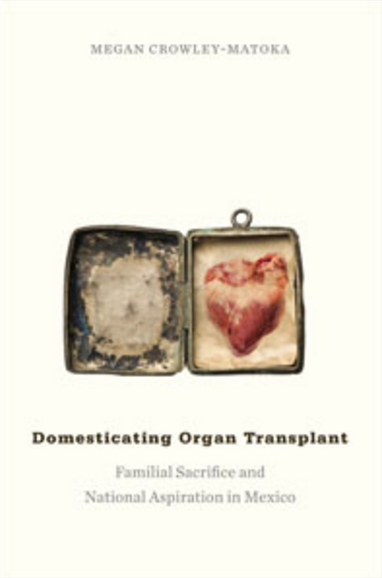
Due for release in March 2016 from Duke University Press is Megan Crowley-Matoka’s Domesticating Organ Transplant: Familial Sacrifice and National Aspiration in Mexico. The text explores the familial nature of kidney transplantation in Mexico, where the organs are donated between relatives rather than received by strangers. Crowley-Matoka also examines kidney transplant in Mexico beyond the family unit, assessing national pride in transplantation procedures performed at hospitals operated by the state. Through family and government, organ transplantation thus becomes an iconic procedure in Mexican society– both within the home and across the nation– that represents the curative promise of contemporary medicine. Crowley-Matoka’s ethnography highlights the relationships between embodied experience, domestic life, national identity, and clinical practice. This text will appeal widely to scholars who study biomedicine in the Americas, the connections between medicine and the state, and familial networks of caregiving.

About the author: Megan Crowley-Matoka is Assistant Professor of Medical Humanities and Bioethics at Northwestern University. You can access more details about her upcoming book here.

AAA 2015 Sessions: Medical and Patient Bodies

This entry is our last in a three-part blog series on the upcoming American Anthropological Association (2015) meeting, to be held in Denver, CO from November 18th-22nd. Here we feature paper sessions on contemporary themes in medical anthropology and social medicine. This year, we showcased sessions on the anthropology of mental health care (read here) and on cultural approaches to food sovereignty and economies, featured last week. In this installment, we highlight three sessions on the theme of the medical and patient body. All sessions are listed chronologically by date and time.

Image via AAA Website

Image via AAA Website

The Politics of Health and Ritual Practices: Ethnographic Perspectives

Wednesday, November 18th from 2:00pm-3:45pm (details here.)

In this session, topics will include: health and religion in Putin’s Russia; rhetoric and biopolitics in local medicines of North India; hypochondria, somatic experience, and psychiatry in Soviet-era Bulgaria; and the implications of mortuary rituals in neoliberal Romania. These papers will particularly interest scholars who study the relationship between body and state, as well as those who examine the intersection of religion, health, and healing practice.

The Biosociocultural Trajectory of Stigma

Sunday, November 22nd from 10:15am-12:00pm (details here.)

Papers in the session will address stigma in the following contexts: methadone treatment in a Moldovan prison; HIV+ identities in intergenerational perspective; changes in HIV/AIDS stigma in Western Kenya; stigma and HIV/AIDS as chronic versus curable; obesity and depression in Puerto Rico; and de-stigmatization in massive weight loss. Through these presentations, the session will posit the medical body at the center of social discourses on stigma, illness, and treatment across cultures.

Micropolitics of Medical Life

Sunday, November 22nd from 10:15am-12:00pm (details here.)

This session spans topics such as: organ donation and the family in Japan; patient-centered approaches to biomedical readmission; infant health in El Salvador; translation and language in medical encounters; ethnographic research on contaminated water exposure and local treatments for infant diarrhea; dialysis and the family unit; and the connections between cells, culture, and knowledge-making. These papers will underscore the cross-cultural ties between body, biology, illness, culture, and daily life.

AAA 2015 Sessions: The Anthropology of Mental Health Care

Beginning last Fall 2014, we began compiling lists of sessions at the Annual Meeting of the American Anthropological Association that we thought would be of interest to our readers attending the conference. These sessions included topics such as drug use and abuse, reproductive medicine, and global health. This year, we again feature our series on the upcoming conference, to be held November 18-22 in Denver, Colorado (more information here.) You can also browse last week’s installment of the blog, where we highlighted sessions on biomedicine and the body at the upcoming Society for Social Studies of Science (4S) meeting, also in Denver, to be held November 11-14 (details here.) This week, we present three paper sessions on the anthropology of mental health care. The sessions are organized chronologically by time and date.

Image via AAA Website

Image via AAA Website

Re-Institutionalizing Care: Anthropological Engagements with Mental Health Courts and Alternative Forensic Psychiatry Interventions in North America

Saturday, November 21st 10:15am-12:00pm (details about this session.)

Topics in this session will include racial disparities in a mental health court in Canada; the relationship between criminal justice officials, psychiatric crisis, and mental health; dogma and psychiatry; and mental health care reform. The session lists itself as particularly of note to applied and practicing anthropologists, especially those with an interest in mental health care, policy, and reform.

From the Streets to the Asylum: Medicalizing Vulnerable Children

Saturday, November 21st 10:15am-12:00pm (details about this session.)

This session includes work on the following topics: humanitarian care and child homelessness in Cairo, Egypt; drug use and treatment amongst juvenile prisoners in Brazil; immigrant youth and mental health in France; and notions of American childhood in the context of mental health. Though the session is sponsored by the Anthropology of Children and Youth Interest Group, its topics overlap with many contemporary issues in medical anthropology and the social study of mental health care.

Making Sense of Mental Health Amidst Rising Rural Social Inequality in North America: Class, Race, and Identity in Treatment-Seeking

Saturday, November 21st, 1:45pm-3:30pm (details about this session.)

Presenters in this session will speak on these issues: mental health and poverty in rural New England; mental health and prescription drug abuse in Appalachia; citizenship and mental health in Oklahoma; care access in remote Alaskan communities; community mental health activism; and inequity and depression in rural Kentucky. These sessions will be of interest to scholars of social justice and medicine, as well as those studying mental health care access and the culture of psychiatry in the United States.

Book Release: “The Law of Possession: Ritual, Healing, and the Secular State”

Screen Shot 2015-09-13 at 7.10.00 PM

Image via Oxford UP website

Out this November 2015 from Oxford University Press is an edited collection by William S. Sax and Helene Basu entitled The Law of Possession: Ritual, Healing, and the Secular State. The text presents both contemporary and historical case studies of the relationship between spiritual conflict and judicial exchanges across cultures. While rituals to exorcise spirits from the afflicted are typically characterized solely as acts of healing, they are also scenarios in which spirit healers do justice by the possessed by driving out a spirit who has committed an act of evil against the person they inhabit. Spirit possession may similarly provide valuable opportunities for members of a community to contact restless spirits through a human oracle. These otherworldly entities may then offer evidence to the living as to how to avenge or appease them, thereby restoring social harmony. Healing, justice, cosmic order, and religion are thus closely integrated within these culturally meaningful negotiations.

The authors of the text challenge the assumption that these spiritual encounters– which have consequences for both medicine and the law in many societies– are antiquated and do not belong in modern societies or in secular governments. By drawing on examples from East Asia, South Asia, and Africa, the authors assert that spiritual healing and law nevertheless persist in the contemporary age as a way to meet social and religious needs in many cultures.

Learn more about the book (in paperback) by clicking here.

Link to the hardcover copy: https://global.oup.com/academic/product/the-law-of-possession-9780190275747?cc=us&lang=en

About the editors: William Sax teaches at the University of Heidelberg, where he serves as the Chair of Cultural Anthropology at the South Asia Institute. Helene Basu is the director of the Institute of Social Anthropology at Münster University.

Issue Highlight: Vol 39 Issue 3, Suicide in Rural Kenya

When a new issue of Culture, Medicine & Psychiatry is released, we feature a series of blog posts that highlight these latest publications in our journal. The current September issue includes articles that address psychiatric conditions and the experiences of people with mental illness across cultures. Readers may access the full issue at Springer here: http://link.springer.com/journal/11013/39/3/page/1. In this issue highlight, we will discuss an article on ethnographic analyses of suicide and distress amongst three communities in northern Kenya.


cards3

Suicide in Three East African Pastoralist Communities and the Role of Researcher Outsiders for Positive Transformation: A Case Study

Bilinda Straight, Ivy Pike, Charles Hilton, and Matthias Oesterle – Pages 557-578

http://link.springer.com/article/10.1007/s11013-014-9417-4

The authors of this article strive to establish a nuanced and ethnographically rich understanding of suicide and mental distress in an under-studied population of three distinct, yet interacting, pastoral communities in northern central Kenya. These three groups– the Pokot, Samburu, and Turkana– are engaged in intercommunity conflicts over territory and land use agreements, despite the communities’ shared and entangled oral histories. Such tensions are only exacerbated by mutual fear of raids by other groups, dearths in food available for forage, and the theft of livestock from individuals who sell the animals to finance political campaigns. Poverty is likewise aggravated by these patterns of loss and violence.

This turbulent social environment creates widespread mental distress amongst the three communities, yet individuals from each group stressed to the research team that they felt obligated to persevere despite these pressures, making admitting psychological suffering (and especially confessing thoughts about suicide) deeply taboo. Therefore, any mental health intervention would have to be responsive to the extent to which Pokot, Samburu, and Turkana culture disallow individuals from discussing or even thinking about suicide: an act which could create even more social strain on the family of the person who committed it. The researchers confirmed this inability to discuss suicide by the high rates of non-response on a survey question which asked participants whether or not they had experienced suicidal thoughts.

Suicide thus proves to be a unique case for anthropological analysis because it is both driven by the social conditions of those who take their own lives, as well as disruptive to the communities in which these people lived. Its treatment by global health workers must in turn be sensitive to cultural beliefs that forbid conversation about suicide, especially in communities where the death of an individual may contribute to already extraordinary social distress.

Issue Highlight: Vol 39 Issue 3, Depression & Psychiatry in Iran

With each new issue of Culture, Medicine & Psychiatry, we feature a series of blog posts that highlight the latest publications in our journal. This September’s issue features articles that address psychiatric conditions and the experiences of people with mental illness across cultures. The articles span studies in India, the United States, East Africa, Iran, and Belize. Readers may access the full issue at Springer here: http://link.springer.com/journal/11013/39/3/page/1. In this issue highlight, we will explore the emergence of public discourse about mental illness, suffering, and political struggle in Iran.


cropped-cards.jpg

Writing Prozak Diaries in Tehran: Generational Anomie and Psychiatric Subjectivities

Orkideh Behrouzan – Pages 399-426

http://link.springer.com/article/10.1007/s11013-014-9425-4

Behrouzan’s study began upon noticing young Iranians discussing mental illness in blogs and in public forums in the early 2000s. At the same time, the author examined unpublished public health records maintained by the state, and noticed that there was a sharp rise in the prescription rate of antidepressants in the mid to late 1990s. This pattern correlated with a shift in the understanding of suffering: during the Iran-Iraq war of the 1980s, PTSD and anxiety disorders were considered the most pressing mental health concerns, but these illnesses became supplanted by a shared culture of loss and hopelessness amongst young Iranians in the period following the war.

Unlike the narrative of depression in other places, however, Behrouzan found that the Iranian category of depreshen held deep political meanings. The illness category reflected the condition of those unable to publicly mourn for friends and family who may have been executed as political prisoners, or to process grief about continued political unrest that seemed to have no resolution, or to understand the loss of a parent during wartime as a young child. As one Iranian blogger described, “our delights were small: cheap plastic footballs, cartoons and game cards… But our fears were big: what if a bomb targets our house?” Thus depreshen becomes an experience of suffering that reverberates throughout a generation.

However, Iranian psychiatry responds to this condition outside of its cultural context, and continues to treat depreshen as an individual patient pathology that can be understood in biological terms. By biomedicalizing depreshen in this way without understanding its connection to political struggle, Iranian psychiatry minimizes suffering and “takes away subjects’ abilities to interpret and/or draw on their pain as a political resource.” When we interpret depreshen from the perspective of patients, therefore, we gain a nuanced view of suffering that is at once culturally specific and politically powerful.

Guest Blog: The Autism Spectrum, Anorexia, and Gender

This week on the blog, we are hosting a guest post by Carolyn Smith, MA, a third-year PhD student in medical anthropology at Case Western Reserve University. Carolyn studies the intersections of mental health, eating, and the body, blending biological and cultural approaches. This blog post complements our July 2015 issue on autism, which you can read more about in the links provided at the end of the guest post.


In Autism spectrum disorders: Toward a gendered embodiment model, Cheslack-Postava and Jordan-Young[1] argue the importance of gender theory in understanding the preponderance of male cases with autism spectrum disorders (ASD) in the United States. In addition to evidence of autism as sex-linked, the authors argue that there is evidence as well for biases in diagnosing autism, and that social environment likely plays a role in male susceptibility. The literature on anorexia nervosa offers a parallel argument: anorexia nervosa, like autism, is often described in terms of biological risk factors[2] yet it remains a socially charged, deeply gendered diagnosis. In the USA and other societies with thin female beauty ideals, for instance, anorexia nervosa is most widely attributed to women.[3]

Both anorexia nervosa and ASD are recognized by the American Psychological Association (APA) and have specific criteria. While these categorizations are justifiably scrutinized by medical anthropologists, here I use the APA criteria as a cultural document that reflect what conditions that biomedical practitioners in the United States are cataloguing when they demarcate mental conditions. Anorexia nervosa is an eating disorder characterized as one of the most fatal mental illnesses in the United States.[4] Diagnostic criteria in the Diagnostic and Statistical Manual of Mental Disorders, Fifth Edition (DSM-V) includes restrictive eating and an intense fear of gaining weight/persistent behaviors to prevent weight gain. [5] One key criterion for anorexia is being of low body weight with the absence of any other pathology. The inclusion criteria have changed over the years, as have social ideas about the disorder and who suffers from it. Meanwhile, autism is classified as a neurodevelopmental disorder with social deficits and rigid behaviors.[6] The understandings of autism, like anorexia nervosa, have also changed over time in the United States.
cards3

Yet gendered categories for these conditions persist. In the realm of psychiatric health, autism is assumed to be a male disorder, and anorexia nervosa, a woman’s diagnosis. This simple categorization overlooks the extent to which anorexia and autism are demonstrably comorbid in studies carried out in the USA and the UK.[7] [8] [9] One study from the UK, in fact, found that anorexics, restrictive-type were five times more likely than the general population to score as high on the Autism Questionnaire as someone with an ASD. 9 This finding offers no simple cause-and-effect explanation for how the two disorders are linked. However, this new data suggests that the body, the mind, gender roles, and dieting behaviors may be entwined in ways that resonate with cultural beliefs and categories.

There are competing theories about the etiologies of anorexia as well as autism, each with gendered overtones that do not reflect the findings of associations between the two psychiatric conditions. One theory of autism is that it is linked to a “hypermasculinized” brain.[10] Meanwhile, in a 2012 article for Psychology Today, Maestripieri argues that anorexia may be due to a “hyperfeminine” brain. The two conditions, it seems, appear to be “oppositional.”[11] However, these theories do not capture the wide diversity of cultural perspectives within the USA or UK, meaning there may be unique gendered understandings of psychiatric disorders between social groups that are not accounted for in existing research. In either case, what is clear is that cultural categories of psychiatric conditions in the US and UK may be missing how patients (of any gender, from numerous cultural backgrounds) live and seek care with either condition.

These gendered categories become even more complex for individuals diagnosed as both autistic and anorexic. The comorbidity of ASD and anorexia is complicated by the fact that restrictive dieting in anorexia may lead to cognitive impairment, which subsequently causes behaviors that might be confused with cognitive patterns on the autism spectrum. However, people with anorexia do report having autistic traits prior to the onset of their eating disorder, and people recovering from anorexia appear more often than non-anorexics to fall along the autism spectrum. 6,7 Thus, the two illnesses co-produce one another in ways that cross traditional gender lines (autism as male, anorexia as female) while also making it difficult, if not impossible, to isolate each condition from the other. Here medical anthropologists can offer valuable perspectives from the view of patients, who may describe their eating patterns and body image in terms that span and challenge existing diagnostic divisions.

Though there may be no empirical means to measure the extent to which ASD and anorexia overlap, existing theories about socialization may shed some light on how these two illnesses co-occur. There are numerous common traits between anorexia nervosa and ASD, including perfectionism, social withdrawal, and obsessive thinking.6 Girls and women with anorexia appear to have other similar traits to boys and men with autism: systematizing, a fascination with details, and resistance to change. Anorexic individuals with these autistic traits, Baron-Cohen hypothesizes, could become fixated on the systemic relationships behind body weight, shape, and food intake.[12]Of course, this would depend on whether or not the person with autism was brought up in a cultural environment where food intake and body shape are viewed as something that can and should be regulated at all. Here is where socialization may play a crucial role in the development of anorexia nervosa out of behavioral patterns attributed most often to autism.

The comorbidity of ASD and anorexia nervosa presents an anthropologically complex case where discrete classifications of mental illness may not reflect the connectedness of the two conditions. Likewise, the gendering of each illness as dualistic male-autistic and female-anorexic overlooks the extent to which the conditions share behaviors, tendencies, and thought patterns. Though national clinical studies in the USA and the UK suggest a connection between autism and anorexia, cultural readings of gender, eating, and self-regulation amongst patients with comorbid cases might better illuminate how these conditions manifest on the local scale, and between cultural groups.


Additional Reading

Publications:

Jaffa, T., Davies, S., Auyeung, B., Allison, C., & Wheelwright, S. (2013). Do girls with anorexia nervosa have elevated autistic traits. Mol Autism, 4(1), 24.

Nilsson, E. W., Gillberg, C., Gillberg, I. C., & Raastam, M. (1999). Ten-year follow-up of adolescent-onset anorexia nervosa: personality disorders. Journal of the American Academy of Child & Adolescent Psychiatry, 38(11), 1389-1395.

Oldershaw, A., Treasure, J., Hambrook, D., Tchanturia, K., & Schmidt, U. (2011). Is anorexia nervosa a version of autism spectrum disorders?. European Eating Disorders Review, 19(6), 462-474.

Websites: 

ASD and Autism

https://www.psychologytoday.com/blog/games-primates-play/201208/the-extreme-female-brain

http://www.medicalnewstoday.com/articles/264666.php

https://books.google.com/books?hl=en&lr=&id=iPGFAgAAQBAJ&oi=fnd&pg=PR10&dq=malson+the+thin+woman&ots=sQPGnzOFN1&sig=ZSv8OMyuNAFQ3UgBOWZTEX5lHAg#v=onepage&q=malson%20the%20thin%20woman&f=false

CMP Special Issue Features: July 2015 Issue on Autism

https://culturemedicinepsychiatry.com/2015/07/08/special-issue-highlight-the-anthropology-of-autism-part-1/

https://culturemedicinepsychiatry.com/2015/07/22/special-issue-highlight-the-anthropology-of-autism-part-2/

https://culturemedicinepsychiatry.com/2015/08/05/autism-in-brazil-and-italy-two-cases-from-the-june-2015-special-issue/


References Cited

[1] Cheslack-Postava, K., & Jordan-Young, R. M. (2012). Autism spectrum disorders: toward a gendered embodiment model. Social science & medicine, 74(11), 1667-1674. “Our argument is fully biosocial, and our main points in advancing it are to articulate a model for autism, specifically for explaining the male-female disparities in prevalence, that does not exclude social environmental variables, and is therefore more biologically satisfying; and to demonstrate concrete mechanisms whereby autism may become more prevalent in males as a result of social structures and processes related to gender (p. 1673).”

[2] Bulik, C. M., Slof-Op’t Landt, M. C., van Furth, E. F., & Sullivan, P. F. (2007). The genetics of anorexia nervosa. Annu. Rev. Nutr., 27, 263-275.

[3] Malson, H. (2003). The thin woman: Feminism, post-structuralism and the social psychology of anorexia nervosa. Routledge.

[4] Arcelus J, Mitchell AJ, Wales J, Nielsen S. Mortality Rates in Patients With Anorexia Nervosa and Other Eating Disorders: A Meta-analysis of 36 Studies. Arch Gen Psychiatry. 2011;68(7):724-731.

[5] IBD

[5] IBD

[6] American Psychiatric Association. (2013). Diagnostic and statistical manual of mental disorders: DSM-5 (5th ed.).

[7] Zucker, N. L., Losh, M., Bulik, C. M., LaBar, K. S., Piven, J., & Pelphrey, K. A. (2007). Anorexia nervosa and autism spectrum disorders: guided investigation of social cognitive endophenotypes. Psychological bulletin, 133(6), 976.

[8] Nilsson, E. W., Gillberg, C., Gillberg, I. C., & Raastam, M. (1999). Ten-year follow-up of adolescent-onset anorexia nervosa: personality disorders. Journal of the American Academy of Child & Adolescent Psychiatry, 38(11), 1389-1395.

[9] Baron-Cohen., Jaffa, T., Davies, S., Auyeung, B., Allison, C., & Wheelwright, S. (2013). Do girls with anorexia nervosa have elevated autistic traits. Mol Autism, 4(1), 24.

[10] Baron-Cohen, S. (2002). The extreme male brain theory of autism. Trends in cognitive sciences, 6(6), 248-254.

[11] Maestripieri, D. (2012 August 23). The Extreme Female Brain: Where eating disorders really come from. Psychology Today. Retrieved from https://www.psychologytoday.com “Therefore, just like Autism Spectrum Disorders may be the product of the combination of the extremely high systemizing and low empathizing tendencies that characterize the extreme male brain, eating disorders may be a manifestation of high negative evaluation anxiety that originates from the combination of the extremely high empathizing and low systemizing characteristics of the extreme female brain.”

[12] (2013 August 10). Anorexia and autism – are they related? Medical News Today. Retrieved from http://www.medicalnewstoday.com

Vol. 39 Issue 1 March 2015: Medicalizing Heroin

In addition to our From the Archive series, where we highlight past articles in the journal’s history, the CMP blog features selected previews of our latest issue. This week, we again take a sneak peek into an article from the March issue: the first installment of 2015’s Volume 39 of Culture, Medicine & Psychiatry.


Heroin: From Drug to Ambivalent Medicine

On the Introduction of Medically Prescribed Heroin and the Emergence of a New Space for Treatment

Birgitte Schepelern Johansen • Katrine Schepelern Johansen. Pages 75-91. Link to article: http://link.springer.com/article/10.1007/s11013-014-9406-7

This article examines the reintroduction of heroin as a medicine, as opposed to illicit drug, in the treatment of substance abuse patients. Unlike existing research on this topic, the authors here emphasize the exchanges between the users, the staff, and the material space of the implementation of heroin: the built and organizational environments of the clinic, rather than just the actors in this space alone.

Heroin exists in a complicated place in these clinics: it is (paradoxically) utilized to minimize addiction to it. Rather than marginalizing the drug, this process of managed heroin prescription lends the drug a central place in the lives of users and staff, albeit a place that ambivalently lies between drug use as pleasure and drug injection as a form of medicalized control.

cards3

When considering the rooms in the clinic where the staff injects heroin into clients, the authors note that the space is strictly regulated. Staff observe incoming clients, while those who carry out injections do not permit the patients from selecting where the drug is administered. Likewise, this clinical space is not used for socializing: clients don’t casually talk while waiting, and typically depart this area and linger in the facility’s more casual cafe after receiving their injection. The clinical space removes the use of heroin from the context of pleasure-seeking, and assumes control for the drug’s use. Although the substance is the same, heroin users’ experiences of the drug in recreational settings is deliberately set apart from its use in the clinic.

Yet distinguishing the clinical space where heroin is injected, while no doubt increasing medicalized control over the substance, also complicates the notion of the drug as unquestionably destructive. Clients move into a social, casual environment in the cafe after initial injection. Even the clinical space itself underscores the intimacy of intravenous drug use, as staff and clients engage one-on-one during the injections. The staff similarly struggle with the complex nature of heroin as an illegal drug, made most evident by the strict safeguarding of the location where heroin is stored.

Although the medicalization of heroin abuse may serve to diminish the criminal stigma surrounding use of the drug, medical models of treatment remain entangled in older ideas of substance illegality, criminality, and the stringent enforcement of substance abuse policies. Conversely, the clinical treatment space and its organization is arranged in such a way that muddies the boundary between pleasure and treatment. The authors thereby illustrate the complexity of moving towards a medical model of heroin treatment, and how notions of control evolve with the changing landscape of substance abuse policy.

Guest Blog: Culture, Medicine, and Neuropsychiatry

This week, we are featuring a special guest blog post by M. Ariel Cascio, PhD. Here, she discusses neuropsychiatry in the Italian context and within the United States.

In the 21st century, anthropologists and allied scholars talk frequently of the biologization, cerebralization or neurologization of psychiatry. Many make reference to the 1990s, the “Decade of the Brain” that closed out the last century. They talk about “brain diseases” as a dominant discourse in discussions of mental illness. The 2014 Annual Meeting of the American Anthropological Association hosted a panel on “reflections on mind and body in the era of the ‘cerebral subject.’” In these and other ways, scholars write and talk about increasing dominance of brain discourses in discussion of psychological and psychiatric topics. This dominance has historical roots, for example in German (Kraepelinian) psychiatry, and authors in Culture, Medicine & Psychiatry and elsewhere have written about the historical context and local manifestations of this dominance of the neurological in the psy- sciences.

In this blog post I explore a situation in which neurology and psychiatry have long co-existed: the Italian field of neuropsychiatry. While the field “neuropsychiatry” is not unknown in the United States, and similar terms are used in other countries as well, I offer some comments specifically on the Italian context. The example of Italian neuropsychiatry provides one case of a particular historical relationship between neurology, psychiatry, and psychology that would be of interest to any historical or anthropological scholars of psychiatry.

The Italian medical system distinguishes between neuropsychiatry and psychiatry, neuropsichiatria infantile and psichiatria. Neuropsichiatria infantile (child neuropsychiatry), abbreviated NPI but sometimes referred to simply as neuropsichiatria (neuropsychiatry), addresses neurological, psychiatric, and developmental problems in children under age 18. Psichiatria (psychiatry) treats adults starting at age 18. As such, it is tempting to simply distinguish child and adult psychiatry. However, neuropsychiatry and psychiatry actually have distinct origins and practices. As the names imply, neuropsychiatry links neurology and psychiatry. Adult psychiatry, however, does not.

While Italian psychiatry has its roots in early 19th century organicist and biological approaches, in the 1960s a younger generation of psychiatrists, most prominently Franco Basaglia, aligned themselves with phenomenology and existential psychiatry. These psychiatrists crystallized their ideas into the ideology of Psichiatra Democratica (Democratic Psychiatry) and the initiative of “Basaglia’s Law,” the 1978 Law 180 which began Italy’s process of deinstitutionalization, generally considered to be very successful (Donnelly 1992). While childhood neuropsychiatry is indeed the counterpart to adult psychiatry, more than just the age group served differentiates these fields. If Italian psychiatry has its roots in Basaglia and the ideology of democratic psychiatry, neuropsychiatry has its roots at the turn of the 20th century, in the works of psychiatrist Sante de Sanctis, psychopedagogue Giuseppe F. Montesano, and pedagogue Maria Montessori.

In this way, neuropsychiatry’s origins bridged psychiatry and pedagogy (Bracci 2003; Migone 2014). Giovanni Bollea has been called the father of neuropsychiatry for his role in establishing the professional after World War II (Fiorani 2011; Migone 2014). Fiorani (2011) traces the use of the term neuropsychiatry (as opposed to simply child psychiatry, for example) to Bollea’s desire to honor the distinctly Italian tradition and legacy following Sante de Sanctis.

Several features distinguish psychiatry and neuropsychiatry. Migone (2014) argues that child neuropsychiatry has taken more influence from French psychoanalytic schools, whereas adult psychiatry has taken more influence from first German and then Anglo-Saxon psychiatries. Migone further explains:

Child and adolescent psychiatry in Italy is therefore characterized by a reduced use of medications (if compared to the United States), and by a diffuse use of dynamic psychotherapy, both individual and family therapy (from the mid-1970s systemic therapy spread). The attention to the family and the social environment is extremely important for understand the clinical case during the developmental years. [My translation]

Moreover, neuropsychiatry is known for being multidisciplinary and working in equipe, teams of psychiatrists, psychologists, social workers and so on. It incorporates psychoanalysis, psychotherapy, dynamic psychology, psychological testing, social interventions, and more (Fiorani 2011).

This extremely brief overview outlines key characteristics of Italian neuropsychiatry and the ways it is distinguished from Italian psychiatry, as well as from U.S. psychiatry. Italian neuropsychiatry provides one example of a long-standing relationship between neurology, psychiatry, psychology, philosophy, and pedagogy. By drawing attention to this medical specialty and the complexities of the different fields it addresses, I hope to have piqued the interest of historical and anthropological scholars. I include English and Italian language sources for further reading below.


References and Further Reading – English

Donnelly, Michael. 1992. The Politics of Mental Health in Italy. London ; New York: Routledge.

Feinstein, Adam. 2010. A History of Autism: Conversations with the Pioneers. Malden, MA: Wiley-Blackwell.

Levi, Gabriel, and Paola Bernabei. 1997. Italy. In Handbook of Autism and Pervasive Developmental Disorders. 2nd edition. Donald J. Cohen and Fred R. Volkmar, eds. New York, NY: John Wiley & Sons.

Nardocci, Franco. 2009. The Birth of Child and Adolescent Neuropsychiatry: From Rehabilitation and Social Inclusion of the Mentally Handicapped, to the Care of Mental Health during Development. Ann Ist Super Sanità 45: 33–38.

References and Further Reading – Italian

Bracci, Silvia. 2003. Sviluppo della neuropsichiatria in Italia ed Europa. Storia delle istituzioni psichiatriche per l’infanzia. In L’Ospedale psichiatrico di Roma. Dal Manicomio Provinciale alla Chiusura. Antonio Iaria, Tommaso Losavio, and Pompeo Martelli, eds. Pp. 145–161. Bari: Dedalo.

Fiorani, Matteo. 2011. Giovanni Bollea, 1913-2011: Per Una Storia Della Neuropsichiatria Infantile in Italia. Medicina & Storia 11(21/22): 251–276.

Migone, Paolo. 2014. Storia Della Neuropsichiatria Infantile (prima Parte). Il Ruolo Terapeutico 125: 55–70.

Russo, Concetta, Michele Capararo, and Enrico Valtellina. 2014. A sé e agli altri. Storia della manicomializzazione dell’autismo e delle altre disabilità relazionali nelle cartelle cliniche di S. Servolo. 1. edizione. Milano etc.: Mimesis.


ABOUT THE AUTHOR

M. Ariel Cascio is an anthropologist specializing in the cultural study of science and biomedicine, psychological anthropology, and the anthropology of youth. She recently successfully defended her dissertation on autism in Italy at Case Western Reserve University. She can be reached at ariel.cascio@case.edu. Her blog, written in Italian and English, can be viewed here: https://arielcascio.wordpress.com/.

From the Archive: AMC’s Breaking Bad, Empowerment, and Terminal Illness

In the “From the Archive” series, we highlight articles published throughout the journal’s history. We look forward to sharing with our readers these samples of the innovative research that CMP has published on the cultural life of medicine across the globe.


In “From the Archive,” we generally highlight older publications from the journal and discuss their importance for medical anthropology and cultural studies of medicine today. This week, we are taking a turn to revisit a newer piece from 2013 that has been one of CMP’s most popular articles: Mark A. Lewis’ “From Victim to Victor: ‘Breaking Bad’ and the Dark Potential of the Terminally Empowered.”

cards

Lewis, an oncologist, opens by describing a recent shift in the treatment of cancer. With new and experimental treatments growing in number, patients are encouraged to feel hopeful about therapy for their cancer, rather than defeated in the face of a potentially terminal condition. These new scientific innovations in treatment, therefore, are altering the rhetorics surrounding cancer diagnoses. Cancer is something to be overcome, or even battled. In the age of the “Live Strong” campaign, and the casting of cancer patients into fighters, new notions of what it means to endure this illness are developing.

The key to AMC’s Breaking Bad, Lewis argues, is that the creators seize upon this new model of the cancer patient and then betray the audience’s expectations that his battle against illness is a “noble” one. Rather than having a diagnosis opening a realm to hope, it lends Walter White the potential to take risks he would not have taken in good health. Imminent death “emboldens” Walter, yet this newfound audacity is channeled towards selfish, perhaps prideful, and certainly criminal ends.

Lewis notes that these behavioral, psychological shifts in cancer patients come under the purview of a new field deemed psycho-oncology. This budding discipline addresses the mental wellness and conditions of cancer patients, whose diagnosis carries somatic as well as psychological effects. As the article suggests, stress for cancer patients extends beyond the worries they have about the severity of their illness: it includes anxiety about the financial and personal costs of the treatment needed to ‘battle off’ the disease. For White, this entails not only having the means to treat his illness and support his family, but also to be self-sustaining, hence why he turns down assistance from wealthy benefactors and instead makes and sells crystal meth.

Walter White therefore follows in the steps of a cancer patient whose diagnosis opens a realm of possibilities and encourages him to take risks in fighting off his condition. However, this transformation alters what victory means for Walter. As he descends deeper into the meth business, the terms of victory are no longer noble. Walter murders his competitors, and after the publication of Lewis’ article, declares at the end of the series that his drug-dealing empire is what gives him life. His pride is in his business, not in overcoming his cancer. Walter’s potential is unlocked by the cancer, yet he subverts the narrative of a “noble” patient who survives his dire diagnosis. His cancer has merely positioned him to accomplish what he would have not otherwise set out to do.

Lewis’ article demonstrates the centrality of illness narratives and new models of illness experience to popular media. His article draws on medical science, popular health campaigns, and on modern-day encounters with terminal illness to inform viewers’ expectations of what path patients might, and should, follow.

To access the article and read an abstract, click here:

http://link.springer.com/article/10.1007/s11013-013-9341-z